

Living with a senior cat rarely unfolds in a straight line. Most people expect aging to arrive with a single diagnosis, something clear and manageable that can be addressed and then set aside. The reality is often more layered. Senior cats tend to accumulate conditions slowly, quietly, and sometimes all at once. A cat who was once simply “getting older” may suddenly be navigating diabetes alongside kidney disease, arthritis alongside vision loss, or thyroid issues alongside unexplained weight changes. What begins as one concern often becomes a web of interconnected needs.
At BellenPaws, we have learned that senior care is not about managing isolated problems. It is about learning how to care for the entire animal as a living system. The cat in front of you is not a diagnosis, a lab value, or a treatment plan. They are a whole being whose body, behavior, comfort, and emotional state all influence one another. This article is written for people who find themselves standing at that complicated crossroads, trying to make sense of overlapping conditions while still wanting their cat to feel safe, loved, and comfortable.
We are not veterinarians. We are pet owners who have lived alongside senior cats through chronic illness, daily routines, setbacks, improvements, and losses. Everything shared here comes from lived experience and careful observation, not from a textbook. The goal is not to simplify what is complex, but to help it feel less overwhelming and more human.
When Diagnoses Begin to Overlap
 One of the hardest moments in senior cat care is realizing that the rules you learned for one condition do not always apply cleanly when another enters the picture. Diabetes may require careful monitoring and structured feeding, while kidney disease introduces concerns about hydration and protein tolerance. Thyroid disorders may affect appetite and metabolism in ways that ripple outward into blood sugar stability and weight maintenance. Arthritis can reduce movement, which then affects muscle tone, digestion, and even emotional wellbeing.
These conditions do not exist in separate compartments. They influence one another constantly, even when it is not obvious. This is why managing a senior cat often feels less like following instructions and more like learning a language. You begin to recognize subtle shifts, small changes in behavior, and patterns that only appear over time.
Many caregivers struggle here because the advice they receive can feel contradictory. One recommendation pushes in one direction, another pulls in the opposite. This is when it helps to pause and remember that the goal is not to perfectly satisfy every guideline, but to support the cat in front of you as they are, not as a theoretical case.
Learning to Read the Cat, Not Just the Numbers
When multiple conditions exist, it is easy to become consumed by data. Blood glucose readings, lab results, medication schedules, and dietary guidelines can begin to dominate daily life. These tools are important, especially for conditions like diabetes, but they are not the full story.
A senior cat communicates far more through behavior than through numbers. Appetite, grooming habits, sleep patterns, social engagement, and mobility often provide clearer insight into how a cat is truly feeling. A cat who eats willingly, seeks affection, and moves with relative ease may be doing better overall than one whose test results look ideal but who has withdrawn or stopped eating.
This is why long-term tracking matters more than isolated readings. Patterns tell a story that single moments cannot. Tools like printable glucose logs and curve forms are valuable not because they offer instant answers, but because they help caregivers see trends and changes over time. When used thoughtfully, they support calmer decision-making and more productive conversations with veterinarians.
Routine as a Form of Stability
 Senior cats rely on routine more than we often realize. When the body feels unpredictable, familiar patterns offer a sense of safety. Feeding at consistent times, administering medications in the same sequence, and keeping daily rhythms steady can reduce stress significantly. Stress does not just affect mood. It can influence blood sugar, appetite, digestion, and immune response.
As conditions multiply, routine becomes one of the most powerful tools a caregiver has. It does not need to be rigid or perfection-driven. It simply needs to be predictable. A calm, familiar environment helps senior cats conserve energy and cope more effectively with physical challenges.
Even small environmental adjustments can make a difference. Lowering litter box entry points, keeping food and water easily accessible, and maintaining familiar layouts all support independence and reduce anxiety, especially for cats with mobility or vision issues.
Nutrition Without the Myth of Perfection
Food decisions become especially complicated when multiple conditions are involved. Caregivers are often presented with conflicting nutritional advice, each recommendation supported by valid reasoning. This can create a sense that every choice carries risk.
What experience teaches, however, is that there is rarely a perfect diet for a senior cat with complex needs. There is only the best compromise for that individual at that moment in time. A diet that looks ideal on paper is not helpful if the cat refuses to eat it or loses weight as a result. Appetite, enjoyment, and consistency matter deeply, especially for cats managing chronic illness.
Over time, many caregivers learn to prioritize steady intake and comfort over strict adherence to guidelines that do not fit their cat’s reality. This does not mean ignoring medical advice. It means integrating that advice with close observation and compassion.
Comfort Is Not Optional Care
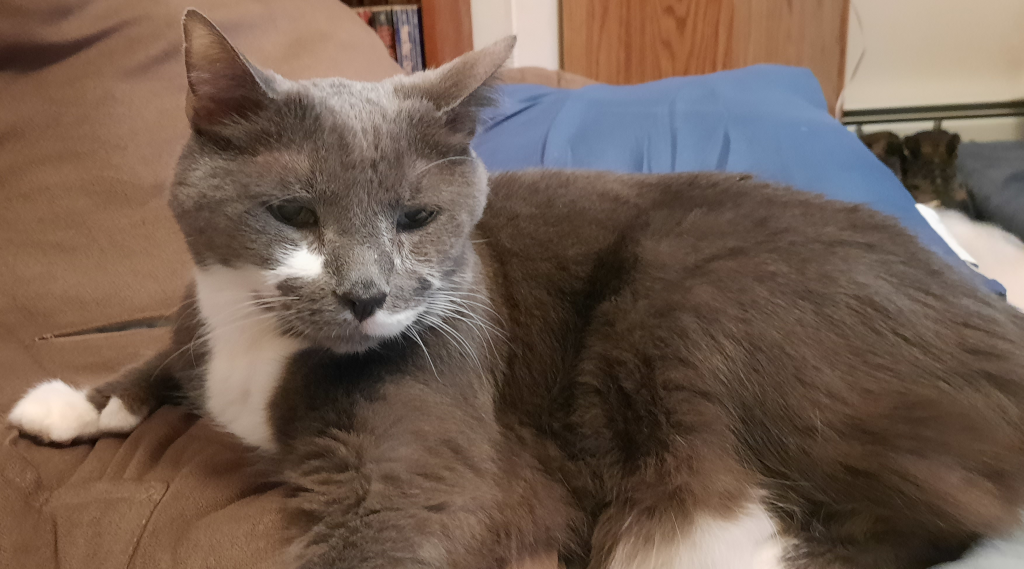 Comfort is often treated as secondary to medical treatment, but for senior cats with multiple conditions, comfort is care. Pain management, warmth, soft resting places, and easy access to favorite spots all contribute to physical stability and emotional wellbeing.
An arthritic cat who struggles to climb may move less, eat less, and lose muscle mass. A cat who cannot rest comfortably may sleep poorly, affecting immune function and mood. These factors may not appear on lab reports, but they influence health outcomes just as strongly as medication does.
Supporting comfort does not mean giving up on treatment. It means recognizing that quality of life is not a luxury. It is a central goal.
The Emotional Weight of Complex Care
Caring for a senior cat with multiple conditions carries emotional weight that is often unspoken. There is the constant fear of missing something important, the guilt that creeps in when decisions feel uncertain, and the exhaustion that comes from daily vigilance. There is also anticipatory grief, the quiet awareness that time is limited even when things are stable.
These feelings do not mean you are failing. They mean you are deeply invested. Loving a senior cat through complex illness is demanding precisely because it matters so much.
At BellenPaws, this understanding is woven into everything we do. The site exists not just to share information, but to remind caregivers that they are not alone in this experience. Many people are quietly walking the same path, making the same hard choices, and learning the same lessons through love and loss.
Shifting the Goal From Fixing to Supporting
 One of the most meaningful shifts a caregiver can make is letting go of the idea that every condition must be fixed. Some illnesses cannot be reversed. Some numbers will never return to normal ranges. This does not mean care has failed.
Managing the whole cat means supporting the life that still exists, not chasing an ideal outcome that may no longer be realistic. A cat who still enjoys meals, seeks companionship, and rests comfortably is living a meaningful life, even if their medical chart is complicated.
This perspective does not diminish the importance of veterinary care or monitoring. It simply reframes success. Success becomes measured in comfort, connection, and dignity.
Why the Whole Cat Approach Matters
BellenPaws was created in honor of senior cats who taught us that aging is not a decline into irrelevance, but a transition into deeper connection. The tools on the site, from age calculators to diabetes trackers, exist because real life does not fit neatly into categories. They exist to support observation, understanding, and patience.
Managing multiple conditions at once is not about doing everything perfectly. It is about showing up consistently, paying attention, and making thoughtful choices rooted in compassion. Senior cats do not need flawless care. They need present care.
If you are navigating this stage of life with your cat, know that uncertainty is part of the process. You are not doing it wrong because it feels complicated. Complexity is the reality of aging bodies.
Senior pets still have love to give. Often, they give it more gently, more deliberately, and more profoundly than ever before.