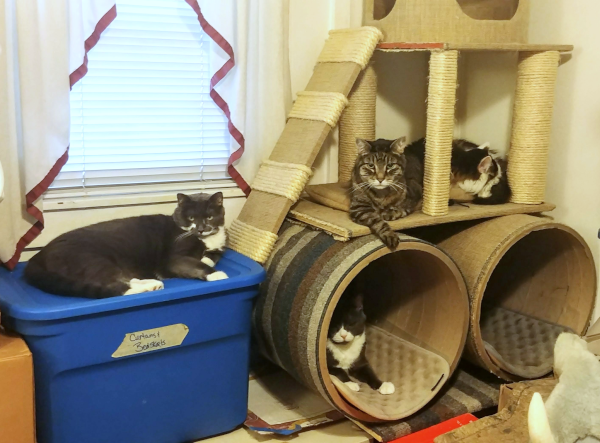
When people picture a cat tree, they often imagine a tall, carpeted tower bought from a pet store. While those can be useful, they are not the only option. Many cat owners have spare wood, leftover rope, old shelves, or unused furniture pieces sitting in a garage or basement. With a little planning and care, those materials can become something meaningful and practical for your cat, especially a senior cat who needs comfort and stability more than height and flash.
At BellenPaws, we have always believed that caring for pets is about thoughtful adjustments. Senior cats do not need towering structures that reach the ceiling. They need safe, steady spaces that support aging joints, provide scratching outlets, and allow them to climb in ways that feel secure. Building your own cat tree gives you full control over how it fits your cat’s needs.
This article will walk through the mindset, materials, and practical steps for building a sturdy, senior friendly cat tree from everyday items. No advanced carpentry degree required. Just patience, attention, and love.
Why Senior Cats Benefit from a Custom Cat Tree
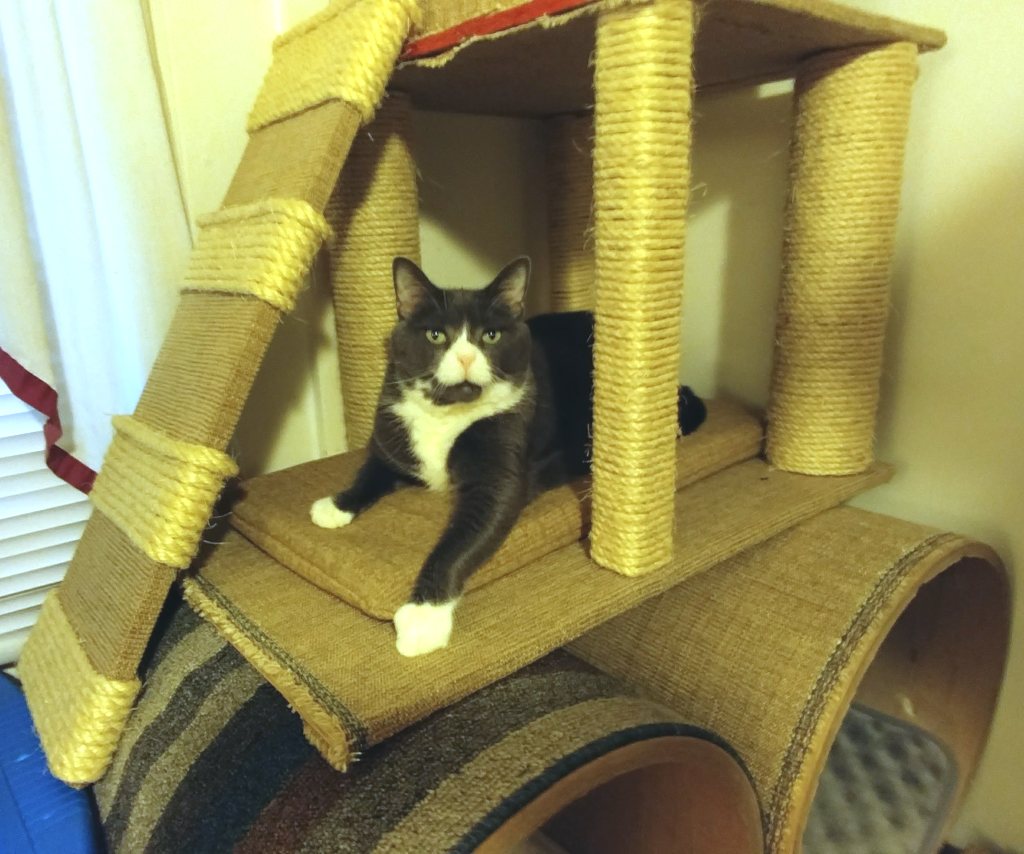 As cats age, their bodies change. Arthritis can make jumping painful. Muscle loss can make climbing more difficult. Vision changes may affect balance. Yet the instinct to scratch, perch, and observe does not disappear.
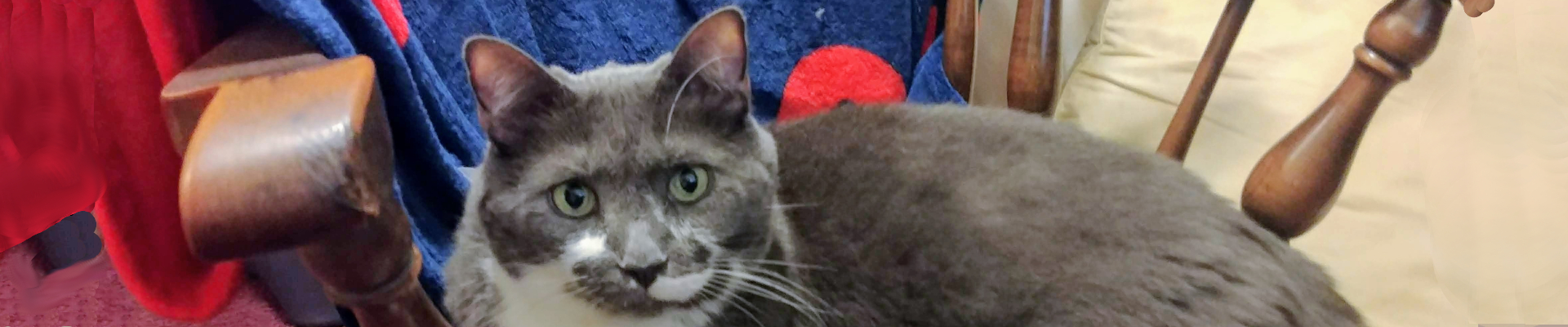
We saw this with Belle. As she moved deeper into her senior years, she still wanted to climb and look out the window. But high leaps were no longer her thing. She preferred shorter, manageable steps with stable footing. A custom cat tree allowed us to create exactly that.
A senior friendly tree should:
- Have wide, stable platforms
- Include gradual step ups instead of long vertical jumps
- Be low enough to prevent injury from a fall
- Offer sturdy scratching surfaces
- Provide soft resting spots
When you build your own, you can design for comfort first and height second.
Materials You May Already Have
One of the beautiful things about DIY projects is that they often start in the garage. Before buying anything, look around your home.
Here are common items that can be repurposed:
- Solid wood boards or leftover plywood
- 2×4 or 4×4 posts
- Scrap lumber from old shelving
- Sisal rope or hemp rope
- Thick fabric, fleece, or small blankets
- Screws, brackets, and wood glue
- Sandpaper
If you have built things before, you may already have screws and brackets on hand. If not, they are inexpensive and easy to find. Sisal rope is ideal for scratching posts because it is durable and safe for claws. Hemp rope can also work. Avoid synthetic rope that may fray into sharp plastic fibers.
Designing for Stability First
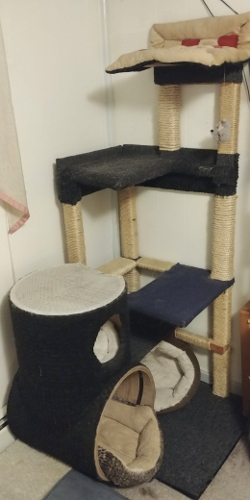 The most important rule for a senior cat tree is stability. A wobbly structure can scare a cat and even cause injury. Start with a wide, heavy base. A thick square of plywood works well. The base should be wider than the highest platform so the tree does not tip.
If your cat is heavier or has mobility issues, consider adding rubber pads to the bottom to prevent sliding on hardwood floors. You can also anchor the tree lightly to a wall stud using brackets for extra security.
Senior cats often test a surface before fully committing their weight. If it shifts even slightly, they may never use it again. Make sure everything feels solid.
Building the Scratching Post
Cats scratch for many reasons. It keeps claws healthy, stretches muscles, and marks territory.
To create a scratching post:
- Take a solid wood post such as a 4×4.
- Secure it firmly to the base using screws from underneath.
- Apply wood glue to a section of the post.
- Wrap sisal rope tightly around the post.
- Secure the rope at the top and bottom.
Keep the rope pulled tight as you wrap. Loose rope can unravel and create a hazard. For senior cats, consider a slightly angled scratching surface in addition to a vertical one. Some older cats prefer scratching at an angle because it reduces strain on shoulders.
Creating Low, Gradual Platforms
 Instead of stacking platforms straight up, think in steps.
A simple layout might include:
- Base level platform about 6 to 8 inches high
- Second platform 12 to 16 inches high
- Top perch 18 to 24 inches high
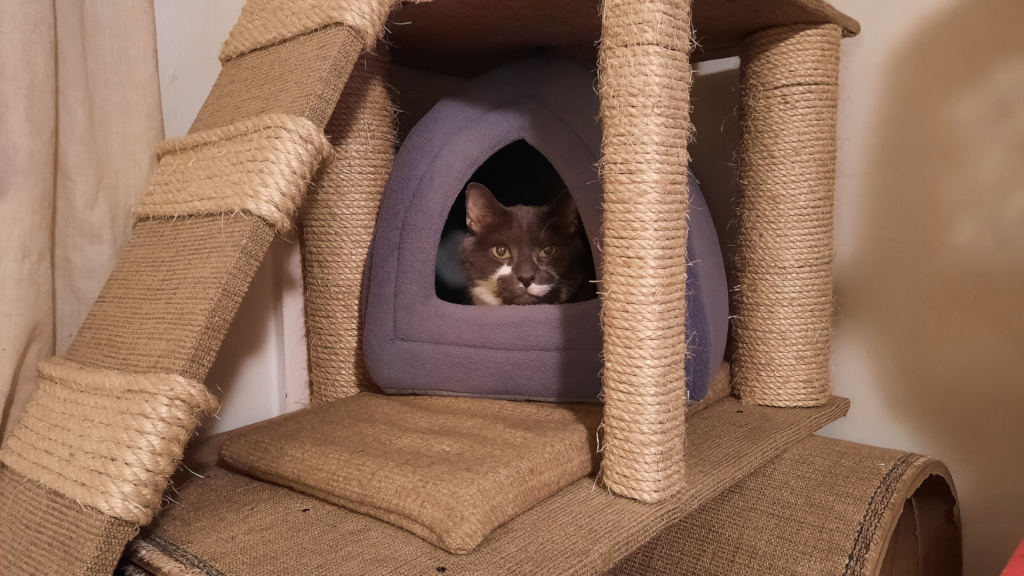
These gentle increases allow older cats to climb comfortably without leaping. Each platform should be large enough for your cat to turn around easily. Use plywood or solid boards, sand the edges smooth, and cover the top with thick fabric. Secure platforms with brackets underneath for extra strength. Do not rely on a single screw in the center. That will wobble.
Adding Soft Resting Areas
Senior cats sleep a lot. Their joints benefit from soft surfaces.
You can:
- Staple fleece or thick fabric over a foam pad
- Attach a shallow wooden box lined with blankets
- Repurpose a small pet bed and secure it to the top platform
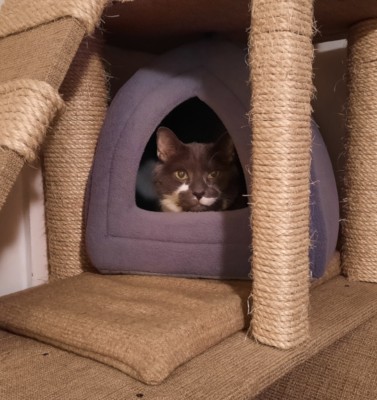
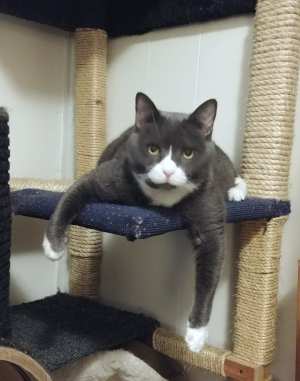
Make sure fabric is tightly secured so it does not bunch up. Loose folds can cause slipping. We once used a spare cushion that fit perfectly on a platform. It became Belle’s favorite afternoon spot. Sometimes the simplest additions make the biggest difference.
Making It Diabetes Friendly
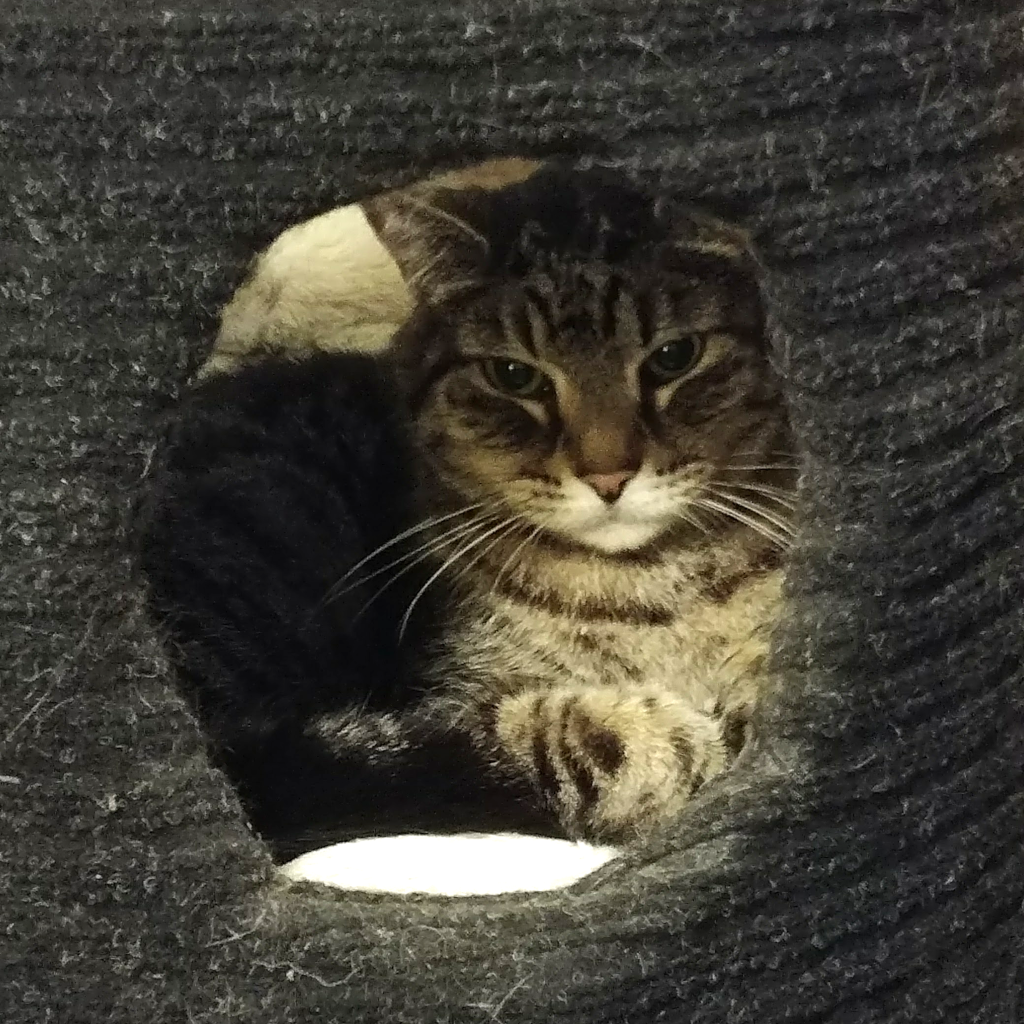 For those caring for diabetic cats like we did with Zippy and Bentley, accessibility is especially important. Diabetic cats may experience weakness, especially if blood sugar fluctuates.
A stable tree close to their usual resting area reduces unnecessary strain. If your cat uses insulin and has regular testing times, placing the tree near their usual monitoring spot can help you observe behavior changes.
Our diabetes tracker and printable glucose forms have helped many owners see patterns in energy levels. When you notice lower energy days, you can adjust the environment accordingly. A well placed, easy access cat tree becomes part of that supportive setup.
Rope Choices and Safety Considerations
Sisal rope is generally considered the best choice for scratching posts because it is natural and durable. Hemp rope can also work, especially if it is thick and tightly wound. You can calculate the amount of rope you need by using our Cat Scratching Post Rope Calculator.
Avoid:
- Nylon rope that frays easily
- Thin rope that can unravel
- Treated wood with chemicals
- Sharp edges or exposed staples
Always sand wood smooth. Senior cats often have thinner skin and can be more prone to minor injuries. If you decide to paint or seal any part of the wood, use non toxic, pet safe products and allow them to cure completely before letting your cat explore.
Incorporating Existing Furniture
You do not always need to start from scratch. Old bookshelves can become excellent cat trees with modifications.
For example:
- Reinforce each shelf with brackets
- Add fabric or sisal panels
- Secure the unit to the wall
- Add small ramps between shelves
This approach can be especially helpful for senior cats who struggle with vertical climbs. A series of wide shelves creates a gentle staircase effect.
Ramps for Arthritic Cats
If your cat has arthritis or limited mobility, consider adding ramps instead of steps.
A ramp can be made from:
- A sturdy board
- Covered in fabric for grip
- Attached securely between two levels
Keep the incline gentle. A steep ramp defeats the purpose. Ramps allow older cats to maintain independence. Independence matters. It keeps them engaged and confident.
Testing and Observing
After building your tree, observe your cat’s interaction.
- Do they approach it cautiously?
- Do they test each level before committing?
- Do they prefer one section over another?
Cats tell us what works. Sometimes adjustments are needed. Maybe a platform is slightly too high. Maybe the rope needs to be tighter. We learned through trial and error. What looked perfect to us sometimes needed tweaking once paws touched it.
Emotional Value of DIY Projects
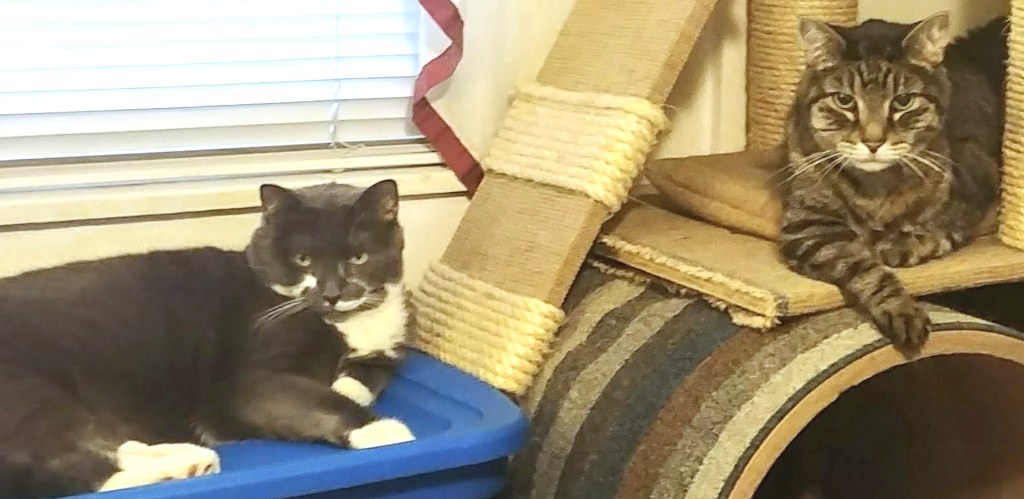 There is something meaningful about building something with your own hands for your pet. It becomes more than a structure. It becomes part of their daily life. After Everly passed, we found ourselves looking at the places she loved most. Familiar spots carry memories. A handmade cat tree can become one of those anchors in a home.
Senior pets do not need extravagance. They need thoughtful design and consistent comfort.
Keeping It Clean and Maintained
Senior cats may shed more or have medical issues that require extra cleanliness.
Regularly:
- Vacuum fabric areas
- Tighten screws
- Check rope for wear
- Replace fabric if needed
Maintenance ensures safety and longevity. If your cat has kidney disease or other health conditions, accidents can happen. Removable, washable covers make cleaning easier.
Saving Money While Adding Enrichment
 Commercial cat trees can be expensive. Building your own often costs much less, especially if you already have materials. You can also use our rope length calculator on BellenPaws to estimate how much rope you need before starting. That prevents overbuying and saves money.
A DIY project can become a weekend activity that benefits your pet for years.
Creating a Senior Friendly Environment
A cat tree is only one part of a larger supportive environment.
Senior cats benefit from:
- Litter boxes with low entry
- Food and water at accessible heights
- Soft bedding in multiple rooms
- Stable climbing options
Each small adjustment adds up. We have cared for cats with hyperthyroidism, kidney disease, diabetes, and many other conditions. The lesson that keeps repeating is this. Adapt the environment as they age. Do not expect them to adapt to discomfort.
Final Thoughts
Building your own cat tree from spare wood and rope is not about perfection. It is about intention. It is about observing your cat’s needs and creating something that supports them physically and emotionally.
Senior cats still crave enrichment. They still stretch, scratch, climb, and watch the world from above. They just need it delivered in a way that respects aging bodies. With a sturdy base, tightly wrapped rope, wide platforms, and soft resting areas, you can create a safe haven from materials you already have. The process may take an afternoon. The benefit can last for years.
And when you see your senior cat climb gently to their favorite perch, settle into a soft cushion, and close their eyes in comfort, you will know it was worth every screw, staple, and strand of rope.