
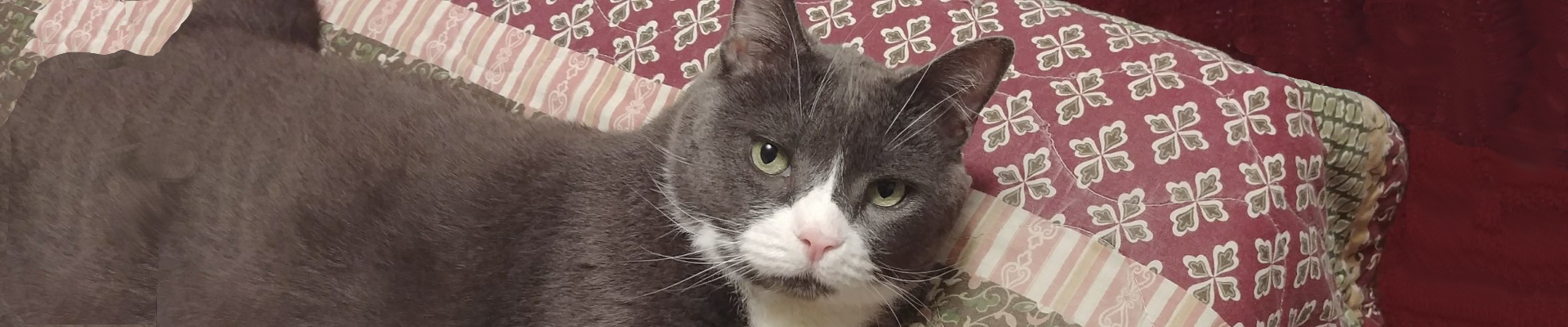
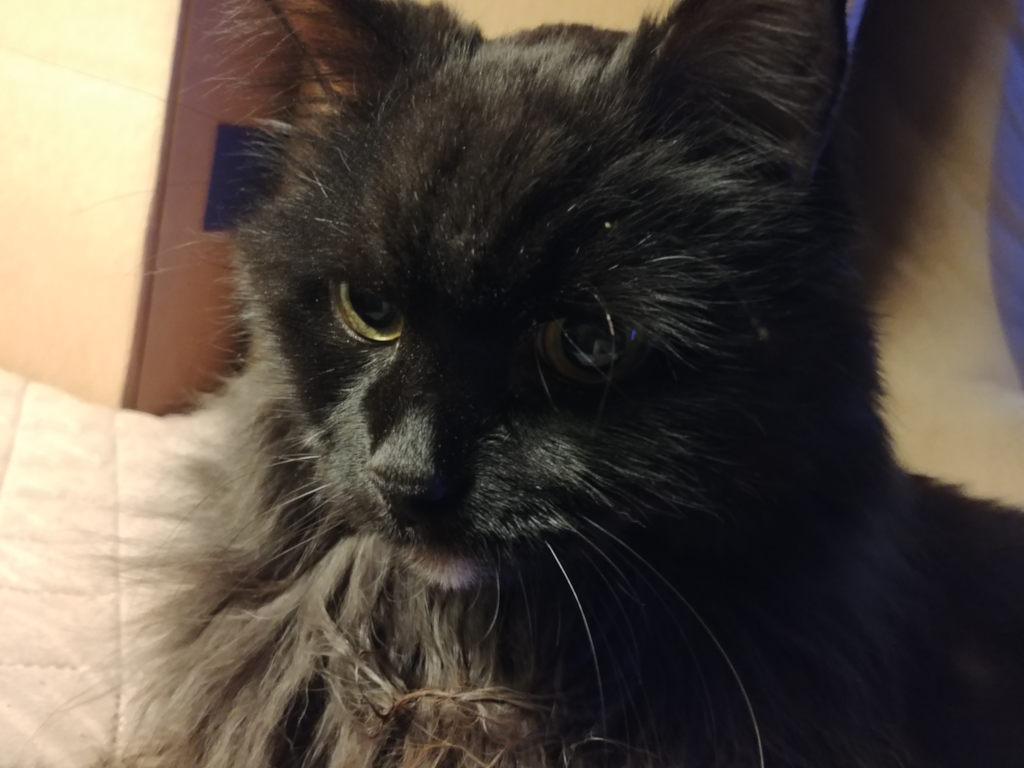
If you’ve found yourself searching for a “quality of life scale,” chances are your heart is already carrying a weight that’s hard to describe. This is one of the most difficult places a pet parent can stand. It’s that quiet space between hope and acceptance, where every small moment feels magnified and every decision feels permanent.
Over the years, we’ve walked this road more than once. With Belle, there were days where she seemed like her old self, gently asking for attention and soaking up the sunlight. And then there were other days where her body just couldn’t keep up with her spirit anymore. Those fluctuations can make it incredibly hard to know what’s truly best.
That’s where the HHHHHMM Quality of Life Scale comes in. It doesn’t make the decision for you. It doesn’t remove the emotional weight. But it does something just as important. It gives you a gentle, structured way to look at your pet’s life as it is right now, not just how you wish it could be.
What the HHHHHMM Scale Really Represents
The name might look a little clinical at first glance, but behind it is a deeply compassionate framework. Each letter stands for a core part of your pet’s daily experience: Hurt, Hunger, Hydration, Hygiene, Happiness, Mobility, and More good days than bad.
Instead of focusing only on a diagnosis or a single symptom, this scale invites you to step back and look at your pet’s entire life. It asks a simple but powerful question: Is your pet still experiencing comfort, dignity, and moments of joy?
When we were caring for Bentley during his diabetic journey, we learned quickly that numbers alone did not tell the full story. Blood glucose readings mattered, of course, but so did whether he greeted us at the door, whether he was interested in food, and whether he still had that spark in his eyes. Quality of life lives in those small details.
Looking Gently at Each Piece
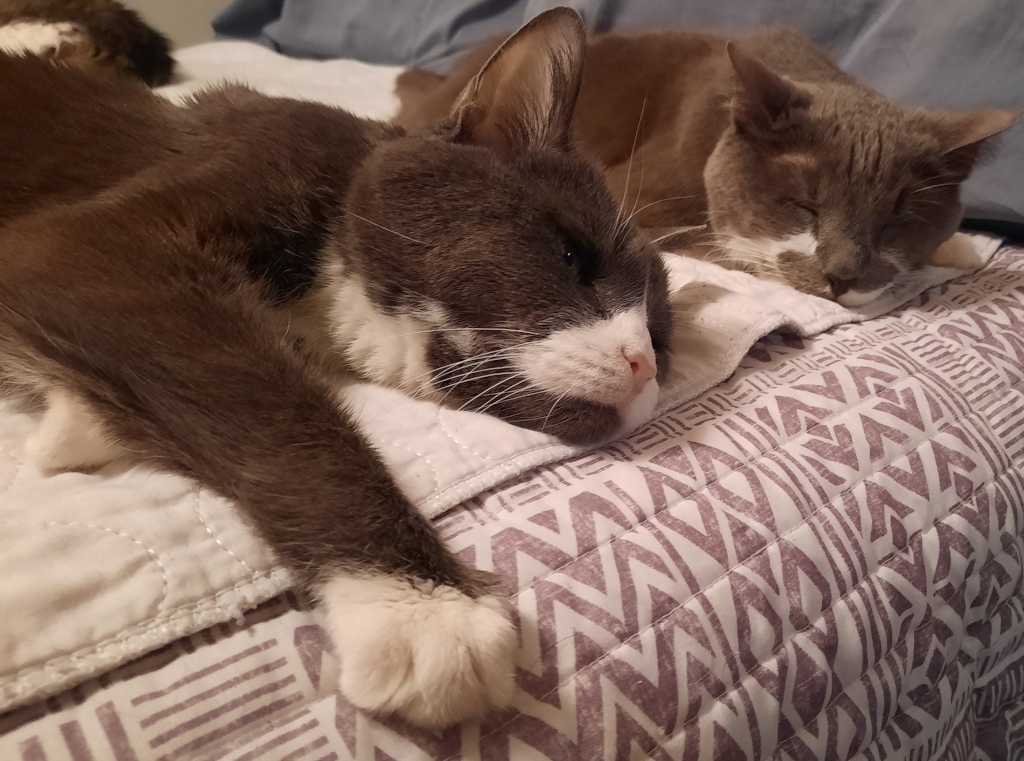 The first part of the scale focuses on pain and discomfort. Hurt does not always show up as obvious suffering. Sometimes it’s subtle. A hesitation before jumping. A quiet withdrawal. A change in breathing or posture. Senior pets are incredibly good at hiding pain, so we have to become careful observers of the little things.
Hunger and hydration follow closely behind. Eating and drinking are basic, but they are also deeply tied to a pet’s will to engage with life. A pet who still enjoys food is often telling you they are still connected to the world around them. When that interest fades, it can be one of the clearest signals that something is changing.
Hygiene might feel like a practical concern, but it is really about dignity. If your pet can no longer stay clean without constant intervention, or if accidents are causing distress rather than simple inconvenience, it’s worth paying attention. This is especially true for cats, who are naturally very particular about cleanliness.
Happiness is one of the most important, and sometimes the hardest, to measure. It’s not about whether your pet is playful all day. It’s about whether they still have moments of contentment. Do they seek you out? Do they respond to your voice? Do they relax when you sit beside them? Even small signs of connection matter here.
Mobility is another key piece. It is not about perfection or youthful energy. It is about whether your pet can move in a way that allows them to live their life with some independence. Struggling occasionally is one thing. Being unable to rise, walk, or reposition comfortably is another.
And then there is the final piece, the one that often brings everything into focus. Are there more good days than bad? This question can feel overwhelming at first, but it becomes clearer when you start to track it honestly. Not through hope alone, but through observation.
The Emotional Tug of Good Days and Bad Days
One of the hardest parts of this journey is how unpredictable it can be. A pet can have a beautiful, peaceful day that fills you with hope, only to follow it with a day that reminds you how fragile things have become.
We remember this vividly with Belle. There were mornings when she would greet us with that familiar softness, and for a moment, everything felt normal again. It was tempting to hold onto those moments and let them outweigh everything else. That’s a natural instinct. We love them, so we want to believe those good days are the beginning of a recovery.
But the scale gently encourages us to look at patterns instead of isolated moments. It asks us to step back and see the overall direction. Are the good days becoming less frequent? Are the bad days becoming harder for your pet to recover from?
This is not about taking away hope. It is about grounding hope in reality so that we can make decisions rooted in love, not fear.
Using the Scale as a Tool, Not a Verdict
 It’s important to understand that the HHHHHMM scale is not a test you pass or fail. It is not a scorecard that suddenly tells you, “It’s time.” Instead, it is a way to organize what your heart is already trying to tell you.
Some pet parents find it helpful to actually write things down. Tracking daily observations can bring clarity over time. You might notice trends that are harder to see when you are living in the moment day by day.
This is where having structured tools can really help. On our site, we’ve seen how tracking changes over time, whether it’s glucose levels for diabetic pets or daily habits and behaviors, can take something overwhelming and make it a little more manageable. When everything feels emotional, having something concrete to look at can be grounding.
But even with all the structure in the world, the decision will never be purely logical. And that’s okay. It’s not supposed to be.
The Quiet Role of Love in the Decision
There is a moment that many pet parents recognize, even if it’s hard to put into words. It’s not always dramatic. Sometimes it’s quiet. A realization that your pet is no longer experiencing life in the way they used to. That their world has become smaller, more uncomfortable, or more confusing.
That moment is not a failure. It is not giving up. It is, in many ways, one of the most profound expressions of love we can offer.
When we cared for Bentley through his diabetes, we fought for every good day we could give him. Tight regulation, careful monitoring, adjusting routines, all of it came from a place of wanting to give him the best possible life. And that same mindset applies here. The goal is not to extend time at all costs. The goal is to protect the quality of that time.
Sometimes, the most loving decision is the one that prevents suffering, even when it breaks your heart.
Giving Yourself Permission to Be Human
It’s easy to feel like you need to be strong, objective, and certain. But the truth is, this process is messy and emotional for everyone. You might second guess yourself. You might wonder if you’re acting too soon or waiting too long.
Those feelings are not signs that you’re doing something wrong. They are signs that you care deeply.
If you’re using the quality of life scale and finding that several areas are declining, it’s okay to acknowledge that. If you’re seeing fewer good days than bad, it’s okay to say that out loud. And if you’re not sure, it’s okay to sit with that uncertainty for a moment while you gather your thoughts.
You don’t have to rush. But you also don’t have to ignore what you’re seeing.
A Gentle Way Forward
 The HHHHHMM scale does not take away the pain of this decision, but it can bring a sense of clarity and peace to a situation that often feels overwhelming. It reminds us to look at our pets not just through the lens of diagnosis, but through the lens of their lived experience.
Are they comfortable? Are they able to enjoy even small moments? Are they still connected to you and their environment? If the answer to those questions is becoming less certain, it may be time to have deeper conversations with your veterinarian and with yourself.
And through all of this, remember something important. Your pet does not measure their life in years or even in days. They measure it in moments. The warmth of your presence. The comfort of your care. The feeling of being safe and loved.
Whatever decision you make, if it comes from that place, it will always be the right one.