

There is something deeply special about a home filled with older pets. The pace is different. The energy softens. The relationships feel deeper, almost quieter in a way that only comes with time. When you are caring for not just one, but multiple senior cats and dogs together, that feeling multiplies. It becomes a kind of shared rhythm between you and them, where patience, awareness, and compassion guide everything.
But let’s be honest. It is also one of the most demanding stages of pet ownership. You are not just managing personalities anymore. You are managing aging bodies, shifting needs, medications, diets, and sometimes emotional changes that can catch you off guard. And when you combine both senior cats and senior dogs under one roof, the complexity grows in ways that only experienced pet parents truly understand.
What I can tell you from years of living this life is that it is absolutely doable, and it can be incredibly rewarding. It just requires a different mindset, one rooted in observation, flexibility, and a willingness to adapt as things change.
Understanding the Changing Needs of Aging Pets
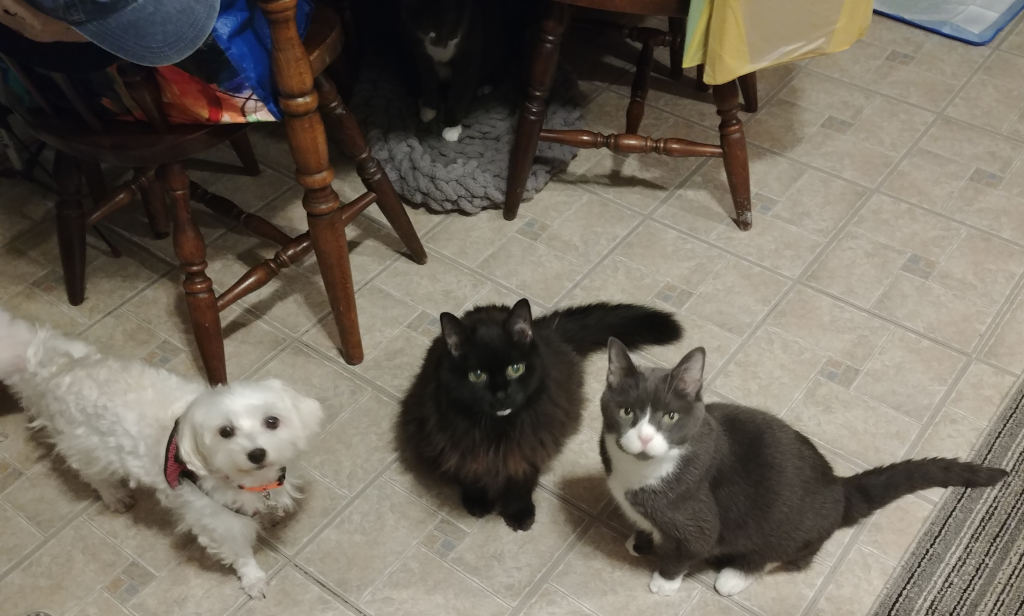 As pets grow older, they do not all age the same way. One cat might remain active well into their senior years, while another begins slowing down much earlier. The same goes for dogs. In a mixed household, you may find yourself caring for one pet with arthritis, another with kidney disease, and another who simply needs a quieter environment.
I remember Belle in her later years. She dealt with multiple health challenges, including kidney disease and high blood pressure, yet she still had her routines and preferences. She wanted her space respected, her meals at the same time each day, and her comfort spots untouched. That consistency mattered more to her than anything.
In a multi-pet home, recognizing each individual’s needs becomes essential. You are no longer thinking in terms of “the group.” You are thinking in terms of each pet’s comfort, safety, and dignity. This often means creating small adjustments throughout the home. Separate feeding areas, easy access to water, and comfortable resting spots that are not shared or contested.
Senior pets also become more sensitive to stress. What might seem like a small change to us can feel overwhelming to them. A new routine, a shift in feeding time, or even a louder environment can create tension, especially when multiple pets are involved.
Creating Harmony Between Cats and Dogs
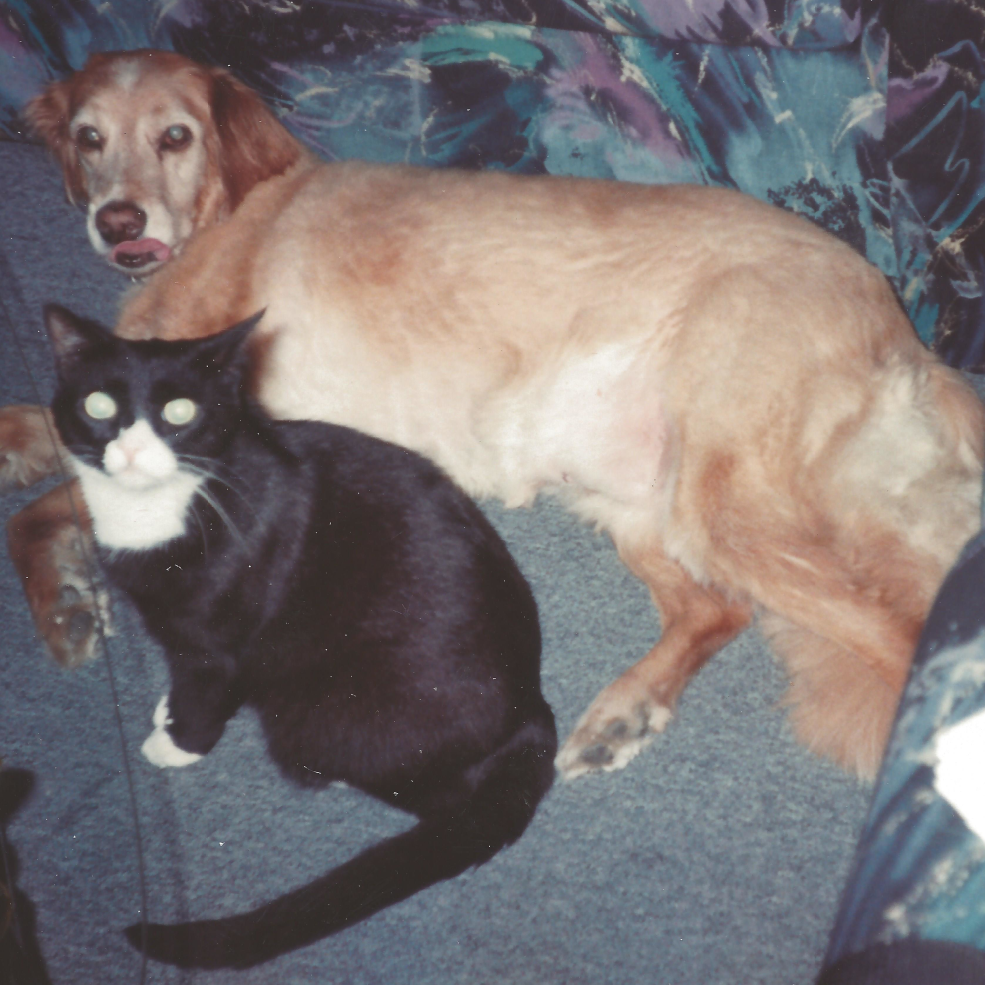 One of the most delicate parts of managing a senior multi-cat and multi-dog household is maintaining harmony between species. Younger pets often work things out through energy and play. Seniors do not have that luxury. They rely more on predictability and personal space.
Older cats, especially, tend to become more territorial or sensitive. They may not tolerate the presence of dogs as easily as they once did. At the same time, senior dogs may lose some of their awareness or mobility, which can lead to accidental boundary crossing.
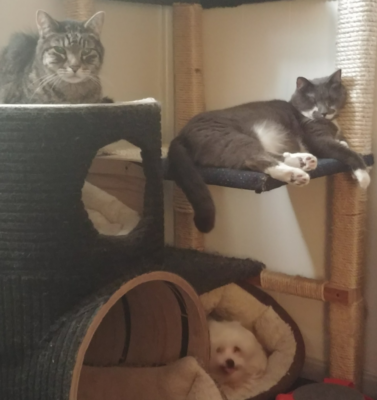
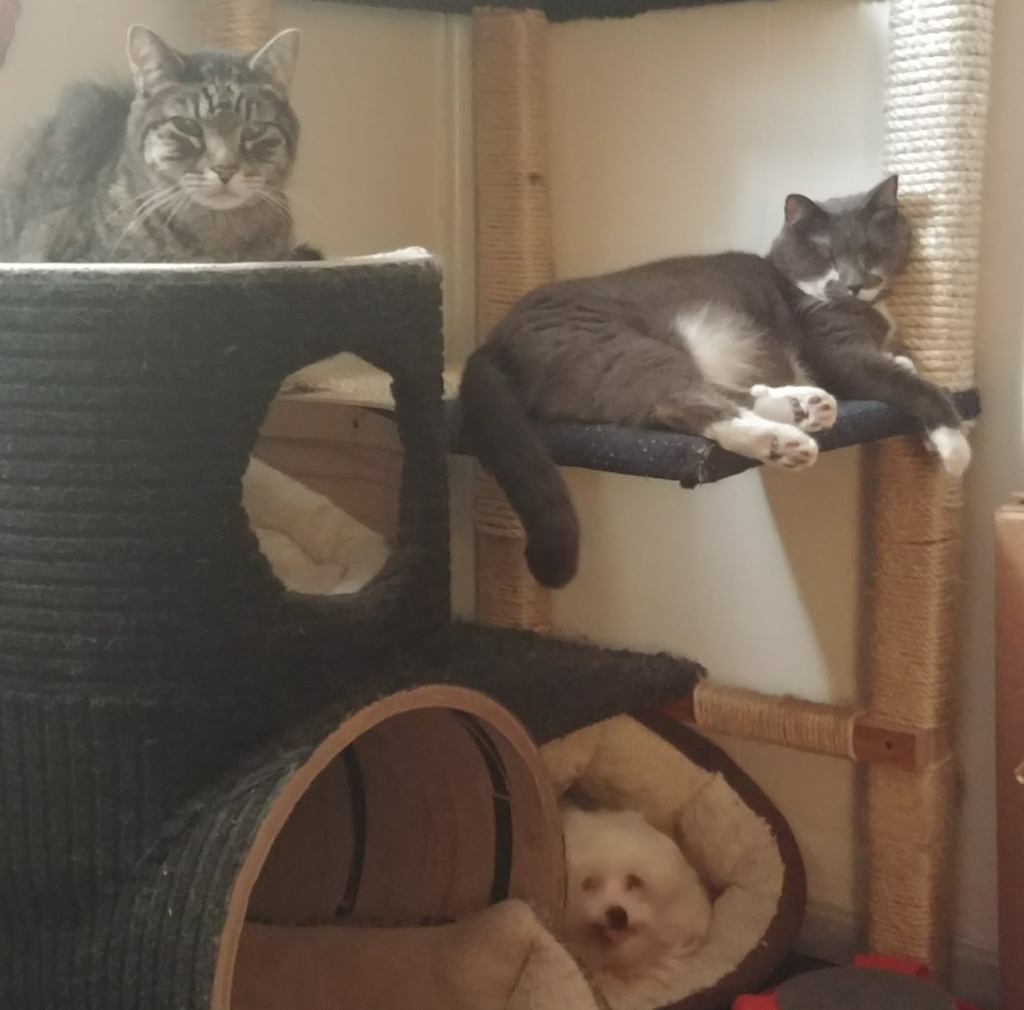
This is where your role becomes that of a quiet mediator. You start noticing patterns. Which cat prefers the higher perch. Which dog needs a clear path to walk without obstacles. Which interactions cause tension and which ones are still comfortable. Instead of forcing coexistence, you guide it. You create layers within your home. Elevated spaces for cats. Soft, accessible beds for dogs. Pathways that allow movement without confrontation.
In our experience, even small changes can make a big difference. Giving a cat a safe, elevated resting area can completely reduce stress in a shared environment. Providing a dog with a quiet corner away from foot traffic can improve their sense of security. Harmony is not about forcing closeness. It is about allowing peaceful distance when it is needed.
Managing Health, Medications, and Daily Routines
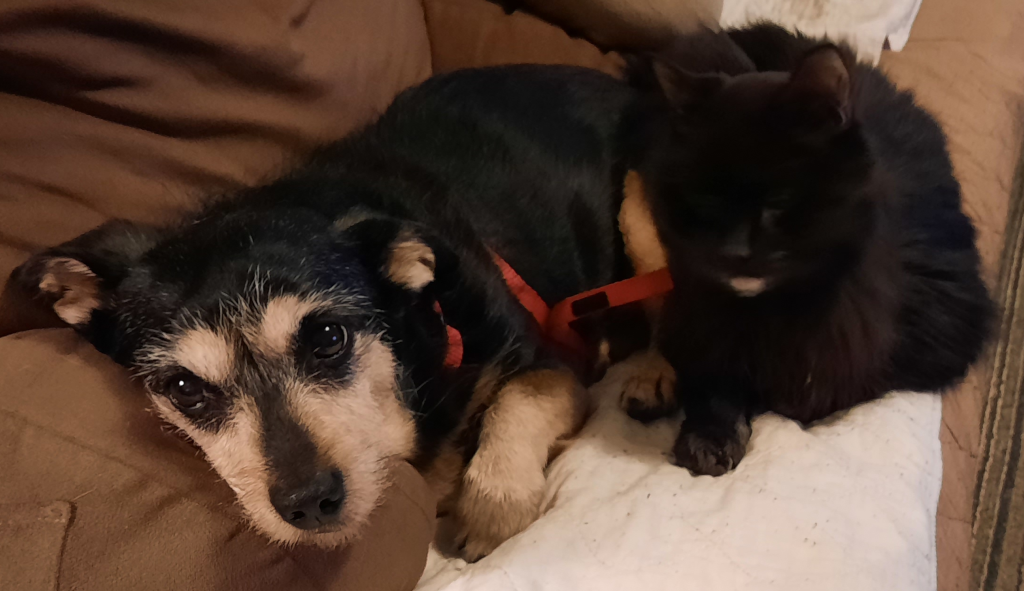 This is often the most overwhelming part for many pet parents. When you have multiple senior pets, each with their own medical needs, it can feel like you are running a small care facility inside your home. Medications alone can become a full-time schedule. Different dosages, different times, different methods of administration. Add in specialized diets, supplements, and monitoring, and it can quickly become complicated.
Bentley, who is currently on insulin for diabetes, requires a strict routine with his shots twice a day. That routine does not just affect him. It shapes the entire household schedule. Feeding times, quiet times, and monitoring all revolve around keeping his glucose levels stable.
In a multi-pet environment, this means being intentional about structure. You develop a rhythm that supports everyone. Meals happen in specific locations. Medications are given in a calm, predictable way. You learn to stay organized, often relying on charts, notes, or trackers to keep everything straight.
This is actually where tools can become incredibly helpful. Having a dedicated place to log things like feeding times, medications, or glucose readings can take a lot of mental pressure off. It allows you to focus more on your pets and less on trying to remember everything.
But beyond the logistics, there is something else that matters just as much. Your presence. Your calm. Senior pets pick up on your energy. If you are rushed or stressed, they feel it. If you are steady and patient, they settle into that rhythm with you.
Navigating Emotional Changes and Behavior Shifts
One thing that does not get talked about enough is how aging affects behavior and emotions. Senior pets can become more anxious, more withdrawn, or sometimes more vocal. In a multi-pet household, these changes can ripple through the group.
A cat that once tolerated others may start seeking more isolation. A dog that was always confident may become hesitant or confused, especially if vision or hearing declines.
We saw this shift with Paws as he aged. He became more selective about where he rested and who he interacted with. It was not aggression. It was a quiet request for space and comfort. Recognizing these changes early helps you respond with compassion instead of confusion. You start to adjust your expectations. You stop expecting them to behave as they did years ago and instead meet them where they are now.
Sometimes this means separating pets during certain times of the day. Sometimes it means offering extra reassurance. And sometimes it simply means allowing them to choose solitude without feeling like something is wrong. Behavior in senior pets is often communication. It is their way of telling you what they need as their world changes.
Making the Home Senior-Friendly for Everyone
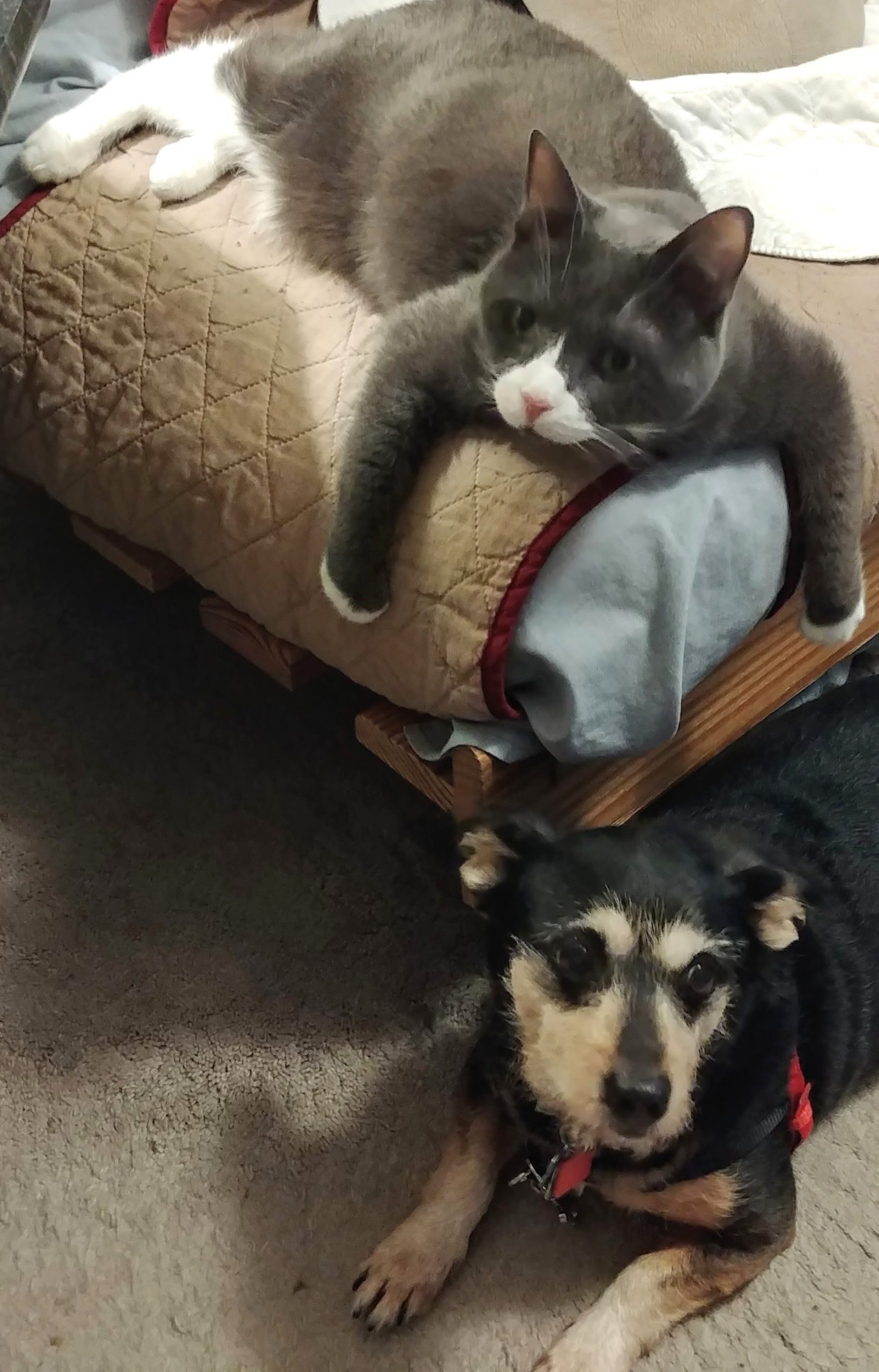 In a mixed senior household, your home becomes an environment that needs to support aging bodies. This is not just about comfort. It is about safety and accessibility. You begin to notice small things. Slippery floors that are harder for dogs to walk on. Litter boxes that are too high for older cats to step into. Feeding areas that require too much bending or strain.
Adjusting these things does not have to be complicated. Adding rugs or mats for traction can help dogs move more confidently. Using lower-entry litter boxes can make a huge difference for cats with arthritis. Elevating food and water bowls can reduce strain on joints, especially for dogs.
Even something as simple as ensuring that each pet has their own resting space can reduce tension and improve overall comfort. In a home with both senior cats and dogs, you are essentially designing a shared space that respects different physical needs. It becomes less about aesthetics and more about function and care.
Finding Joy in the Slower Moments
It is easy to get caught up in the responsibilities. The schedules, the medications, the constant awareness. But one of the most important parts of this journey is remembering why you are doing it. Senior pets have a way of teaching patience like nothing else. They slow you down. They remind you to be present. The moments may be quieter, but they are often more meaningful.
There is something incredibly comforting about a room where older pets are resting peacefully. A cat curled up in a favorite spot. A dog sleeping deeply nearby. These moments may seem small, but they are the heart of what it means to care for them in their later years.
You start to appreciate things differently. A good day. A comfortable nap. A meal enjoyed without issue. These become victories.
Supporting Yourself Along the Way
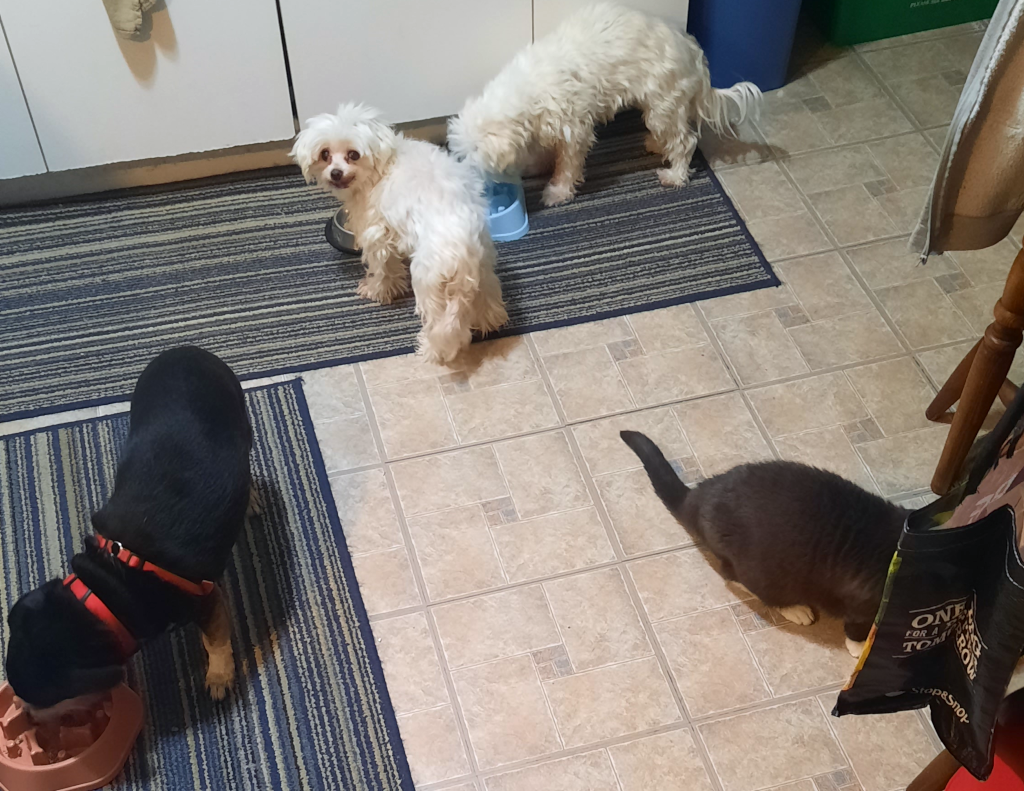 Caring for multiple senior pets can be emotionally and physically demanding. It is important to acknowledge that. There will be days when it feels overwhelming. When you question whether you are doing enough. What matters is that you are showing up. That you are paying attention. That you are adapting and learning as you go. You do not have to do everything perfectly. You just have to do it with care.
If there is one thing I would share with anyone navigating this kind of household, it is this. Give yourself the same compassion you give your pets. You are part of this environment too, and your well-being matters.
A Home Built on Care and Understanding
A senior multi-cat and multi-dog household is not always easy. It requires patience, awareness, and a willingness to constantly adjust. But it is also one of the most meaningful experiences you can have as a pet parent.
You are not just caring for them. You are honoring their lives. Their histories. The years they have spent with you.And in return, they give you something just as valuable. Trust. Comfort. And a quiet kind of companionship that only comes with time.
In the end, it is not about managing a household. It is about creating a space where every pet, no matter their age or condition, feels safe, understood, and loved.