

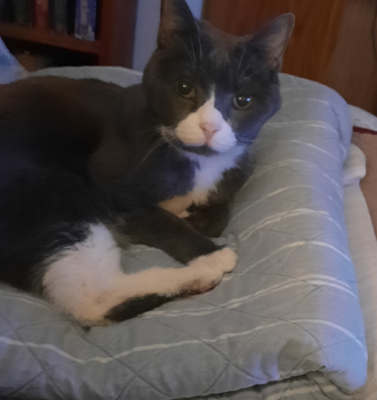
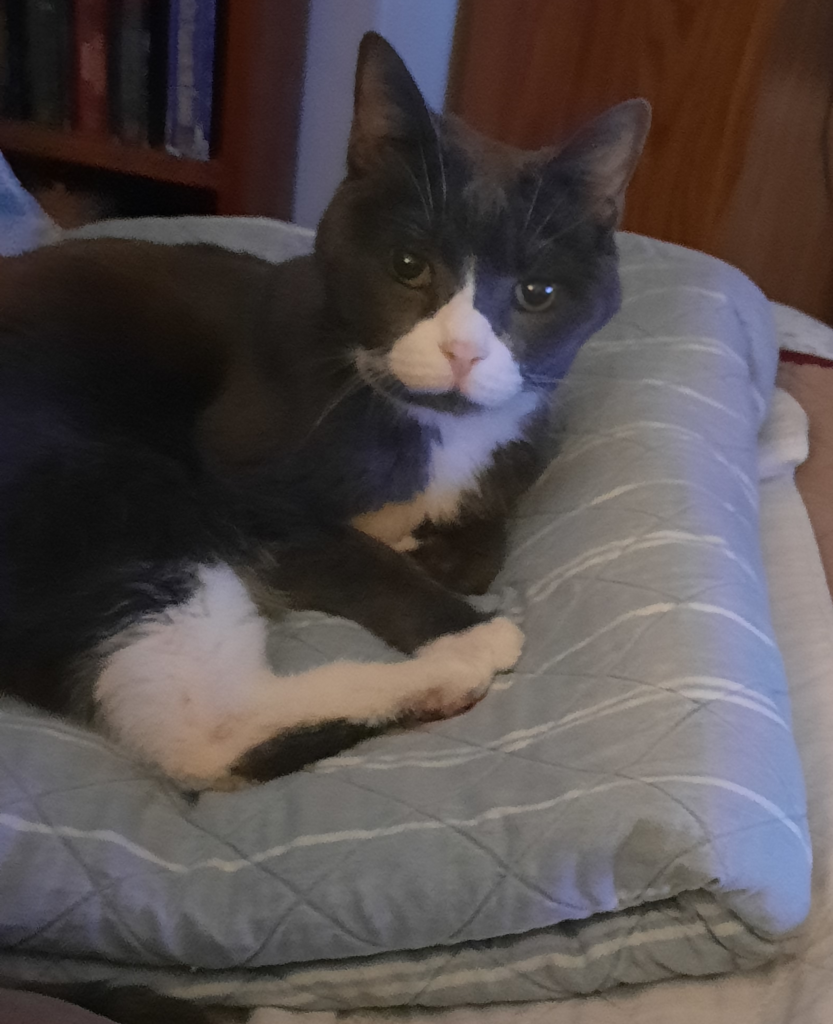
When most people hear the term psychogenic alopecia, they picture a cat with visible bald patches, often on the belly or legs. By the time it reaches that stage, it feels obvious that something is wrong. But in our experience, the real story starts much earlier, in the small changes that are easy to miss if you are not looking closely.
Psychogenic alopecia is often rooted in stress or anxiety, and our pets do not always show that stress in ways we immediately recognize. Instead of loud or dramatic signals, they tend to communicate through subtle shifts in behavior. These early signs can appear long before any fur is missing, which gives us a valuable window of time to step in and help.
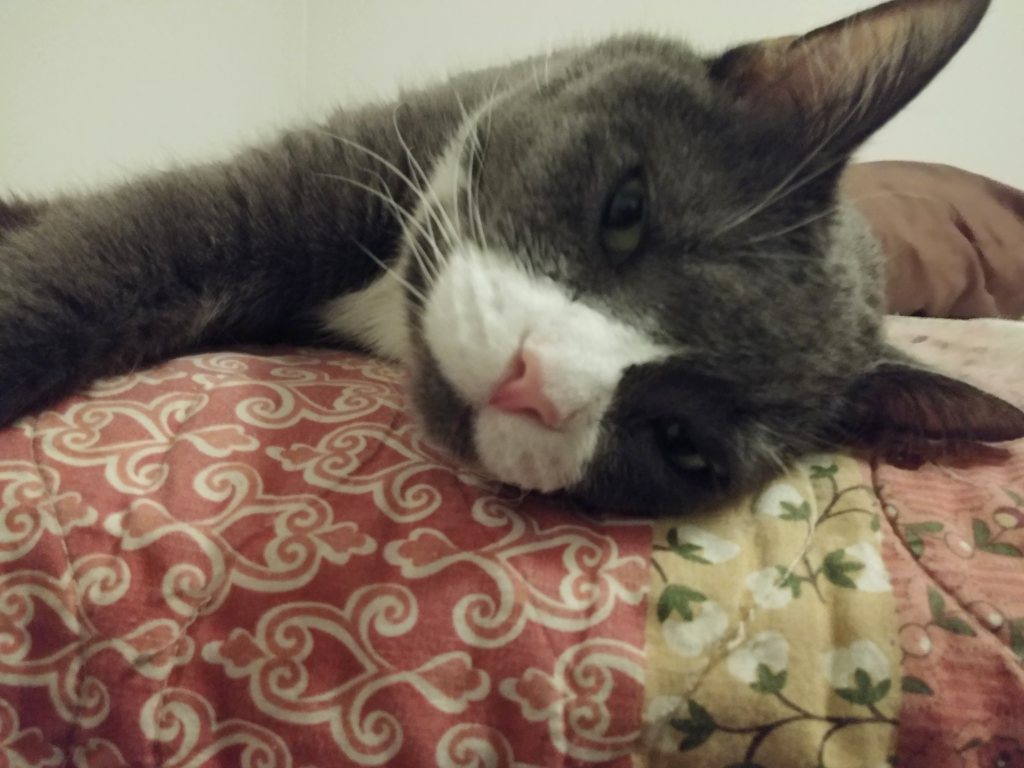
We learned this the hard way with our girl Belle. She never developed dramatic bald spots, but she did struggle with psychogenic alopecia for a long time. If we had understood the early warning signs better, we could have made changes sooner and likely reduced her discomfort.
Grooming That Feels “Off” Rather Than Excessive
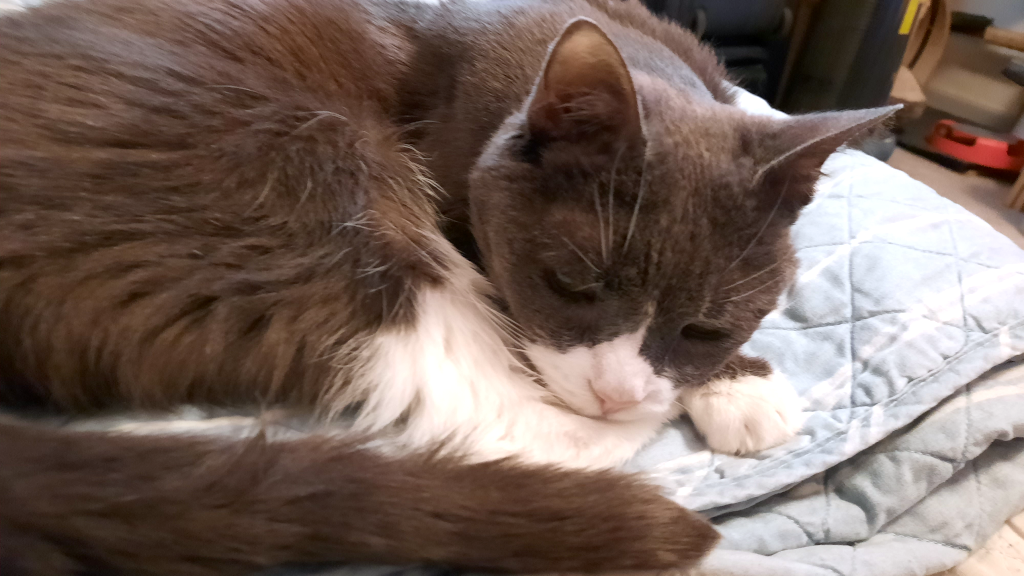 Cats are meticulous groomers by nature, so it can be tricky to tell when grooming crosses the line from normal to concerning. Early on, psychogenic alopecia often shows up not as obvious overgrooming, but as grooming that feels slightly out of rhythm.
You might notice your cat returning to the same spot repeatedly, especially during quiet moments. Instead of a relaxed grooming session followed by a nap, there is a sense of urgency or persistence. They may groom for shorter bursts but do it more frequently throughout the day.
Another early clue is sound. You might start hearing more licking noises than usual, especially at night when the house is quiet. It becomes part of the background, easy to dismiss, but over time you realize it is happening more often than it used to.
At this stage, the fur may still look completely normal. That is why it is so important to trust your instincts. If something about your pet’s grooming feels different, even if you cannot quite explain it, it is worth paying attention.
Changes in Coat Texture Before Fur Loss
Before bald patches appear, the coat itself often tells a quiet story. The fur may start to look a little uneven or less plush in certain areas. It might feel slightly coarse or appear “barbered,” meaning the ends of the hairs look shorter or uneven rather than naturally shed. You may notice small patches where the fur seems thinner, but not completely gone. These areas can be easy to overlook, especially in cats with thicker coats or darker coloring.
Running your hand gently over your cat during petting sessions can help you catch these changes early. Sometimes the difference is more noticeable by touch than by sight. A spot that feels different from the rest of the coat can be one of the first physical clues that overgrooming is beginning.
Emotional Shifts That Often Go Unnoticed
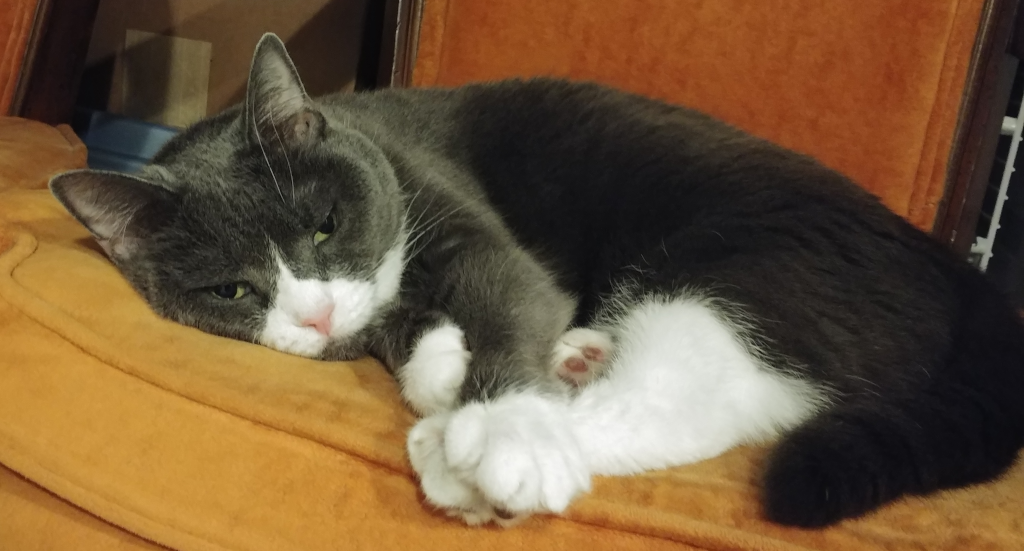 Because psychogenic alopecia is often tied to emotional stress, behavioral changes are one of the earliest indicators. The challenge is that these changes are often subtle and easy to attribute to personality.
A normally social cat might begin spending more time alone. A confident cat might become slightly more jumpy or sensitive to noise. You might notice them retreating to the same hiding spot more often, or becoming less interested in interactive play.
In some cases, the opposite happens. A cat may become clingier, following you from room to room and seeking constant reassurance. This shift can feel endearing, but it may also be a sign that they are trying to cope with internal stress.
With Belle, we saw small changes in her behavior long before we connected them to her grooming. She became more routine-driven, almost rigid about certain habits. At the time, it seemed like she was just settling into her senior years. Looking back, it was likely her way of managing stress.
Environmental Triggers That Set the Stage
One of the most important things to understand about psychogenic alopecia is that it rarely appears without a reason. There is often a trigger, even if it is not immediately obvious. Changes in the home environment are a common starting point. This could be something as major as moving to a new house or as subtle as rearranging furniture. New pets, new people, or even changes in your schedule can all create stress for a sensitive animal.
Sometimes the trigger is not a single event but a buildup of small changes over time. A new noise outside, a shift in feeding routine, or less playtime due to a busy schedule can all contribute. Cats thrive on predictability. When their environment feels uncertain, they often turn to self-soothing behaviors like grooming. Recognizing these environmental shifts can help you connect the dots between what is happening around your pet and how they are responding.
The Role of Routine and Predictability
 One of the most effective ways to catch early warning signs is to pay attention to your pet’s daily rhythm. When you know what “normal” looks like for them, even small deviations become easier to spot.
If your cat usually grooms after meals but starts grooming at unusual times, that is a clue. If they typically nap in one spot but begin rotating between several locations, it may signal restlessness. Establishing consistent routines can also help prevent stress from escalating. Regular feeding times, predictable play sessions, and a stable home environment all provide a sense of security.
For diabetic pets, this becomes even more important. With Bentley, who is on tight regulation and receives insulin twice a day, consistency is everything. While his situation is different, the principle is the same. A predictable routine helps reduce stress, and reduced stress supports overall health.
When to Pause and Look Closer
It is easy to second-guess yourself when the signs are subtle. You might wonder if you are overreacting or imagining things. But early intervention is one of the most powerful tools we have as pet parents.
If you notice repeated grooming in the same area, changes in coat texture, or shifts in behavior, it is worth taking a closer look. This does not mean jumping to conclusions or assuming the worst. It simply means staying present and observant.
Sometimes, keeping a simple record can help. Jotting down when you notice certain behaviors or changes can reveal patterns that are not obvious day to day. On our site, we offer tools for tracking health patterns, including printable charts that can be shared with your vet. While these are often used for diabetes management, they can be just as helpful for tracking behavioral changes.
Supporting Your Pet Before It Escalates
 The good news is that catching psychogenic alopecia early gives you a chance to address the underlying stress before it leads to significant fur loss. Start by looking at your pet’s environment through their eyes. Are there recent changes that could be unsettling? Is there enough mental stimulation and enrichment in their day? Are there quiet, safe spaces where they can retreat and relax?
Simple adjustments can make a big difference. Adding interactive play sessions, creating cozy resting areas, and maintaining a consistent routine can all help reduce stress levels.
In some cases, you may need to work with your veterinarian to rule out medical causes such as allergies or skin conditions. Psychogenic alopecia is often a diagnosis of exclusion, meaning other potential issues should be considered first.
A Gentle Reminder for Pet Parents
One of the hardest parts of dealing with conditions like psychogenic alopecia is the feeling that we may have missed something. It is natural to look back and wish we had recognized the signs sooner. But the truth is, these early signals are easy to overlook because they are so subtle. What matters most is not catching every single change immediately, but being willing to learn and adjust as you go.
Our pets rely on us to notice what they cannot say out loud. When we slow down and pay attention to the small details, we give them a voice. If there is one takeaway, it is this. Trust your instincts. If something feels different about your pet’s behavior, even in a small way, it is worth exploring. Those quiet clues are often the first step in understanding what they need from us.
And in that understanding, we can offer them comfort, stability, and the kind of care that helps them feel safe in a world they experience so differently than we do.