When people think about emotional stress in cats, they often imagine extreme cases. Bald patches. Raw skin. Obvious overgrooming to the point where fur is gone. But emotional distress in cats does not always announce itself in dramatic ways. Sometimes it shows up quietly, persistently, and in ways that are easy to overlook or dismiss.
Psychogenic alopecia is commonly described as hair loss caused by stress. While that description is not wrong, it is incomplete. At its core, this condition is about emotional overload. Hair loss is only one possible outcome. Many cats experience compulsive grooming driven by anxiety long before fur ever disappears. In some cases, it never does.
Understanding this broader picture is especially important for senior cats. Emotional health becomes more fragile with age, and changes that seem small to us can feel enormous to them. When we reduce these behaviors to “just stress,” we risk missing the opportunity to help our cats truly settle, heal, and feel safe again.
When Stress Does Not Leave Bald Spots
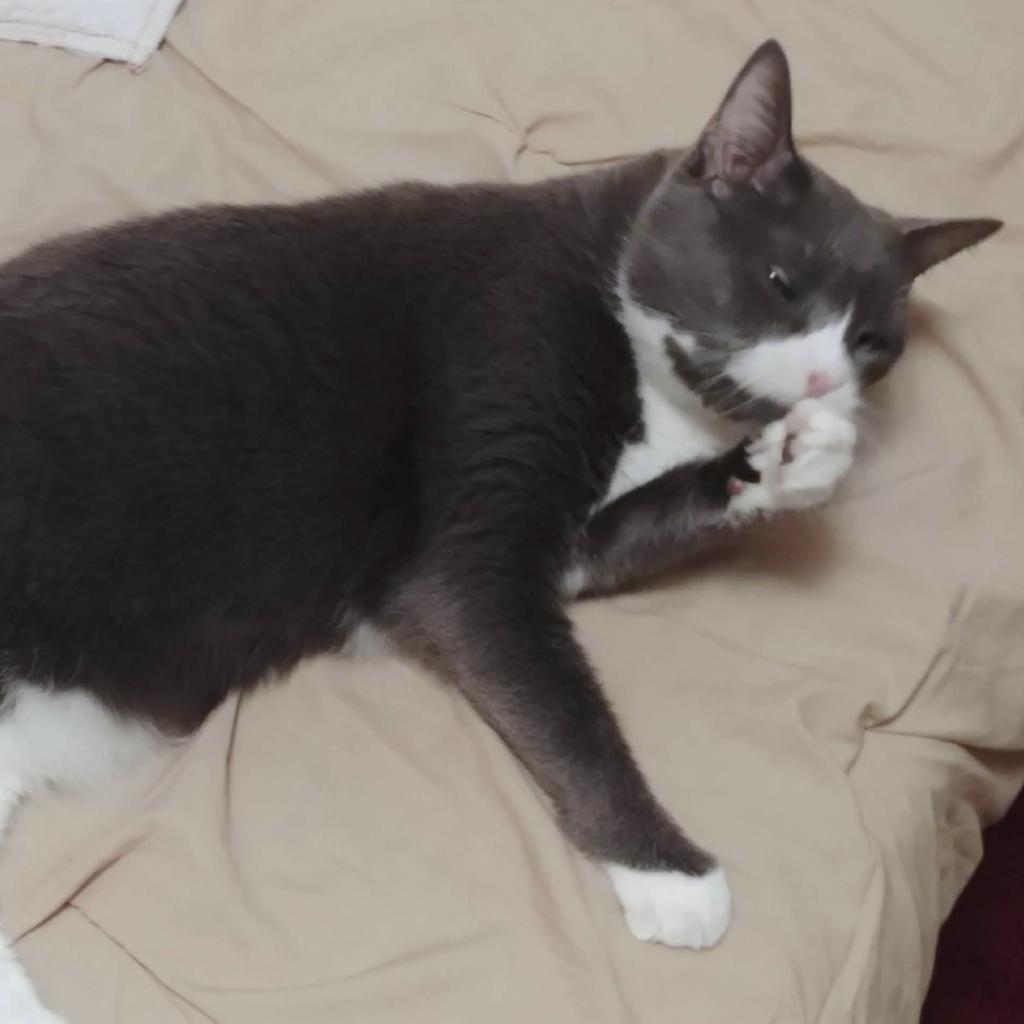 Not every cat with stress-related grooming ends up with visible alopecia. Some cats lick constantly but evenly, spreading the behavior across their body. Others focus on areas that are already part of normal grooming routines. The result can be a cat who appears well-groomed on the surface but is actually stuck in a loop of self-soothing behavior.
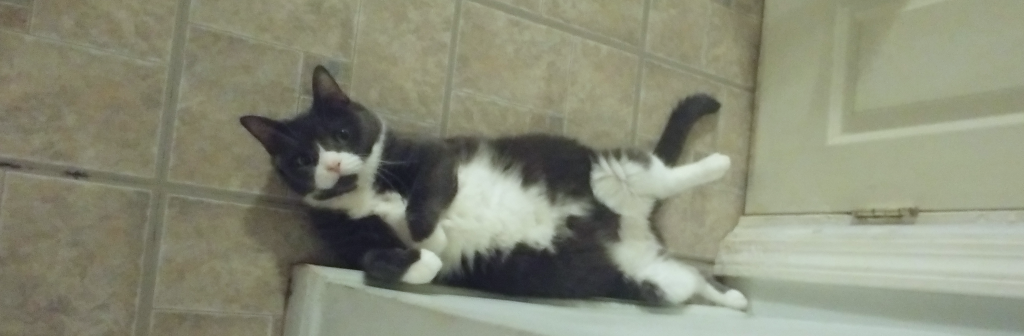
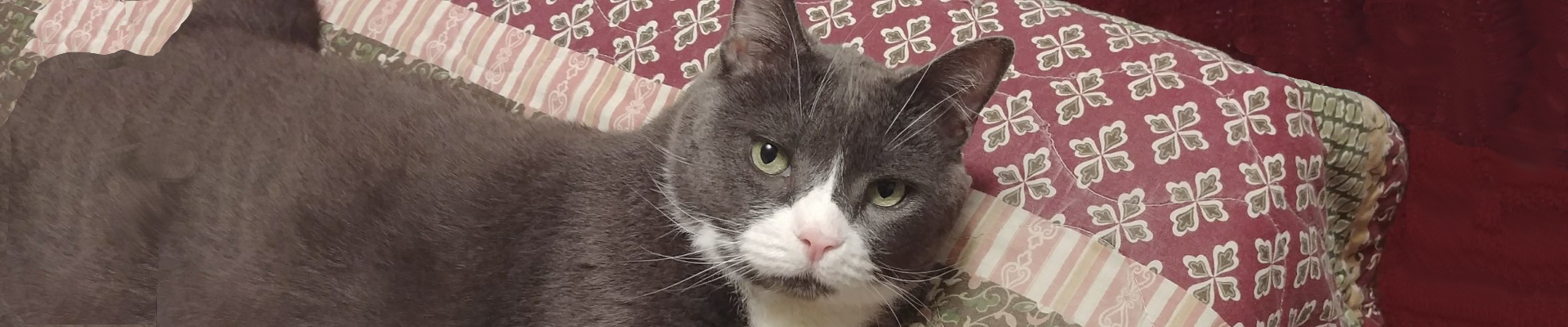
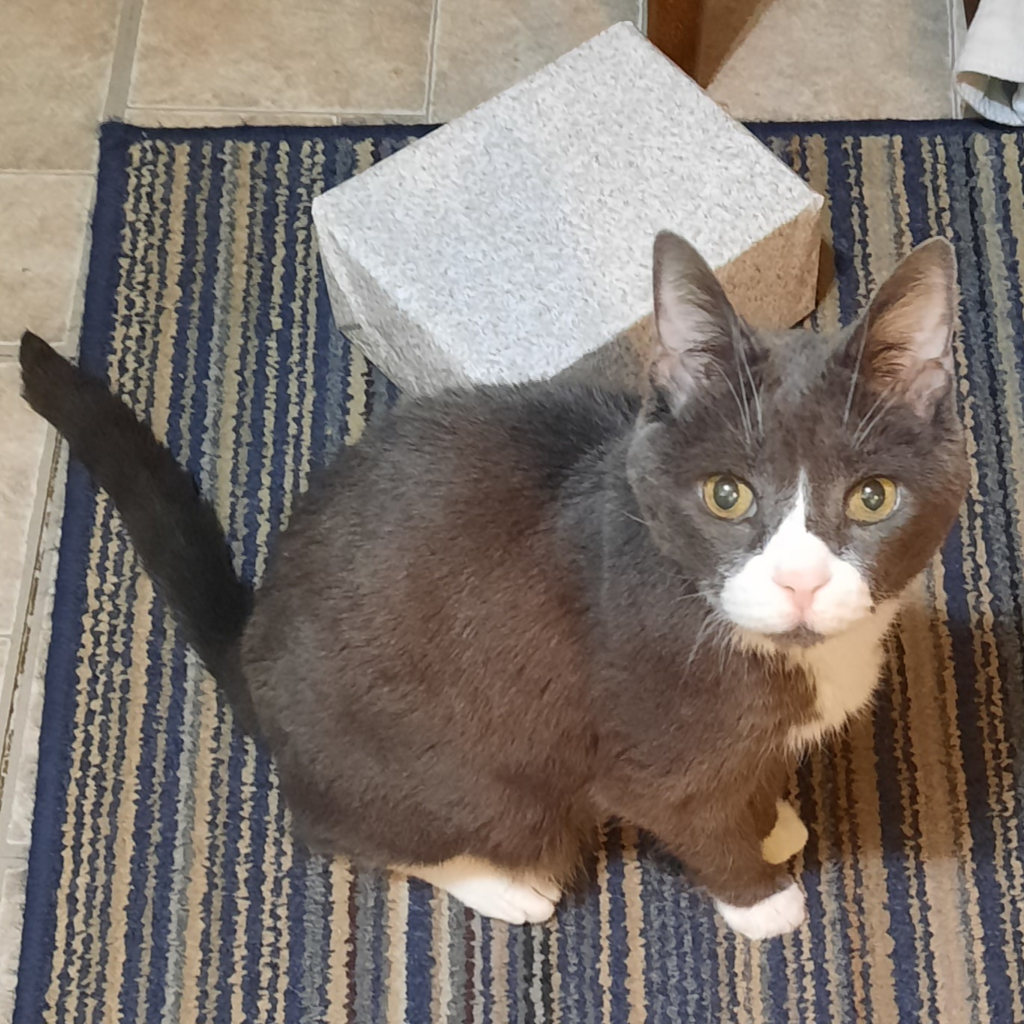
This was the case with our cat Belle.
When Belle came to us at 12 years old, she had just experienced a major life change. She was leaving the only home she had known and entering an entirely new environment with new people, new smells, and new routines. On paper, the transition was gentle. In reality, it was emotionally overwhelming.
Almost immediately, we noticed that Belle was bathing herself constantly. Not the casual grooming that cats do throughout the day, but long, repetitive sessions that seemed difficult for her to stop. She would lick, pause briefly, then return to the same motions again and again. There was no fur loss. Her coat looked fine. Her skin looked healthy. But something was clearly off.
At first glance, it would have been easy to shrug this off. After all, cats groom. Some groom more than others. But when you live with a cat, you learn their rhythms. Belle’s grooming was not about cleanliness. It was about coping.
Why Emotional Stress Hits Senior Cats Differently
Senior cats carry their histories with them. By the time a cat reaches double digits, they have built strong expectations about how the world works. Where they sleep. Who feeds them. What sounds mean safety and which ones signal danger.
When those expectations are disrupted, older cats often struggle more than younger ones. Their ability to adapt is still there, but it requires more emotional energy. Add in age-related changes like reduced vision, subtle hearing loss, or early arthritis, and the world can suddenly feel unpredictable.
For Belle, the stress was not just about a new house. It was about losing the familiar and having no way to understand whether this new situation was permanent or safe. Grooming became her anchor. It was something she could control in a moment where everything else felt uncertain. This is an important point for anyone caring for senior cats. Emotional stress is not a weakness or a personality flaw. It is a normal response to feeling unmoored.
Psychogenic Grooming Is a Coping Strategy
Grooming releases calming chemicals in a cat’s brain. It lowers heart rate and provides sensory feedback that can temporarily ease anxiety. In short bursts, this is healthy. In prolonged or repetitive patterns, it becomes a sign that the cat is struggling to regulate their emotions.
What made Belle’s situation different from many cases of psychogenic alopecia was timing and outcome. Her grooming behavior began almost immediately after the move. It persisted for weeks, then slowly began to fade. Over the course of a few months, the excessive bathing tapered off until she was grooming at a normal, relaxed level.
Nothing dramatic changed overnight. There was no single intervention that flipped a switch. What helped Belle was stability.
The Power of Time, Safety, and Predictability
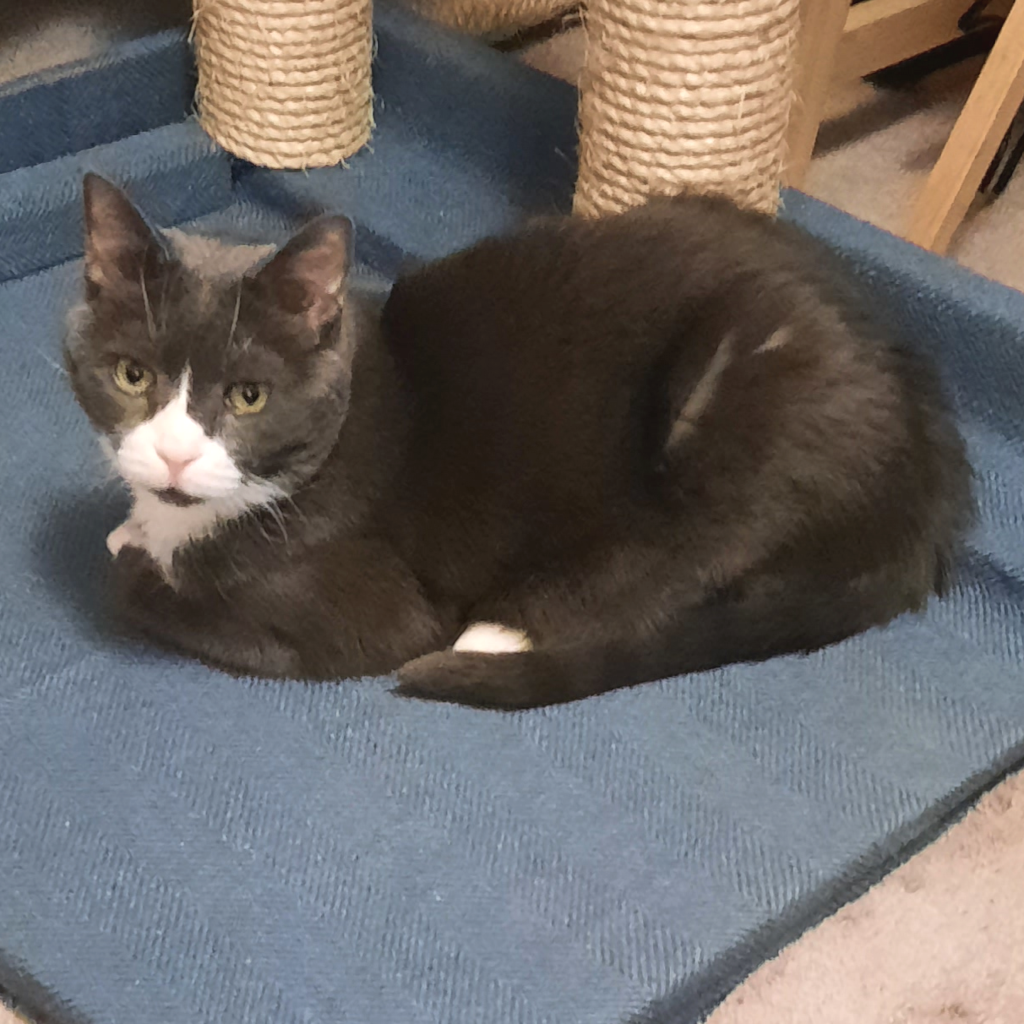 One of the hardest things for pet owners to accept is that emotional healing takes time. We are wired to look for quick fixes. Cats do not work that way. Belle needed to learn that she was safe. That food would come regularly. That voices were familiar. That routines stayed consistent. That no one was going to take her away again.
We did not force interaction. We did not interrupt her grooming unless it became clearly distressing. We allowed her to observe, retreat, and engage at her own pace. Quiet spaces mattered. Familiar textures mattered. Gentle routines mattered.
As weeks turned into months, her nervous system settled. The compulsive grooming faded naturally. She still bathed herself, because cats do that, but the urgency disappeared. What remained was a calm, comfortable senior cat who had found her footing again.
Belle’s story is important because it shows that emotional distress does not always require medication or extreme intervention. Sometimes it requires patience, observation, and respect for the cat’s internal process.
Why Hair Loss Should Not Be the Only Red Flag
Many articles focus on psychogenic alopecia only after fur loss appears. By that point, the behavior has often been entrenched for months or even years. Skin irritation may be present. Secondary infections may have developed. Stress levels are often high.
Belle never lost her fur, but her emotional stress was still real. If we had ignored her behavior simply because her coat looked fine, we would have missed the message she was sending.
This is especially relevant for senior cats who may express distress more subtly. Increased grooming, changes in sleep patterns, withdrawal, or clinginess can all be signs of emotional strain. These behaviors deserve attention even when they do not fit textbook definitions.
The Connection Between Emotional Stress and Physical Health
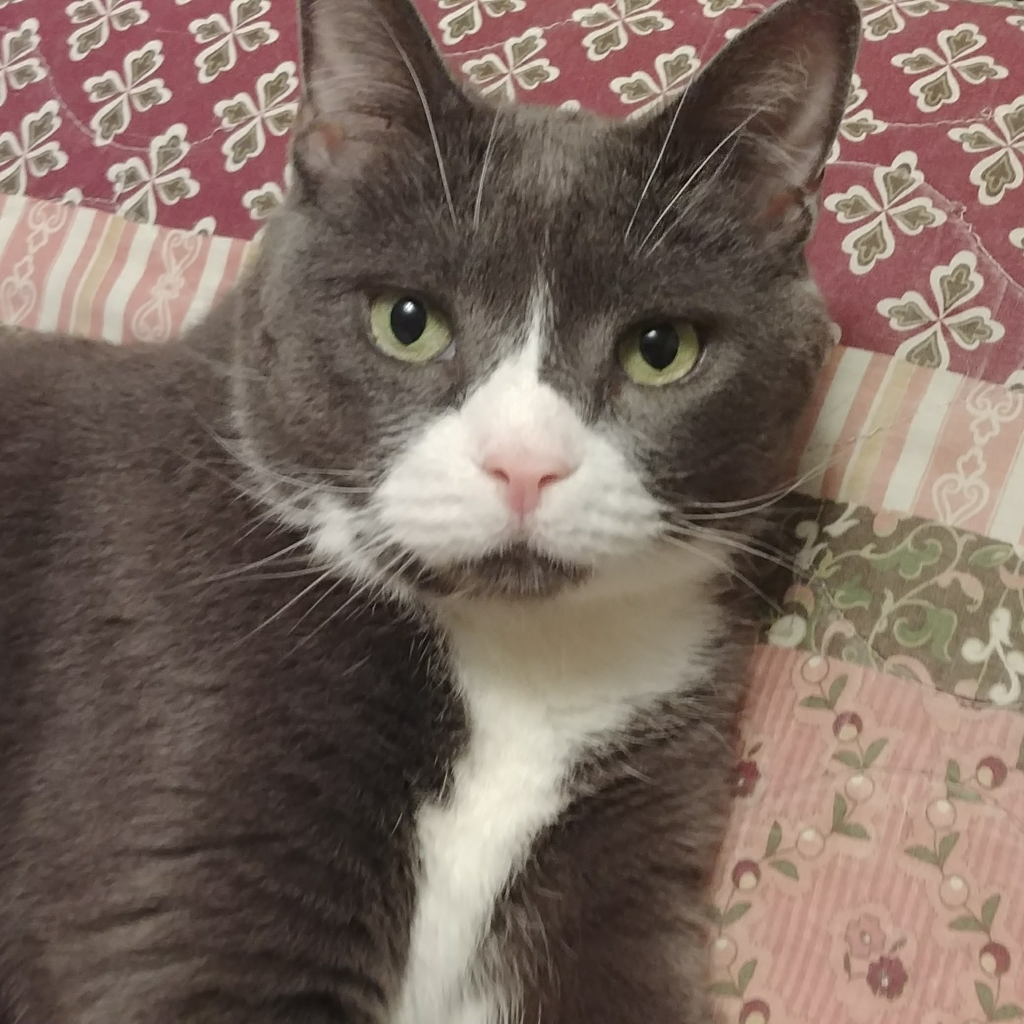 Emotional stress does not exist in isolation. It affects appetite, digestion, immune function, and energy levels. In cats with chronic illnesses like diabetes, kidney disease, or thyroid disorders, stress can complicate management.
We have seen firsthand how emotional stability supports physical stability. Cats who feel secure tend to eat more consistently, rest more deeply, and tolerate necessary care with less resistance. Emotional health creates a foundation for everything else.
For some cats, stress-related grooming escalates into full psychogenic alopecia with visible hair loss. For others, like Belle, it resolves once emotional equilibrium is restored. Both outcomes are valid. Neither should be minimized.
What Belle Taught Us About Listening to Cats
Belle taught us that success does not always look dramatic. Sometimes success is quiet. It is the absence of a behavior that once filled the room with tension. It is the gradual return of normalcy.
Her experience reinforced a lesson we have learned over and over with senior pets. Behavior is communication. Cats do not act “out” for no reason. When something changes, it is worth asking why. Psychogenic alopecia and stress-related grooming are not failures on the part of the cat or the owner. They are signs that adjustment is needed. When that adjustment is made with compassion, cats often surprise us with their resilience.
Emotional Health Is Part of Senior Cat Care
Caring for senior cats means looking beyond lab results and medication schedules. It means paying attention to how they move through their environment, how they respond to change, and how they soothe themselves.
Belle’s story is a reminder that emotional health deserves space in the conversation. Not every cat will lose fur. Not every case will look the same. But every cat deserves to feel safe.
If your cat is grooming excessively, even without hair loss, pause and observe. Consider recent changes. Consider age-related challenges. Consider emotional needs alongside physical ones. Sometimes the most powerful intervention is consistency, patience, and time.
And sometimes, as Belle showed us, that is enough for a true success story.