

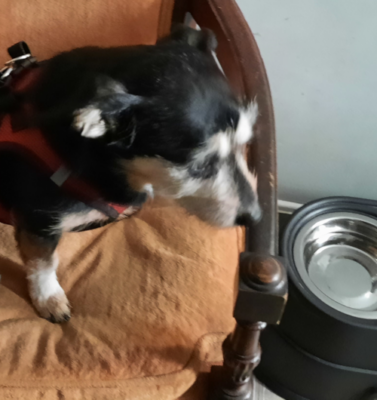
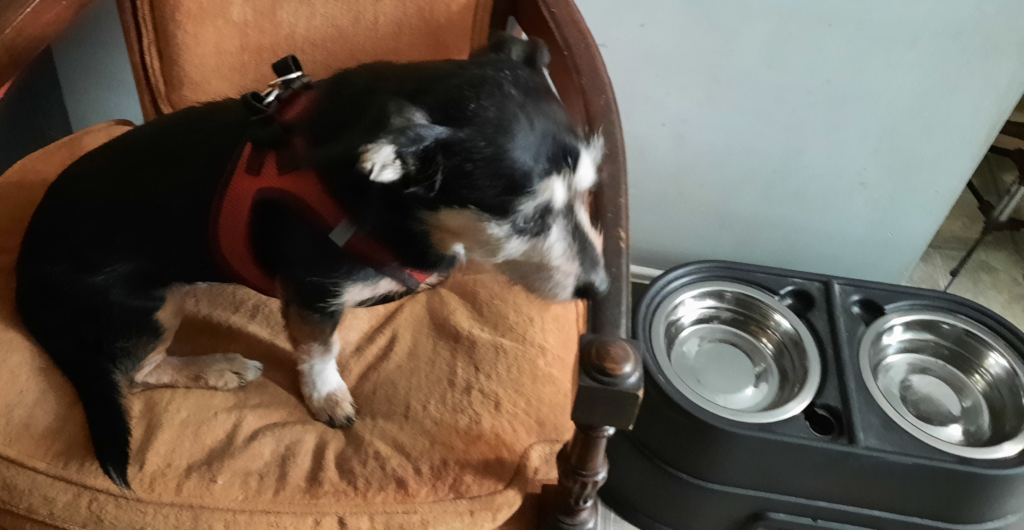
As our pets get older, we start noticing the little things first. The hesitation before stepping onto a favorite spot. The slower turn of the head when we call their name. The way they shift their weight when eating or drinking. These quiet changes often lead us to look for ways to make life easier for them, and one of the most common suggestions that comes up is switching to elevated food and water bowls.
At first glance, it feels like an obvious upgrade. Raise the bowl, reduce the need to bend, and make mealtime more comfortable. But like many things in senior pet care, it is not quite that straightforward. Elevated bowls can be helpful in some situations, but they can also create new issues if used without understanding the bigger picture.
Over the years, we have tried both approaches in our own home. With Bentley, who is currently on tight regulation for his diabetes, even something as simple as how he stands while eating became part of the routine we paid attention to. And with Belle, as she aged and developed multiple conditions, we learned that comfort is not always about doing what seems easiest, but about doing what works for that individual pet.
So let’s walk through this together in a way that makes sense, without overcomplicating it.
What Elevated Bowls Are Supposed to Help With
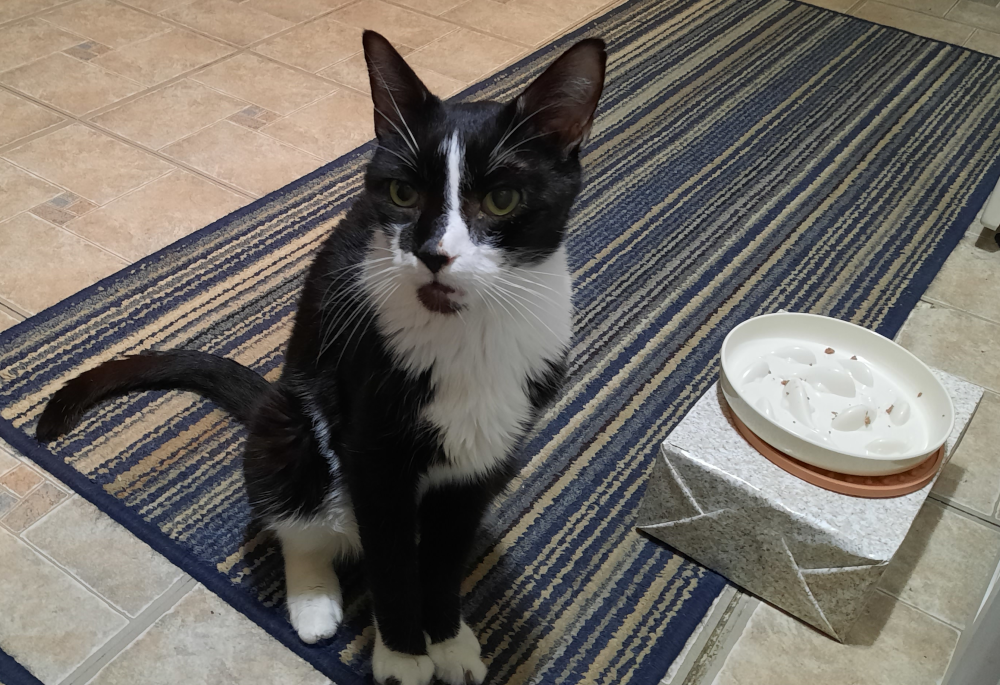 The idea behind elevated bowls is rooted in comfort and posture. When a bowl is raised, a pet does not have to lower their head as far to eat or drink. For a young, healthy animal, this does not make much difference. But for a senior pet, especially one dealing with arthritis, stiffness, or neck pain, that bending motion can become uncomfortable.
You might notice your pet hesitating at mealtime, eating more slowly, or even avoiding the bowl altogether. Sometimes they spread their legs wider, lean awkwardly, or shift their weight in a way that just does not look natural. These are the moments when elevated bowls often get recommended.
In theory, raising the bowl can help align the neck and spine in a more neutral position. This may reduce strain on the joints and make eating feel less like a chore. For some pets, especially those with mobility issues, that small change can make a noticeable difference in how willing they are to eat.
And when you are caring for a senior or diabetic pet, appetite matters more than ever. Consistent eating is often tied directly to medication timing, especially with insulin. Anything that encourages a pet to eat comfortably and consistently can feel like a win.
But here is where we need to pause and look a little deeper.
The Digestive Angle: Does Height Really Help?
One of the claims you will often hear is that elevated bowls improve digestion. The reasoning is that gravity helps food move more easily from the mouth to the stomach when the bowl is raised. It sounds logical, but in practice, the evidence is mixed.
Most pets are designed to eat with their heads lowered. Their anatomy supports this natural position, and their digestive systems are built to handle it. For many animals, eating from the ground does not hinder digestion at all.
In fact, for some pets, especially certain dogs, elevated feeding has been associated with an increased risk of a serious condition called gastric dilatation volvulus, often referred to as bloat. While this risk is more commonly discussed in large, deep-chested breeds, it is something that reminds us that changing feeding height is not automatically beneficial for every pet.
For cats, the conversation is a bit different. Cats often prefer a slightly raised position, especially if they have arthritis or are experiencing discomfort in their neck or shoulders. A gentle elevation can sometimes help them eat more comfortably without dramatically altering their natural posture.
What we have found in our own experience is that digestion is less about the height of the bowl and more about the overall routine. Consistent feeding times, appropriate portion sizes, and monitoring how a pet feels after eating tend to matter more than whether the bowl is on the floor or slightly elevated.
When Elevated Bowls Truly Help
 There are situations where elevated bowls can make a real, meaningful difference. These tend to center around comfort rather than digestion. If a pet has arthritis in the neck, shoulders, or front legs, lowering their head repeatedly can be painful. You may see subtle signs like shorter eating sessions, walking away from food, or even vocalizing when bending down. In these cases, raising the bowl to a moderate height can reduce strain and make mealtime more accessible.
We saw something similar with Belle in her later years. She had a combination of conditions that made movement more difficult, and while she never stopped being interested in food, the act of eating became slower and more deliberate. Slightly adjusting the height of her bowl helped her stay more relaxed during meals. It did not fix everything, but it removed one small barrier.
Elevated bowls can also be helpful for pets recovering from surgery or injury, where bending down is temporarily uncomfortable. And for some diabetic pets, maintaining a steady posture while eating can support a more predictable routine, which is always something we aim for when managing blood sugar levels.
The key here is moderation. The bowl should not be raised so high that the pet is stretching upward. Instead, it should allow them to eat in a natural, relaxed stance, with their head slightly lowered or at a neutral level.
When Elevated Bowls Can Work Against You
Just as important as knowing when elevated bowls help is understanding when they might not. If a pet is already eating comfortably from the floor, there may be no need to change anything. Sometimes we feel the urge to improve things simply because we can, but in senior pet care, stability often matters more than innovation. If something is working, that consistency can be more valuable than any upgrade.
For some pets, especially certain dogs, raising the bowl too high can alter their eating posture in a way that is not natural for them. This can lead to gulping food more quickly or swallowing more air, which may contribute to discomfort.
There is also the risk of overcorrecting. If a bowl is raised too much, the pet may have to adjust their stance in a different way, shifting strain from one area to another. Instead of helping, it can create a new source of discomfort.
And then there is the individual personality of the pet. Some animals are creatures of habit. Changing something as simple as bowl placement can cause confusion or hesitation, especially in older pets who rely on familiar routines to feel secure.
Bentley, for example, thrives on consistency. His feeding schedule, his insulin routine, even the placement of his bowl all play a role in keeping his day predictable. Any change has to be introduced slowly and thoughtfully, because even small disruptions can ripple into bigger issues.
Finding the Right Height Without Guesswork
 If you are considering an elevated bowl, the goal is not to follow a strict rule but to observe your pet and adjust accordingly. A good starting point is to look at how your pet naturally stands while eating. Ideally, their neck should not be sharply angled downward or stretched upward. A gentle, neutral position is what we are aiming for.
Instead of jumping straight to a tall stand, try small adjustments. You can place the bowl on a low platform or even a sturdy book and watch how your pet responds. Do they seem more relaxed? Do they eat more comfortably? Or do they hesitate or adjust awkwardly?
These small experiments can tell you far more than any general guideline. It is also important to watch what happens after the meal. Are they walking away comfortably? Are they showing signs of bloating or discomfort? Are they maintaining a steady appetite over time?
Sometimes the answer is not a full switch to elevated feeding, but a slight lift that reduces strain without changing the overall dynamic too much.
The Bigger Picture: Comfort, Routine, and Trust
At the end of the day, elevated bowls are just one piece of a much larger puzzle. Senior pet care is rarely about a single solution. It is about layering small, thoughtful adjustments that work together to support comfort and stability.
Feeding height should be considered alongside everything else. Mobility, appetite, medical conditions, and daily routine all play a role. For diabetic pets, consistency is especially critical. Tools like a reliable feeding schedule and even something like our online pet diabetes tracker can help you see patterns over time and understand what is truly working for your pet.
What matters most is not whether the bowl is elevated or not, but whether your pet feels comfortable, confident, and willing to eat.
A Gentle Reminder From One Pet Parent to Another
 If there is one thing years of caring for senior pets has taught us, it is that there is rarely a one size fits all answer. What works beautifully for one pet may not work at all for another.
Elevated bowls can be helpful, especially for pets dealing with pain or mobility challenges. But they are not a universal fix, and they are not always necessary. The best approach is always the one that is guided by observation, patience, and a willingness to adjust.
Watch your pet. Trust what you see. Make small changes and give them time to settle in. Because in the end, it is not about the bowl. It is about making sure that every meal still feels safe, comfortable, and familiar for the companion who has shared so much of their life with you.