
If you’ve ever watched a young cat leap onto a tall scratching post with ease, you know how natural and effortless it can look. But as our cats grow older, those same movements can become slower, more cautious, and sometimes disappear altogether. That doesn’t mean the need to scratch goes away. In fact, it often becomes even more important.
Scratching is not just about claws. It is about stretching muscles, relieving stress, marking territory, and maintaining comfort in their own body. For senior cats, especially those dealing with arthritis, stiffness, or reduced balance, the way they scratch simply needs to adapt. And that is where a senior-friendly scratching post can quietly make a huge difference.
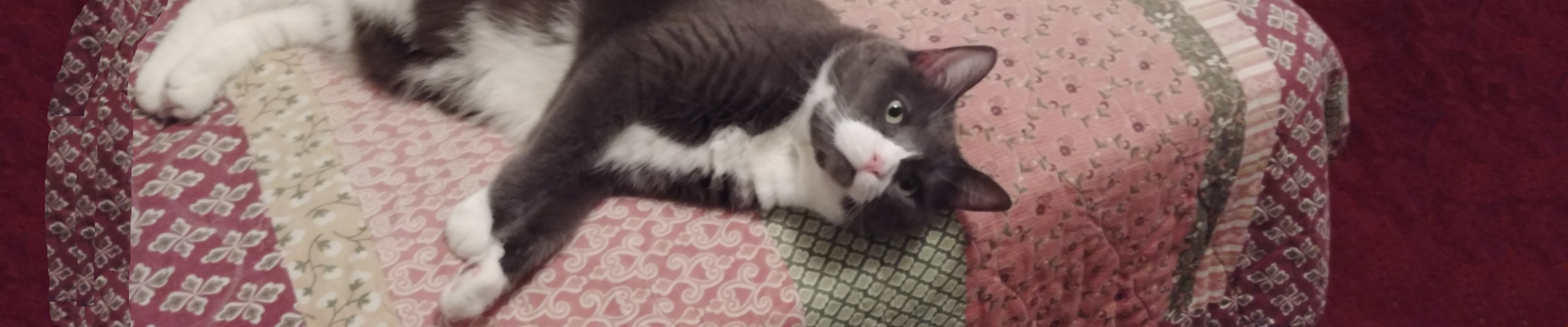
I remember noticing this shift with Belle. She had always loved a tall, sturdy post by the window, but as her hyperthyroidism and age caught up with her, she started avoiding it. Instead, she would reach for lower surfaces or even the edge of a rug. It was not a behavioral issue. It was her body telling us something had changed.
Once you start seeing scratching through that lens, it becomes less about stopping unwanted behavior and more about supporting a natural instinct in a way that feels safe again.
Understanding What Senior Cats Need
 The biggest mistake we can make is assuming that what worked before will always work. Senior cats are incredibly good at adapting quietly, which means we sometimes miss the subtle signs that something is no longer comfortable.
As cats age, joint stiffness, reduced muscle strength, and balance changes all come into play. Jumping up to a tall vertical post may feel risky. Stretching too far upward might cause discomfort. Even standing on certain surfaces can feel unstable if their paws are sensitive. That is why a senior-friendly scratching setup is less about size and more about accessibility. The goal is to bring the scratch to them, not make them work for it.
You might notice your cat scratching more horizontally as they age. That is not random. It is often their way of still getting that stretch without putting strain on their joints. When we recognize that, we can start designing something that supports that instinct instead of fighting it.
This is also where observation becomes your best tool. Where do they scratch now? What angles do they prefer? Are they avoiding certain surfaces? These small details tell you exactly what they need.
Designing for Comfort and Stability
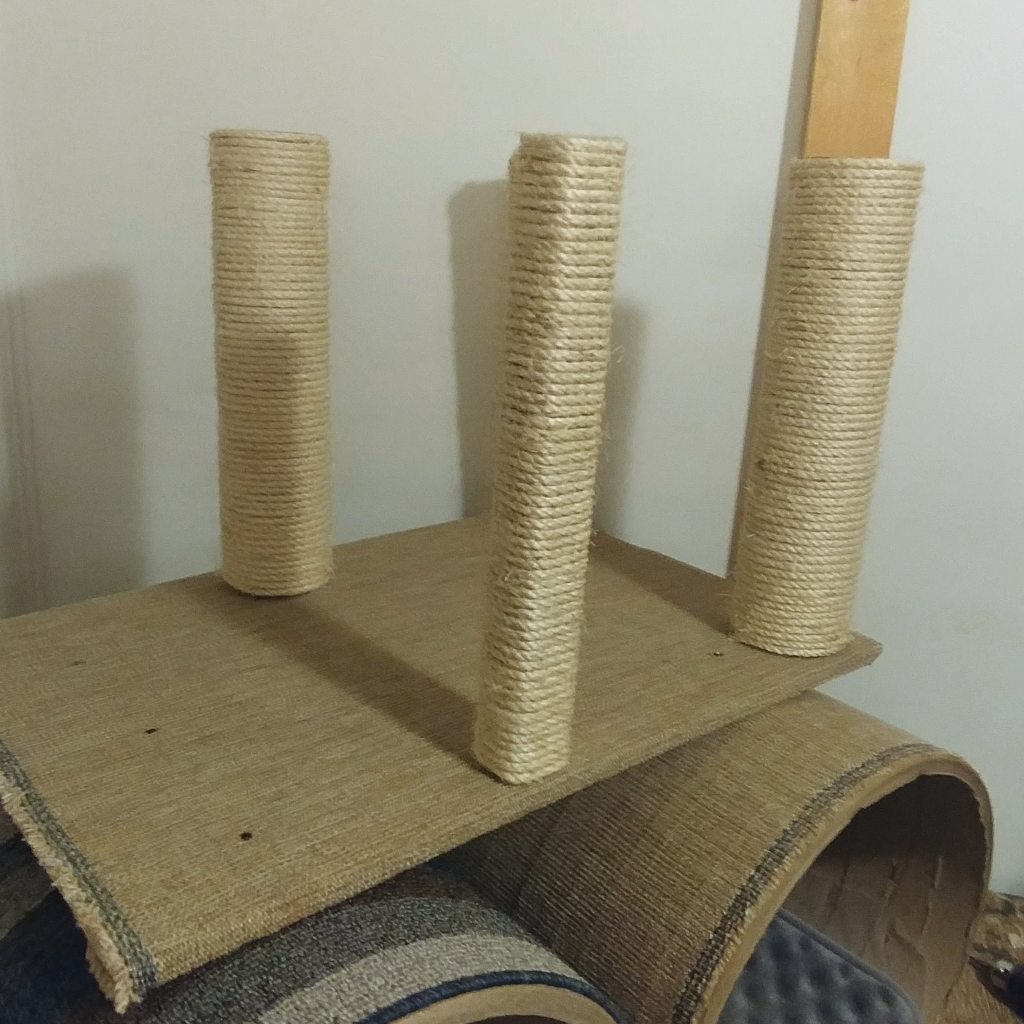 When creating or choosing a scratching post for a senior cat, stability is everything. A post that wobbles even slightly can be enough to discourage use, especially if your cat already feels uncertain on their feet. A wider base is one of the simplest ways to improve stability. Think of it like giving them a solid foundation they can trust. If you are building one yourself, using a heavier base or even anchoring it slightly can make a big difference.
Height also matters, but not in the way most people think. Senior cats still enjoy stretching, but they do not need extreme height to do it. A lower post that allows a full-body stretch without requiring them to reach too high is often ideal. You can even angle the scratching surface slightly to make it easier on their joints.
Texture plays a role too. Sisal rope is a favorite for many cats, but make sure it is tightly wrapped and not too rough. Worn or loose material can catch claws or feel uncomfortable. Some older cats also appreciate softer scratching surfaces, especially if they have sensitive paws.
I found that when we adjusted Belle’s setup to include a lower, sturdier post with a gentle angle, she returned to scratching almost immediately. It was like watching her confidence come back in real time.
DIY Approaches That Make a Difference
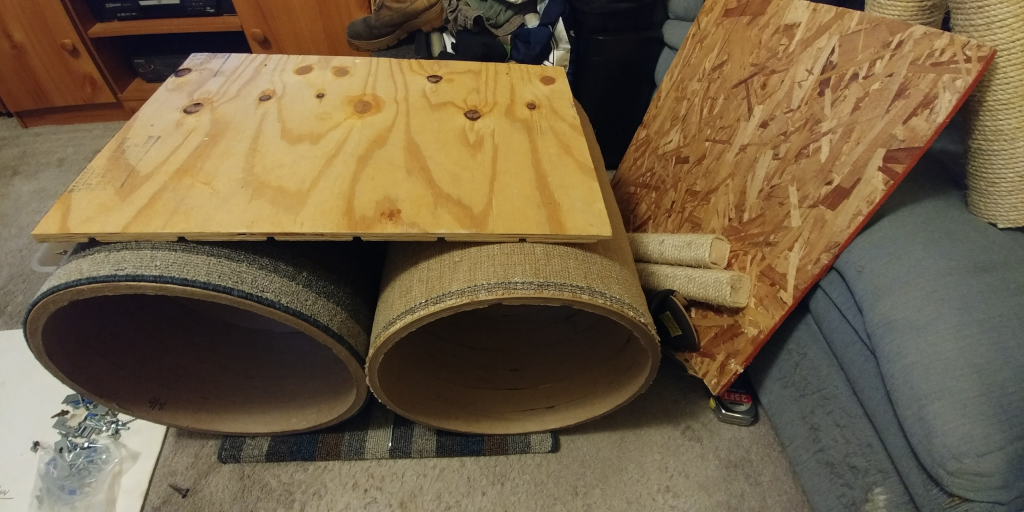
One of the most rewarding things about creating a senior-friendly scratching post is that it does not have to be complicated or expensive. In fact, some of the best solutions come from simple adjustments to things you already have.
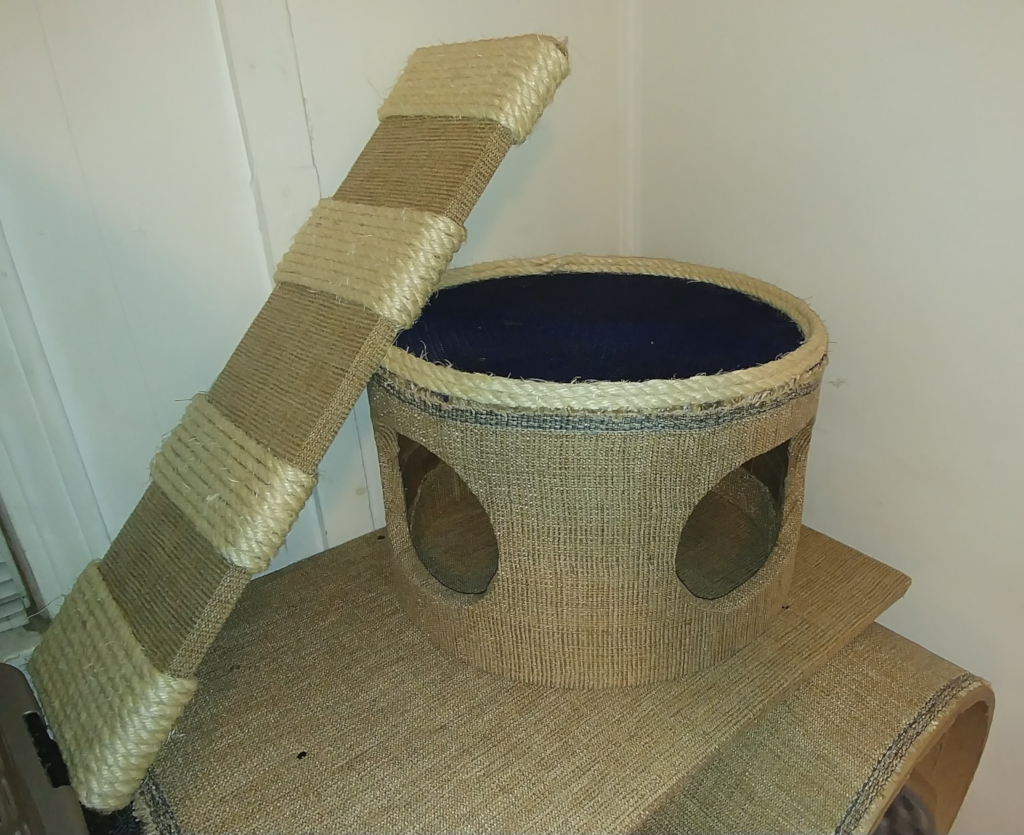
If you enjoy DIY projects, this is a great opportunity to build something tailored exactly to your cat’s needs. A basic wooden base with a short vertical post wrapped in sisal can be incredibly effective. Adding a slight incline or even a ramp-like scratching surface can make it even more accessible.
You can also repurpose materials. A sturdy piece of carpet secured to a low platform can become a favorite spot. Some cats prefer cardboard scratchers placed at an angle rather than flat on the ground. It is all about experimenting gently and seeing what your cat responds to.
For those who like precision in their builds, even something as simple as measuring rope length properly can save time and frustration. That is actually why we put together a rope length calculator on our site. It takes the guesswork out of wrapping posts and helps you get a clean, secure finish. The beauty of DIY is that you can adjust as you go. If your cat starts favoring a different angle or location, you can adapt the setup without starting from scratch.
Placement Matters More Than You Think
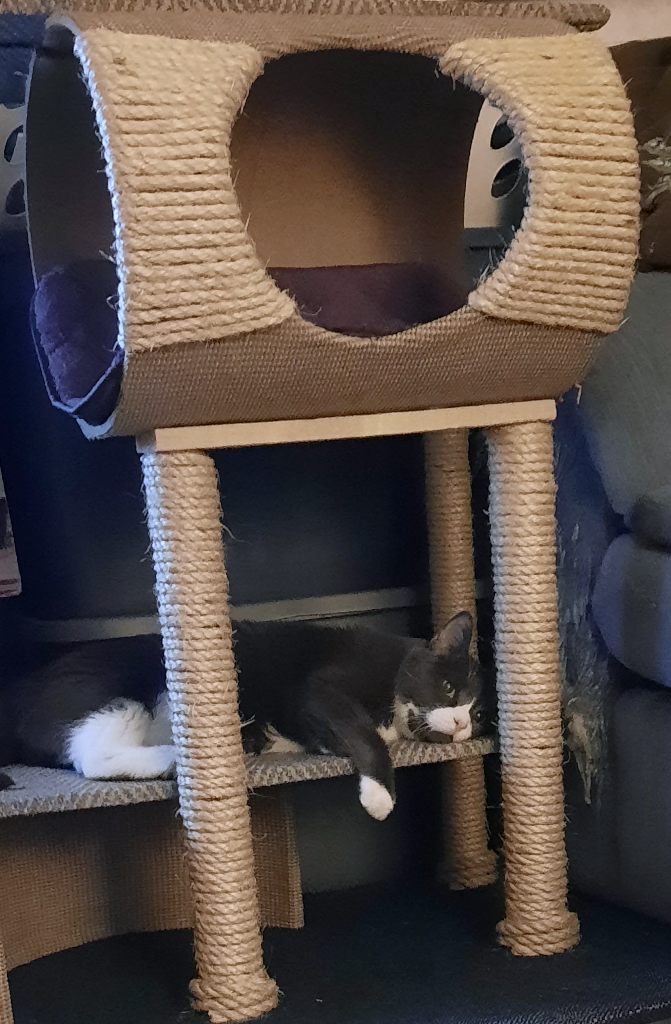 Even the perfect scratching post will go unused if it is in the wrong place. Cats are very intentional about where they scratch, and that does not change with age. Senior cats often prefer locations that feel safe and familiar. Near their favorite resting spots is usually a good place to start. This reduces the effort required to use the post and makes it part of their natural routine.
If your cat enjoys looking out a window, placing a scratching surface nearby can encourage use. If they tend to scratch after waking up, positioning it close to their bed can make it easier for them to stretch comfortably.
Avoid placing posts in high-traffic or noisy areas if your cat has become more sensitive with age. Calm, predictable spaces tend to work best.
With Bentley, who is currently on tight regulation for his diabetes, routine is everything. Even small disruptions can throw things off. Keeping his scratching area consistent and easy to access has helped maintain a sense of normalcy for him, which matters more than we sometimes realize.
Supporting Health Beyond Scratching
Scratching might seem like a small part of daily life, but for senior cats, it connects to so many aspects of their health. It encourages movement, helps maintain claw condition, and even supports emotional well-being. For diabetic cats, gentle activity can play a role in overall balance and stability. While scratching is not exercise in the traditional sense, it keeps them engaged and moving in a way that feels natural and safe.
This is also where tracking patterns can be helpful. If your cat suddenly stops using their scratching post, it can be an early sign that something has changed physically or emotionally. Having tools to monitor their overall health, like a diabetes tracker or printable logs, can help you see the bigger picture.
We have leaned on those kinds of tools ourselves over the years, especially when managing Bentley’s care. It is not about overcomplicating things. It is about noticing trends early and making small adjustments before they become bigger issues.
Creating a Space That Feels Like Theirs
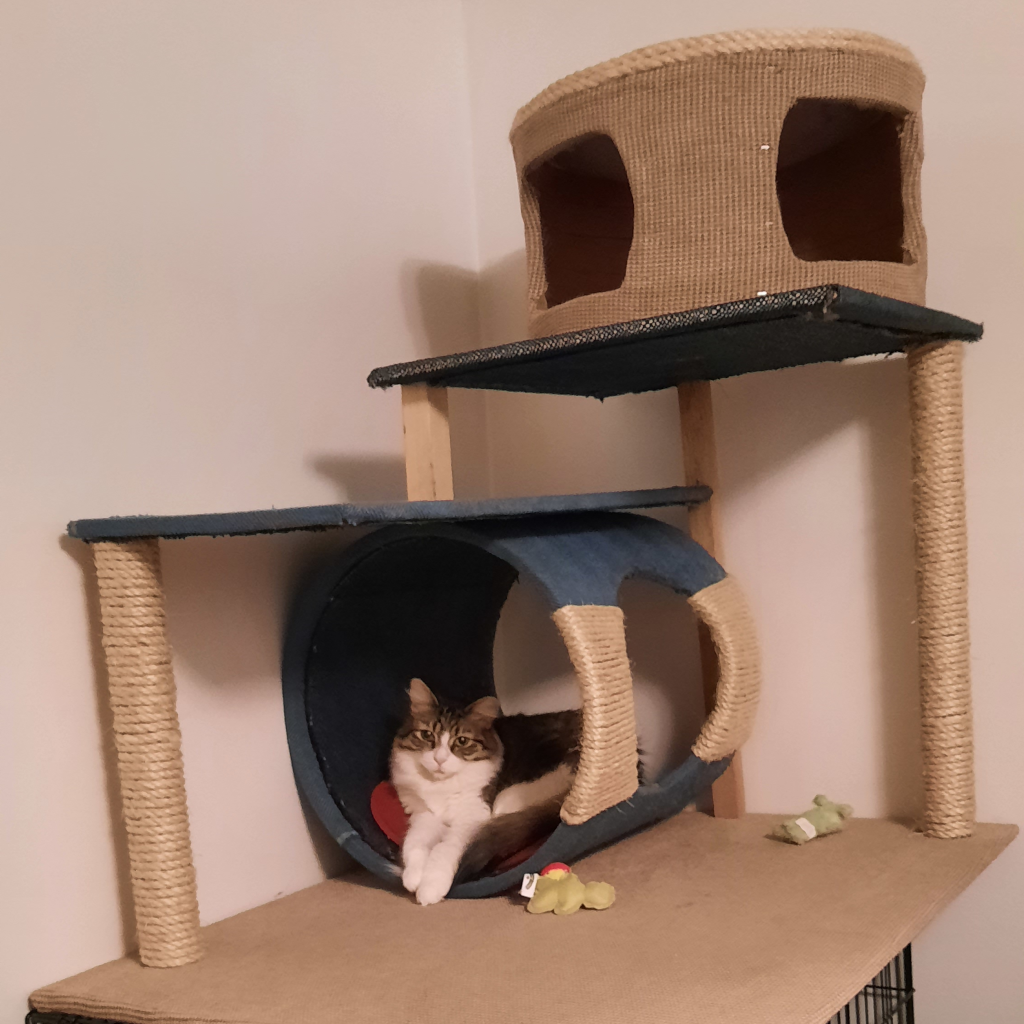 At the end of the day, a scratching post is not just an object. It is part of your cat’s environment, their routine, and their sense of comfort. For senior cats, that sense of ownership becomes even more important. They may not explore as much as they used to, so the spaces they do use need to feel right. Familiar textures, easy access, and a stable design all contribute to that feeling.
Sometimes, the smallest changes make the biggest impact. Lowering a surface by a few inches. Moving it closer to their favorite spot. Changing the angle slightly. These are not dramatic adjustments, but to a senior cat, they can mean the difference between avoiding something and using it every day.
There is something deeply rewarding about seeing an older cat return to a behavior they once loved. It is a reminder that aging does not mean giving things up. It just means doing them differently. And as pet parents, we get to be part of that transition. We get to listen, adapt, and create spaces that support them in this stage of life.
If there is one thing I have learned through caring for cats like Belle and now Bentley, it is that comfort is everything. When something feels right to them, they will show you. And when it does not, they will quietly look for another way. Our job is simply to notice, understand, and meet them where they are.