
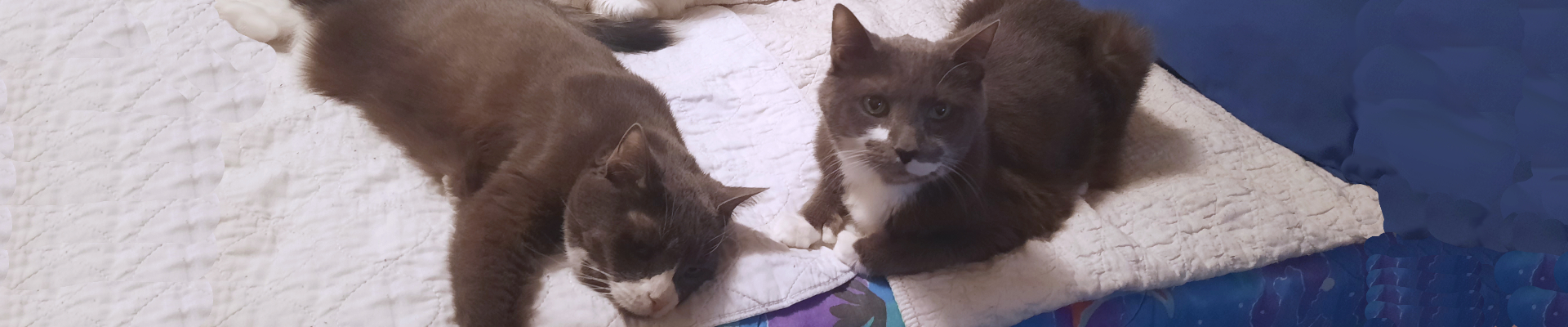
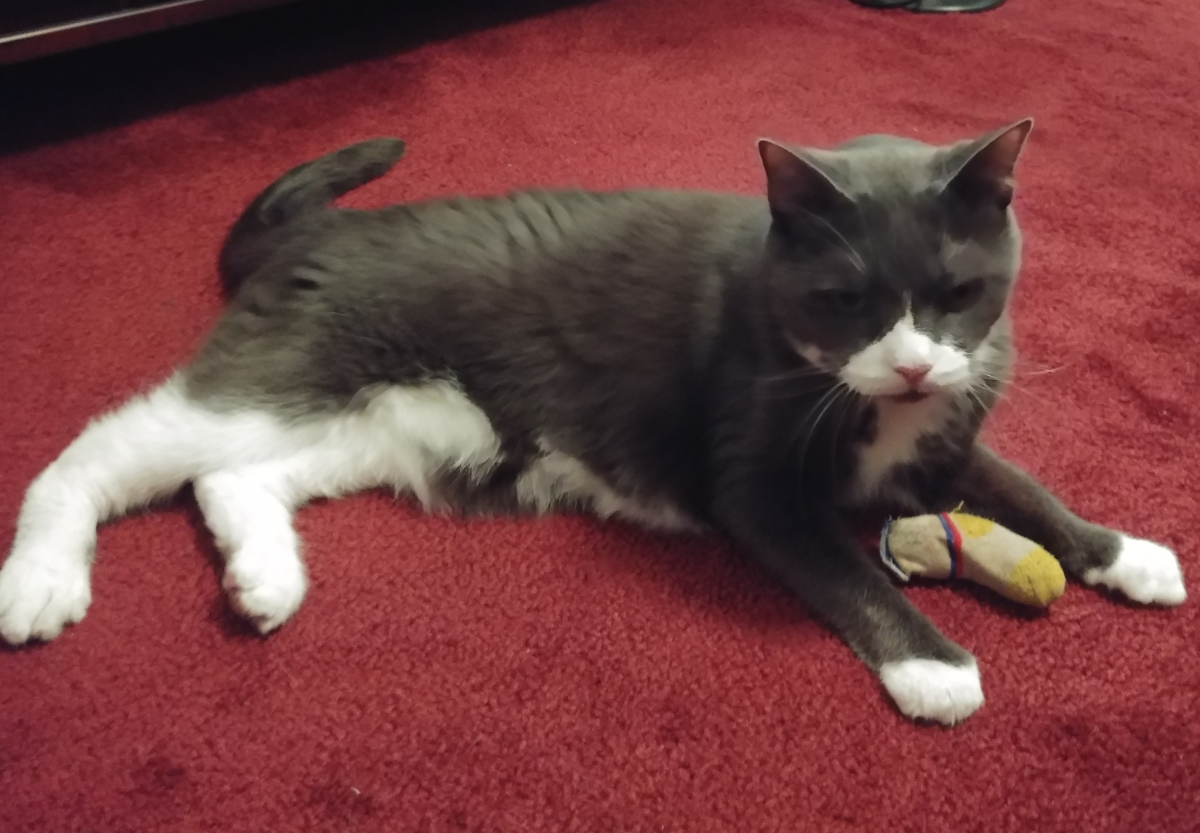
Aging changes the way many dogs and cats play, but it does not erase the need for play. The ten-year-old cat who once launched herself across the room may now prefer to bat at a toy from a rug. The older dog who used to chase a ball until everyone else was tired may be happier searching for a few treats hidden around the living room. Those quieter versions of play still matter because they give an older animal chances to move, think, investigate, make choices, and interact with the people they trust.
One of the easiest mistakes to make with a senior pet is to stop offering activities simply because the animal no longer participates the way they once did. Sometimes the change is normal aging, but sometimes reduced play is connected with pain, weakness, sensory changes, or illness. The American Animal Hospital Association recommends that senior-pet assessments include discussion of movement, exercise, play behavior, attitude, vision, hearing, eating, drinking, and other daily patterns. In other words, play is not merely recreation. It can also be one small part of the picture that helps us notice how an older pet is doing.
Play Does Not Have to Look Young to Be Valuable
People often picture play as running, jumping, wrestling, fetching, or chasing. Those activities may still suit some healthy senior animals, but age can change speed, endurance, balance, flexibility, hearing, eyesight, and recovery time. A useful approach is to stop measuring an older pet against the animal they were five or ten years ago and start paying attention to what feels enjoyable and comfortable now.
That shift can be surprisingly freeing. A senior dog may enjoy a slow sniffing game far more than repeated ball throws. A cat may prefer a wand toy dragged gently across the floor instead of one that requires high leaps. Some pets enjoy food puzzles, simple training exercises, cardboard boxes, scent exploration, or searching for a favorite toy. The activity can be brief and still have value if the animal is engaged and choosing to participate.
Veterinary guidance supports adapting the environment and activity to the individual senior pet rather than treating aging as one uniform process. AAHA’s senior-care guidance emphasizes individualized plans because species, breed, size, health status, and lifespan all affect what an older animal needs. For dogs with age-related cognitive changes, the Merck Veterinary Manual also recommends regular exercise suited to the dog’s comfort and mobility, along with physical and mental enrichment.
Play Gives the Brain Something to Do
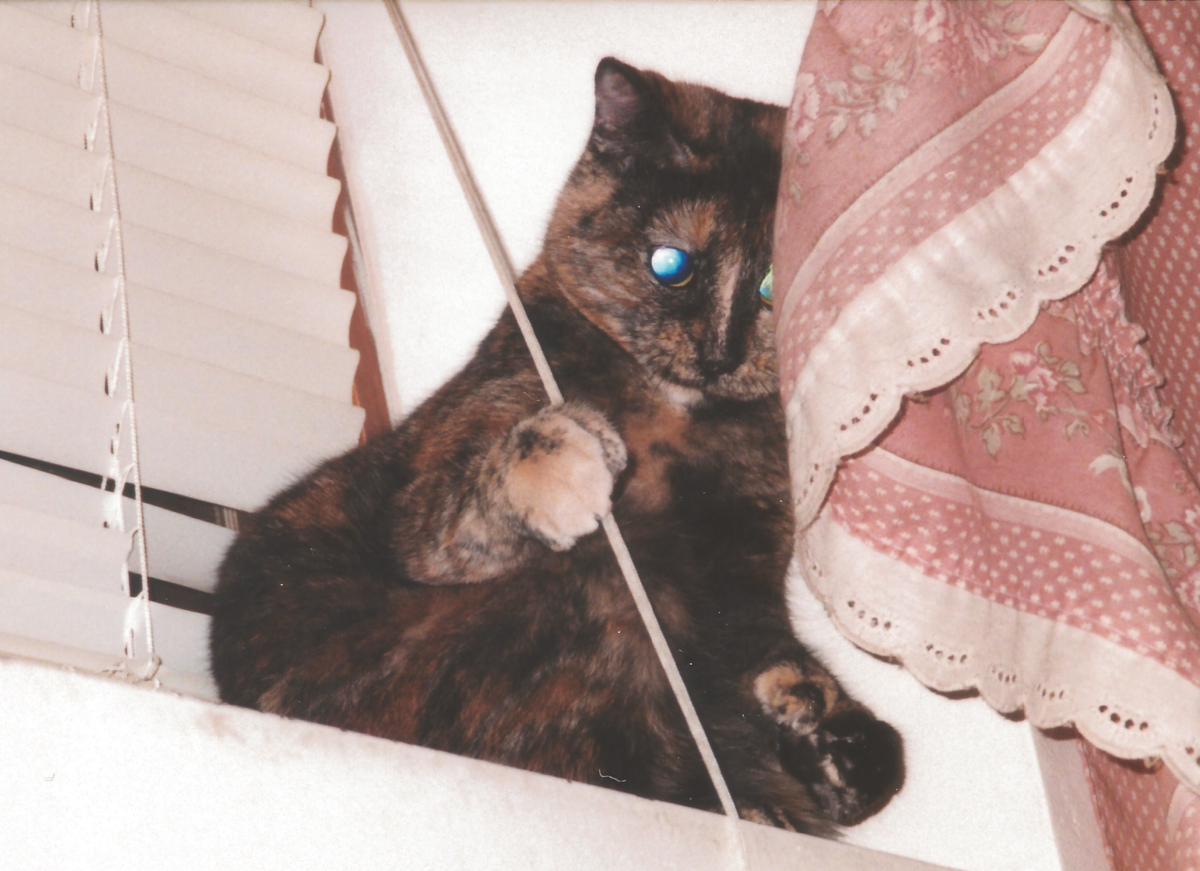 Older pets can spend a great deal of time sleeping, resting, or waiting for the next predictable event in the household. That may be perfectly comfortable, but a quiet routine does not have to mean an empty routine. Short periods of problem-solving, scent work, searching, gentle training, and interactive play give the animal something to process and respond to.
The evidence is strongest in specific settings rather than as a promise that play will prevent cognitive decline. In dogs with cognitive dysfunction syndrome, Merck describes environmental enrichment, including physical and mental stimulation, as part of management and notes that reinforcement-based training can provide mental stimulation and social interaction. That is a more careful claim than saying a puzzle toy prevents dementia, which veterinary evidence does not justify.
Cats benefit from enrichment as well. The 2021 AAHA/AAFP Feline Life Stage Guidelines call for environmental needs such as toys, scratching areas, resting places, and play to be addressed throughout life, while senior cats should also be monitored for behavior and cognitive changes. Cornell’s Feline Health Center similarly recommends gentle ways to encourage older cats to play and specifically suggests activities such as wand play, indoor walking, and chasing individual pieces of kibble when appropriate for that cat’s diet.
Movement Can Be Gentle and Still Count
A senior pet does not need an intense workout to benefit from getting up and moving. For many older animals, several short sessions are easier than one long session. A little walking to find treats, following a toy across a rug, stepping over a low obstacle, or moving between a few food-search locations can add activity without asking for explosive effort.
Comfort has to set the pace. Older dogs and cats are more likely to develop conditions that affect mobility, and some become less willing to jump, climb, turn quickly, or walk on slick surfaces. AAHA’s senior-care materials specifically recommend senior-friendly surroundings such as good traction, ramps, and soft resting areas, while Cornell notes that older cats may need easier access to favorite locations as arthritis or reduced mobility develops.
In practical terms, the floor beneath the game can matter as much as the toy. We have cared for enough aging animals to learn that an activity can stop being fun if the pet is concentrating on keeping their feet under them. Rugs, runners, yoga mats, or another stable surface can make a large difference for an animal that hesitates on tile or hardwood. A dog who will not chase a toy down a slippery hallway may still happily play the same game on carpet.
Senior Cats Often Need the Game Brought Down to Their Level
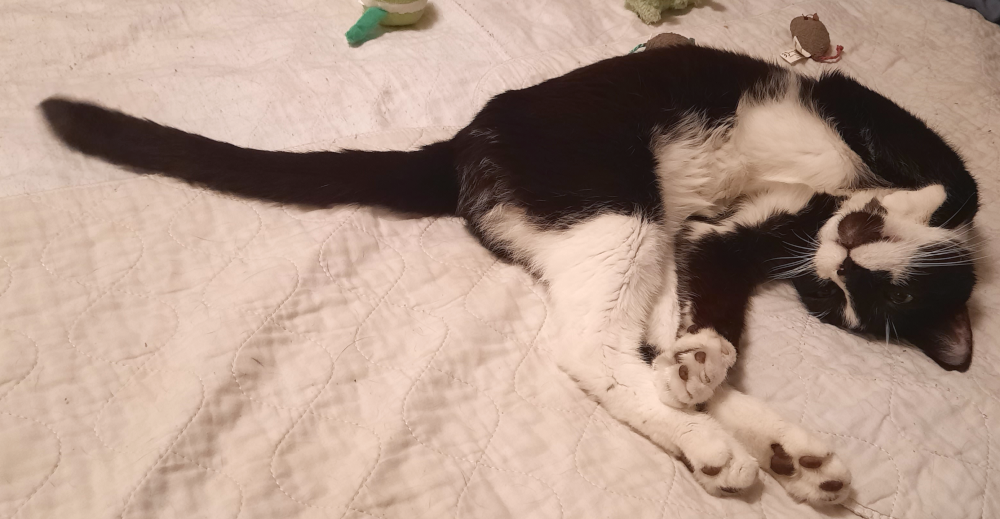 Older cats can be especially easy to misread because their play may become brief and subtle. A younger cat might sprint, jump, stalk, and pounce in one dramatic sequence. A senior may watch the toy for a long time, shift position, reach out with one paw, and then stop. That can still be participation.
Floor-level play is often easier on aging joints. A wand toy can be moved slowly around the edge of a box, underneath a piece of paper, or across a rug so the cat can stalk without having to jump. Soft toys can be nudged or tossed a short distance. Food-search games can encourage movement, although treats and kibble used for games still need to fit the cat’s overall diet, especially if the cat has diabetes, kidney disease, obesity, food allergies, or another condition that affects feeding.
Toy safety matters at every age. Cornell advises that toys can support exercise, mental stimulation, and natural feline behaviors such as stalking and pouncing. With a senior cat, supervision also gives us a chance to see whether the cat tires quickly, loses interest, appears uncomfortable, or has trouble tracking the toy.
Senior Dogs Often Enjoy Games That Use the Nose
Aging dogs do not necessarily need fast games to become deeply engaged. Scent-based play can turn an ordinary room or yard into an activity space. Hiding a few pieces of the dog’s regular food, asking the dog to find a familiar toy, or creating a simple scent trail can encourage exploration at a self-selected pace.
Gentle training games can work well too. An older dog may enjoy touching a hand target, choosing between two toys, finding a named object, walking around a cone, or performing familiar cues for praise and an appropriate reward. The point is not to demand perfect obedience. It is to give the dog an understandable problem with a pleasant outcome.
For a dog with cognitive dysfunction, predictable routines and positive interaction may be especially useful. Merck recommends a consistent environment, social contact, activity during the day, physical and mental enrichment, and reinforcement-based training as parts of management. Those recommendations should be adjusted around any medical or mobility limitations the dog has.
A Drop in Play Can Be Useful Information
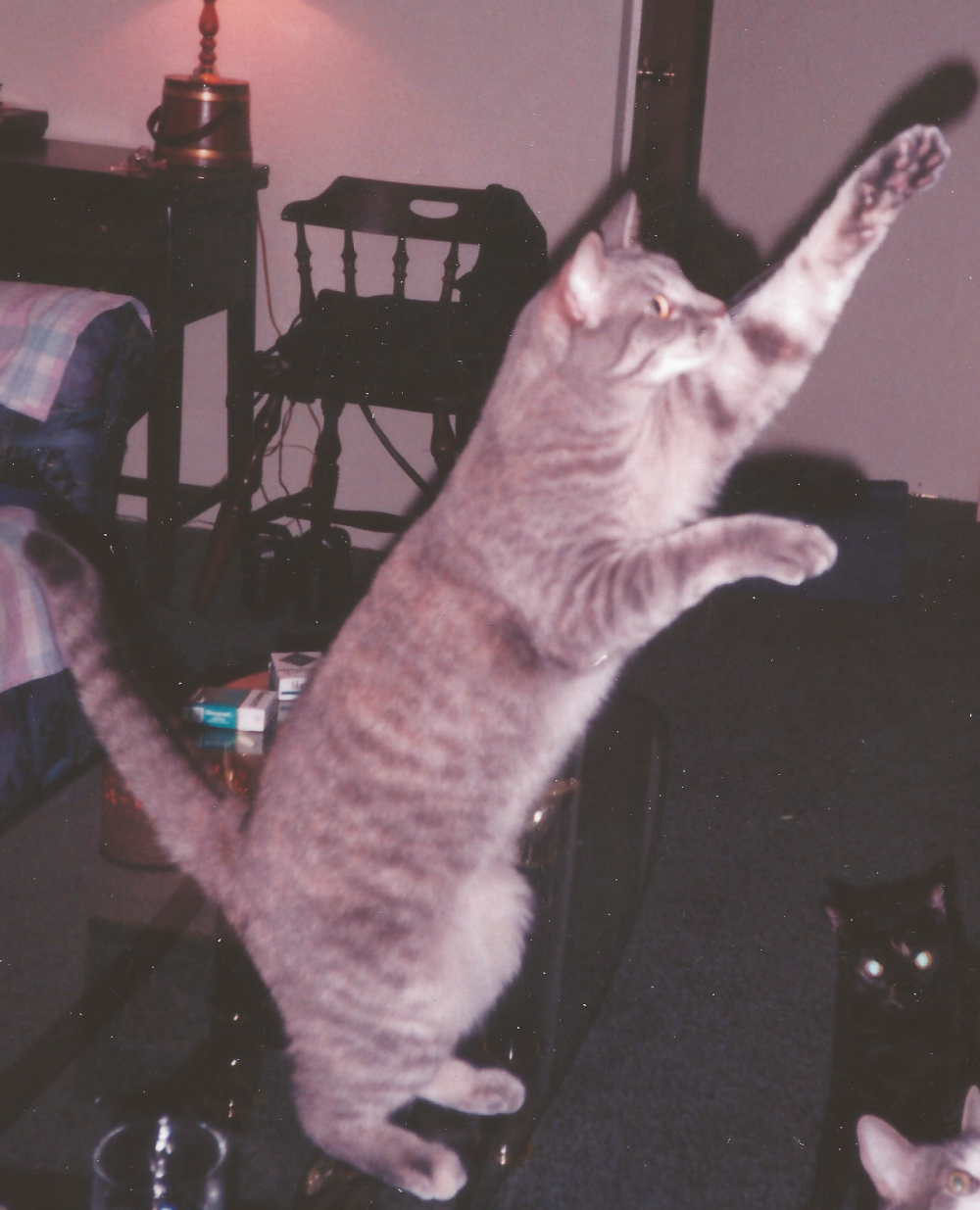 Aging often changes play gradually, but a clear change in willingness to play deserves attention. A pet who suddenly stops chasing a favorite toy, refuses an activity they usually enjoy, appears stiff after playing, struggles to rise, becomes unusually irritable during interaction, or consistently avoids movement may be showing something worth discussing with a veterinarian. The cause cannot be determined from play behavior alone.
This is where living with an animal every day gives pet owners information that a veterinary team cannot collect during a short examination. We see whether the dog still brings the toy after dinner, whether the cat still waits by the cabinet where the wand toy is stored, and whether a five-minute game now ends after thirty seconds. AAHA’s senior guidelines encourage owners and veterinary teams to pay attention to changes in movement, play, attitude, elimination, grooming, eating, drinking, vision, and hearing rather than automatically assigning changes to age.
A simple note in a phone or calendar can help when a pattern is developing. Recording how often a pet initiates play, how long they participate, whether they hesitate on certain movements, and how they seem afterward can make a veterinary conversation more specific. Video can also be useful because animals do not always move in a clinic the way they move at home, and AAHA’s senior-care materials specifically mention videos and pictures as helpful monitoring tools.
Let the Pet Have Some Control
Good senior play is not something we impose on an animal. It is an invitation. The pet should be able to approach, participate, pause, walk away, or choose another activity without being pushed to continue.
That matters because older animals can have changing thresholds for effort and stimulation. A dog may enjoy three searches for a hidden treat and then decide the game is over. A cat may stalk a wand toy for two minutes and then settle into a bed. Stopping at that point is not a failed session. The animal participated, made choices, and had an experience suited to that moment.
Choice also helps us discover what an older pet still loves. Keep two or three types of activities available and see which one draws interest. Rotate toys rather than leaving everything out all the time. Change the location of a search game. Offer familiar activities alongside something mildly new. The goal is variety without turning the home into a confusing obstacle course.
Play Can Preserve the Relationship as Care Becomes More Complicated
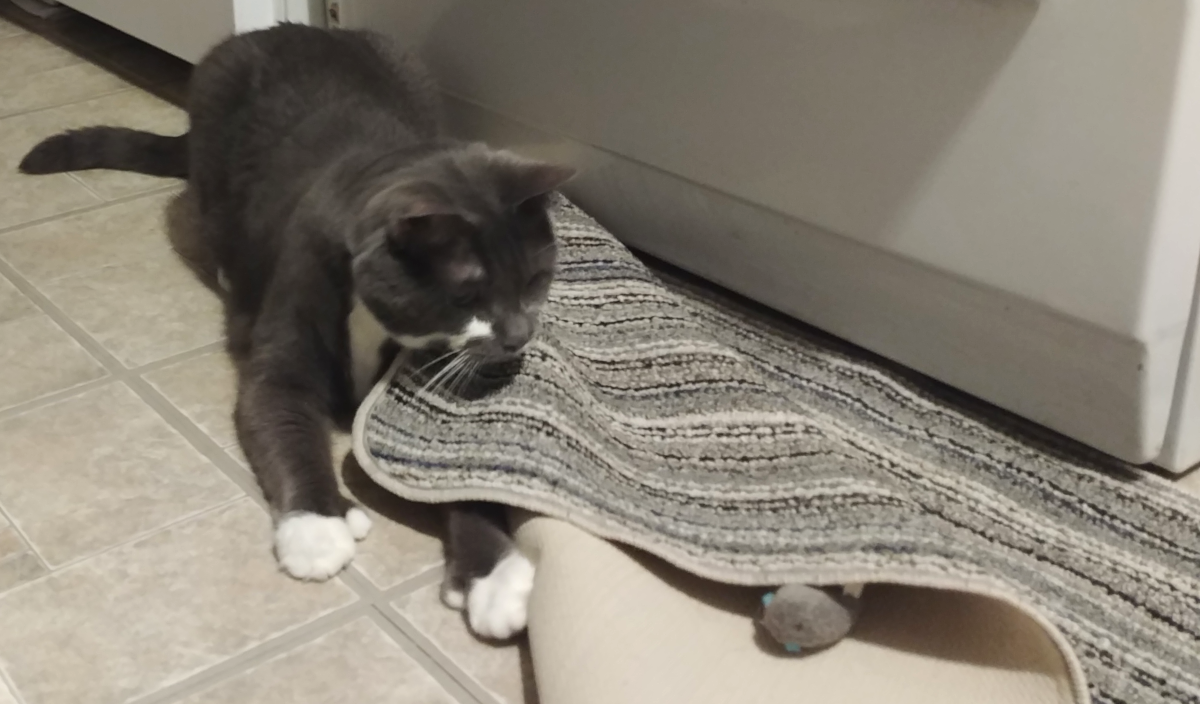 Senior-pet care can gradually become task-heavy. There may be medications, glucose checks, special meals, mobility assistance, grooming help, veterinary visits, and more time spent watching for changes. Those routines are necessary for many animals, but it is easy for interactions to become centered on care that must be done rather than things the pet chooses to do.
Play gives some of that shared time back. For a diabetic cat, a gentle game may fit between the structured parts of the feeding and insulin routine, provided the activity is appropriate for the cat’s condition and veterinary plan. For a dog with limited mobility, lying on the floor together while the dog searches through a simple puzzle can become a meaningful form of interaction without demanding strenuous movement.
After decades of caring for animals into old age, we have found that this change in perspective matters. The question becomes less about whether a senior pet can still play the old way and more about what kind of play fits the animal standing in front of us now. Sometimes the answer is a slower game, a shorter game, or a game that barely looks like exercise at all.
Keep Adjusting the Game as the Pet Changes
A senior pet’s abilities may change over months, and the activity that worked last year may need another adjustment now. Lower the height, shorten the distance, slow the toy, add traction, use easier puzzles, or break one activity into several small sessions. If a pet has a diagnosed orthopedic, neurologic, heart, respiratory, metabolic, or other medical condition, ask the veterinarian what level and type of activity is appropriate.
There is no prize for making an old dog run farther or persuading an arthritic cat to jump higher. The useful measure is whether the pet remains interested, comfortable, and able to participate without obvious distress. Senior play works best when it respects what age has changed while still making room for curiosity, movement, problem-solving, and shared enjoyment.