
There is a particular kind of silence that settles into a home after one animal in a bonded pair dies. The empty bed, unused food dish, or favorite sleeping spot may stand out to us, but the surviving animal is also living in a home that suddenly does not work the way it did before. A companion who was part of meals, naps, grooming, play, and countless ordinary moments is simply gone.
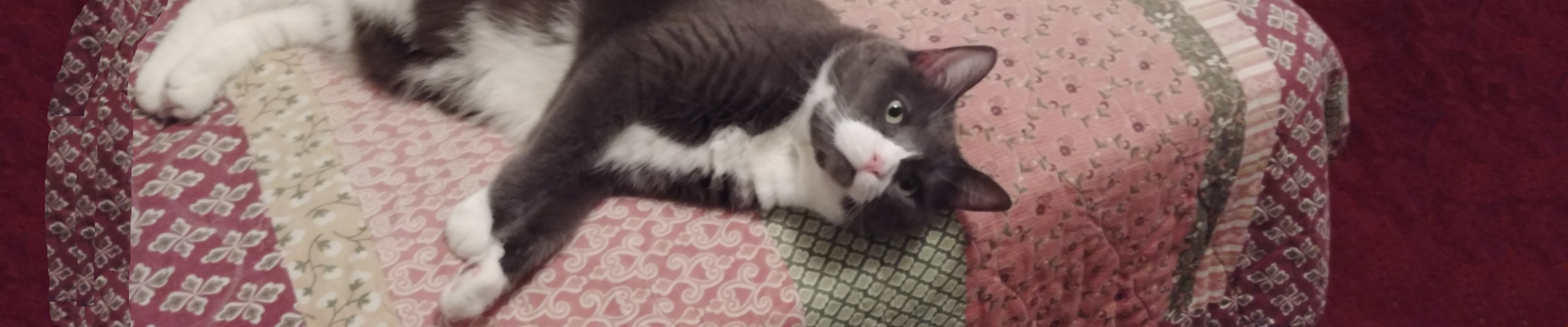
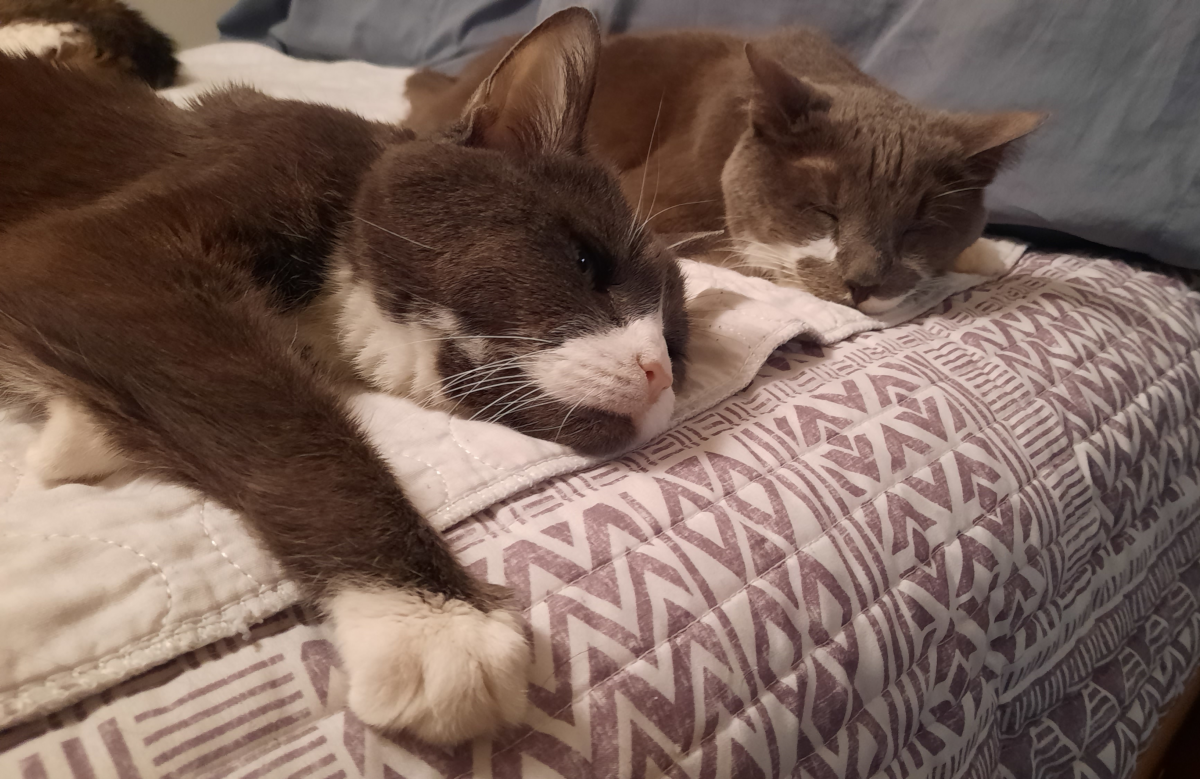
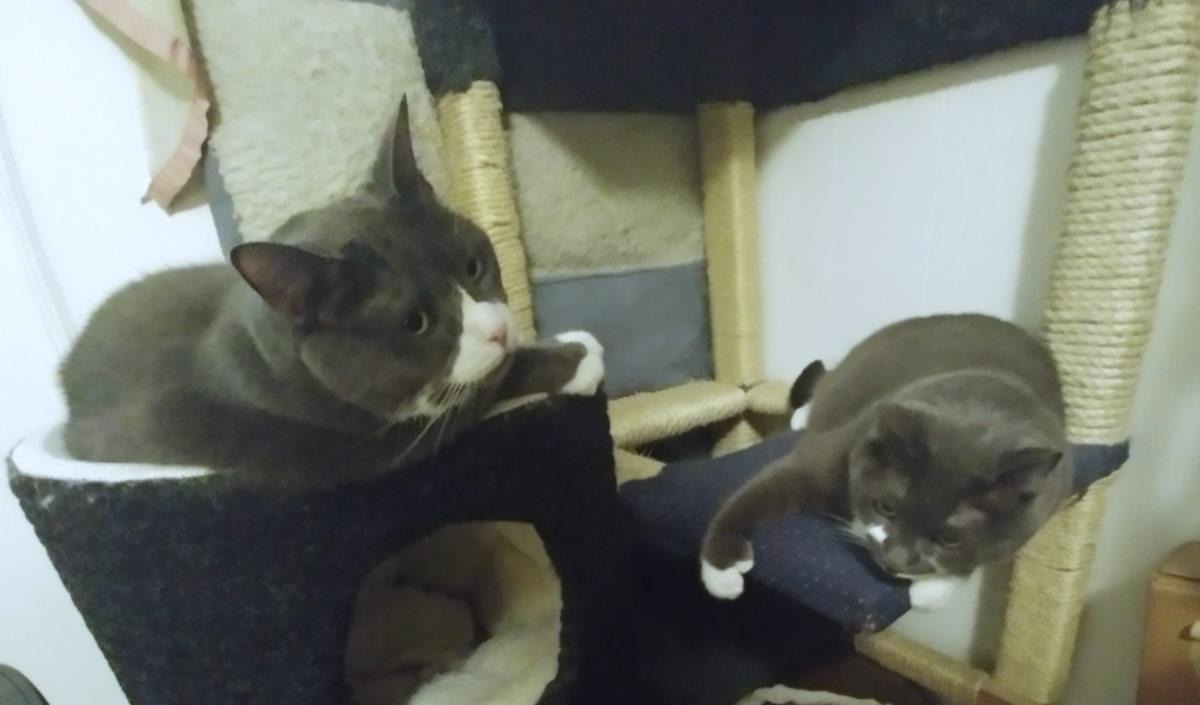
We saw this firsthand with Belle and Paws, the two rescue cats for whom BellenPaws was named. They were a bonded pair, and Paws died before Belle. After his death, Belle became depressed in a way that was difficult to miss. She was almost lethargic for a couple of months before gradually becoming more like herself.
But “more like herself” was not the same as the Belle we had known with Paws. She eventually functioned normally again, yet she never completely returned to her old playful personality. Something about her had changed. We cannot know exactly what Belle understood or felt, but after living with her every day, we could certainly see that the loss of Paws had affected her.
Animals Can Change After Losing a Companion
Science has to be careful about assigning a human emotional experience such as grief to another species because animals cannot describe what they are feeling. What researchers and pet owners can observe, however, are changes in behavior after the death of an animal companion.
Cornell University College of Veterinary Medicine notes that surviving companion animals may become more anxious or withdrawn, seek additional attention, react differently to their surroundings, or experience changes in eating, playing, sleeping, and other daily routines after another pet dies. Cornell also points out that some of these changes may be related not only to the missing animal, but to changes in the household and in the behavior and emotions of the people who are grieving too.
Research involving both cats and dogs supports the observation that something can change after the loss of a companion. One owner-reported study involving 414 surviving animals found that 75 percent were reported to have at least one behavioral change following the death of an animal companion. Changes included seeking more attention, visiting areas associated with the deceased animal, altered eating, increased sleeping in some dogs, and increased vocalization in some cats. The median duration of the reported behavioral changes was less than six months.
A separate study of dogs found changes in playing, sleeping, eating, and fearfulness following the death of another dog. Interestingly, the quality of the relationship between the animals appeared more closely associated with some of those changes than simply how long the dogs had lived together. The researchers were careful not to claim that the study proved dogs experience grief exactly as humans do, but concluded that the behaviors could be consistent with separation distress following the loss of a close social companion.
For someone who has watched a bonded pair live together for years, that distinction makes sense. Sharing a house does not necessarily make two animals close. Some simply tolerate one another. Others sleep together, groom each other, play together, follow one another from room to room, and develop routines that are difficult to separate into “his” and “hers.” When one disappears, the surviving animal has lost much more than another body in the house.
Grief-Like Behavior Can Look Different in Each Pet
 There is no single behavior that identifies grief in a dog or cat. Some animals become quieter. Others become more vocal or clingy. A pet may begin following a person around the house, sleeping in different locations, searching familiar rooms, spending time where the deceased animal used to rest, or losing interest in activities the pair once shared.
Eating habits can change as well. A pet that previously ate beside another animal may hesitate at mealtime or eat less enthusiastically when that familiar companion is missing. Sleep patterns and activity can change, and an animal that once initiated play may seem less interested.
This was one of the hardest parts of watching Belle after Paws died. There was no dramatic single behavior that explained everything. She simply seemed diminished. Her low activity continued long enough that it became clear we were not looking at one strange afternoon or a couple of unsettled days.
That kind of observation matters because pet owners know the small details of their animals’ normal behavior. We know who normally appears when a cabinet opens, who sleeps in which chair, who starts the evening game, and who follows whom down the hallway. A veterinarian sees an animal during an examination, but the owner sees thousands of these small behaviors at home. Changes in those patterns can provide useful information.
Do Not Assume Every Change Is Grief
There is an important medical side to this subject, especially when the surviving animal is older. Withdrawal, reduced appetite, excessive sleeping, decreased activity, hiding, or apparent lethargy can occur after a loss, but those same changes can also accompany illness, pain, dehydration, kidney disease, dental problems, gastrointestinal problems, endocrine disease, and many other medical conditions.
Cornell specifically advises that persistent behavioral changes after the loss of another animal warrant a veterinary examination rather than automatically being attributed to grief. Changes involving eating, drinking, urination, or defecation deserve particular attention.
That distinction becomes even more important with senior pets because several things may be happening at once. An older cat might lose a lifelong companion during the same period that arthritis is becoming more uncomfortable or kidney function is changing. A senior dog that suddenly sleeps more might be reacting to the loss, experiencing pain, developing an unrelated medical condition, or dealing with a combination of factors.
A significant decrease in food or water intake should never simply be watched indefinitely under the assumption that the animal is sad. The same applies to marked lethargy, weakness, breathing difficulty, repeated vomiting or diarrhea, unusual elimination changes, signs of pain, collapse, or other concerning physical symptoms. Contacting a veterinarian promptly allows medical causes to be considered while still recognizing that the animal may also be responding behaviorally to the loss.
Familiar Routine Can Provide Stability
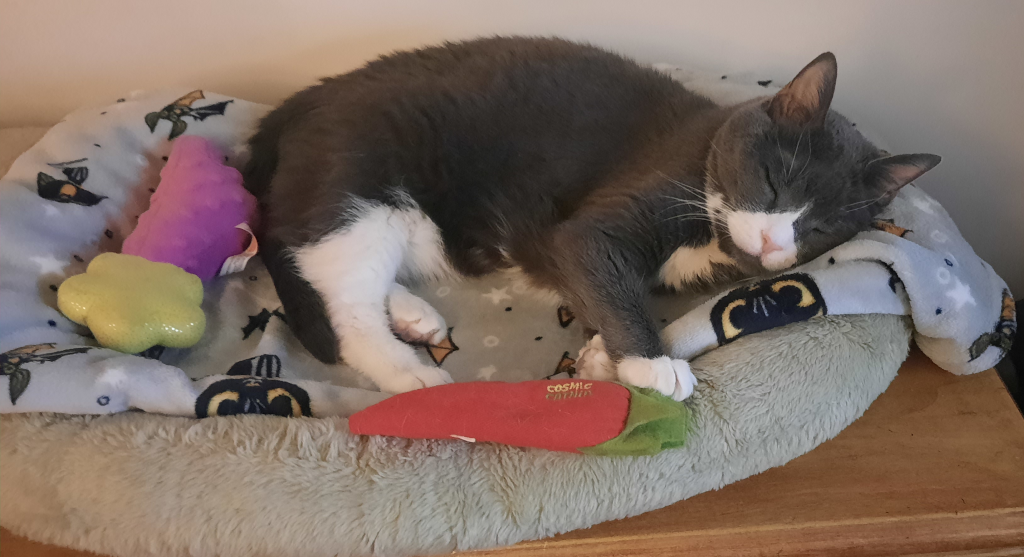 One of the simplest things we can give a surviving pet is predictability. The household has already undergone an enormous change from the animal’s perspective, so changing everything else at the same time can add more uncertainty.
Cornell recommends maintaining the pet’s daily routine as consistently as possible and providing calm reassurance. That means meals can continue at familiar times, walks can follow their usual schedule, bedtime routines can remain recognizable, and favorite resting areas can stay available.
Consistency does not mean pretending nothing happened. The household is different, and the surviving pet may behave differently within it. It simply means leaving some dependable landmarks in the animal’s day.
This can be particularly helpful when the deceased animal played a role in those routines. Perhaps the dogs always waited together for their evening walk, or the cats met in the kitchen every morning. The surviving animal may still appear at the expected time. Continuing the underlying routine can provide something familiar even though one participant is missing.
Give Attention Without Demanding a Response
It is natural to want to make a grieving pet happy again. We may bring out favorite toys, offer extra attention, sit beside them, or try to encourage the activities they previously enjoyed. Those things can be helpful, but they do not have to produce an immediate transformation.
A cat that does not want to play today may still appreciate having someone quietly nearby. A dog that normally races to the door may prefer a slower walk. Gentle interaction gives the animal an opportunity to participate without turning recovery into another expectation.
This is also a good time to pay attention to what the pet chooses. Some animals seek considerably more human contact after losing a companion. Others withdraw and want longer periods of quiet. An animal may alternate between the two.
We learned with Belle that we could not simply recreate what she had with Paws. We could give her attention, comfort, routine, medical care, and time, but we could not become Paws. The relationship between those two cats belonged to them.
Watch Trends Instead of Individual Moments
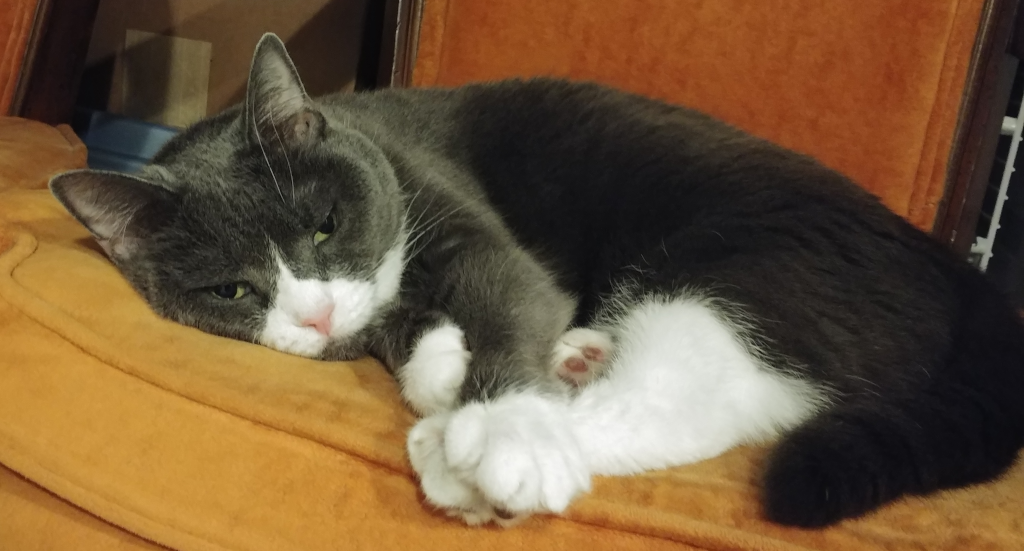 Keeping simple notes can be surprisingly useful during this period, especially if the pet is older or already has medical conditions. Memory becomes unreliable when we are grieving ourselves, and gradual changes can be difficult to judge from one day to another.
You do not need an elaborate medical chart. A brief daily record of appetite, water intake, elimination, activity, sleep, social interaction, play, and unusual behavior can reveal whether the animal is gradually improving, remaining unchanged, or declining. Body weight can also be valuable when it can be measured safely and consistently.
For example, “seems sad” is meaningful as an observation but difficult to compare over time. Notes showing that a cat ate about half of breakfast, stayed under the bed most of the afternoon, came out for dinner, and played briefly in the evening give much more context. Several weeks of those observations may show small improvements that were difficult to notice day by day.
Those records can also help a veterinarian. Instead of trying to remember when a change began, an owner can describe approximately how long it has been occurring and whether eating, drinking, elimination, mobility, or activity changed along with it.
A New Pet Is Not a Replacement for the One Who Died
After losing one animal from a bonded pair, people sometimes wonder whether the surviving pet needs another companion immediately. There is no universal answer, and rushing into another adoption solely to “replace” the deceased animal can create a completely different social situation.
The surviving pet may not want a new companion right away. An older animal that spent years with one particular cat or dog does not necessarily want an unfamiliar youngster suddenly sharing food bowls, beds, litter areas, toys, and human attention. A pet that is already unsettled may find that additional change stressful.
That does not mean another adoption is always a bad idea. Many animals eventually form wonderful relationships with new companions. The decision should take into account the surviving animal’s age, health, temperament, history with other animals, current behavior, and the household’s readiness to care for another pet.
Most importantly, another dog or cat cannot recreate the previous relationship. A new relationship has to develop on its own terms.
Sometimes They Recover, but They Are Still Changed
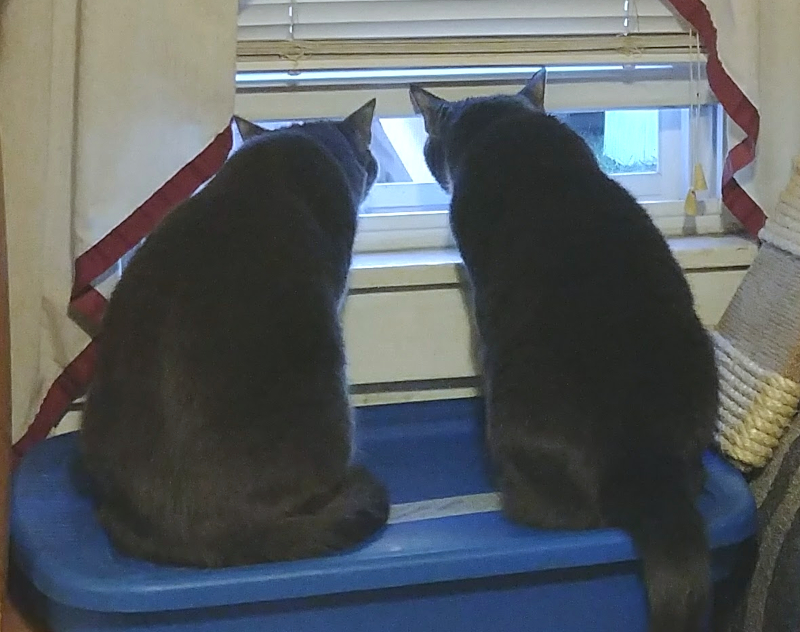 There can be a strong temptation to measure recovery by asking when the surviving animal will become exactly the way they were before. Our experience with Belle taught us that this may be the wrong measurement.
Belle improved. The near-lethargic period passed, and after a couple of months she became relatively normal again. She continued living her life, interacting with us and participating in the household. But the playful Belle we remembered with Paws never completely returned.
That does not necessarily mean she remained continuously unhappy. We cannot know that, and it would be unfair to assign a permanent emotional state to her that she could not confirm. What we can say is that her behavior and personality seemed different after losing him, and that difference remained noticeable to the people who knew her before and after his death.
Research gives us good reason to take such observations seriously while remaining careful about what they mean. Behavioral changes following the death of a companion have been documented in both dogs and cats, but researchers still cannot tell us precisely how animals understand death or whether their internal emotional experience matches human grief.
For the person caring for the surviving animal, we do not need to solve that scientific question before responding to what is happening in front of us. We can maintain familiar routines, provide companionship without forcing interaction, watch eating and drinking carefully, record meaningful changes, involve the veterinarian when behavior persists or physical symptoms appear, and allow the animal time to establish a new version of daily life.
Belle eventually found hers. It simply was not quite the same life she had shared with Paws, and after watching the two of them together for so many years, we came to understand that perhaps it was unreasonable to expect it to be.