
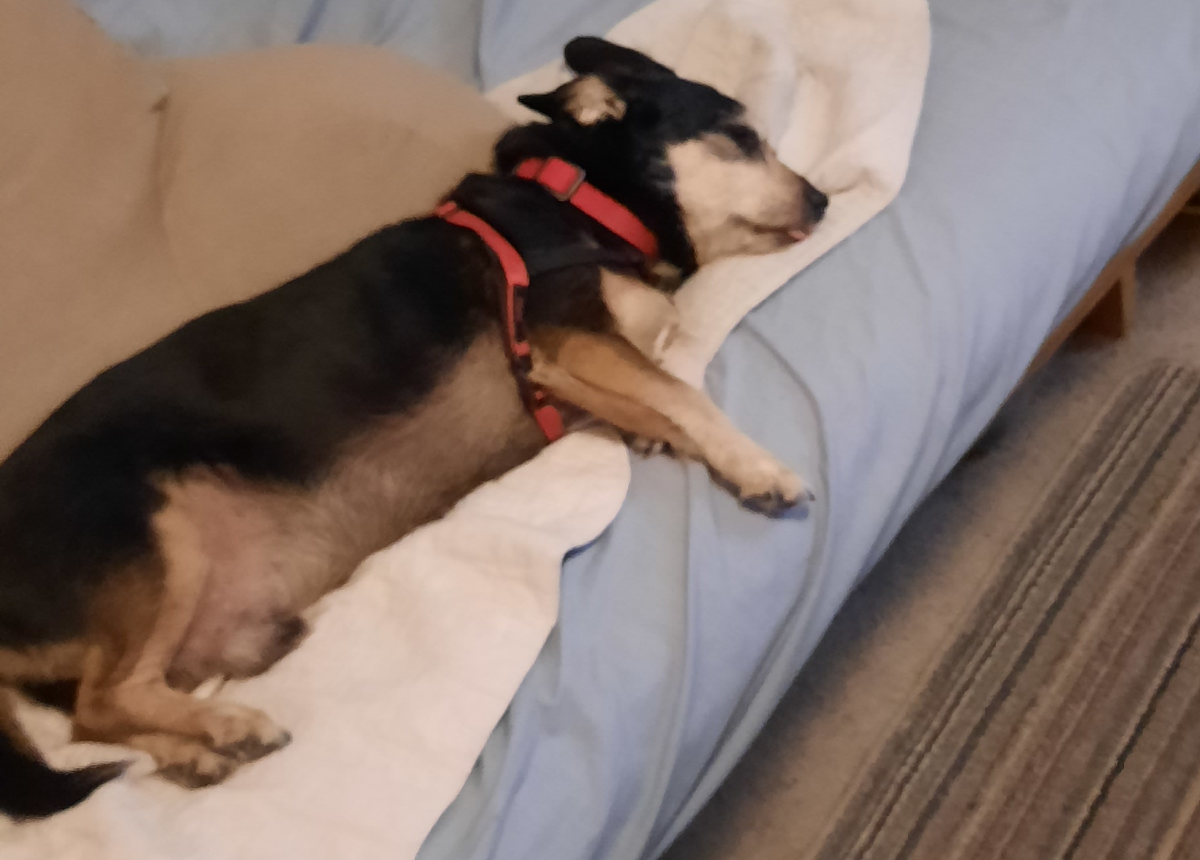
Lethargy is one of those symptoms that can be easy to explain away, especially in a middle-aged or senior dog. A dog starts sleeping longer, hesitates before getting up for a walk, seems less interested in play, or simply moves through the day with less energy than before. Sometimes that change really is related to age, pain, weather, a recent illness, or a quieter routine. Sometimes, however, persistent lethargy is one piece of a larger pattern that deserves a closer look.
Hypothyroidism belongs on that list of possibilities because low thyroid hormone can slow many body functions. Dogs with hypothyroidism commonly show lethargy, mental dullness, reduced exercise tolerance, unexplained weight gain, cold intolerance or heat-seeking behavior, and skin or coat problems. Those signs are not specific to thyroid disease, which is exactly why diagnosis can become confusing. Veterinary guidelines also warn that canine hypothyroidism is overdiagnosed when symptoms and a single low thyroid value are treated as proof of disease.
For an owner, the useful question is not whether every tired dog needs an expensive thyroid workup. The better question is when the overall pattern is strong enough that a basic thyroid screening result should not be the end of the discussion. That is where understanding the difference between a total T4 test and a more complete thyroid assessment becomes valuable. This approach fits the practical BellenPaws goal of helping owners pair careful observation at home with informed conversations with their veterinarian.
Lethargy Is a Symptom, Not a Diagnosis
Lethargy simply describes a decrease in normal energy, activity, or responsiveness. It can accompany a very long list of problems, including pain, anemia, infection, heart disease, kidney disease, liver disease, diabetes, cancer, medication effects, orthopedic disease, and endocrine disorders such as hypothyroidism. A dog who is tired because of arthritis may look very different from a dog who is tired because of anemia, but early in the process both may simply seem less willing to move.
That is why a thyroid panel should not replace a good examination and routine diagnostic work. A veterinarian may reasonably begin with a physical exam, complete blood count, chemistry panel, urinalysis, medication review, weight history, and other tests based on the dog’s age and symptoms. In hypothyroid dogs, routine blood work may show findings such as elevated cholesterol or triglycerides and a mild nonregenerative anemia, but those abnormalities are supportive rather than diagnostic.
There is also an important difference between gradual lethargy and an emergency. A dog who has become mildly less energetic over several weeks is not in the same situation as a dog who suddenly collapses, cannot stand, has trouble breathing, has pale or blue gums, has repeated severe vomiting, develops a painful or distended abdomen, has a seizure, or may have swallowed a toxin. Those signs warrant prompt veterinary or emergency evaluation rather than waiting for a thyroid appointment.
The Pattern That Makes Hypothyroidism More Suspicious
Persistent lethargy becomes more suggestive of hypothyroidism when it appears with other compatible changes. AAHA and Merck both describe decreased activity, mental dullness, exercise intolerance, unexplained weight gain, and coat or skin abnormalities among common signs. Some dogs also become less tolerant of cold temperatures or seek warm places more often.
Owners are often in the best position to notice that several small changes are happening at once. A dog may still eat normally but gain weight. The coat may become dry or brittle, hair may thin along the trunk or tail, clipped hair may grow back slowly, or recurrent skin and ear infections may appear. None of these observations proves hypothyroidism, but the combination matters more than lethargy alone.
A written record can make these changes much easier to explain during a veterinary appointment. Instead of trying to remember everything in the examination room, consider keeping track of:
- when the lower energy level began and whether it is getting progressively worse;
- changes in walking stamina, willingness to play, or ability to climb stairs;
- weight changes without an obvious increase in food intake;
- new heat-seeking behavior or reduced tolerance for cold;
- hair thinning, slow hair regrowth, dry coat, darkened skin, or repeated skin and ear problems;
- current medications, recent illnesses, and any major change in diet or activity.
A short video can also help if the change is easier to see than describe. A thirty-second clip of a dog moving slowly at home, hesitating on stairs, or losing interest during a walk may give the veterinarian information that is not obvious during an excited office visit.
Why a Total T4 Test Can Be Helpful but Incomplete
Total T4, often written as TT4, is commonly used as the first thyroid screening test in dogs. It measures the total amount of thyroxine circulating in the blood, including hormone that is bound to proteins and hormone that is free. Merck describes total T4 as a useful initial screening test, and AAHA notes that a result in the upper half of the laboratory reference interval generally makes hypothyroidism unlikely.
The trouble comes when the result is low or near the bottom of the reference range. A low TT4 does not automatically mean the thyroid gland is failing. Nonthyroidal illness can suppress thyroid hormone concentrations, a situation often called euthyroid sick syndrome or nonthyroidal illness syndrome. Age, breed, stress, and several medications can also affect thyroid results. Glucocorticoids and phenobarbital are well-known examples, and other drugs can interfere through different mechanisms.
Breed matters too. Healthy sighthounds, including Greyhounds and several related breeds, may naturally have total T4 and free T4 values below reference ranges developed from the general dog population. Treating a breed-normal low value as disease can lead to a false diagnosis. Michigan State’s Veterinary Diagnostic Laboratory specifically recommends interpreting thyroid hormone values in sighthounds with appropriate breed context and looking for supporting changes such as an increased TSH.
This is one reason an owner may reasonably ask for more testing when the clinical picture still looks suspicious. The goal is not to keep ordering tests until one becomes abnormal. The goal is to sort out whether a low screening value represents true thyroid failure or something else affecting the numbers.
What a More Complete Thyroid Workup Usually Adds
There is no single universal package called a “full thyroid panel.” Laboratories offer different combinations, so it is worth asking what is actually included. Cornell’s canine thyroid testing service offers combinations that can include total T4, total T3, free T4, TSH, and thyroglobulin autoantibodies, while Michigan State offers broader diagnostic profiles that also evaluate thyroid autoantibodies.
For most suspected hypothyroidism cases, the most useful additions to TT4 are free T4 and canine TSH. Free T4 measures the small portion of thyroxine that is not bound to blood proteins. Free T4 measured by equilibrium dialysis is especially useful when nonthyroidal illness, medication effects, or thyroid hormone autoantibodies may be confusing the picture because that method is less vulnerable to some of those interferences.
TSH, or thyroid-stimulating hormone, adds another piece of information. In classic primary hypothyroidism, the thyroid hormones are low while TSH rises because the pituitary gland is signaling the thyroid to work harder. A low TT4 or free T4 combined with an elevated TSH strongly supports hypothyroidism in a dog with compatible signs. A normal TSH does not completely rule it out, however, because roughly 20 to 40 percent of dogs with confirmed hypothyroidism can have TSH values within the reference range.
Thyroglobulin autoantibody testing, often abbreviated TgAA, can help identify lymphocytic thyroiditis, an immune-mediated process that damages thyroid tissue. A positive TgAA result is evidence of autoimmune thyroid disease, but dogs can have thyroid autoantibodies while their thyroid hormone concentrations are still within the reference range. Michigan State recommends continued monitoring in those cases because they may be at greater risk of becoming hypothyroid later.
Total T3 may appear on comprehensive panels, but it is generally less useful for diagnosing ordinary canine hypothyroidism because dogs with confirmed disease can have low, normal, or occasionally high T3 concentrations. A broader panel can still provide useful context, especially when autoantibodies are suspected, but more values do not automatically mean a clearer answer. Interpretation still has to match the dog in front of the veterinarian.
When It Is Reasonable to Ask for the Broader Panel
A broader thyroid workup becomes particularly reasonable when a dog has persistent signs that fit hypothyroidism and the initial TT4 is low or near the low end of normal. AAHA specifically recommends evaluating free T4 and TSH when clinical suspicion remains high in that situation.
It is also reasonable to have a deeper discussion when a dog has several compatible signs, such as lethargy, unexplained weight gain, exercise intolerance, and coat changes, but the explanation remains unclear after routine testing. If the dog is taking medication known to affect thyroid results, has another illness that could suppress thyroid hormones, belongs to a breed with naturally lower thyroid values, or has an unexpected thyroid result that does not fit the clinical picture, a more complete profile or repeat testing at a better time may prevent a mistaken diagnosis.
The timing of testing matters. Severe illness can lower total T4 and even free T4, so thyroid testing is often easier to interpret after the dog has recovered or stabilized when that is medically practical. AAHA recommends considering clinical stabilization or recovery before thyroid testing when illness could be distorting the results.
There is another side to this discussion that deserves equal attention. If a dog’s TT4 is comfortably within the upper half of the reference interval, hypothyroidism becomes much less likely, and repeatedly expanding thyroid testing may not be the best next move. In that situation, persistent lethargy still deserves an explanation, but the veterinarian may get more useful information by investigating pain, anemia, heart disease, infection, metabolic disease, medication effects, sleep problems, or other causes.
How to Raise the Question With Your Veterinarian
Owners do not need to walk into the exam room demanding one particular laboratory panel. A better approach is to bring the pattern you have observed and ask how the thyroid results fit with the rest of the case. If the total T4 is low or borderline, it is reasonable to ask whether free T4 and canine TSH would help distinguish true hypothyroidism from illness or medication effects.
You can also ask which free T4 method the laboratory uses, especially if the dog has another illness, is taking a medication that affects thyroid values, or has possible thyroid autoantibodies. Equilibrium dialysis is often preferred in complicated cases because it reduces some forms of assay interference. Cornell and Michigan State both describe free T4 testing as useful when routine thyroid hormone measurements may be misleading.
If results remain contradictory, asking whether the sample should be sent to a veterinary reference laboratory or reviewed by an internist is also reasonable. That does not mean the primary veterinarian has done anything wrong. Endocrine testing can be genuinely difficult to interpret, and the best decision sometimes comes from combining the history, examination, routine laboratory work, several thyroid measurements, and the dog’s response over time.
The Goal Is the Right Diagnosis, Not Just a Thyroid Diagnosis
Hypothyroidism is treatable, and dogs with an accurate diagnosis generally respond well to appropriate thyroid hormone replacement and monitoring. The harder part is making sure the dog actually has hypothyroidism before committing to long-term treatment. Both Merck and AAHA emphasize that isolated low thyroid values can occur in dogs whose thyroid glands are functioning normally.
That distinction matters because lethargy can be the first visible sign of many conditions. If your dog has been steadily slowing down and the change does not fit their usual behavior, age alone should not close the discussion. Keep track of the pattern, bring the full medication list, note changes in weight, coat, temperature preference, activity, appetite, drinking, and mobility, and ask how the thyroid values fit with everything else the veterinarian is seeing.
Sometimes a total T4 is enough to move hypothyroidism far down the list. Sometimes a low or borderline result, paired with a convincing clinical pattern, is exactly the reason to ask for free T4, TSH, and possibly antibody testing rather than accepting a single number as the answer. The value of a full thyroid panel is not that it searches harder for a diagnosis. Its value is that, in the right dog, it can help separate true thyroid disease from the many other things that can make a dog look tired.