

Bringing a feral or formerly outdoor cat into a home with existing pets requires careful preparation. A cat accustomed to surviving outdoors may be unfamiliar with enclosed rooms, household noises, and close contact with people or other animals. Even a newcomer that appears friendly can become frightened or defensive when placed in unfamiliar surroundings.
The situation becomes more complicated when the household includes senior cats, dogs, or animals with chronic medical conditions. Established pets have familiar routines and territories, while the newcomer must adjust to an entirely different environment. Introducing everyone too quickly can create territorial conflicts, defensive aggression, and behavioral problems that become increasingly difficult to resolve.
A gradual introduction gives each animal opportunities to become familiar with unfamiliar scents, sounds, and behaviors before direct contact occurs. The process may take weeks or months, and some cats will require permanent accommodations that limit interaction with other household animals.
Understanding Whether the New Cat Is Truly Feral
The terms feral and stray are often used interchangeably, although they describe cats with different socialization histories. A stray cat has generally experienced human companionship but has become separated from that environment. A truly feral cat has had little or no positive human contact and may regard people as potential threats.
This distinction matters because a frightened stray may gradually return to familiar household behaviors, while a genuinely unsocialized adult feral cat may never become comfortable living indoors. Alley Cat Allies explains the differences between stray and feral cats and emphasizes that their suitability for indoor adoption can differ considerably. Fearful behavior during capture or the first few days indoors does not necessarily reveal an animal’s previous relationship with humans.
Before bringing an unfamiliar outdoor cat into a household permanently, determine whether the animal already has an owner. A veterinary clinic or shelter can check for a microchip, while local lost-pet reporting services may help identify someone searching for the cat. An animal that appears neglected, thin, or frightened is not necessarily abandoned.
Recognizing When Indoor Living May Be Inappropriate
 Not every adult feral cat is a suitable candidate for permanent indoor placement. Some remain extremely distressed by confinement despite appropriate environmental accommodations and careful efforts to reduce fear. Prolonged attempts to socialize an unsocialized adult may create significant welfare concerns without producing meaningful improvement.
The Feline Veterinary Medical Association’s 2024 Indoor/Outdoor Lifestyle Position Statement acknowledges that certain cats cannot have their welfare needs adequately met indoors. For these animals, properly managed outdoor arrangements, including suitable barn placement or community-cat management, may be more appropriate. Decisions should account for the cat’s history, medical condition, safety, and available care rather than assuming indoor adoption is always the preferred outcome.
The following introduction methods are most appropriate for socialized strays, partly socialized cats, and formerly feral animals that are demonstrating an ability to adjust to indoor living. For a cat that remains highly fearful of human contact, an experienced community-cat organization can help determine whether continued indoor acclimation is reasonable.
Addressing Veterinary Needs Before Introductions Begin
A cat that has lived outdoors may have medical conditions that are not immediately apparent. Fleas, intestinal parasites, respiratory infections, dental disease, and untreated injuries are among the concerns that warrant evaluation before allowing contact with resident animals. A veterinary examination provides an opportunity to assess general health, discuss appropriate vaccinations, and determine whether parasite testing or treatment is needed.
Testing for feline leukemia virus (FeLV) and feline immunodeficiency virus (FIV) is especially relevant when other cats already live in the household. The 2020 AAFP Feline Retrovirus Testing and Management Guidelines recommend testing newly acquired cats and explain why repeat or confirmatory testing may sometimes be necessary. A negative result obtained shortly after a possible exposure does not always rule out infection.
FIV and FeLV also have important differences in transmission. FIV spreads primarily through deep bite wounds, and some FIV-positive cats can live with FIV-negative companions when fighting is absent. FeLV can spread through close social contact, including mutual grooming and shared feeding arrangements, making housing decisions more complicated when cats have different infection statuses.
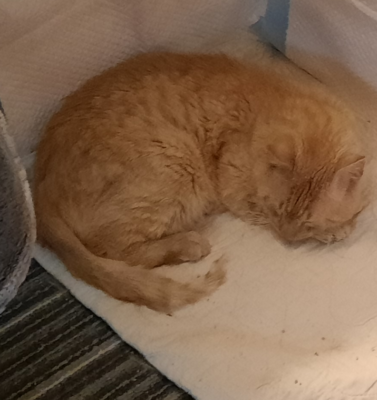
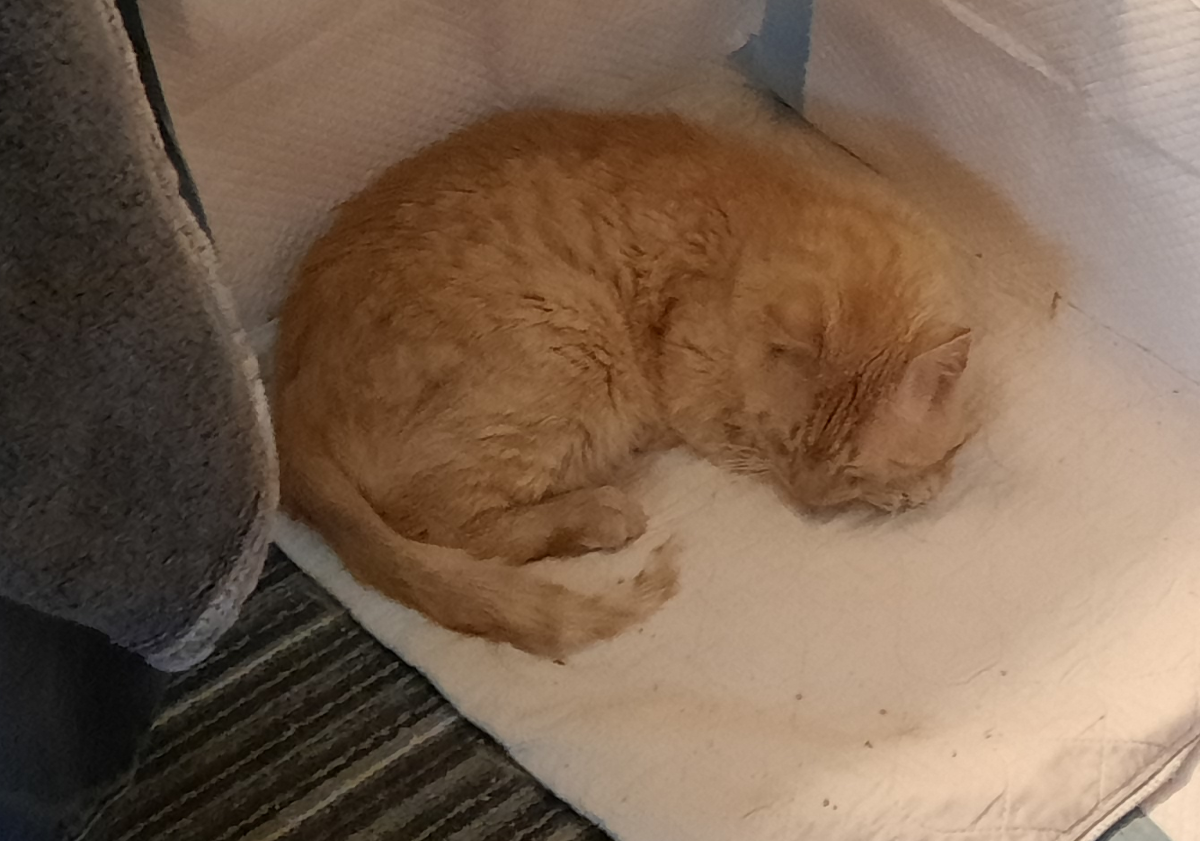
At BellenPaws, we have cared for Stanley, a formerly feral stray who needed treatment for a serious oral infection and was also found to have FIV. He now lives indoors with us, although his circumstances should not be treated as a prediction of how another cat will respond. His medical history illustrates why an outdoor cat’s health needs deserve attention independently of its apparent temperament.
Establishing a Health Separation Period
The newcomer should remain physically separated from resident pets until an appropriate veterinary assessment has been completed and any necessary infectious-disease precautions are addressed. This reduces opportunities for disease transmission while giving the cat a quieter environment in which to adjust. There is no universal isolation period that reliably accounts for every infection, testing window, or parasite-treatment schedule.
During this period, provide separate litter boxes, feeding equipment, bedding, and grooming supplies. Wash your hands after handling the newcomer or cleaning its litter area, particularly when infectious or parasitic conditions are still being evaluated. If a contagious disease is identified, the required precautions should reflect that specific condition.
Some outdoor cats cannot be examined safely through ordinary handling. A veterinarian or experienced community-cat rescue organization can advise on humane trapping, secure transport, and examination procedures. Attempting to restrain a terrified animal without appropriate equipment can result in serious injuries.
Preparing a Safe Room for the New Cat
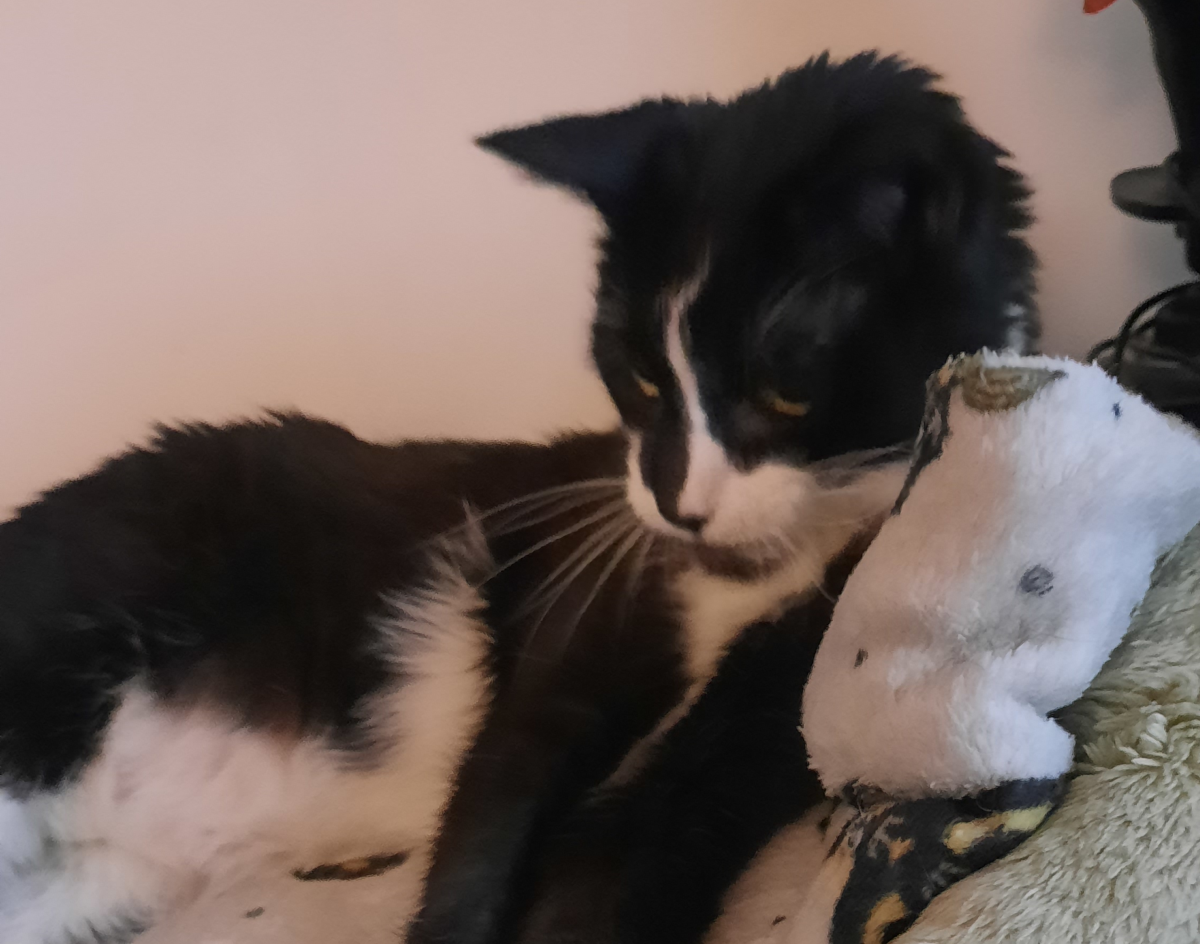 A separate room provides a predictable environment while the newcomer becomes accustomed to indoor life. Ideally, it should be quiet, comfortably heated or cooled, and away from the busiest household activities. A spare bedroom or another enclosed room with a secure door generally offers more control than an open living area.
Provide food, fresh water, an appropriately sized litter box, scratching surfaces, and comfortable resting areas. Covered beds or sturdy cardboard hiding boxes allow the cat to retreat without disappearing into inaccessible spaces. Place the litter box away from feeding areas and ensure the cat can reach every essential resource without feeling exposed.
Remove hazardous plants, electrical cords, dangling strings, unstable objects, and anything that could trap or injure the animal. Windows should be securely closed or protected because ordinary insect screens may not withstand a determined escape attempt. Before entering or leaving the room, make sure resident pets are secured and the cat cannot reach an exterior exit.
A frightened cat benefits from having some control over its surroundings. Providing accessible hiding places allows it to retreat when household activity becomes overwhelming, while keeping those spaces visible enough for routine observation. Repeatedly pulling a cat from hiding or blocking its escape can increase defensive behavior and make future handling more difficult.
Establishing Predictable Indoor Routines
Begin with consistent feeding and cleaning schedules rather than attempting frequent physical interaction. Enter the room calmly, complete necessary tasks without sudden movements, and allow the cat to observe you from a comfortable distance. Sitting quietly nearby can help the animal become familiar with human presence without requiring direct contact.
Food may help establish positive associations, but withholding meals to force interaction is inappropriate. Some cats begin eating comfortably while a person is present within days, while others need considerably longer. The appropriate pace depends on the animal’s behavior, health, and previous experiences.
Pay attention to basic activities while the cat adjusts. Eating, drinking, urination, bowel movements, grooming, and relaxed resting provide useful information about how the animal is functioning. A cat that refuses food for approximately 24 hours needs prompt veterinary advice, particularly when its medical history is unknown, because prolonged inadequate food intake can become medically serious.
Avoid picking up, cornering, or restraining the newcomer merely to encourage socialization. Voluntary approaches, interest in toys, and relaxed behavior around people provide better opportunities for gradual interaction. Some cats eventually seek physical affection, while others remain comfortable only when humans respect greater personal distance.
Introducing the New Cat to Resident Cats Through Scent
 Once appropriate health precautions have been completed and the newcomer is comfortable in its room, introductions can begin without direct visual contact. Cats rely heavily on scent when identifying familiar individuals and investigating their surroundings. Allowing them to encounter unfamiliar odors gradually reduces the need to process every aspect of a new relationship simultaneously.
Start by exchanging small pieces of bedding or soft fabric carrying each cat’s scent. Place these items where the animals can investigate them voluntarily, preferably away from essential feeding and resting locations. If a cat avoids the object or becomes visibly distressed, remove it and attempt a less intense introduction later.
The 2024 AAFP Intercat Tension Guidelines recommend gradual introductions that proceed only while the cats remain comfortable. Their guidance also emphasizes returning to an earlier stage when tension develops rather than continuing according to a predetermined schedule. This approach is particularly useful when the newcomer is already dealing with fear or unfamiliar surroundings.
After the cats tolerate one another’s scent, individual play sessions or meals on opposite sides of a closed door can create opportunities for positive associations. Begin far enough from the doorway that both animals remain relaxed and willing to participate. If either cat hesitates to approach or stops eating, increase the distance rather than moving its food closer.
Allowing Exploration Without Direct Contact
Another useful technique involves allowing the newcomer to explore selected areas while resident cats are safely confined elsewhere. This gives the new cat opportunities to investigate unfamiliar rooms without simultaneously confronting other animals. The resident cats can later explore those same spaces and encounter the newcomer’s scent.
Begin with a small area and ensure the newcomer can return safely to its familiar room. The household should remain secure against accidental escapes, and the exploration should occur only after appropriate health precautions have been completed. If the cat remains frightened or reluctant to leave its room, additional exploration can wait until it shows greater confidence.
Moving From Scent Recognition to Visual Introductions
When the cats consistently tolerate one another’s scent, controlled visual contact becomes the next stage. A secure screen door, properly fitted mesh barrier, or sufficiently tall pet gate may allow observation without physical contact. The barrier must prevent climbing, squeezing through openings, or reaching another animal in ways that could cause injury.
Initial sessions should be brief, with enough distance that neither cat feels trapped. Individual treats or play can help maintain a relaxed atmosphere, provided the animals remain interested in participating. A cat that observes the newcomer briefly and then returns to grooming or another ordinary activity is generally displaying greater comfort than one that remains rigidly focused.
Hissing or growling may occur during introductions, but persistent threatening behavior indicates that the session is progressing too quickly. Flattened ears, stiff posture, prolonged staring, repeated swatting, or attempts to attack the barrier are reasons to stop and reduce exposure. Punishing these responses can increase fear and associate the other cat’s presence with unpleasant experiences.
Beginning Supervised Face-to-Face Meetings
 Direct interaction should begin only after repeated visual sessions have remained calm. Select a room with adequate space, multiple escape routes, and accessible resting locations where neither cat can easily trap the other. Narrow hallways and cramped doorways are poor choices because one animal may be able to block the other’s retreat.
Allow the cats to approach or move away voluntarily rather than carrying one toward the other. A brief investigation followed by disengagement may be more productive than prolonged contact. Separate toys or treats can redirect attention without encouraging competition over a shared object.
Initially, keep meetings short enough that they end before tension develops. Return the newcomer to its familiar room and gradually increase the duration of future interactions as the cats demonstrate greater tolerance. Continue separating them during unsupervised periods until their behavior indicates that shared access is consistently safe.
If a confrontation develops, never place your hands between fighting cats. A large cushion, piece of cardboard, or another solid visual barrier can help interrupt eye contact and create an opportunity for safe separation. After a serious conflict, return to physical separation and reassess the introduction process before attempting another meeting.
Introducing a Formerly Feral Cat to Resident Dogs
Introducing an outdoor cat to dogs requires additional precautions because canine and feline behavior can be interpreted differently by the animals involved. An enthusiastic dog may approach with friendly intentions while appearing threatening to a frightened cat. Dogs with strong chasing or predatory behavior present particular safety concerns.
Before introductions begin, establish areas the cat can access without being followed by the dog. Elevated platforms, secure barriers, and separate rooms provide opportunities to retreat. Food, water, litter boxes, and resting locations should remain accessible without requiring the cat to pass close to a dog.
Best Friends Animal Society’s guidance for introducing cats and dogs recommends gradual exposure, secure barriers, careful observation of body language, and controlled leash sessions. Beginning with scent recognition through a closed door and progressing to visual contact allows the animals to become accustomed to each other before sharing an open space. When there are multiple dogs, introductions should occur individually.
During initial direct meetings, the dog should be securely controlled by a handler while the cat remains free to move away. Having a second person present to observe the cat can make the encounter easier to manage. Reward the dog for relaxed behavior, looking away from the cat, and responding reliably to familiar cues.
A dog that becomes rigid, stares intensely, lunges, or attempts to chase the cat should be separated immediately. Repeated fixation or pursuit may require assessment by a qualified behavior professional before further introductions are attempted. Some dogs cannot safely share unrestricted space with cats, even after careful training and gradual exposure.
Protecting the Routines of Existing Indoor Pets
 The arrival of a new cat changes the household before direct introductions even begin. Resident animals may notice unfamiliar odors, closed doors, and changes in feeding or cleaning activity. Some respond with curiosity, while others become withdrawn or increasingly protective of familiar areas.
Maintaining established routines helps limit unnecessary disruption. Continue feeding resident pets at their usual times, preserve familiar resting locations, and avoid relocating essential resources solely to accommodate the newcomer. An older cat should not have to abandon a preferred sleeping area or struggle to reach a litter box because the household arrangement has changed.
Resource availability becomes especially relevant in multi-cat homes. A commonly recommended starting point is one litter box per cat plus an additional box, along with multiple feeding stations, water sources, scratching surfaces, and resting locations. These resources should be distributed throughout the home rather than concentrated in one area where a confident animal could control access.
Senior cats with arthritis, impaired vision, or reduced mobility may have difficulty escaping uncomfortable encounters. Accessible resting locations and unobstructed routes to essential resources deserve particular attention. A newcomer that repeatedly blocks doorways or follows an older cat into confined spaces can create persistent tension without an actual fight occurring.
For households with medically fragile senior cats, the decision to introduce another animal deserves especially careful consideration. The AAFP’s intercat tension guidance advises against acquiring another cat when a resident cat is a senior with significant medical concerns or is in poor health. Changes in eating patterns, stress, and access to resources can complicate the care of animals already managing diabetes, kidney disease, or other chronic conditions.
Recognizing Progress and Persistent Stress
Progress during introductions is not always consistent. A cat may appear relaxed during one interaction and become uncomfortable during another, especially when noise, visitors, or unexpected movement change the environment. Occasional setbacks do not necessarily mean the introduction has failed, but repeated distress indicates that the current arrangement needs adjustment.
Comfortable coexistence is often reflected in ordinary activities rather than obvious affection. Cats that can eat, groom, rest, or explore while another animal is nearby are showing greater tolerance of shared space. Sleeping together or grooming one another is not necessary for a household arrangement to be successful.
Persistent avoidance, resource guarding, repeated chasing, and prolonged staring deserve attention even when physical fighting is absent. A resident cat may stop using a favorite room because the newcomer repeatedly blocks its path. Another may begin hiding during normal feeding periods or avoiding a previously accessible litter box.
Changes in appetite, elimination, grooming, or activity should also be assessed for possible medical causes. Stress can affect behavior, but symptoms should not automatically be attributed to an unfamiliar animal. Repeated straining to urinate, producing little or no urine, or experiencing difficulty breathing requires emergency veterinary attention.
When repeated attempts at introduction produce ongoing conflict, a qualified feline behavior professional or veterinary behaviorist may help identify contributing factors. Sometimes environmental changes can reduce competition or improve opportunities for retreat. Other situations involve incompatible temperaments or established behavioral patterns that make unrestricted shared living unsafe.
Establishing a Sustainable Long-Term Living Arrangement
 After repeated successful supervised interactions, the newcomer may gradually receive greater access to shared living spaces. Its original safe room should remain available, particularly during noisy periods or when visitors arrive. Continued separation during unsupervised periods may still be necessary while the animals’ relationships are developing.
Pay attention to where each cat chooses to spend its time once the household becomes more settled. Some prefer quiet rooms away from other animals, while others comfortably share communal areas without seeking direct contact. Maintaining separate resting and feeding options allows these preferences to continue without unnecessary competition.
For a formerly feral cat, long-term indoor adjustment also involves opportunities to engage in normal feline behavior. Sturdy scratching posts, climbing structures, hiding places, window observation areas, and interactive toys can provide outlets for exploration and play. Cats that become comfortable with people may enjoy regular interactive play sessions, while less social animals may initially prefer activities that do not require close human involvement.
If an adult feral cat continues experiencing severe distress despite appropriate accommodations and behavioral support, alternative living arrangements deserve consideration. Any decision should account for medical needs, the animal’s previous territory, available supervision, and environmental safety. An experienced community-cat organization can help evaluate whether a managed outdoor setting or another placement would better meet the cat’s needs.
In a household where integration is possible, relationships may continue changing long after the initial introduction period. New resting preferences, competition around favorite locations, or changes in an older pet’s mobility can affect an arrangement that previously worked well. Maintaining accessible resources, safe retreat areas, and the ability to separate animals when necessary allows the household to adapt without requiring every cat or dog to maintain close contact.