

A dog that once chased tennis balls across the yard may eventually prefer watching one roll slowly across the living room. An older cat might still show considerable interest in a feather toy but hesitate to leap after it. Changes like these can make familiar games less suitable, particularly when arthritis, muscle weakness, or other mobility problems begin affecting how comfortably an animal moves.
Fortunately, interactive play does not have to involve running, jumping, or vigorous physical activity. Many dogs and cats enjoy games that encourage sniffing, pawing, investigating objects, and solving simple problems. With thoughtfully selected toys and adjustments to familiar activities, pet owners can provide enjoyable interaction while limiting unnecessary physical strain.
The challenge is finding activities that match an animal’s current abilities. A pet that no longer runs after a ball may remain interested in following its movement, while a cat that avoids jumping might happily investigate a toy moving slowly across the floor. Recognizing these preferences can help owners adapt playtime without expecting their pets to perform movements that have become uncomfortable.
Why Joint-Friendly Play Matters for Older Pets
 Osteoarthritis is a common cause of chronic discomfort and reduced mobility in aging dogs and cats. The disease involves progressive changes to joint cartilage, bone, and other joint structures, often resulting in pain, inflammation, and restricted movement. These changes can affect everyday activities such as climbing stairs, rising after rest, grooming, and participating in familiar games.
Cats frequently display subtle behavioral changes associated with joint discomfort. The U.S. Food and Drug Administration’s information about feline osteoarthritis explains that affected cats may become less active, groom themselves less frequently, or have difficulty jumping onto furniture. Some gradually stop participating in activities they previously enjoyed, making changes in play behavior particularly useful observations for owners.
Dogs may demonstrate stiffness, hesitation when moving, reduced enthusiasm for vigorous games, or difficulty recovering after physical activity. However, declining mobility should not automatically be attributed to arthritis or normal aging. Neurological disorders, injuries, muscle weakness, and other medical conditions can produce similar changes, making veterinary evaluation appropriate when persistent discomfort or noticeable movement difficulties develop.
Regular, appropriate physical activity remains valuable for many animals with joint disease. The American College of Veterinary Surgeons’ guidance on canine osteoarthritis recommends limiting high-impact activities and replacing them with more controlled, lower-impact movement. Gentle exercise can help maintain muscle function and joint stability, although the appropriate activity level depends on the animal’s condition.
Interactive toys can complement an established mobility or pain-management plan by providing opportunities for gentle movement and mental engagement. They are not treatments for arthritis, and there is insufficient evidence to claim that particular toy designs prevent joint deterioration. Their practical value comes from allowing owners to adjust an activity’s physical demands while keeping it interesting.
Puzzle Feeders That Encourage Gentle Problem-Solving
Food puzzles are among the most adaptable interactive toys for dogs and cats with reduced mobility. Instead of receiving food directly from a bowl, the animal investigates a device that requires some manipulation to release its contents. Depending on the design, the activity may involve sniffing, licking, nudging, or carefully moving small objects.
For older pets, the puzzle’s construction matters more than its complexity. Some commercial products require vigorous pushing or chasing, while others remain stationary and allow participation with minimal movement. A shallow puzzle tray with accessible compartments is often a practical starting point for an animal that struggles with balance or prolonged standing.
Stationary puzzle trays contain sliding covers, removable pieces, or compartments that conceal small portions of food. Dogs often investigate these openings with their noses, while cats may prefer using their paws. The toy should remain stable during use, and its openings should be large enough for the animal to retrieve food without forceful manipulation.
Introducing a puzzle gradually can prevent frustration. Begin by leaving some compartments uncovered, allowing the pet to discover the food without struggling. As the animal becomes familiar with the device, a few compartments can be partially covered to introduce a manageable challenge.
Lick mats offer another option, particularly for dogs that enjoy working with their tongues rather than moving objects. A small amount of appropriate food can be spread across the textured surface, allowing the animal to investigate while remaining relatively stationary. The mat should be secured against sliding and used under supervision, especially if the dog tends to chew or swallow flexible materials.
A food puzzle should never make it unnecessarily difficult for an animal to eat. Pets with dental pain, impaired coordination, significant weakness, or difficulty lowering their heads may find certain designs uncomfortable. In these situations, a simpler feeding activity or appropriately positioned dish may be preferable.
Snuffle Mats and Scent Games for Senior Dogs
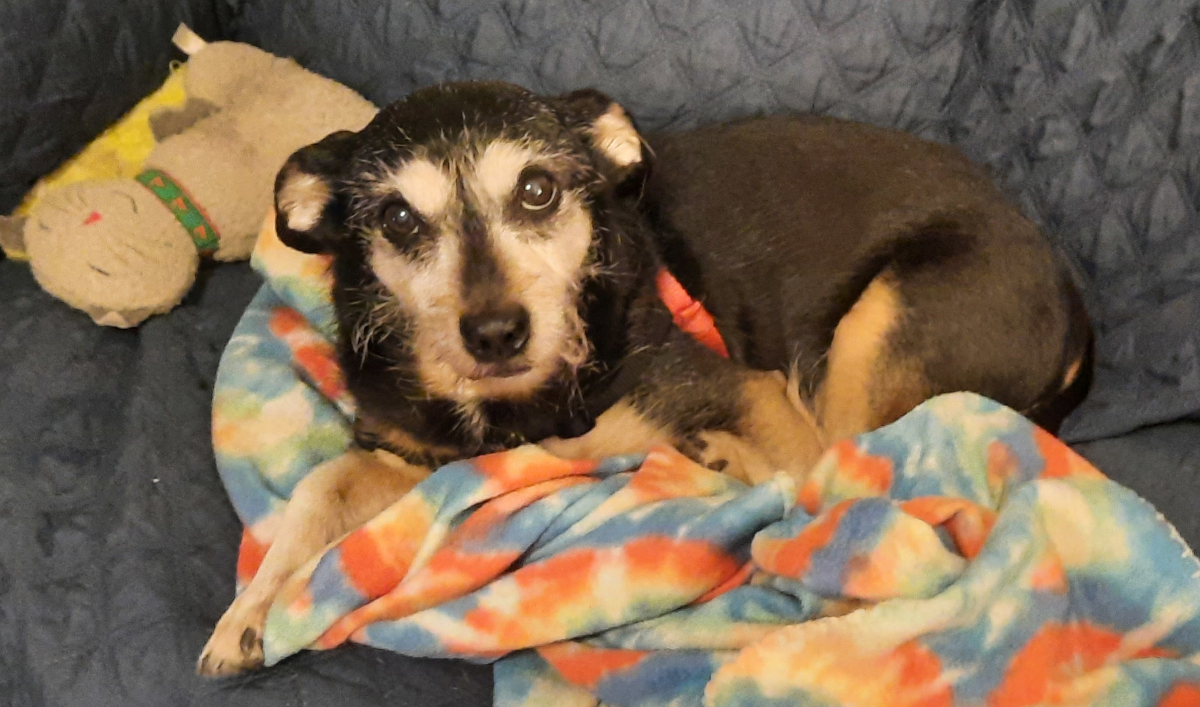 A dog’s sense of smell offers opportunities for interactive play that do not require athletic movement. Snuffle mats contain overlapping strips or pockets of fabric that conceal small portions of food. Dogs investigate the material with their noses, searching for the hidden pieces without needing to chase anything.
For dogs with joint discomfort, the mat should rest on a stable, nonslip surface. Its dimensions should allow the animal to investigate without repeatedly turning, stretching, or repositioning its body. A dog that has difficulty lowering its head may be more comfortable with a shallow scent puzzle placed on a securely supported surface at an appropriate height.
Simple scent-search games can also be created using household objects. Place a few pieces of the dog’s regular food in easily accessible locations within a small room and encourage the dog to investigate them. Initially, the food can remain visible, with hiding places becoming slightly more challenging as the dog demonstrates interest.
A loosely folded towel can provide a similar activity, provided the dog does not attempt to swallow the fabric. An open cardboard box containing familiar toys and a few hidden food pieces may also encourage investigation. Boxes should be free of staples, loose tape, sharp edges, and other materials that could cause injury.
The Cornell University College of Veterinary Medicine’s senior dog enrichment guidance specifically discusses food puzzles, indoor scent games, and modified activities for older dogs. It also emphasizes adjusting activities to an individual dog’s physical abilities rather than assuming all senior dogs can manage the same challenges.
Scent games can be surprisingly absorbing for dogs that enjoy searching and investigating. However, mental engagement does not eliminate physical fatigue, and prolonged searching may still become demanding for an animal with significant mobility limitations. Short sessions with accessible hiding places are generally easier to manage than elaborate searches requiring movement throughout the house.
Interactive Wand Toys for Cats With Limited Mobility
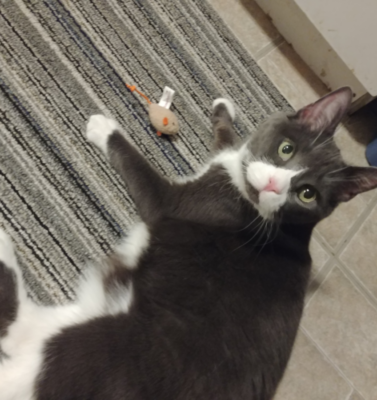
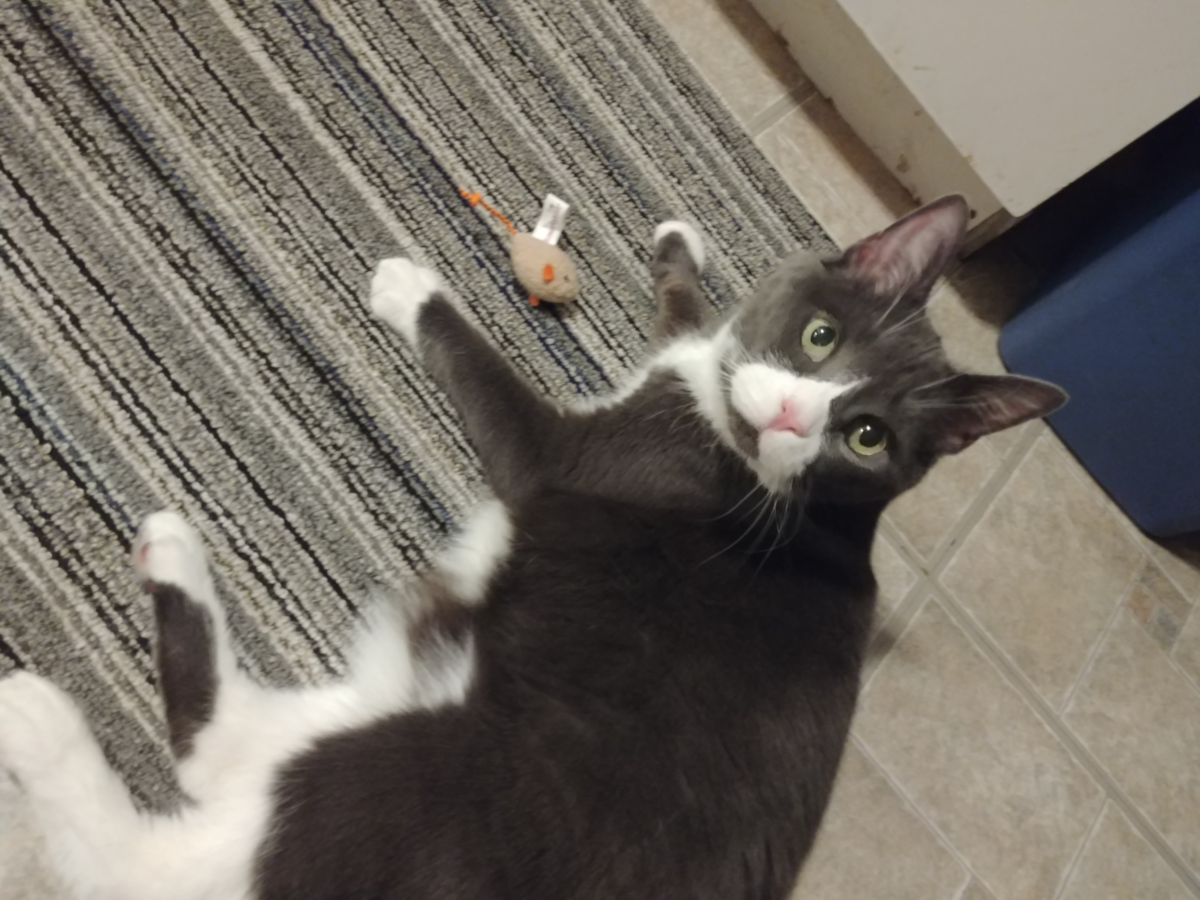
Wand toys remain useful for many older cats because owners can control the speed, distance, and direction of movement. A feather, fabric mouse, or soft attachment can be presented close to the floor rather than swung overhead to encourage jumping. This allows cats that still enjoy stalking and capturing objects to participate without repeated leaps or sudden changes in direction.
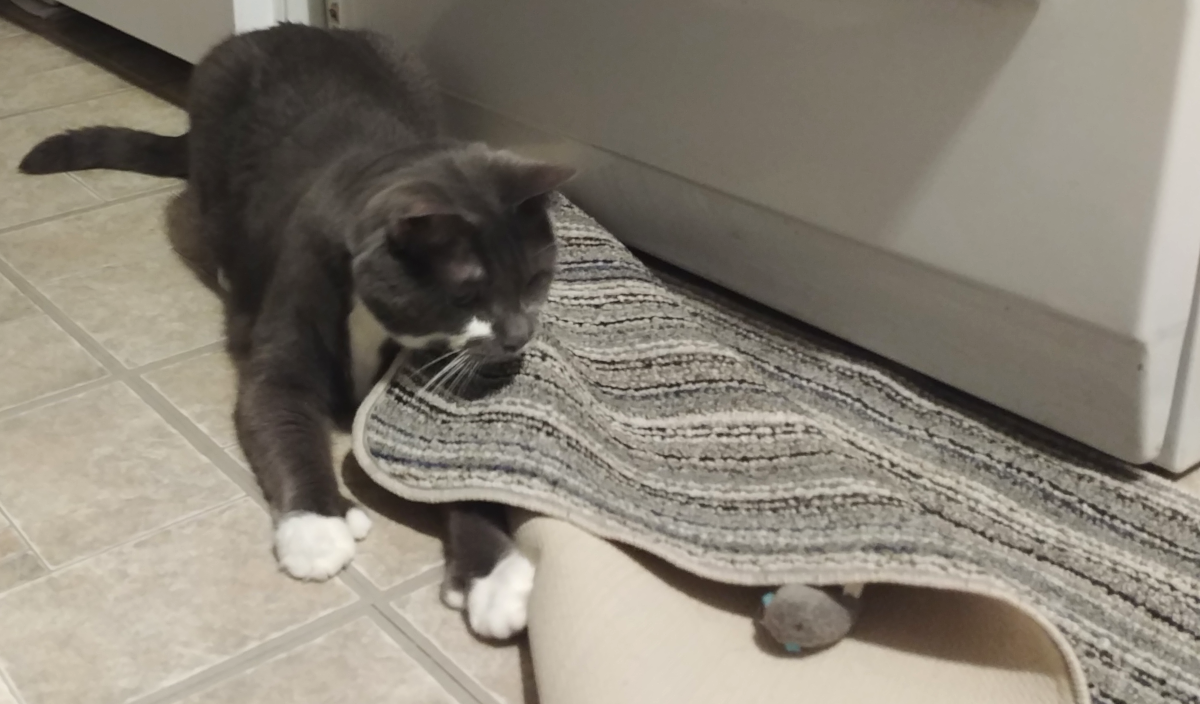
A cat with reduced mobility may prefer watching a toy move slowly across a rug before reaching forward to capture it. Brief movements followed by pauses provide opportunities for the cat to respond at its own pace. The attachment should remain within comfortable reach, particularly if the animal has difficulty standing or shifting its weight.
The AAFP and ISFM Feline Environmental Needs Guidelines recognize interactive play, food puzzles, and opportunities to express hunting-related behaviors as meaningful parts of a cat’s environment. These veterinary guidelines also acknowledge that older cats may require modifications to the type and intensity of play offered.
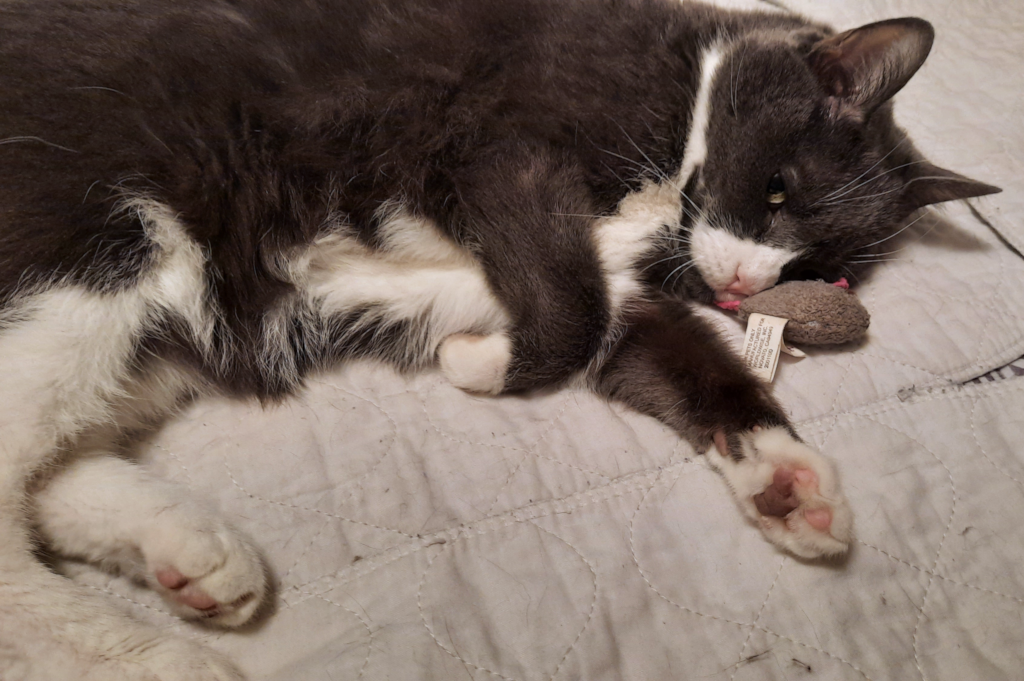
Some cats prefer participating while lying on their sides or resting comfortably on a soft surface. Moving a small toy within easy pawing distance allows the animal to bat at it without repeatedly standing or changing positions. Owners should avoid encouraging extensive stretching or twisting simply to keep the cat engaged.
An important feature of wand play is allowing the cat to capture the attachment occasionally. Continuously pulling the toy away can make the activity frustrating and encourage unnecessary pursuit. Brief captures allow the cat to grasp or investigate the object before the next movement.
Wand toys should be stored safely after supervised play. Strings, feathers, elastic cords, and detachable components can become dangerous if swallowed, particularly when cats are left alone with them.
Soft Kicker Toys and Floor-Level Cat Games
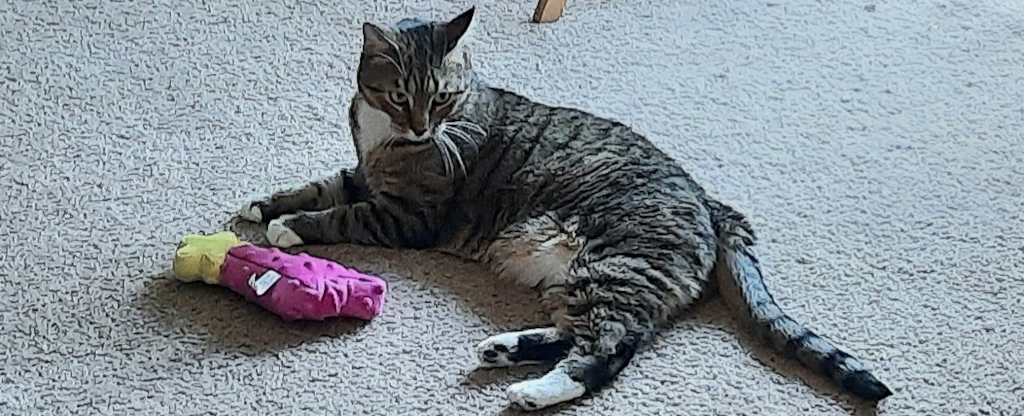 Soft kicker toys provide another possibility for cats that enjoy grabbing and holding objects. These elongated fabric toys are designed for grasping with the front paws and sometimes kicking with the hind legs. An older cat may prefer holding, pawing, or gently biting the toy rather than engaging in vigorous kicking.
Size and weight influence how comfortably a cat can manipulate these objects. A lightweight fabric toy may be easier to position than a large, heavily stuffed one, particularly for an animal with restricted movement. Toys with hard internal components or exposed decorative attachments should be avoided when they could create discomfort or ingestion hazards.
Small fabric mice and soft balls can be incorporated into stationary games. Instead of throwing the object across the room, roll it a short distance within the cat’s reach. Some cats will extend a paw to stop the movement, while others may investigate the object after it comes to rest.
A shallow cardboard play box can introduce variety without requiring climbing. Place several appropriately sized toys inside a low-sided container so the cat can retrieve or manipulate them from outside. If reaching into the box requires awkward stretching, reduce the height or bring the toys closer.
Cats with significant mobility limitations may benefit from activities arranged beside their preferred resting areas. Familiar flooring and comfortable body positioning can make participation easier without repeatedly requiring the animal to move between locations.
Modified Fetch and Rolling Games for Older Dogs
Dogs that have enjoyed fetch throughout their lives may continue showing interest in balls even after running becomes uncomfortable. The game can often be modified by reducing the distance, speed, and physical expectations involved.
Rolling a soft ball slowly along the floor is one option. The dog can follow it for a few steps, stop it with a paw, or retrieve it from a nearby location. A short hallway or uncluttered room with dependable traction may help prevent abrupt turns and slipping.
For dogs with greater mobility limitations, even walking several steps to retrieve an object may be demanding. The owner can instead roll the ball directly toward the animal or encourage a gentle nose touch. This preserves an element of the familiar game without requiring pursuit.
The choice of ball also deserves attention. Lightweight toys that roll predictably are generally easier to control than heavy balls or objects that bounce unpredictably. Balls must be large enough that the dog cannot swallow or lodge them in its throat, and they should be made from materials appropriate for the animal’s chewing habits.
Stationary toy exchanges provide another way to encourage interaction. Present one familiar object, allow the dog to investigate or hold it, and then offer a second toy. Dogs that understand simple cues such as “touch,” “take,” or “give” may enjoy practicing these behaviors with little physical movement.
Tug toys require additional judgment because forceful pulling can place stress on the neck, back, and limbs. Sudden jerking, twisting, or strong resistance may be unsuitable for dogs with orthopedic problems. Animals that enjoy holding a soft tug toy can sometimes participate in gentle, low-resistance interactions, but pulling games should be avoided when the movement causes discomfort or conflicts with activity restrictions.
Choosing Toys for Pets With Vision or Hearing Changes
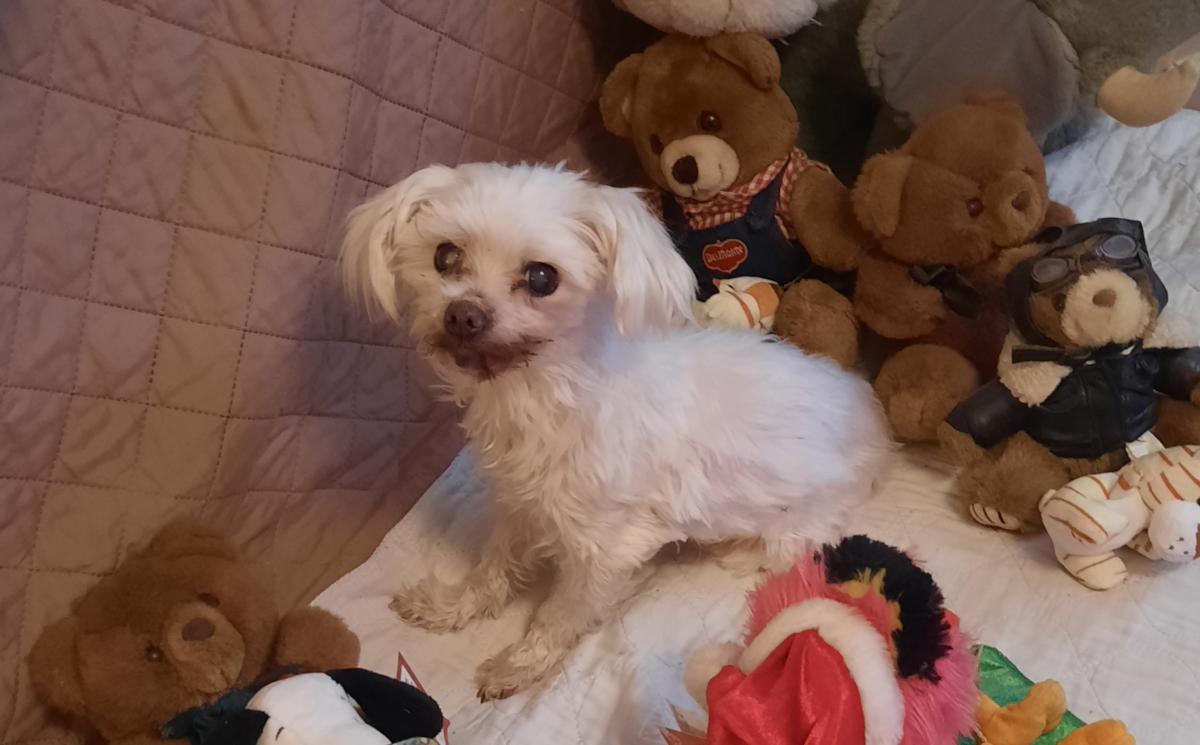 Sensory changes can affect how successfully an older dog or cat interacts with toys. An animal with impaired vision may have difficulty locating objects, while hearing loss can reduce the usefulness of toys that depend primarily on sound.
Dogs with declining vision may respond better to familiar toys with distinctive textures or recognizable scents. Keeping activities within a predictable area can make objects easier to locate while reducing the chance of collisions with furniture. A ball that produces a gentle sound may also help some dogs locate it, provided their hearing remains adequate.
Pets with hearing loss may benefit from visual cues or direct presentation of familiar objects. Slowly introducing a toy within the animal’s field of view can establish the activity without causing unnecessary surprise. Owners should avoid approaching a resting animal abruptly or touching it unexpectedly simply to initiate play.
Cats with reduced vision may continue enjoying toys they can locate through scent or direct contact. A familiar fabric mouse placed near the front paws allows investigation without requiring the cat to track something moving across the room. Toys that move unpredictably may be less suitable for animals that also have balance or coordination difficulties.
Commercial motorized toys deserve particular consideration. Some travel quickly, reverse direction without warning, or encourage animals to chase them around furniture. A slower, owner-controlled toy usually makes it easier to adjust the activity to the pet’s responses.
Making Food-Based Enrichment Appropriate for Chronic Illness
Food-based toys require additional planning for animals with diabetes, obesity, kidney disease, food allergies, or prescription dietary requirements. Treats that are suitable for one pet may be inappropriate for another, particularly when the animal’s diet is being used to manage a medical condition.
One practical approach is to reserve a measured portion of the animal’s regular daily food for enrichment rather than adding extra calories. This may work well for pets that can safely eat their prescribed food in small portions throughout the day. However, any arrangement should remain consistent with the animal’s nutritional needs and established feeding routine.
Diabetic pets require particular attention because food intake and insulin treatment may be closely related. Feeding schedules differ between dogs and cats and also depend on the prescribed insulin and individual treatment plan. A puzzle should not unexpectedly delay a required meal or make it difficult to determine how much food the animal has actually consumed.
Food puzzles are best used as optional enrichment rather than obstacles that pets must overcome to receive adequate nutrition. If an animal becomes tired, frustrated, or unwilling to finish the food, the remaining portion should be made accessible according to its normal feeding plan. Owners should not alter prescribed medication or insulin schedules to accommodate a new toy.
Creating a Comfortable Indoor Play Area
Even a suitable toy can become difficult to use when the surrounding environment creates mobility problems. Hardwood, tile, and laminate flooring may provide insufficient traction for animals struggling with balance or joint stiffness. A washable, nonslip rug or securely positioned floor mat can offer a more dependable surface.
The American Animal Hospital Association’s 2023 senior pet pain management guidelines discuss environmental adjustments such as suitable flooring, ramps, accessible litter boxes, and other accommodations for pets with mobility difficulties. These recommendations address general comfort and movement, but many are also useful when preparing an indoor play area.
Toy placement should reflect the animal’s comfortable standing and resting positions. A puzzle positioned too far away may require repeated stretching, while an unstable toy can slide across the floor and force the animal to follow it. Keeping objects within easy reach allows the pet to investigate without unnecessary repositioning.
For dogs, a small designated play area can prevent a quiet game from turning into uncontrolled running. Cats may prefer a quieter location away from energetic household animals, particularly when they need additional time to investigate objects.
Multi-pet households may benefit from separate play sessions. An older animal can become frustrated or physically overwhelmed when a younger companion repeatedly steals toys or interrupts food puzzles. Providing individual access also makes it easier to observe whether the senior pet is genuinely interested in the activity.
Interactive toys should be inspected regularly for wear. Torn fabric, exposed stuffing, damaged plastic, loose strings, and detachable components can present ingestion or choking hazards. Any toy that breaks apart easily or encourages destructive chewing should be removed before it creates a problem.
Recognizing When Play Is Becoming Uncomfortable
 An animal’s response during and after an activity provides useful information about whether the game is appropriate. A pet may appear enthusiastic initially but gradually demonstrate that continued movement is becoming difficult.
Dogs may begin moving more slowly, repeatedly sit down, hesitate before changing direction, or develop a noticeable limp. Some become reluctant to retrieve an object despite continuing to watch it with interest. These changes may indicate discomfort, fatigue, or another limitation affecting participation.
Cats can be more difficult to assess because signs of discomfort are often subtle. An affected cat may withdraw from the toy, become reluctant to change positions, or stop attempting movements it previously performed comfortably. Irritability during handling or reduced participation can also provide useful information, although these behaviors do not establish a diagnosis.
Owners should pay attention to what happens after the game ends. Increased stiffness following rest, difficulty rising, or reduced willingness to move later in the day may suggest that an activity was too demanding. Comparing these observations with the animal’s usual behavior can help identify patterns.
Beginning with brief, uncomplicated sessions provides an opportunity to assess interest and tolerance. A few minutes may be enough for an animal with substantial mobility limitations, while another pet may comfortably participate for longer. There is no universal session length, and enthusiasm alone does not guarantee that an activity is physically appropriate.
Persistent limping, worsening mobility, repeated signs of pain, or a substantial decline in activity warrant veterinary assessment. Sudden inability to stand or bear weight, severe pain, or suspected injury requires prompt attention rather than further attempts at exercise.
Recording which activities a pet enjoys, how long it participates comfortably, and whether stiffness appears afterward can be helpful. Short videos showing movement during ordinary activities may provide useful context during veterinary appointments, particularly when symptoms are intermittent or less apparent outside the home.
Keeping Interactive Play Interesting as Mobility Changes
An older pet does not necessarily need increasingly complicated toys to remain interested. Changing how a familiar object is presented can introduce variety while keeping the physical demands manageable.
A soft ball might be rolled gently one day and placed partly beneath a towel the next. A cat’s fabric mouse can be presented near a favorite resting area, inside a shallow box, or beside a familiar scratching surface. These adjustments create different opportunities to investigate without increasing the amount of movement required.
Rotating a small selection of toys can also help maintain interest. Rather than leaving every interactive object available continuously, owners can exchange several familiar choices periodically. Any toy that the animal regularly uses for resting or comfort can remain available.
Some pets eventually develop limitations that make even modified games difficult. In those circumstances, play can become more stationary, with objects brought to the animal rather than expecting it to move toward them. A dog may enjoy selecting between two familiar toys using a nose touch, while a cat resting comfortably may prefer gently batting at a soft object placed nearby.
Pets recovering from orthopedic surgery or managing unstable injuries may require more restrictive activity limits than animals with uncomplicated chronic joint disease. Even gentle play can involve unexpected twisting, reaching, or attempts to stand. Any prescribed movement restrictions should take priority over enrichment activities until the animal is cleared to resume them.
As mobility changes, it can be useful to keep a few familiar toys that can serve several purposes. A soft ball that once supported short retrieval games may later become a stationary nose-touch toy, while a wand attachment can be moved closer as a cat’s comfortable reach decreases. These practical adjustments allow familiar interactions to continue without requiring an animal to repeat movements that have become difficult.