



A bag of chicken-flavored treats might seem like a reasonable purchase for a diabetic cat, just as a package of soft beef treats might appear to be a suitable reward for a senior dog. Turn those packages around, however, and the ingredient lists may reveal substances such as dextrose, cane molasses, corn syrup, or maltodextrin. Some are added sugars, while others are carbohydrates or processing ingredients that serve different purposes in the finished product.
Identifying these ingredients becomes particularly useful when caring for a diabetic pet, managing an animal’s weight, or maintaining a consistent feeding routine. Commercial pet treats do not always provide the detailed sugar and carbohydrate information that people have become accustomed to seeing on human food packaging. Owners are often left examining ingredient lists and contacting manufacturers to determine whether a product meets their animal’s nutritional needs.
Commercial treats can have a perfectly reasonable place in a pet’s diet, particularly when they help with training, medication administration, or daily caregiving routines. Understanding what those treats contain allows owners to make more informed decisions without relying entirely on the nutritional claims and attractive imagery displayed on the front of the package.
Why Manufacturers Add Sugar to Pet Treats
Sugar serves several purposes in commercial pet food manufacturing, some of which have little to do with sweetness. It can contribute to browning during baking, influence texture, retain moisture, and improve the appeal of certain products. These characteristics are useful when producing soft, chewy treats intended to maintain their consistency throughout their shelf life.
Ingredients that attract and retain moisture are known as humectants. A 2023 scientific review of pet food palatability and manufacturing describes the use of simple sugars, corn syrup, glycerol, and other humectants in semi-moist pet foods to control water activity. Water activity refers to the amount of water available to support microbial growth and chemical reactions within a product, rather than simply its total moisture content. Controlling water activity forms part of the manufacturing process used to maintain product stability.
Dogs possess functional sweet taste receptors and can find sweet ingredients appealing. Cats, however, lack a functional version of the conventional mammalian sweet taste receptor, a difference established through genetic research published in PLOS Genetics. Sugar in a cat treat may therefore serve manufacturing purposes or influence characteristics such as texture and aroma rather than providing a sweet taste the cat can recognize.
The inclusion of sugar does not automatically establish that a product is poorly manufactured or nutritionally inappropriate. Understanding why manufacturers include these ingredients does, however, help explain why even savory, meat-flavored treats sometimes contain added sweeteners.
Recognizing the Different Names for Added Sugar
The easiest sugars to identify are those appearing under familiar names, such as sugar, cane sugar, brown sugar, honey, and maple syrup. Other ingredients are less recognizable, particularly if you are unfamiliar with food manufacturing terminology. Dextrose, for example, may sound like a specialized food additive, but it is another name for glucose.
Common sugar and sugar-containing ingredients to watch for in commercial dog and cat treats include:
- Sucrose: Common table sugar.
- Dextrose: Another name for glucose.
- Fructose: A simple sugar found naturally in fruit and other foods.
- Maltose: A sugar consisting of two glucose molecules.
- Corn syrup: A sweetener produced from corn starch that contains glucose and other carbohydrates.
- Glucose syrup: A starch-derived syrup containing glucose and other carbohydrates.
- High-fructose corn syrup: A corn-derived sweetener containing glucose and fructose.
- Cane molasses: A sugar-containing syrup produced during sugarcane processing.
- Invert sugar: A mixture of glucose and fructose produced by breaking down sucrose.
- Rice syrup or brown rice syrup: A sweetener produced through the breakdown of rice starch.
- Honey, agave syrup, and maple syrup: Naturally derived sweeteners that contribute dietary sugars.
- Fruit juice concentrates: Ingredients that can contribute concentrated amounts of naturally occurring sugars.
Several sweeteners may appear within the same formulation. A manufacturer might include dextrose, molasses, and corn syrup, with each appearing separately in the ingredient statement. Their combined contribution could be greater than their individual positions on the list suggest, although those positions cannot establish the quantities involved.
Ingredient names alone cannot determine how much sugar a treat contains. A product containing several sweeteners could contain less total sugar than one containing only a single sweetener, depending on the amounts used. The ingredient statement is most useful as a screening tool that helps owners identify products requiring further investigation.
Carbohydrates That Are Easily Mistaken for Sugar
Maltodextrin deserves particular attention because it does not fit neatly into the category of simple sugars. Produced through the partial breakdown of starch, conventional maltodextrin may be used as a carrier, thickener, or bulking ingredient. Although it consists primarily of glucose molecules joined together in chains, digestible maltodextrin can be broken down into glucose during digestion.
Potato starch, tapioca starch, rice flour, corn flour, and wheat flour also contribute carbohydrates without necessarily containing substantial amounts of simple sugars. These ingredients provide structure to biscuits, bind ingredients together, and help manufacturers achieve particular textures. A treat containing no added sugar can consequently contain a considerable amount of digestible starch.
Glycerin, sometimes listed as glycerol or vegetable glycerin, requires a different explanation. It is a sugar alcohol commonly used to maintain moisture and softness in treats. The body can metabolize glycerol for energy, but its presence does not establish that a product will produce the same blood glucose response as an equivalent quantity of glucose or sucrose.
Dietary fiber also belongs to the broader carbohydrate category, although its nutritional properties differ considerably from those of readily digestible starches and sugars. Certain types and amounts of fiber can be beneficial in the dietary management of diabetic dogs. Automatically rejecting every carbohydrate-related ingredient would overlook these differences and could eliminate products that are otherwise appropriate for an animal’s nutritional needs.
Understanding What the Ingredient List Actually Reveals
 Under United States pet food labeling requirements, ingredients are listed in descending order by weight. The Association of American Feed Control Officials’ guide to reading pet food labels explains how ingredient statements are organized and what nutritional information manufacturers provide. Ingredient order reflects the weight of ingredients used in the formulation, including their moisture content, rather than their individual contribution to the nutritional composition of the finished product.
Consider a hypothetical soft chicken treat containing chicken, wheat flour, vegetable glycerin, cane molasses, corn starch, and natural flavoring. Chicken appears first, but the ingredient statement does not reveal how much water the chicken contributed during manufacturing or how much digestible carbohydrate remains in the finished treat. The percentage of carbohydrate attributable to molasses is equally difficult to determine.
Traditional guaranteed analysis panels generally provide minimum percentages for crude protein and crude fat, along with maximum percentages for crude fiber and moisture. They do not ordinarily provide a detailed breakdown of total sugars, added sugars, and digestible starches. Updated American pet food labeling standards developed through AAFCO’s Pet Food Label Modernization initiative introduce more standardized nutritional information, including carbohydrate declarations for applicable products, although implementation and packaging transitions mean owners may encounter different labeling formats.
Some owners estimate carbohydrate content by subtracting the percentages of protein, fat, crude fiber, moisture, and ash from 100. This calculation produces an approximation of nitrogen-free extract, a fraction that includes much of the food’s digestible carbohydrate. It is an imperfect estimate because guaranteed minimum and maximum values do not necessarily represent actual nutrient concentrations, crude fiber does not account for all dietary fiber, and ash content may be unavailable.
Even a reasonably accurate carbohydrate estimate cannot establish how much added sugar a product contains. Owners managing diabetes will generally obtain more useful information by requesting typical nutrient analyses directly from manufacturers rather than relying exclusively on calculations based on packaging.
The Relationship Between Sugary Treats and Obesity
Commercial treats can contribute to excessive calorie consumption, particularly when several members of a household reward the same animal throughout the day. Biscuits, dental chews, snacks offered during medication administration, and rewards given during training all contribute to the animal’s daily energy intake. Because these foods are offered outside regular meals, their combined calorie content can easily be overlooked.
The Clinical Nutrition Service at Tufts University’s Cummings School of Veterinary Medicine explains that common dietary sugars, including honey, brown sugar, and molasses, are generally safe for healthy pets in appropriate amounts. Its guidance recommends that nutritionally incomplete treats and other extras account for no more than 10 percent of a healthy pet’s daily calorie intake.
For an animal with an established daily requirement of 200 calories, that general upper limit would amount to 20 calories from treats and other extras. Five treats containing four calories each would account for the entire allowance. Animals receiving therapeutic diets or being treated for particular medical conditions may require considerably stricter limits.
Excessive calorie consumption can contribute to obesity, an established risk factor for feline diabetes. However, the presence of sugar in a treat does not establish that the product directly causes diabetes in dogs or cats. Fat and other energy-producing nutrients also contribute calories, so a sugar-free treat can still interfere with weight management if its calorie content is excessive.
Body condition deserves individual consideration, particularly in older animals. An overweight senior dog may benefit from fewer calorie-dense rewards, while an underweight older cat struggling to maintain muscle mass and adequate food intake may need additional nutritional support. Age alone does not establish whether a pet should consume fewer calories.
Hidden Sugars and Feline Diabetes Management
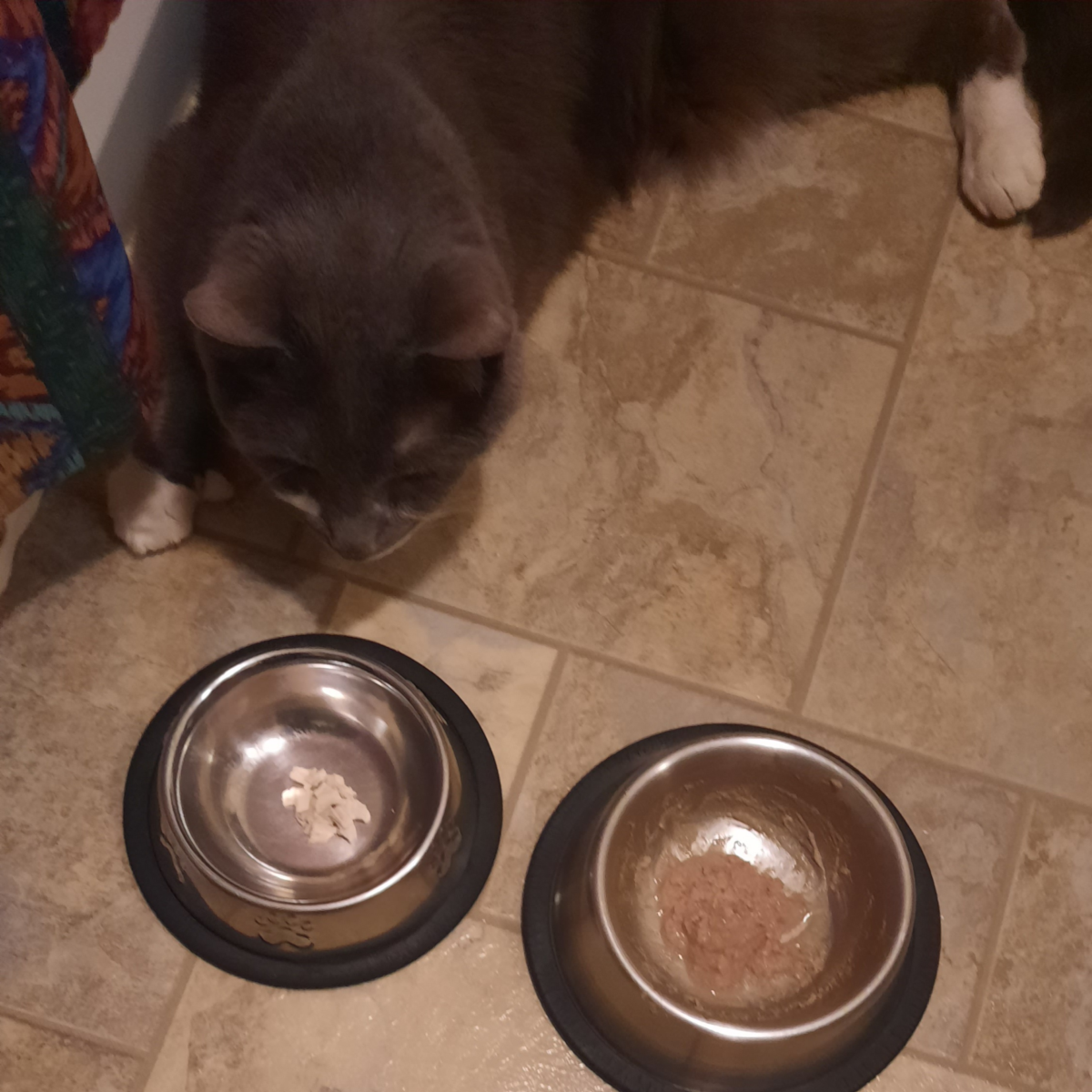 Our experience at BellenPaws with feline diabetes includes managing Zippy through tight regulation and achieving diabetic remission, as well as the ongoing care of Bentley, who receives insulin injections twice daily. Blood glucose monitoring is an important component of tight regulation, and understanding what an animal consumes provides useful context for interpreting those measurements. Although the experience of an individual cat cannot establish a universal treatment approach, dietary consistency and detailed records are practical considerations for anyone managing feline diabetes.
Insulin helps regulate blood glucose by promoting glucose uptake in certain tissues and limiting glucose production by the liver. In diabetic cats, insufficient insulin secretion, reduced responsiveness to insulin, or a combination of both interferes with normal glucose regulation. Dietary sugars and digestible starches can influence blood glucose following food consumption, making the overall carbohydrate content of meals and treats relevant to diabetes management.
The 2026 AAHA Diabetes Management Guidelines for Cats identify relatively high-protein, reduced-carbohydrate diets as beneficial for many diabetic cats. Dietary recommendations must also account for body condition, adequate calorie consumption, food preferences, and concurrent illnesses. Cats with chronic kidney disease, pancreatitis, intestinal disease, or other medical complications may require a nutritional approach that accommodates competing dietary priorities.
A small carbohydrate-containing treat will not necessarily produce a substantial or measurable glucose increase in every diabetic cat. Its effect depends on the amount consumed, the overall nutritional composition of the food, insulin activity, timing, and the animal’s individual response. Regularly offering treats with an unknown carbohydrate content nevertheless introduces another variable when evaluating glucose measurements.
A substantial reduction in dietary carbohydrate consumption can also reduce insulin requirements in some diabetic cats. If the existing insulin regimen no longer matches the animal’s needs, blood glucose may fall to dangerously low levels. Significant dietary changes should be planned with the veterinary team, accompanied by appropriate glucose monitoring and any professionally directed treatment adjustments.
Treat Selection for Diabetic Dogs
Nutritional management of canine diabetes differs from that of feline diabetes. Most diabetic dogs require lifelong insulin therapy, and their dietary management generally emphasizes consistent food consumption, appropriate body condition, and a suitable balance of nutrients. A low-carbohydrate feeding strategy developed for a diabetic cat should not automatically be applied to a diabetic dog.
Veterinary guidance from the Canadian Academy of Veterinary Nutrition, published through VCA Animal Hospitals, explains how nutrition supports the management of canine diabetes. The appropriate balance of protein, fat, and dietary fiber depends partly on the dog’s body condition, glucose control, and accompanying medical conditions.
A diabetic dog may receive carefully measured meals while also consuming biscuits whenever someone enters the kitchen. Larger dental chews and edible training rewards can contribute additional calories and carbohydrates, particularly when given frequently. Including these foods in the dog’s dietary history helps the veterinary team evaluate the complete feeding routine rather than the nutritional composition of regular meals alone.
Avoiding unnecessary added sugars is a reasonable consideration when selecting rewards for a diabetic dog, but the remaining nutritional characteristics of the treat still matter. A high-fat meat treat, for instance, may be unsuitable for a dog with pancreatitis or another condition requiring dietary fat restriction.
The Particular Danger of Xylitol
 Owners searching for sugar-free alternatives should be familiar with xylitol, a sugar alcohol used as a sweetener in various human foods and personal care products. It may also appear under names such as birch sugar or wood sugar. Unlike ordinary dietary sugars, xylitol presents a serious poisoning risk to dogs.
The U.S. Food and Drug Administration’s warning about xylitol toxicity explains that consuming xylitol can trigger a rapid release of insulin in dogs, resulting in hypoglycemia, or dangerously low blood glucose. Poisoning can also cause severe liver injury. Affected dogs may experience vomiting, weakness, poor coordination, collapse, or seizures, although symptoms do not necessarily appear immediately.
Xylitol is particularly relevant to owners who supplement commercial pet treats with human foods. Certain peanut butters, sugar-free baked goods, nutritional supplements, and other products may contain the ingredient. Peanut butter used to fill a dog toy or conceal medication should always be checked before feeding because manufacturers can change their formulations.
If a dog consumes or is suspected of consuming xylitol, contact a veterinarian, emergency animal hospital, or animal poison control service immediately. Do not wait for symptoms to develop or attempt to induce vomiting unless specifically instructed by a veterinary professional.
Cats do not appear to share the characteristic susceptibility to xylitol poisoning seen in dogs. A 2018 veterinary study involving six healthy cats found no evidence of the hypoglycemia or acute liver injury associated with canine xylitol exposure under the conditions studied. Nevertheless, the limited size of the study does not establish the safety of every xylitol-containing product for cats, particularly products containing other potentially harmful ingredients.
Marketing Terms That Can Distract From Nutritional Information
Terms such as natural, grain-free, premium, wholesome, and made with real chicken do not establish that a product is low in sugar or carbohydrates. A grain-free treat might contain potato starch, pea flour, or tapioca instead of wheat or corn. These substitutions can still contribute digestible carbohydrates to the finished product.
A claim of no added sugar also has limitations. Naturally occurring sugars may remain in the product, and substantial amounts of starch may be present even when no sweeteners have been added. Owners comparing products for diabetic animals need to consider the broader nutritional composition rather than focusing exclusively on sugar-related marketing claims.
Products marketed specifically for senior pets warrant similar examination. A soft texture may make a treat easier for an older animal to chew, but that characteristic does not reveal its carbohydrate, phosphorus, sodium, or fat content. These nutritional factors may carry greater significance than the age-related wording on the package when an animal has a chronic medical condition.
Choosing Commercial Treats With Fewer Unnecessary Sugars
 Single-ingredient, fully cooked and dehydrated meat treats can provide a useful starting point for owners seeking rewards with fewer digestible carbohydrates. Products made exclusively from chicken, turkey, or other suitable animal proteins generally contain little carbohydrate compared with flour-based biscuits or treats formulated with syrups. Their suitability still depends on calorie content, fat content, preparation method, and any dietary restrictions affecting the animal.
Freeze-dried products require additional consideration because freeze-drying alone does not reliably eliminate harmful microorganisms from raw animal ingredients. The Centers for Disease Control and Prevention’s pet food safety guidance advises against feeding raw pet foods and treats because of the potential for transmitting pathogens to animals and people. Choosing cooked products is particularly sensible in households with medically vulnerable pets or people at increased risk of infection.
Another option is to reserve a small portion of the pet’s regular food for use as a reward. An animal eating a prescribed therapeutic diet may already have a suitable treat alternative within that diet, particularly when commercial snacks would interfere with established nutritional restrictions. Measuring the reward from the animal’s existing daily food allowance also makes calorie consumption easier to account for.
Texture and portion size deserve attention when caring for older animals with dental disease, missing teeth, or difficulty chewing. Excessively hard treats can damage teeth, while large or awkwardly shaped pieces may be difficult for some animals to manage safely. Small portions of an appropriate soft food can provide a more comfortable alternative without introducing an unfamiliar nutritional ingredient.
Contacting the Manufacturer for Better Nutritional Information
When packaging leaves unanswered questions, contacting the manufacturer may provide information unavailable through the ingredient statement or guaranteed analysis. Manufacturers may maintain typical nutrient analyses based on testing or formulation data, which can provide more representative values than guaranteed minimums and maximums. Ask whether the company can supply information about total sugars, added sugars, starch, digestible carbohydrates, and calories per treat.
Requesting nutrient information in grams per 100 calories can make comparisons easier when products differ in moisture content, calorie density, or individual treat size. Owners of animals with kidney disease, heart disease, pancreatitis, or other dietary restrictions may also need information about phosphorus, sodium, or fat. Providing the exact product name, flavor, and packaging details helps ensure that the manufacturer identifies the correct formulation.
Some manufacturers may be unable to provide every requested nutrient value, particularly separate measurements of added sugars or digestible starch. That does not establish that a product is unsafe, but it limits the owner’s ability to assess whether the treat meets a medically specific nutritional requirement. Keeping any information supplied by the manufacturer, along with the date it was obtained, provides a useful reference if the packaging or formulation changes.
Including Treats in Your Pet’s Daily Health Records
 A daily health record for a diabetic animal becomes more informative when it includes food consumption alongside glucose readings and medication schedules. Treats given after testing, during grooming, or while administering medication can easily escape documentation because they are associated with caregiving tasks rather than regular meals. Recording their timing, type, and approximate quantity provides additional context for interpreting changes in glucose patterns.
The BellenPaws online pet diabetes tracker and printable glucose forms help owners organize glucose measurements and share records with their veterinary team. A separate food diary or notes accompanying those records can document treats, changes in appetite, and other dietary variables. If glucose measurements change after introducing a new treat, that observation may warrant further investigation, although timing alone does not establish causation because illness, stress, insulin activity, and other factors can also affect glucose regulation.
In households with several caregivers, keeping an established daily treat allowance in a small container can help everyone recognize how much has already been given. Once that allowance has been reached, additional rewards can take the form of play, attention, or another activity the animal enjoys. Reserving part of the allowance specifically for glucose testing or medication administration also preserves those familiar caregiving routines without unintentionally increasing the animal’s daily food consumption.