
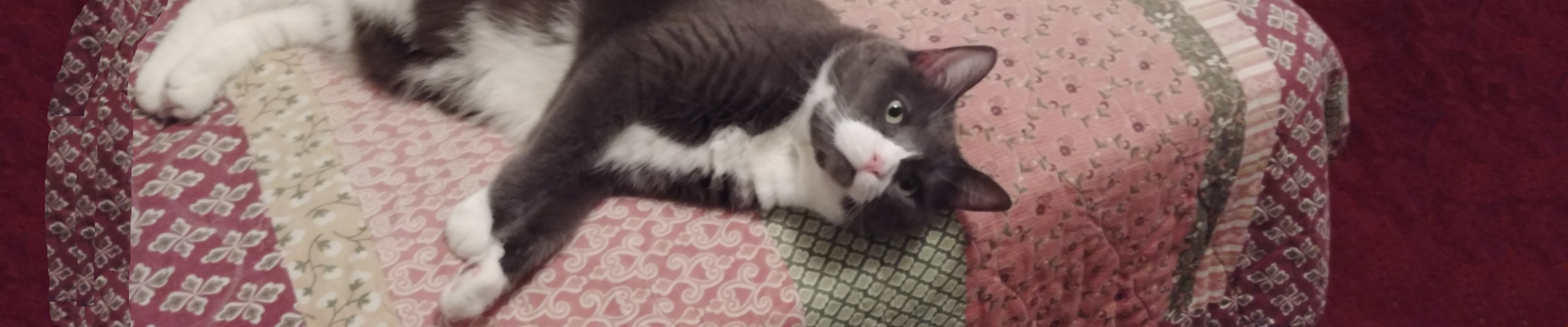
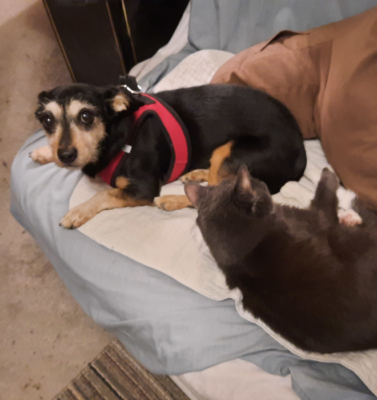
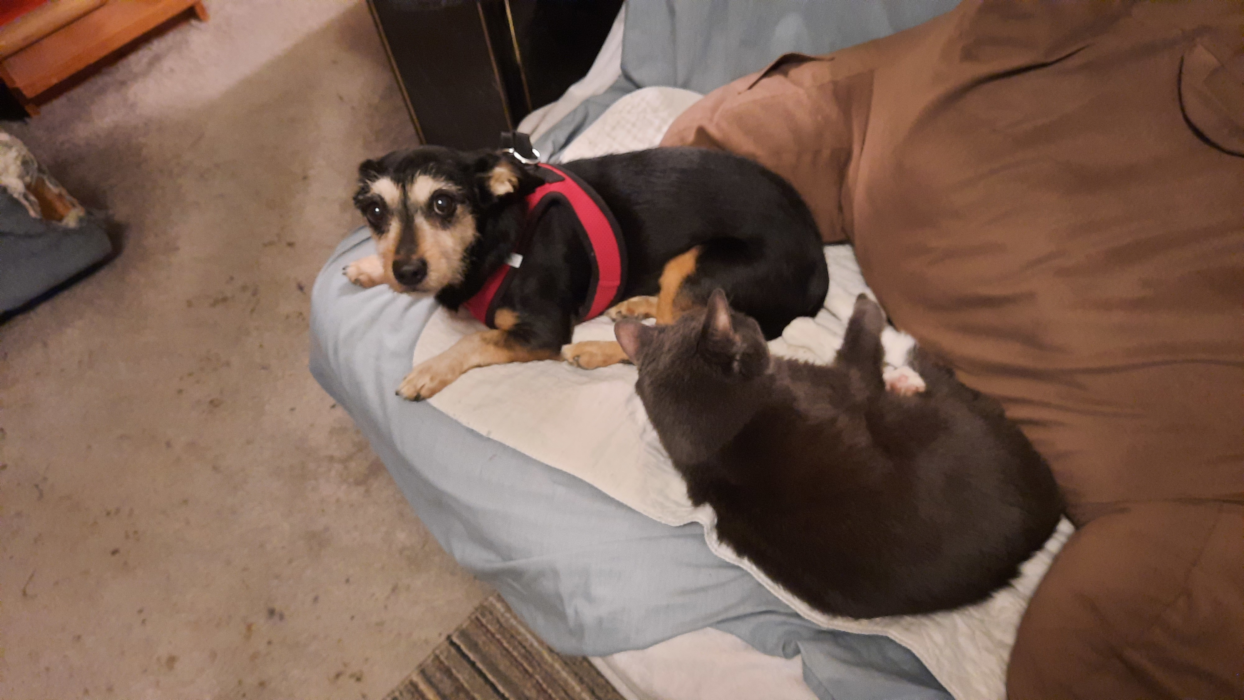
Cats and dogs can live together beautifully, but I do not believe in pretending it always happens like a cute greeting card. Sometimes it is peaceful right away. Sometimes it is awkward for weeks. Sometimes the dog thinks the cat is a squeaky toy with opinions, and the cat thinks the dog is an invading woolly mammoth with bad manners.
The good news is that many cats and dogs can share a home safely and comfortably when the humans slow things down, respect each animal’s limits, and stop expecting instant friendship. Peace usually comes from structure first, affection later. That is especially true in homes with senior pets, diabetic pets, blind pets, arthritic pets, or animals with long-standing habits.
At BellenPaws, we care deeply about senior pets because we have lived with so many of them. Belle and Paws, our founding cats, taught us that older pets deserve patience, dignity, and a home that works for their changing bodies. Over the years, we have cared for cats with hyperthyroidism, kidney disease, high blood pressure, cancer, blindness, obesity, heart issues, injuries, and diabetes. We have also loved dogs with their own personalities, needs, and quirks. That kind of house teaches you something very plain. Harmony is not luck. It is management.
Start With Respect, Not Fantasy
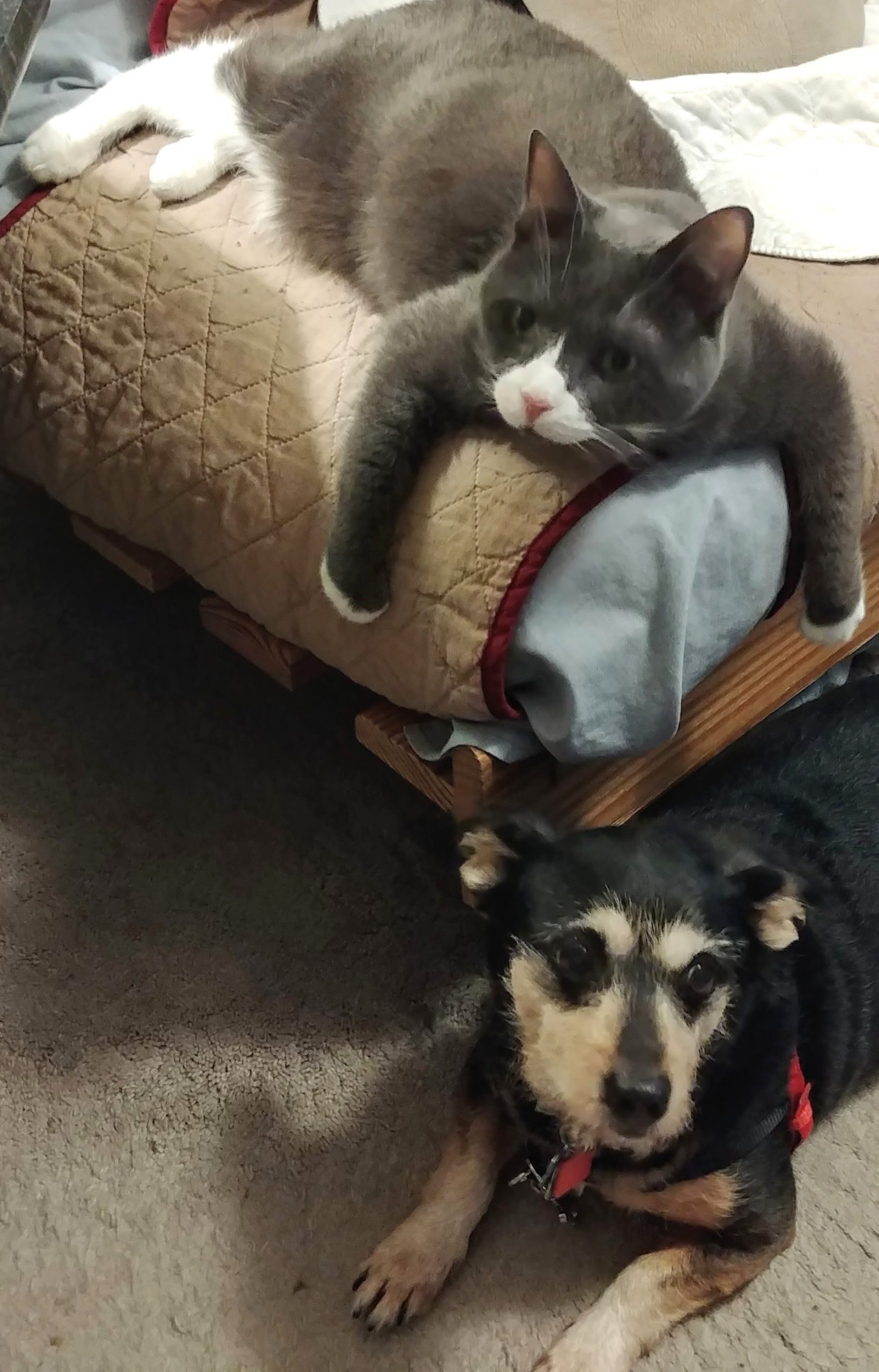 A cat and dog relationship should not begin with the idea that they need to become best friends. That puts pressure on everyone, including the pets. A better goal is safety, then calm, then comfort. Friendship is a bonus.
Some cats will curl up beside a dog and nap like they have shared rent for years. Others will tolerate the dog from a sunny windowsill and never ask for more. Some dogs will ignore cats completely. Others need months of training before they can stop staring, chasing, whining, or pushing boundaries.
That does not mean anyone has failed. Animals have instincts, histories, fears, and preferences. A senior cat who has never lived with dogs may not find a bouncy young dog charming. A rescue dog with a high prey drive may need serious supervision around cats. A diabetic cat who already lives on a routine may become stressed if a dog suddenly storms through feeding areas or sleeping spots. Respect means letting each pet be who they are, not who we pictured them becoming.
The First Rule Is Safe Separation
The biggest mistake people make is letting the cat and dog “work it out.” That can go badly fast. A single chase can make a cat fearful for months. One defensive swipe can injure a dog’s eye. One rough grab can be tragic for a cat, especially a small, elderly, or fragile one.
The safer approach is separation at first. Use doors, baby gates, crates, leashes, and closed rooms. Let them smell each other before they meet face to face. Swap bedding. Feed them on opposite sides of a closed door if both are calm. Let the smell become normal before the visual introduction begins.
Cats need escape routes. Always. A cat should have high places, rooms the dog cannot enter, and quiet areas where food, water, litter boxes, and beds are protected. A dog should not be able to corner a cat in a hallway, bathroom, laundry room, or under furniture. The cat needs to believe, “I can leave.” The dog needs to learn, “I do not get to chase.”
Senior Pets Need Extra Patience
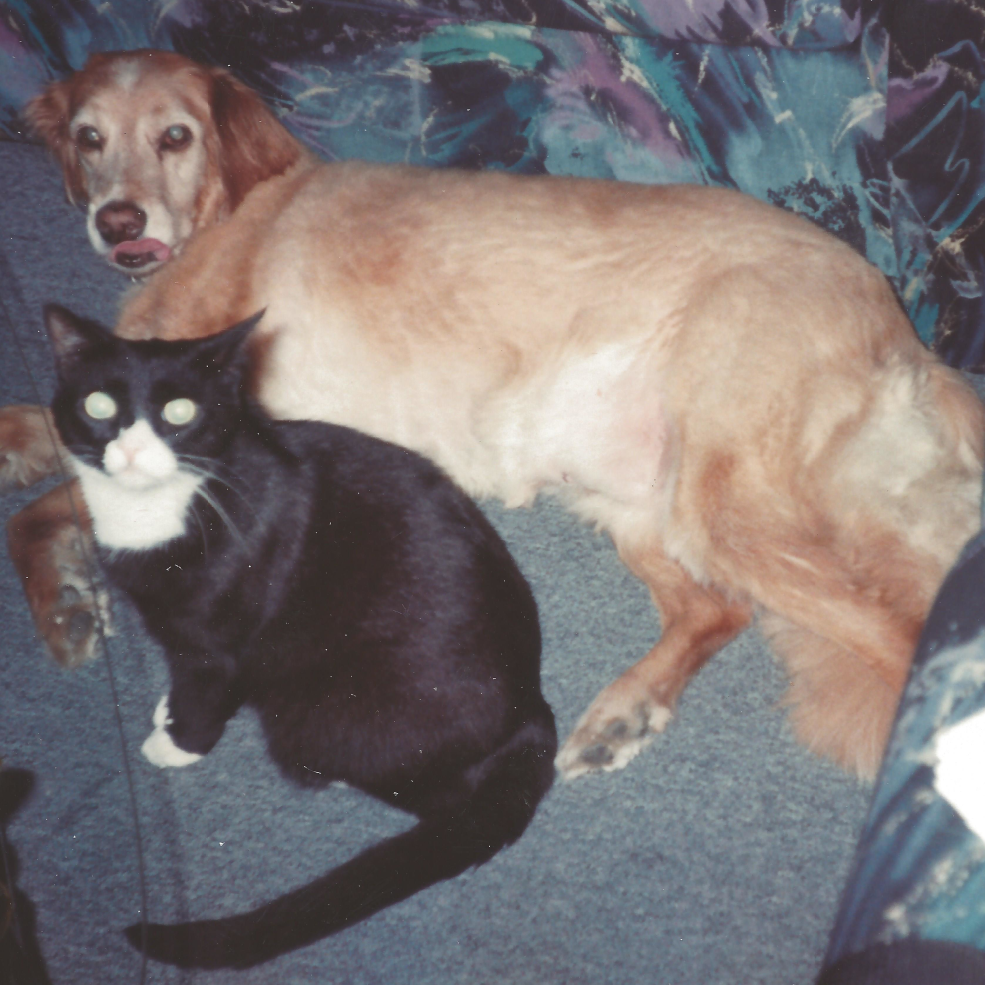 Senior pets often need a slower introduction because their bodies and senses are not what they used to be. A younger cat may spring onto a cat tree without thinking. An older cat with arthritis may need steps, ramps, or lower resting spots. A young dog may back away quickly after a warning hiss. An older dog with poor hearing may miss the cat’s signals and accidentally push too close.
With Belle, Paws, and the many older cats we have loved, we learned that stress can show up in subtle ways. A senior cat may not start a dramatic fight. They may just hide more, eat less, groom too much, stop using favorite resting spots, or avoid the litter box area if the dog is nearby. Those changes matter.
Older dogs also deserve protection. A senior dog with stiff hips may not want a cat darting across their bed. A dog with vision loss may startle when a cat appears suddenly. A dog with heart issues, pain, or anxiety may not handle constant excitement well.
Peace in a mixed pet home often means making the house easier on aging bodies. Non-slip rugs, separate beds, raised bowls when appropriate, low-entry litter boxes, pet stairs, baby gates, and predictable routines can make a big difference.
Dogs Must Learn Manners Around Cats
Many dogs do not mean harm. They are excited, curious, playful, or confused. That does not make chasing acceptable. A cat should not have to live as the household entertainment system. Basic dog manners matter. A dog living with cats should learn reliable commands such as sit, stay, leave it, come, and place. The dog should be rewarded for calm behavior around the cat, not just corrected after getting too excited. Calm looking, calm sniffing, and calm disengaging are all worth praising.
A leash is helpful during early meetings. Not a tight, tense leash that turns the moment into a wrestling match, but a calm safety line. The dog should not be allowed to rush the cat. Short sessions are better than long ones. A few peaceful minutes can build confidence. A twenty-minute session that ends in chasing can undo progress.
Some dogs have strong prey drive. That does not make them bad dogs, but it does mean the human has to be honest. If a dog locks onto the cat, stalks, trembles, lunges, or cannot be redirected, professional help may be needed. In some homes, full freedom together may never be safe. That is not dramatic. That is responsible.
Cats Need Their Own Territory
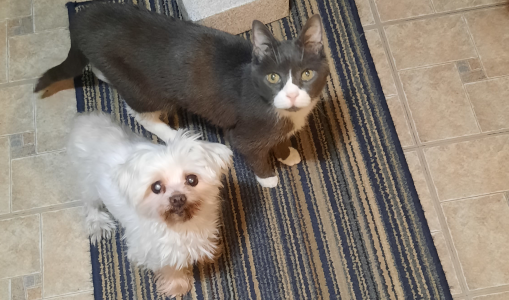 Cats are territorial creatures. Even friendly cats need places where they are not bothered. In a cat and dog household, vertical space is gold. Cat trees, shelves, window perches, furniture paths, and gated rooms give cats control over distance.
Litter boxes need special attention. Dogs often investigate litter boxes, and some dogs treat them like the worst buffet on earth. Gross, but common. Cats may refuse to use a box if a dog blocks the path, sniffs them while they are inside, or raids the area afterward.
Place litter boxes where the cat can enter easily and the dog cannot. A baby gate with a small cat opening can work. A room with a cat door can work. For senior cats, make sure the entrance is not too high or difficult. A stiff old cat should not have to perform gymnastics just to use the bathroom.
Food should also be protected. Cats often graze, while dogs tend to inhale food like they are racing history itself. A cat’s food area should be dog-free. This becomes even more serious if the cat is diabetic, on a prescription diet, underweight, or taking medication with meals.
Diabetic Pets Need Routine and Calm
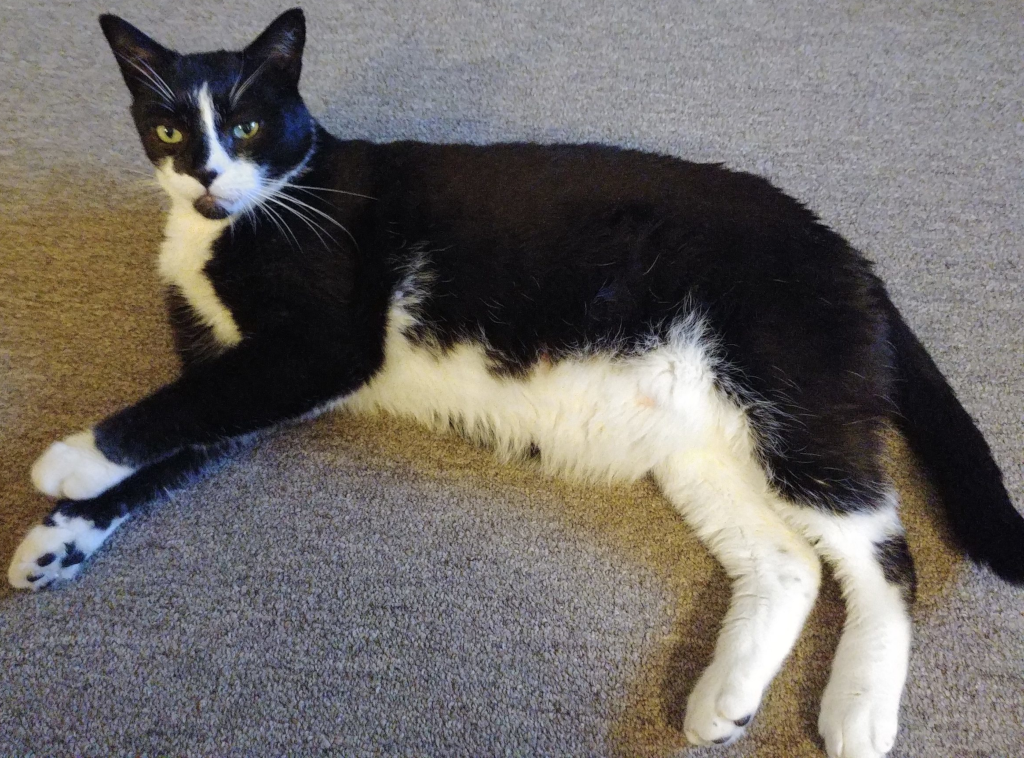 A diabetic pet does best with routine. Food timing, insulin timing, testing, and observation all matter. In our house, Zippy’s remission through tight regulation and Bentley’s current twice-daily shots taught us how much the small details count.
Adding a dog to a diabetic cat’s home, or adding a cat to a diabetic dog’s home, can disturb the rhythm if the household is not set up thoughtfully. A diabetic cat may hide at shot time if the dog is bouncing around. A dog may try to steal the diabetic cat’s food. A cat may avoid eating if the dog hovers nearby, and that can become a real problem when insulin is involved.
The feeding station should be calm. The testing area should feel safe. The insulin routine should not become a circus. If a dog needs to be behind a gate during testing or shots, do it. No guilt. Managing the environment is part of good care.
BellenPaws offers a free online pet diabetes tracker with printable charts and tables for vet visits, along with printable blank glucose curve forms. Tools like that help keep the medical side organized, but the emotional side matters too. A calm house makes the routine easier for both the pet and the person holding the syringe.
Introductions Should Move at the Slowest Pet’s Speed
The slowest pet sets the pace. Not the most social pet. Not the youngest. Not the human who wants a cute photo by Friday. A cautious cat may need several days behind a closed door before feeling secure. A high-energy dog may need weeks of leash practice before calm meetings are possible. A senior pet may need longer because change itself can be tiring.
Signs that things are going well include relaxed body posture, normal eating, normal bathroom habits, soft eyes, curiosity without obsession, and the ability to disengage. Signs that things are moving too fast include hiding, growling, hissing, barking, lunging, chasing, stiff staring, pinned ears, tucked tails, raised hackles, trembling, or refusing food. Setbacks happen. Go back a step. That is not failure. That is how animal introductions often work.
The House Layout Can Make or Break the Peace
A peaceful cat and dog home is often designed, even if it does not look fancy. Gates, paths, beds, feeding areas, and quiet zones all shape behavior. Cats should be able to move through the home without being trapped. Dogs should have their own resting places where cats are not constantly walking across their bodies. Shared spaces should have multiple exits. Narrow hallways, stair landings, and doorways can become tension spots, especially if one pet likes to block the other.
In a senior pet home, comfort matters even more. A blind cat like Cybil would need predictable furniture placement and safe routes. A cat with kidney disease like Pebbles may need easy access to water and litter boxes. A cat with obesity like Bonnie or Blackie may need reachable safe spaces, not only tall furniture. A dog with stiff joints may need a bed away from traffic. The goal is not to turn the house into a maze. The goal is to remove pressure points before they become fights.
Watch the Cat’s Stress Signals
Cats are very good at being quietly unhappy. A dog may bark, jump, whine, and make the problem obvious. A cat may simply vanish under the bed and stop acting like themselves. Common stress signs in cats include hiding more than usual, eating less, overgrooming, swatting, hissing, avoiding rooms, peeing outside the box, sleeping in unusual places, or becoming clingier than normal. Some cats get cranky. Some get silent. Both deserve attention.
A senior cat may show stress through health changes too. Stress can affect appetite, hydration, glucose numbers, grooming, and bathroom habits. For cats with kidney disease, diabetes, hyperthyroidism, high blood pressure, or heart problems, the household mood is not a small detail. A cat who feels safe will usually start to reclaim normal routines. They will visit familiar windows, nap in preferred spots, eat comfortably, and move through the home with less hesitation. That is what I look for. Not cuddling. Normal behavior.
Watch the Dog’s Stress Signals Too
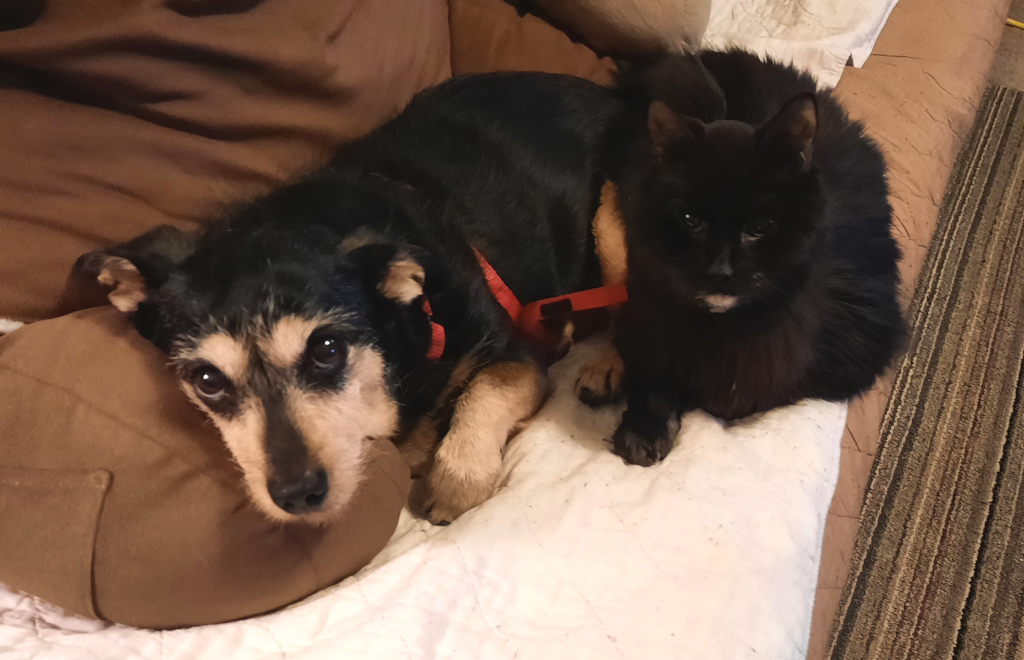 Dogs can also struggle in mixed homes. A dog may be excited by the cat, but excitement is not always happiness. Some dogs become frustrated because they cannot reach the cat. Others become anxious because the cat hisses or swats. A sensitive dog may start avoiding rooms where the cat appears.
Stress signs in dogs can include pacing, whining, barking, lip licking, yawning, stiff posture, fixated staring, panting when not hot, refusing commands, guarding food or beds, or reacting strongly whenever the cat moves.
Dogs need guidance, not constant scolding. If every cat interaction ends with the dog being yelled at, the dog may associate the cat with tension. Calm redirection works better. Reward the dog for looking away, settling on a bed, or choosing not to follow. A tired dog is often easier to manage, but exhaustion is not training. Walks, play, sniffing games, and puzzle toys can help lower the pressure, but the dog still needs clear rules around the cat.
Feeding Time Needs a Plan
Feeding is one of the most common conflict points. Dogs often want whatever the cat has. Cats may become nervous if a dog waits nearby. In a multi-pet home, food management is not optional. Feed dogs and cats separately, especially at first. Pick locations that are easy to control. A cat may eat on a counter, behind a gate, in a separate room, or on a raised feeding station if they can access it safely. A dog may eat in a crate, behind a gate, or in another room.
For senior pets, be practical. Not every older cat can jump to a high shelf. Not every older dog should eat from a slippery kitchen floor. Make the setup fit the pet in front of you. Diabetic pets need even more structure. If insulin depends on food intake, the meal needs to be calm and measurable. No stealing. No guessing. No dog snout in the bowl while the cat walks away annoyed.
Play Styles Are Different
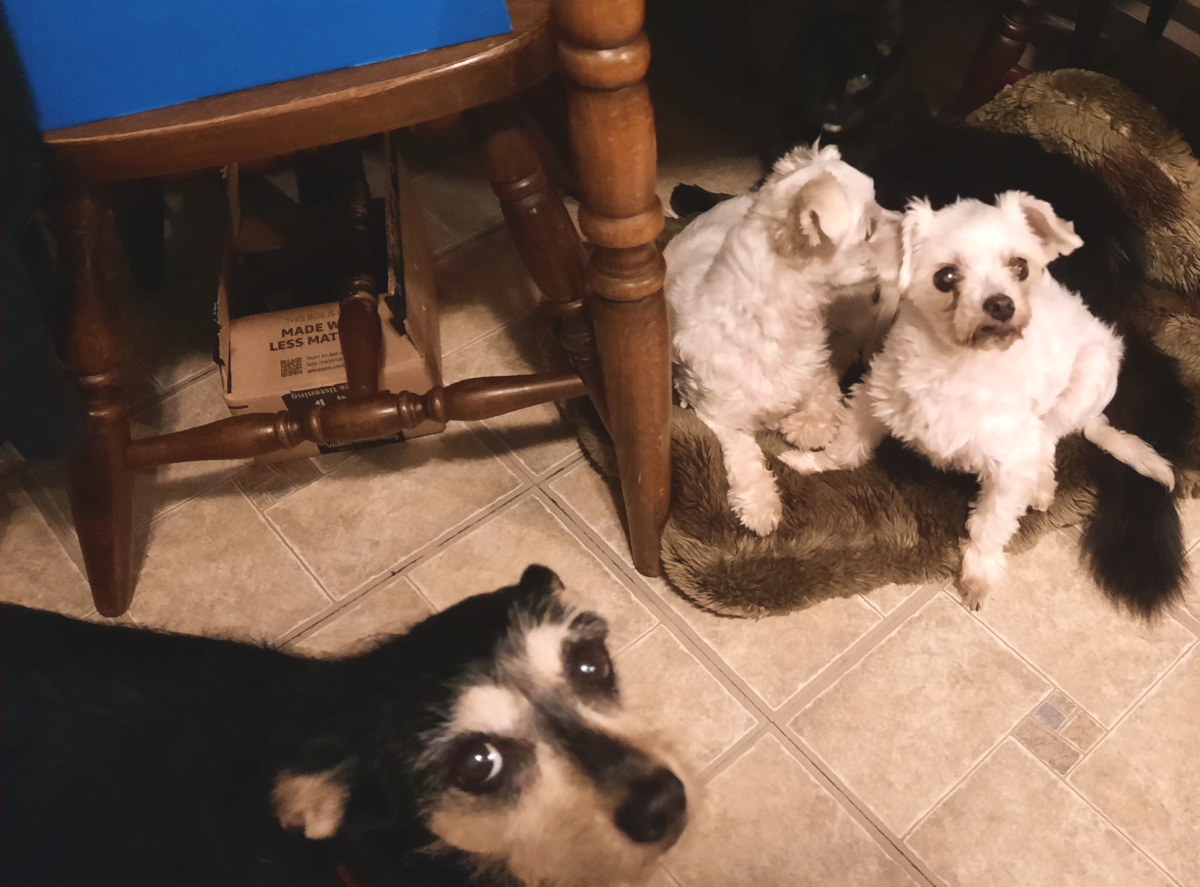 Dogs and cats often misunderstand each other. A play bow may look friendly to another dog, but a cat may see a lunging animal with teeth. A cat’s quick dart across the room may trigger a dog’s chase instinct. A swat may be a warning, not an invitation.
This is why supervised play matters. The dog should not chase the cat for fun. Even if the cat “started it,” chasing can become dangerous. A cat should not be allowed to repeatedly ambush an old or nervous dog either. Fair is fair.
Interactive toys can help. Wand toys give cats a safe outlet. Fetch, tug, walks, and puzzle feeders help dogs burn energy. Separate play sessions can reduce the urge to turn each other into toys. Some cats and dogs do learn to play together. It can be adorable. Still, I prefer to watch closely, especially with size differences. A large dog can hurt a cat by accident. A cat can scratch a dog’s eye in a flash.
Health Problems Change the Rules
A healthy adult cat and a healthy adult dog may handle household change better than pets dealing with illness. Senior and special-needs pets often need tighter management. A cat with hyperthyroidism may already feel restless or hungry. A dog stealing food can add stress. A pet with high blood pressure should avoid repeated panic. A pet with kidney disease may need easy water access without being blocked. A blind pet needs stable routes and no surprise encounters. A pet with cancer or heart disease may need quiet rest more than social drama.
Pain also changes behavior. A sore cat may swat faster. A painful dog may growl when approached. These reactions are not “bad attitudes.” They are information. Regular vet care matters, especially if behavior changes suddenly. A peaceful pet who becomes aggressive, withdrawn, restless, or unusually fearful may be telling you something physical is wrong.
Separate Does Not Mean Unsuccessful
Some people feel guilty if their cat and dog cannot be loose together all the time. I do not. Safe separation is a valid way to run a loving home. Baby gates, closed doors, rotating rooms, crates used properly, and supervised shared time can give everyone a good life.
A cat with a peaceful bedroom, sunny window, clean litter box, food, water, toys, and human affection is not being cheated because the dog is not allowed in. A dog with walks, attention, training, and safe resting space is not being punished because the cat has private territory. The internet loves dramatic transformation stories. Real homes often run on gates and routines. That is fine. Honestly, it is often the smarter setup.
Multi-Pet Homes Need Human Leadership
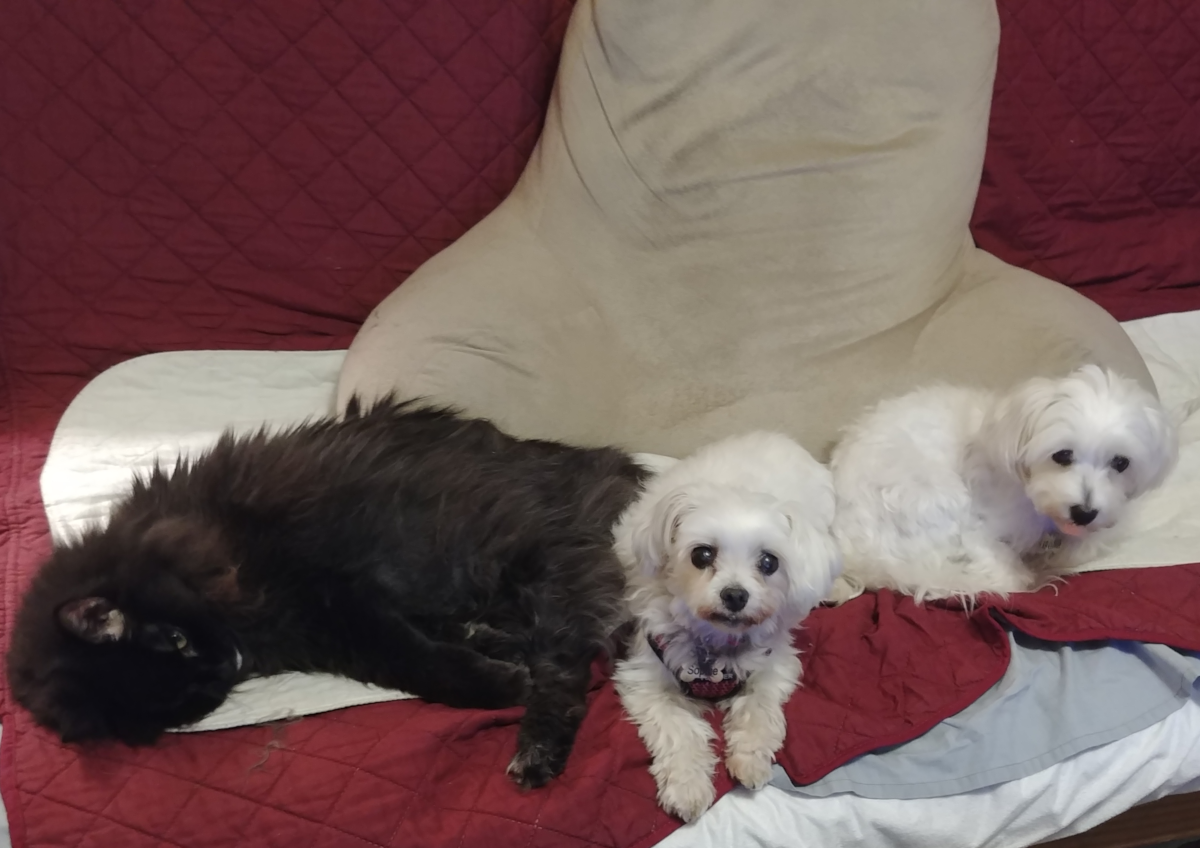 Cats and dogs living together need a person willing to be the calm adult in the room. That means reading body language, preventing trouble, protecting the weaker or older pet, and refusing to rush the process.
It also means being honest about each animal. Some dogs are not safe with cats. Some cats are deeply distressed by dogs. Some pets can improve with time and training. Some need lifelong separation. Love does not erase instinct, age, pain, or fear.
The best mixed pet homes are not perfect. They are thoughtful. The dog learns that the cat is not for chasing. The cat learns that escape is always available. The senior pet learns that their comfort still matters. The diabetic pet keeps their routine. The human pays attention before small problems become big ones. That kind of home may not look like a viral video, but it looks like peace. And for many cats and dogs, peace is more than enough.