
The word “declawing” sounds deceptively simple. It can bring to mind a permanent version of a nail trim, as though the veterinarian is removing the claw and leaving the toe itself intact. Anatomically, that is not what happens. A feline declaw, medically called an onychectomy, removes all or part of the third phalanx, or P3, from the affected toes. That is the small bone at the end of the digit where the claw is attached. Veterinary organizations describe the procedure as an amputation because bone from the end of the toe is removed, not merely the visible claw.
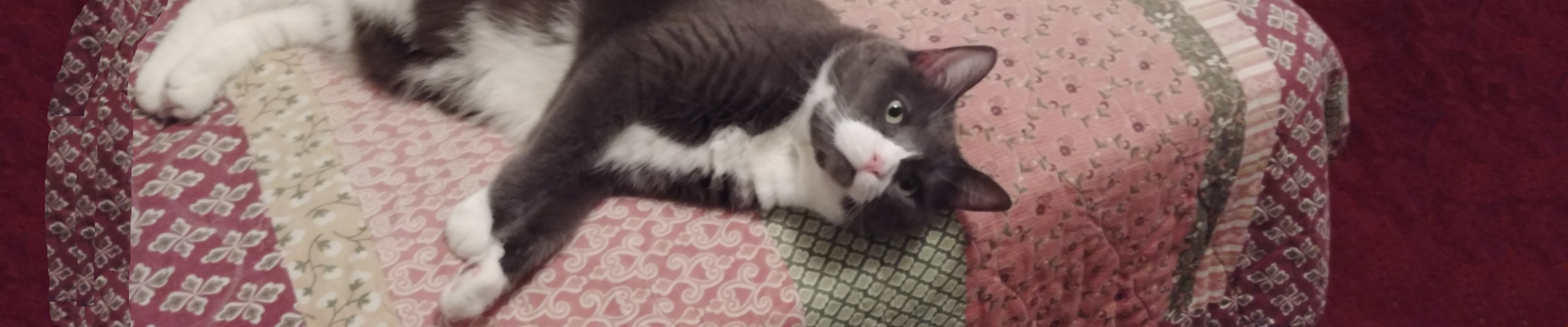
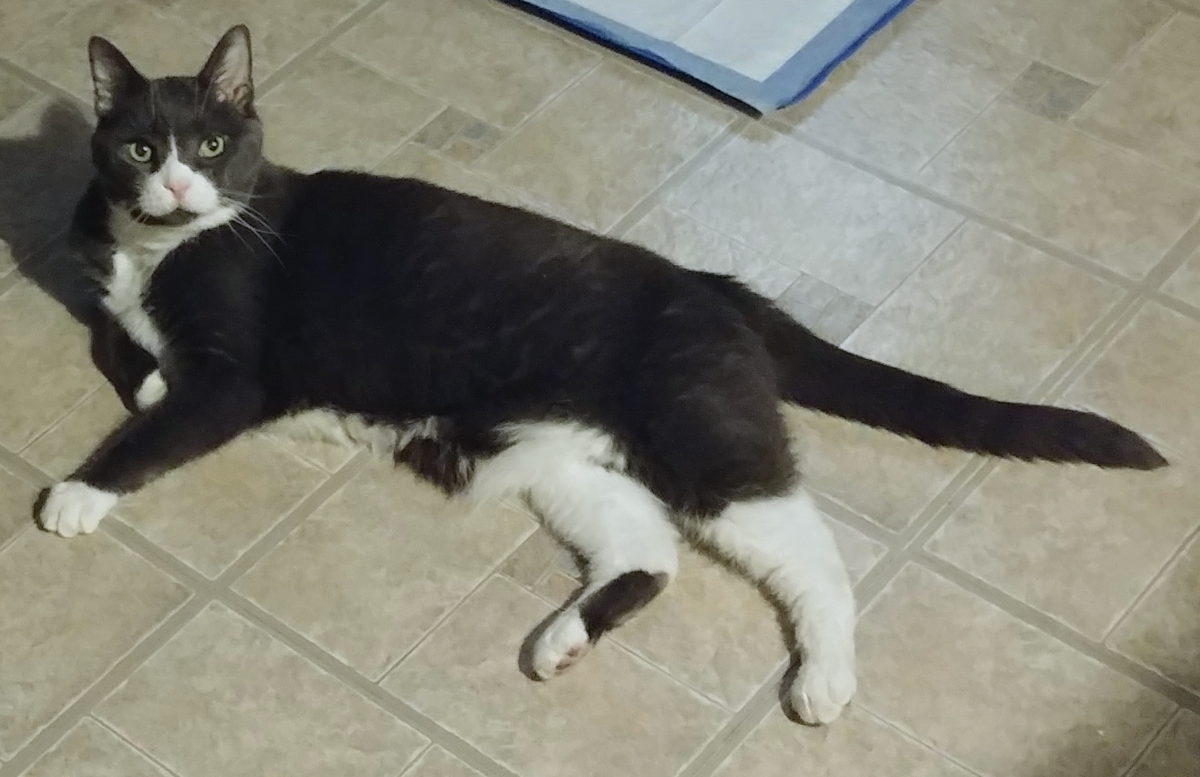
That distinction changes the way we understand the surgery. Belle and Paws, the two cats BellenPaws was named after, came to us already declawed. Sheamus, who we acquired later, was also declawed. We did not make that decision for them, and I would never invent problems they did not have simply to make a point. What their history did teach us was to stop thinking of a declawed cat as a cat whose nails had been removed and start thinking about what had actually been changed in the paw.
A Cat’s Claw Is Part of the Toe
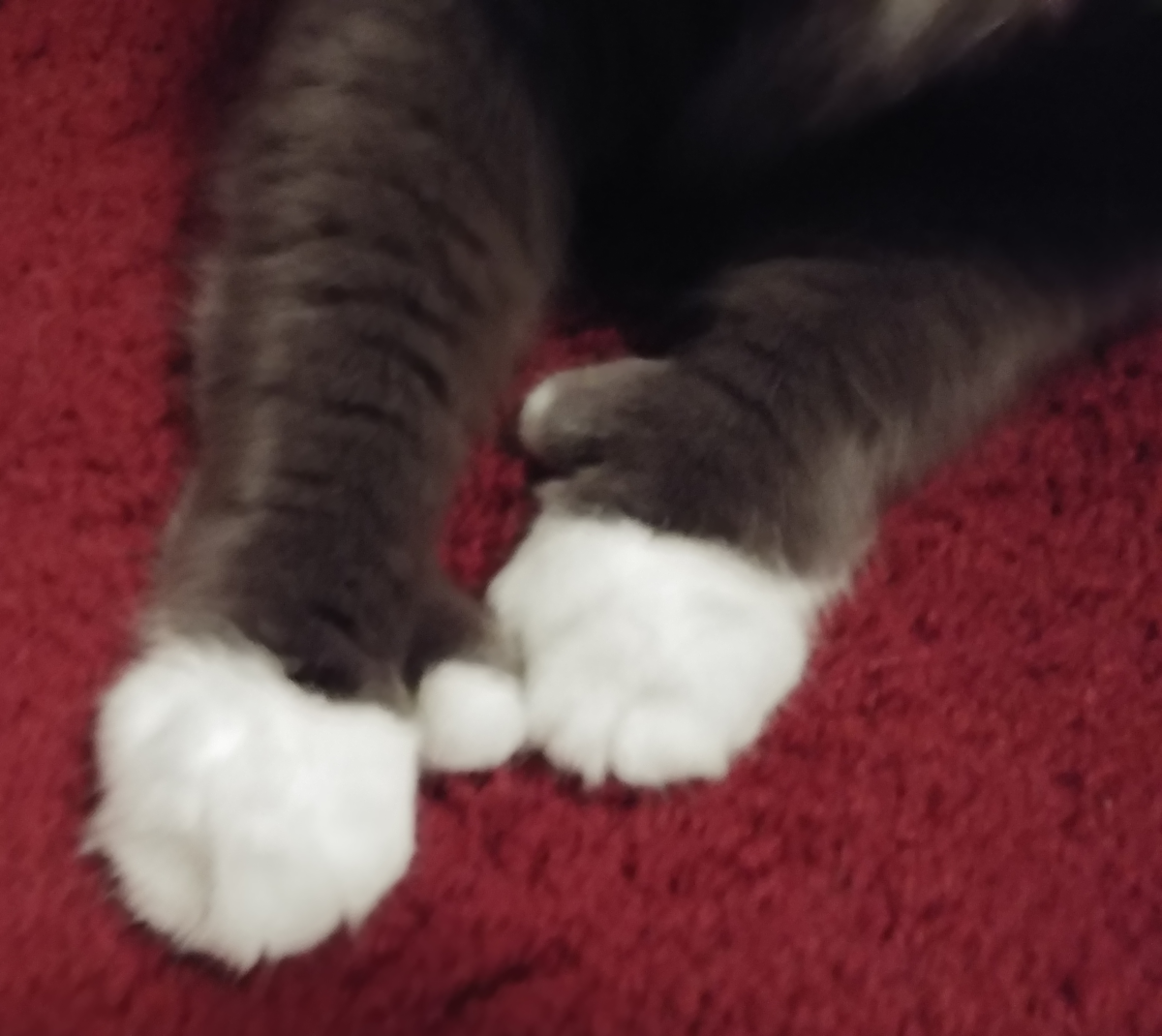 A cat’s toe is built from a series of small bones called phalanges. In the main digits, those bones are commonly described as P1, P2, and P3, moving from the base of the toe toward the tip. P3 is the distal, or farthest, phalanx. The claw is not sitting on top of that bone in the same way a human fingernail sits over the end of a finger. In cats, the claw is closely integrated with the final bone and the surrounding structures that move and support it. The Feline Veterinary Medical Association specifically points out that, unlike human nails, feline claws are attached to the last bone of the toe.
That is why a permanent declaw cannot be accomplished by simply pulling out a claw or cutting it extremely short. Onychectomy removes all or part of P3 so the claw and its growth structures are removed with the terminal portion of the digit. Surgical technique can vary, but once bone from the end of the toe is intentionally removed, the operation is an amputation rather than a nail procedure.
The often-used comparison to a human finger is not exact because cat and human limbs are built differently, but it is useful for understanding the scale of the operation. The closest simple comparison is removing the end of a person’s finger at the last joint rather than removing the fingernail. The Feline Veterinary Medical Association uses that same comparison in its educational material because the word “declaw” otherwise hides how much of the digit is actually affected.
The Paw Is a Moving, Weight-Bearing Structure
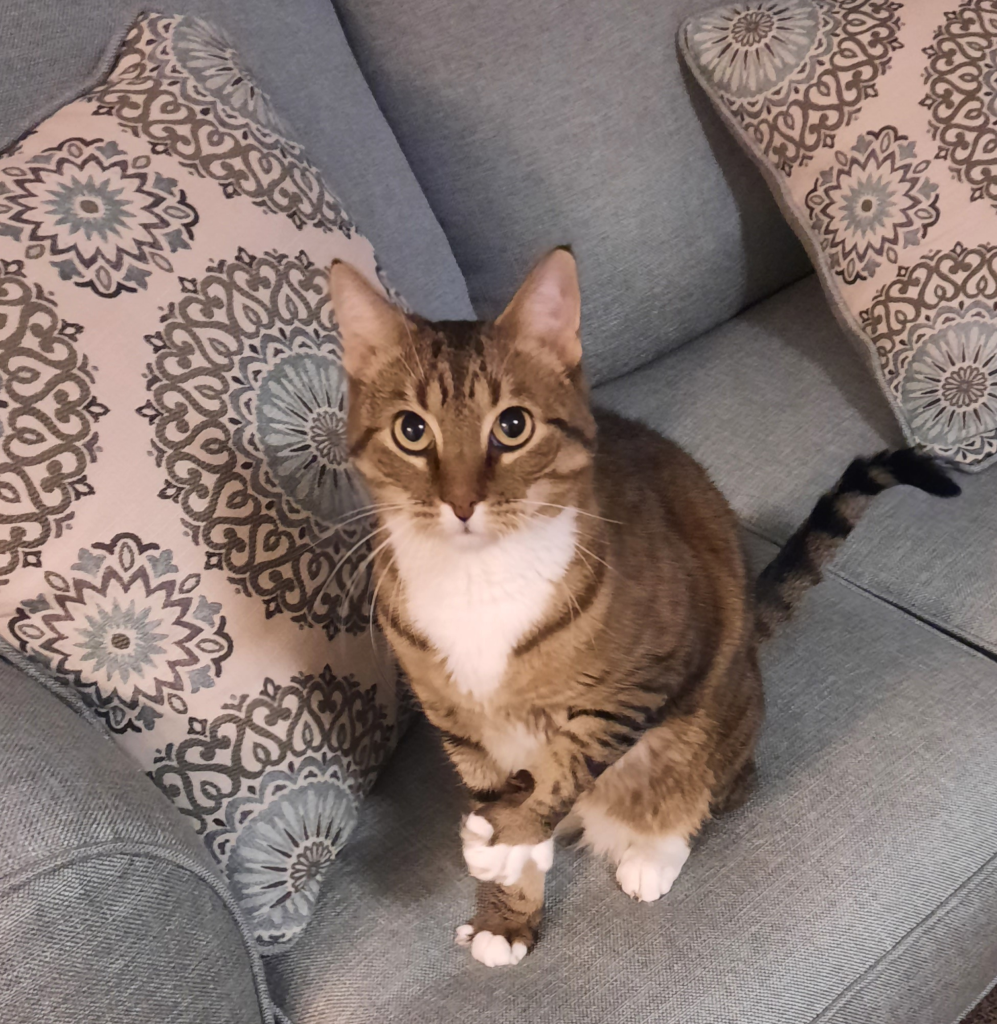 A paw is not just a set of cushions with claws attached. Cats are digitigrade animals, meaning they stand and move with their digits supporting the body rather than placing the whole length of the foot flat on the ground as humans do. Research on feline and other carnivore locomotion describes the digits, pads, joints, muscles, tendons, and sensory structures of the paw as parts of a coordinated weight-bearing system.
That helps explain why removing part of P3 is more meaningful than losing a piece of keratin. The distal phalanges participate in the mechanics of feline posture and movement, while muscles and tendons act across the joints to flex and stabilize the digits. Research examining the anatomical effects of onychectomy has specifically described the distal phalanges as part of normal digitigrade posture and locomotion.
Cats also use their claws during climbing, gripping, stretching, play, and scratching. Scratching helps shed worn outer claw layers, stretches the body, and leaves both visible and scent markings. These are normal feline behaviors, not signs that a cat is being spiteful or intentionally trying to damage property. AAHA and the Feline Veterinary Medical Association recommend giving cats appropriate places to perform those behaviors rather than treating scratching itself as something that needs to be surgically eliminated.
Different Surgical Tools Do Not Change the Basic Anatomy
People sometimes hear that laser declawing is gentler and assume that it is a fundamentally different operation. A laser may change how tissue is cut and may affect some short-term surgical outcomes, but it does not change the defining feature of onychectomy. Bone at the end of each treated toe is still removed. Studies comparing surgical methods have documented postoperative impairment with more than one technique, which is one reason the discussion cannot be reduced to choosing a different cutting tool.
The same distinction matters with tendonectomy, another procedure that has historically been proposed as an alternative. Tendonectomy cuts the tendon responsible for extending the claw, leaving the claw present but interfering with its normal movement. The current AVMA policy strongly discourages onychectomy, tenectomy, and other surgical procedures intended to prevent normal claw use unless there is a medical reason involving the individual cat.
There are situations in which removal of a claw-bearing portion of a toe may be medically necessary. A veterinarian may recommend amputation because of a tumor, severe injury, chronic infection, or another disease process involving a digit. That is very different from removing healthy portions of multiple toes as an elective way to prevent scratching. AAHA’s position specifically separates medically necessary claw or digit removal from elective declawing.
Pain Is Not Limited to the Day of Surgery
 Any operation involving bone, joints, nerves, blood vessels, and soft tissue creates postoperative pain that must be managed by the veterinary team. Research on cats after onychectomy has documented reduced limb function for days following surgery, including studies in which abnormalities were still measurable at the final observation point 12 days later. A systematic review of pain studies also found that assessing feline pain after declawing is difficult and that the available research did not identify one analgesic approach as clearly superior.
The longer-term question is more complicated, and it deserves careful wording. Not every declawed cat will obviously limp, avoid the litter box, or develop a recognizable chronic pain syndrome. Older cats can also have other sources of discomfort, particularly osteoarthritis, making it difficult to look at an individual cat years after surgery and decide from behavior alone that declawing caused a particular problem. Research examining chronic pain in declawed cats has specifically addressed this difficulty in separating post-declaw effects from age-related joint disease.
Research has nevertheless raised substantial concern. A 2018 retrospective study comparing declawed and non-declawed cats found associations between declawing and increased odds of back pain, house soiling, biting, and excessive grooming. Because that type of study can identify associations but cannot prove that declawing caused every behavior in every cat, those findings should not be used as a shortcut diagnosis. They do, however, support taking pain and paw history seriously when a declawed cat develops new physical or behavioral changes.
More recent evidence has added another piece. A 2025 study published in Scientific Reports analyzed cats with osteoarthritis and found that declawed cats in the study had greater sensory abnormalities, functional impairment, biomechanical changes, and nerve-conduction abnormalities than non-declawed cats with osteoarthritis. The researchers were specifically trying to distinguish pain associated with aging joints from effects associated with previous declawing, and their findings support concern about chronic post-declaw pain in at least some cats.
A Declawed Senior Cat Deserves a Careful Look at the Feet
 For people who already share their home with a declawed cat, the useful question is not whether to feel guilty about a surgery that may have happened years ago or before the cat was adopted. The useful question is whether the cat’s paw history should be part of present-day veterinary care. In my experience caring for older cats, small changes in movement often make more sense when we look at the whole animal rather than assuming a new behavior is simply “old age.”
A declawed cat who becomes reluctant to jump, walks differently, reacts when the feet are handled, begins avoiding a particular litter texture, overgrooms the legs or paws, or develops new biting or house-soiling behavior deserves a veterinary examination. None of those signs proves that the paws are responsible, and several can occur with other painful or medical conditions. Research on declawed cats has linked some of these behaviors with pain and physical abnormalities, which makes examination more useful than assuming the change is purely behavioral.
Tell the veterinarian that the cat is declawed even if the surgery happened many years ago. That history may prompt closer examination of the toes, pads, joints, posture, and gait, and the veterinarian can decide whether radiographs or other testing are appropriate. A 2024 case series described declawed cats with retained P3 fragments and problems including lameness, digit infection, tendon contracture, abnormal pad position, claw regrowth, and pain-related behaviors, showing why an old surgical history can remain medically relevant.
This becomes especially worth discussing as a cat ages because joint disease can overlap with other sources of pain. The 2025 research on declawed cats with osteoarthritis found greater impairment in the declawed group, which does not mean that every older declawed cat will experience the same problems. It does mean that a history of declawing belongs in the medical conversation when an older cat’s mobility, grooming, litter-box habits, or tolerance of handling begins to change.
Scratching Problems Usually Have Better Answers
 For a cat who still has intact paws, unwanted scratching can usually be approached as a behavior and environment problem rather than a surgical problem. Cats differ in whether they prefer vertical or horizontal surfaces and in the textures they like, so one small scratching post tucked into an unused corner may not be enough. Veterinary behavior guidance recommends stable scratchers that let the cat stretch fully, placement near sleeping areas or objects the cat already scratches, positive reinforcement, regular claw trims, and, in some households, temporary nail caps.
Punishing scratching can add stress without giving the cat an acceptable place to perform a normal behavior. A better approach is to make the approved scratching surface easier, more stable, and more rewarding than the sofa or doorframe. Cornell’s feline behavior guidance recommends matching the scratching surface to the cat’s preferred orientation and material, then placing the scratcher near the area the cat already uses and rewarding appropriate scratching.
Homemade scratchers can work very well when they are tall enough for a full stretch and sturdy enough not to wobble. For anyone building a sisal-covered scratching post, the BellenPaws rope length calculator can help estimate how much rope will be needed before buying materials, which saves some guesswork on larger posts.
If a cat keeps returning to one piece of furniture despite having several scratching options, changing the location, height, stability, or texture of the scratcher is often more productive than simply adding another identical post. A veterinarian or qualified feline behavior professional can also help when scratching becomes unusually intense, appears alongside other behavioral changes, or continues despite a well-designed setup.