
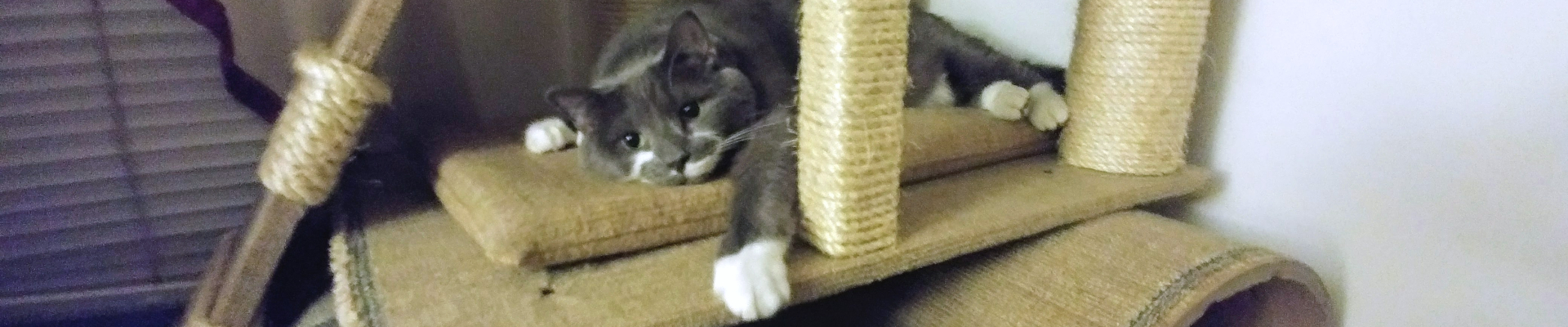
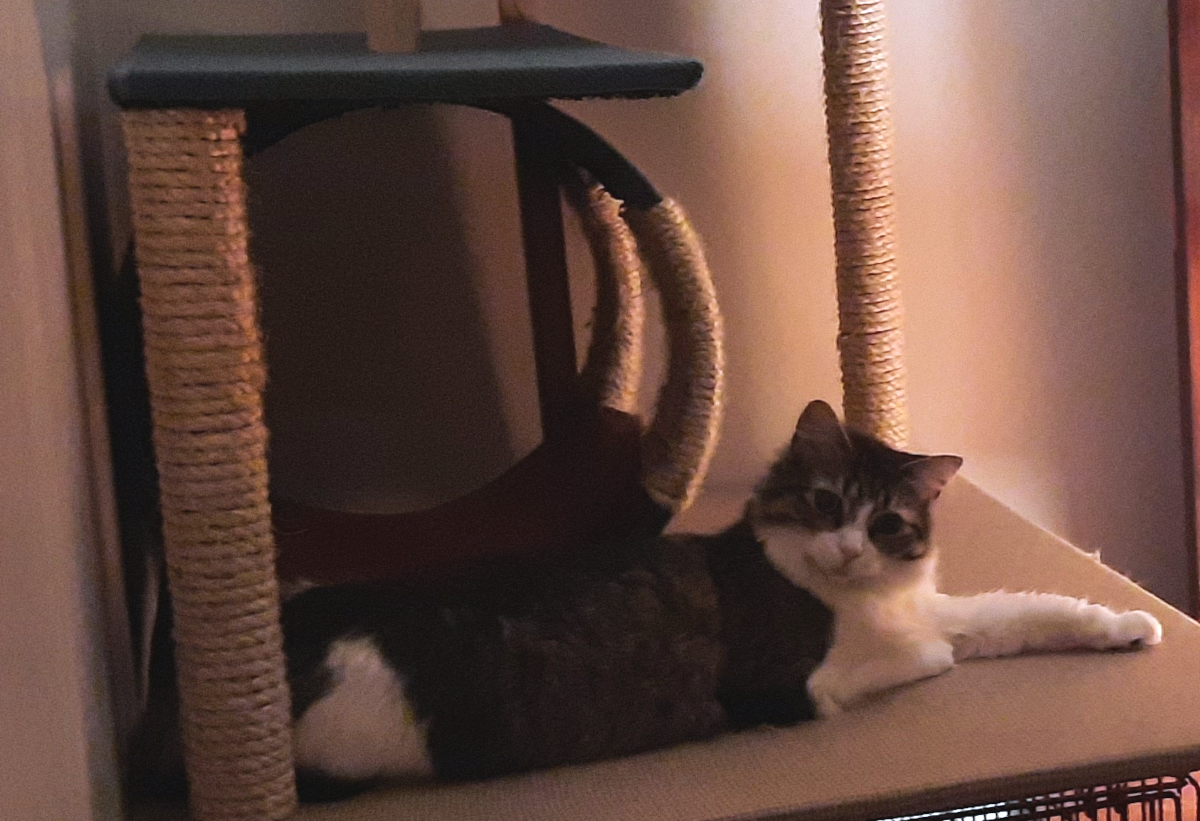
A good cat tree is not just furniture. To a cat, it can feel like a private apartment, a lookout tower, a scratching station, a nap room, and a safe retreat all rolled into one. For senior cats, shy cats, diabetic cats, and multi-pet homes, that little vertical space can matter more than many people realize.
I have lived with enough cats over the years to know that cats do not see a home the same way we do. We look at rooms, furniture, doors, and floors. Cats see height, hiding spots, escape routes, sunny patches, scent zones, and places where they can watch life happen without being in the middle of it. A cat tree gives them something that feels like theirs. That matters. A lot.
Cats Need Territory They Can Own
Cats are territorial creatures, even the sweet ones who curl up in your lap and pretend they are above such things. They like having places that carry their scent. They like having spots where they can stretch, scratch, nap, and observe without being bothered. A cat tree gives them ownership inside a home that is mostly designed for humans.
This is especially helpful in homes with more than one cat. Even cats who love each other need personal space. They may share food areas, windows, couches, and beds, but they still need places where they can retreat without feeling challenged. A tall cat tree can help reduce tension because it adds another layer of territory. Floor space is limited. Vertical space opens the room.
That is one of the biggest reasons cat trees are so valuable. They let cats spread out upward instead of crowding each other on the floor. In a multi-cat home, that can make the difference between quiet coexistence and low-level stress that shows up as swatting, blocking, hiding, overgrooming, or litter box problems.
Height Helps Cats Feel Safe
A cat sitting high on a perch is not just being dramatic, although cats do enjoy a little drama. Height gives cats a sense of control. From above, they can see movement, watch other pets, track people entering the room, and decide whether they want to interact.
For nervous cats, this can be calming. A cat who hides under the bed may gradually learn to relax on a perch instead, where they can stay visible but still feel protected. That is a big emotional step. Hiding under furniture can become a habit, especially after illness, change, or conflict with another pet. A cat tree offers a healthier middle ground.
Senior cats may also appreciate the security of height, but they need help getting there. A tall, narrow tree with big jumps may not work for an older cat with sore joints. A sturdy tree with lower platforms, ramps, wide steps, or closely spaced levels is often a much better choice. The goal is not to impress humans with height. The goal is to make the cat feel safe without making the climb difficult.
Belle, one of the founding senior cats behind BellenPaws, taught me how much cats value familiar comfort as they age. When a cat has health problems, the world can start to feel less predictable. A favorite elevated bed, perch, or cozy level on a cat tree can become part of their daily rhythm.
Scratching Is Not Bad Behavior
A cat tree with scratching posts gives cats a place to do something they are built to do. Scratching stretches the body, sheds the outer layer of the claws, marks territory, and releases energy. It is not spite. It is not revenge. It is not a cat “acting out” because they hate your couch. They just need the right place to scratch.
The best cat trees usually include sisal-covered posts, carpeted sections, or textured surfaces that can handle daily claw work. Some cats prefer vertical scratching. Others like angled or horizontal surfaces. A tree that offers more than one texture or position gives your cat options.
A cat tree can also protect your furniture because it gives your cat a legal target. Placement matters here. If your cat scratches the side of the couch, do not hide the cat tree in a back room and expect magic. Put the scratching area near the problem spot first. Once the cat starts using it, you can slowly move it if needed. Cats are practical. They scratch where it feels useful. Put the useful thing where the cat already wants to scratch.
A Cat Tree Can Support Senior Mobility
Senior cats still need movement, but they may need movement that respects their limits. A good cat tree can help older cats stretch, climb, balance, and stay engaged without forcing them into rough play or big jumps.
This is where design matters. For aging cats, I like cat trees that have:
- Wide platforms that feel stable
- Low entry points
- Several short steps instead of one big leap
- Soft resting areas
- Heavy bases that do not wobble
- Open beds instead of cramped cubbies for cats with stiffness
- Washable cushions when possible
Older cats can become unsure of their bodies. A shaky tree can scare them away. A slippery platform can make them hesitate. A high perch with no easy route down can create trouble, especially if the cat is arthritic, overweight, blind, weak, or recovering from illness.
Cats are proud little souls. Many will not announce that a jump hurts. They will simply stop doing it. They may stop getting into windows, stop sleeping in favorite spots, or stop joining the family in the room. A well-chosen cat tree can give some of that life back in a safer way.
For blind cats or cats with vision loss, consistency is everything. Cybil, one of the cats we loved who dealt with blindness, reminded me that cats can adapt beautifully when their surroundings stay predictable. A cat tree for a visually impaired cat should not be moved around casually. The route up and down should stay the same. Soft landings nearby help too.
Diabetic Cats Benefit From Comfortable Routine
Diabetic cats often live by routine. Meals, blood glucose testing, insulin, observation, and rest all become part of the day. A cat tree can become one of those dependable comfort spots. With Zippy, who achieved remission through tight regulation, and Bentley, who is still on twice-daily insulin, I learned how much calmer diabetes care can feel when a cat has safe places nearby. A familiar perch can help a diabetic cat relax after meals, after testing, or during the quieter parts of the glucose cycle. It gives them a normal cat thing in the middle of all the medical stuff.
That matters emotionally. Diabetes management can start to make a home feel like a clinic if we are not careful. The goal is not just numbers. The goal is still a full cat life, with naps, bird watching, scratching, sun patches, and little personal kingdoms.
For diabetic cats, choose a cat tree that is easy to access and easy to clean. Some diabetic cats drink and urinate more when unregulated, and accidents can happen. Removable cushions, wipeable surfaces, and washable bedding make life easier. If your cat has neuropathy or weakness in the back legs, avoid high jumps and slick surfaces. Stability is non-negotiable.
Our free pet diabetes tracker on BellenPaws was built for the practical side of diabetes care, including printable charts for vet visits. But the emotional side matters too. A good cat tree will not manage blood sugar, but it can help preserve normal routines and comfort while you handle the hard parts.
The Best Location Is Usually Where Life Happens
Many people buy a cat tree and place it in an empty corner, then wonder why the cat ignores it. Cats often want their own space, but they do not always want isolation. Most cats prefer a perch near family activity, a window, a warm room, or a place where they can watch the household.
A cat tree near a window can become prime real estate. Birds, squirrels, leaves, passing cars, and sunlight can entertain a cat for hours. For indoor cats, that kind of visual enrichment is not a small thing. It gives them something to study. It breaks up boredom.
In a home with dogs, location needs extra thought. A cat tree can give cats a dog-free escape spot, but only if the dog cannot knock it over, corner the cat, or harass them at the base. The tree should offer more than one route away when possible. Cats do not like feeling trapped.
In senior pet homes, I also like placing cat trees where the cat already spends time. A tree beside a favorite chair or near a sunny window is far more inviting than one placed in a room the cat rarely visits. Cats vote with their paws.
Stability Matters More Than Style
Some cat trees look adorable online and turn out to be flimsy in real life. A wobbly cat tree is a deal breaker for many cats. Once a cat feels unsafe on it, they may refuse to use it again.
A sturdy base is one of the first things I look for. The tree should not sway every time the cat jumps onto it. Tall trees should be heavy enough to support movement, especially if you have large cats, energetic cats, or multiple cats who may use it at the same time.
Platform size matters too. A big cat needs a big perch. Many trees are built for kittens or small cats, even when the photos make them look larger. Measure your cat when they are stretched out or curled in their favorite bed. Then compare that to the perch dimensions before buying.
Covered condos can be cozy, but they are not ideal for every cat. Some senior cats dislike squeezing into tight spaces. Some cats with pain do not want to curl tightly. Some cats prefer open beds because they can rise and reposition more easily. The cutest design is not always the most cat-friendly design. Buy for the cat you have, not the cat in the product photo.
Cat Trees Help With Stress During Change
Cats are sensitive to change. Moving furniture, bringing home a new pet, changing schedules, adding a baby, remodeling, illness, loss, or even a new smell in the home can unsettle them. A familiar cat tree can act like an anchor during those times.
This is one reason I do not rush to throw away an old cat tree if the cat loves it. Yes, it may look rough. Yes, the sisal may be shredded. Yes, the carpet may have seen better days. But to the cat, that worn tree smells like home.
If you need to replace an old tree, try placing the new one near the old one for a while. Let your cat investigate it on their own schedule. You can add a favorite blanket, sprinkle a little catnip if your cat enjoys it, or reward calm interest with praise or gentle affection. Avoid forcing the cat onto it. Cats hate that kind of nonsense, and honestly, I do not blame them. For anxious cats, the cat tree should feel like a choice, not a trap.
Cleaning Without Erasing Their Comfort
Cat trees need cleaning, especially in homes with senior cats, diabetic cats, or cats with medical issues. Fur, dander, litter dust, food crumbs, and the occasional accident can build up over time. Regular vacuuming helps. A lint roller works surprisingly well on some fabrics. Removable bedding should be washed as needed.
Still, there is a balance. Cats rely heavily on scent. If you scrub every inch of their tree with strong-smelling cleaners, you may make it smell wrong to them. Use pet-safe cleaning methods, avoid harsh fragrances, and give the tree time to dry fully before your cat uses it again.
For cats with accidents, washable pads or small fleece blankets can save the main structure. This is especially helpful for older cats, cats with kidney disease, diabetic cats who are not regulated yet, or cats recovering from illness. Comfort should be easy to maintain, not a daily battle.
DIY Options Can Work Well
A cat tree does not have to be fancy. Some cats are just as happy with a sturdy shelf system, a padded bench by a window, or a homemade climbing setup. The main requirements are safety, stability, traction, and comfort.
DIY scratching posts can also be useful, especially if you want something taller or stronger than store-bought options. Rope-wrapped posts give cats a satisfying scratching surface, but the rope needs to be attached securely and checked over time. Loose rope can become a hazard. For anyone building their own scratching post or repair project, our rope length calculator on BellenPaws can help estimate how much rope you need before you start.
The nice thing about DIY is that you can build around your actual cat. A senior cat may need lower steps. A large cat may need wider platforms. A shy cat may need a covered resting space with an easy exit. A window watcher may need one perfect perch in the sun. Cats do not care if it matches the curtains. They care if it feels good.
Multi-Pet Homes Need Escape Routes
Homes with cats and dogs need vertical spaces. Even friendly dogs can be too much for a cat sometimes. A dog may sniff, chase, bark, block a path, or get excited at the wrong moment. A cat tree gives the cat a place to rise above the chaos and reset.
This is not only about fear. It is about choice. A cat who can choose distance is less likely to lash out. A cat who feels cornered may scratch, bite, hide, or stop using normal areas of the home. Giving the cat a safe vertical option can reduce pressure before it turns into conflict.
The same idea applies to multi-cat homes. One cat should not be able to guard the only entrance or exit. If a tree has a cubby, make sure the cat inside can leave without being trapped by another pet. Open platforms often work better than enclosed boxes for tense households. Watch how your pets move around the room. Their behavior will tell you whether the setup is working.
Cat Trees Are Not Just for Young Cats
A lot of people think cat trees are for kittens and wild little climbers. Senior cats may need them even more, just in a different style. Older cats still want to watch birds. They still want a warm perch. They still want to scratch, stretch, and feel like they have a place in the home that belongs to them.
The trick is adjusting the tree to the cat’s age and body. A young cat may love a ceiling-height tower. A senior cat may prefer a shorter tree with soft beds and easy steps. A diabetic cat with leg weakness may need a ramp or lower resting area. A cat with kidney disease may need washable bedding. A blind cat needs consistency. An overweight cat needs stability and space.
Blackie, Bonnie, Belle, Paws, and so many others in our family reminded me that aging does not erase personality. Senior cats still have preferences. They still have pride. They still deserve comfort that fits who they are now, not who they were ten years ago. A cat tree can be one of the simplest ways to honor that.