



Seeing an outdoor cat who is clearly sick or injured creates an uncomfortable problem. The cat may desperately need veterinary help, yet the very act of trying to help can frighten the animal, worsen an injury, or leave you with a serious bite or scratch if you approach the situation the wrong way.
With an unfamiliar outdoor cat, especially one who is frightened, painful, or unsocialized, the safest goal is usually not to catch the cat with your hands. It is to contain the cat in a humane trap with as little handling and stress as possible, then get the animal directly to veterinary care. Alley Cat Allies specifically recommends humane trapping rather than attempting to pick up an injured community cat, and advises arranging veterinary care before trapping whenever possible.
Those two parts of the plan belong together. Trapping the cat is not the treatment. It is simply the safest way to get a frightened animal from the street to people who can examine and treat them.
Make a Veterinary Plan Before You Set the Trap
For routine Trap-Neuter-Return work, there may be time to schedule trapping around a clinic appointment. A sick or injured cat is different. If the cat is trapped because medical care is needed, there should already be somewhere for that cat to go.
Call a veterinarian, emergency veterinary hospital, community-cat clinic, rescue organization, or experienced TNR group before trapping if circumstances allow. Explain that the patient is an outdoor cat who may be feral or difficult to handle, describe what you have observed, and ask whether the clinic can receive the cat in a humane trap.
This phone call can prevent a surprisingly common problem: successfully catching a sick cat and then having nowhere prepared to treat them. Alley Cat Allies recommends veterinary care immediately after trapping a sick or injured community cat rather than confining the cat for an extended period while trying to arrange treatment afterward.
Calling ahead also gives the veterinary team useful information. Current emergency veterinary guidance recommends contacting the clinic before transport when possible because the staff can provide instructions and prepare for the patient’s arrival.
Know When the Situation May Be an Emergency
 Sometimes the need for veterinary care is obvious, such as a cat with a large wound or a badly injured leg. Other cats simply look weak, withdrawn, unusually still, or very different from the way they normally behave.
Certain observations make rapid veterinary care especially important. These include:
- Difficulty breathing, open-mouth breathing, or obvious respiratory distress
- Heavy or uncontrolled bleeding
- Being struck by a vehicle or suffering other major trauma
- Collapse, loss of consciousness, or severe weakness
- Seizures
- A suspected fracture or inability to use a limb
- Serious eye injury
- Large, deep, or contaminated wounds
- Severe pain
- Major burns
- An inability to urinate or repeated straining to urinate
- Suspected poisoning
Veterinary emergency references identify breathing difficulty, major bleeding, trauma, shock, serious wounds, fractures, seizures, urinary blockage, and several other conditions as reasons for immediate assessment. Trauma can also cause internal injuries that are not obvious from looking at the cat, so a cat hit by a vehicle should not be assumed to be fine simply because they are still walking.
A cat struggling to breathe deserves particular care during capture. Stress and unnecessary handling can make respiratory distress worse, so this is a situation where contacting an emergency veterinarian, animal control officer, or experienced animal rescue group for immediate assistance may be safer than improvising a prolonged trapping attempt.
Use a Humane Box Trap Rather Than Your Hands
A standard humane box trap is usually the best tool for an unsocialized outdoor cat. These traps allow the cat to enter voluntarily, step on a trip plate, and close the door behind them without requiring someone to grab or restrain the animal.
Local TNR programs, community-cat organizations, shelters, rescue groups, and some animal-control agencies may loan traps. Best Friends Animal Society and Alley Cat Allies both recommend humane trapping methods for community cats rather than direct handling. Check the trap before using it. The door should close properly, the trip mechanism should move freely, and there should be no sharp wires, bent metal, or damaged pieces that could injure the cat.
A thin layer of newspaper or other suitable disposable liner can make the wire floor feel less unfamiliar and simplify cleanup, provided it does not interfere with the trip plate or trap mechanism. Avoid putting bulky bedding into the trap while trapping because it can prevent the equipment from functioning properly.
Put the Trap Where the Cat Already Feels Comfortable
 Outdoor cats often follow remarkably consistent routines. They may eat at the same location, walk the same fence line, sleep beneath the same porch, or appear near the same building at roughly the same time each day.
That routine can work in your favor. Place the trap on stable, level ground near an area where the cat already eats or travels. Avoid putting it beside heavy traffic, loose dogs, loud machinery, standing water, unstable slopes, or another hazard that could turn a frightened escape attempt into an injury.
Food with a strong smell can help draw the cat into the trap. The bait should be positioned so the cat must enter far enough to activate the trip plate rather than simply reaching through the entrance for food.
If someone regularly feeds the cat, involving that person can make trapping much easier. They may know the cat’s schedule, preferred food, hiding places, other cats in the area, and whether the animal will approach familiar people.
Never Leave an Active Trap Forgotten Somewhere
Once a trap is set, it needs active supervision. A trapped cat cannot simply move away from heat, cold, rain, people, dogs, wildlife, or other threats. A frightened cat may also thrash against the trap after the door closes. The sooner someone responds, covers the trap, and moves the animal to a safe location, the sooner that initial panic can begin to settle.
This becomes even more significant with a sick or injured cat. An animal who is already dehydrated, bleeding, overheated, hypothermic, weak, or having trouble breathing has far less ability to cope with prolonged exposure or extreme temperatures. If conditions are dangerously hot, cold, stormy, or otherwise unsafe, trapping should be coordinated so the cat can be moved promptly into veterinary care rather than left sitting outside.
Once the Cat Is Trapped, Cover the Trap
Many outdoor cats initially panic when a trap closes. Covering the trap with a large towel, sheet, or lightweight blanket often reduces visual stimulation and helps the animal settle. Cover the entire trap while maintaining adequate ventilation. Move quietly and avoid crowding around the cat to look through the wire.
Alley Cat Allies recommends covering the trap promptly, carrying it carefully, keeping it upright, and transporting the cat directly for veterinary care. Protective gloves can also reduce the chance of being scratched through the wire while the trap is being moved. Do not assume that a cat who has become quiet is suddenly safe to handle. A terrified cat can remain motionless until the door opens and then escape almost instantly.
Do Not Open the Trap to Check the Cat
 One of the biggest temptations after trapping an injured cat is opening the door “just a little” to get a better look. That can turn a controlled situation into a loose, frightened cat inside a garage, house, parking lot, or moving vehicle. Keep the trap closed. Veterinary staff can decide how and where the cat should be removed, and an unsocialized or severely frightened cat may need sedation before a complete examination can be safely performed.
The same principle applies to transferring the cat into an ordinary carrier. Unless veterinary staff or someone experienced in community-cat handling has instructed you and has the proper equipment, transferring a frightened cat creates another opportunity for escape and injury. Alley Cat Allies specifically advises against opening a trap during transport and notes that the veterinarian may choose not to open it until the cat can be safely sedated.
Transport the Trap Like It Contains an Injured Patient
Place the covered trap securely inside the passenger compartment or cargo area of an enclosed vehicle. It should remain level and be positioned so it cannot slide, fall, or overturn during braking or turns. Putting an absorbent pad, puppy pad, plastic liner, or old towel beneath the trap can protect the vehicle if the cat urinates, defecates, vomits, or there is drainage from an injury. The material goes beneath the trap rather than creating loose padding that might interfere with the cat or the trap mechanism.
Drive smoothly and keep the environment quiet. Avoid unnecessary stops, loud music, repeated uncovering of the trap, or attempts to comfort the cat by putting fingers through the wire. A trapped cat should never be transported in an open truck bed or enclosed automobile trunk. Guidance for community-cat transport recommends keeping the trap upright, steady, covered, and inside the vehicle while traveling to veterinary care.
Resist the Urge to Treat the Cat Yourself
 Finding a wounded cat can make people want to clean the wound, give pain medication, apply an ointment, or offer something from their own medicine cabinet. With a frightened outdoor cat, attempting treatment can injure both the cat and the person trying to help.
Human medications can also be dangerous to cats, and medications intended for another animal should not be given without veterinary direction. Alley Cat Allies specifically advises against giving human medicines, another animal’s medication, supplements, or homemade treatments to a sick community cat without veterinary guidance.
Even apparently straightforward wounds can hide deeper damage. Bite wounds may penetrate beneath the skin, vehicle trauma may cause internal injuries, and a limping cat may have anything from a minor soft-tissue injury to a fracture. The trap has already accomplished the most useful thing an ordinary person can usually do in this situation: it has safely contained the cat so veterinary professionals can examine them.
A Friendly Stray Still May Bite When Injured
There is a meaningful difference between a truly feral cat and a friendly stray, but pain can temporarily erase much of that difference. A cat who normally accepts petting may bite or scratch when frightened, confused, or hurting.
Veterinary emergency guidance warns that injured animals may react unpredictably even when they are normally gentle. Keeping your face away from an injured animal and avoiding unnecessary direct handling protects both you and the cat.
If a friendly cat can safely walk into a carrier without being picked up, a veterinarian may tell you that a carrier is appropriate. If there is any doubt, particularly with significant pain or trauma, a humane trap can still be the safer choice.
Protect Yourself From Bites and Scratches
Cat bites can create serious infections because the teeth produce narrow puncture wounds that may carry bacteria deep into tissue. CDC guidance advises immediately washing bites and scratches with soap and water and seeking medical attention in several circumstances, including serious wounds, signs of infection, illness in the cat, or uncertainty about rabies vaccination.
Rabies also deserves appropriate respect when dealing with an unfamiliar outdoor animal. Rabies is preventable after exposure when medical care is obtained before symptoms develop, but suspected exposure requires prompt assessment by medical or public-health professionals.
If an unfamiliar stray cat bites or scratches you, particularly if the skin is broken, wash the area thoroughly and contact a healthcare professional or local public-health authority for advice. Do not rely on the cat’s appearance alone to decide whether medical follow-up is necessary.
Trap-Shy Cats May Need a Different Approach
Some community cats have seen humane traps before and will not enter one. Others are willing to reach for food near the entrance but refuse to step onto the trip plate. Repeatedly chasing or cornering the cat usually makes the problem harder. The cat learns that your presence predicts danger, while an injured animal may waste energy trying to escape.
Experienced TNR volunteers sometimes use techniques such as gradually feeding near and then inside an unset trap, disguising the trap floor, changing bait, or using a manually triggered drop trap. Drop traps require more experience and still need a safe method for transferring the cat into a secure box trap afterward.
For a seriously injured trap-shy cat, this is a good time to call an experienced community-cat organization, animal-control officer, or rescue group rather than escalating the chase yourself. Humane trapping is a skill, and someone who has trapped hundreds of cats may solve in minutes what could otherwise become several stressful unsuccessful attempts.
Tell the Veterinarian Everything You Know
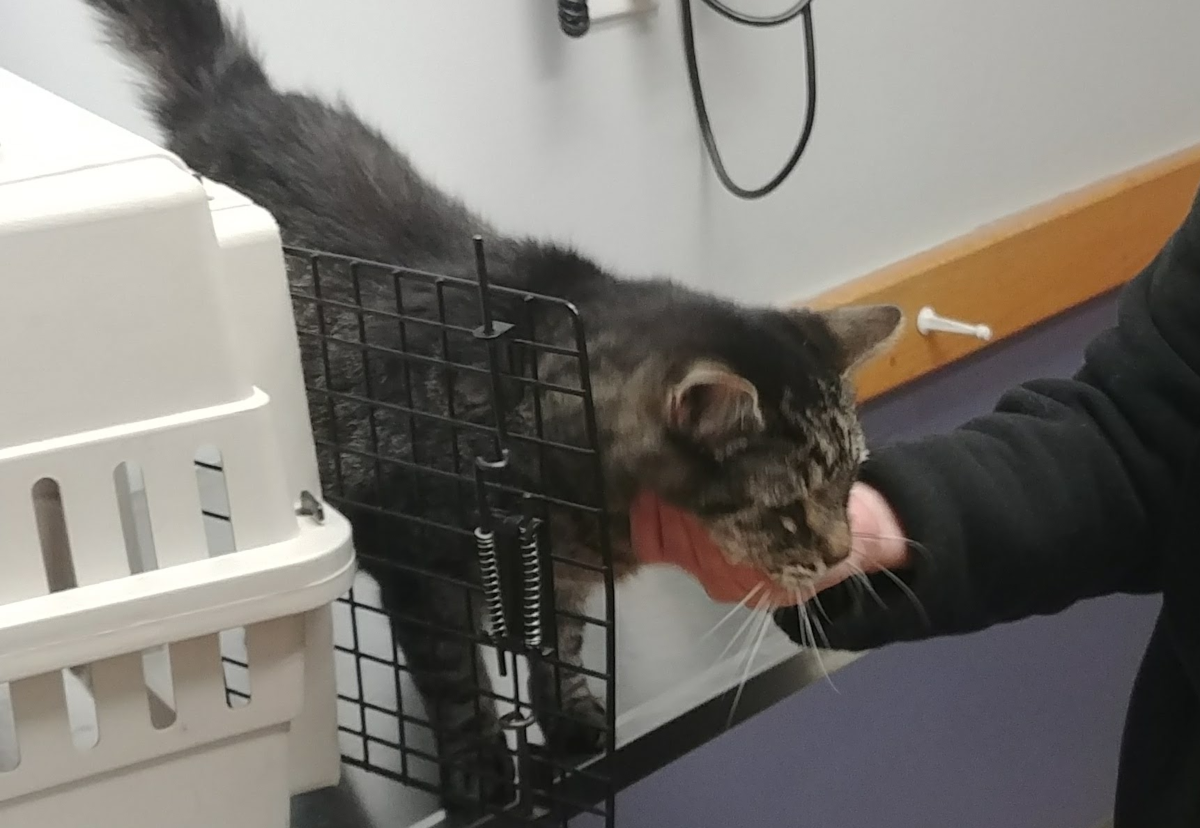 An outdoor cat usually arrives without a medical record, so observations from the person who found the animal can be surprisingly helpful. You do not need to identify the illness or determine what caused the injury. Simply report what you actually saw.
Useful information can include when you first noticed the problem, whether the cat has been eating or drinking, changes in movement, limping, coughing, discharge, wounds, bleeding, vomiting, diarrhea, urination problems, possible fights, suspected vehicle trauma, and whether the cat’s behavior has recently changed.
If the cat belongs to a known outdoor colony, tell the clinic that as well. Someone in the neighborhood may know how long the cat has lived there, whether the cat has already been sterilized or vaccinated, and whether there has been previous veterinary care.
Photos or short video clips taken before trapping can sometimes provide useful context, particularly when a behavior disappears once the frightened cat reaches the clinic. Record those observations without delaying urgent care.
The Plan After Treatment Depends on the Cat
Catching the cat is only the beginning of the medical decision-making process. The veterinarian may recommend treatment, hospitalization, wound care, surgery, medication, observation, or another course based on the examination and testing.
A community cat who can safely return outdoors after recovery may eventually go back to the location they know, but the timing should be based on veterinary advice and the cat’s condition. A major wound, anesthesia, surgery, fracture, severe illness, or ongoing medication may require a very different recovery arrangement from a routine TNR procedure.
A friendly stray may also turn out to have an owner. Once the immediate medical problem is addressed, scanning for a microchip and checking local lost-pet reports can help determine whether someone is searching for the cat.
Helping a sick outdoor cat sometimes begins with something as simple as noticing that yesterday’s familiar cat is walking differently today. Getting that cat safely into a humane trap, keeping the environment calm, and arriving at veterinary care without adding another injury gives the cat something far more valuable than an improvised roadside treatment: a safe path from being noticed to actually receiving medical care.