



Urination is one of those everyday details that can become surprisingly informative once a pet develops a health problem. A cat that starts producing larger litter clumps, a dog that suddenly asks to go outside twice during the night, or a senior pet that begins having accidents near a usual bathroom area may be showing a change worth documenting. The goal is not to diagnose the cause at home. The goal is to notice the change early, describe it accurately, and give your veterinarian a clearer picture of what has been happening between appointments.
After years of caring for aging cats and dogs, I have learned that memory is not nearly as reliable as a simple written record. It is easy to think, “He seems to be urinating more,” but that becomes much more useful when you can say that he normally produces three or four medium litter clumps a day and has produced seven large ones for the last three days. The same applies to dogs. A record of bathroom trips, accidents, urine volume, water intake, appetite, medications, and behavior can turn a vague concern into information a veterinarian can actually work with.
Frequency and Volume Are Not the Same Thing
 One of the first distinctions to make is whether a pet is urinating more often or producing more urine overall. Veterinarians use the term **pollakiuria** for frequent urination, often involving small amounts, while **polyuria** refers to increased total urine production. Those two patterns can look similar from across the room but may point the veterinary investigation in different directions.
A cat visiting the litter box ten times and producing tiny spots is not showing the same pattern as a cat visiting four times and leaving unusually large clumps. Frequent small urinations can occur with lower urinary tract problems such as bladder inflammation, stones, infection, or urethral irritation. Increased total urine production can occur with conditions including kidney disease, diabetes mellitus, some hormonal disorders, and certain medications. Cornell and Merck both describe increased frequency, painful urination, blood in the urine, and urination outside the box among common signs of feline lower urinary tract disease.
This distinction matters for dogs as well. A dog that squats repeatedly and passes only a little urine may be experiencing discomfort or irritation, while a dog producing large amounts of urine may simply be unable to hold the increased volume for the usual length of time. House soiling can have medical, behavioral, neurologic, mobility-related, or age-related causes, so a new accident in a previously reliable dog deserves observation rather than punishment.
Start by Learning What Is Normal for Your Pet
The most useful urinary record starts before there is a crisis. For a cat, spend several days noticing how many urine clumps normally appear in a 24-hour period, roughly how large they are, and whether the cat usually urinates at predictable times. With a dog, note the normal number of outdoor trips, whether the dog usually empties the bladder quickly or urinates several times on a walk, and whether nighttime trips are typical.
Exact laboratory-quality measurement is usually unnecessary for home monitoring unless your veterinarian specifically asks for it. Published reference ranges for daily urine production exist, but measuring a pet’s actual 24-hour output accurately at home can be difficult, especially with absorbent litter, outdoor dogs, or multiple animals sharing the same bathroom areas. Merck lists reference urine-volume ranges for dogs and cats, but those values are clinical reference information rather than a reason to turn every litter box into a measuring experiment.
For routine tracking, consistency is more helpful than false precision. If you use the same litter, keep a similar litter depth, scoop on the same schedule, and record clump number and approximate size, changes become easier to spot. For dogs, using the same general schedule and recording extra requests to go out, accidents, prolonged squatting, dribbling, or unusually long urinations can reveal a pattern over time.
A Simple Litter Box Tracking Routine
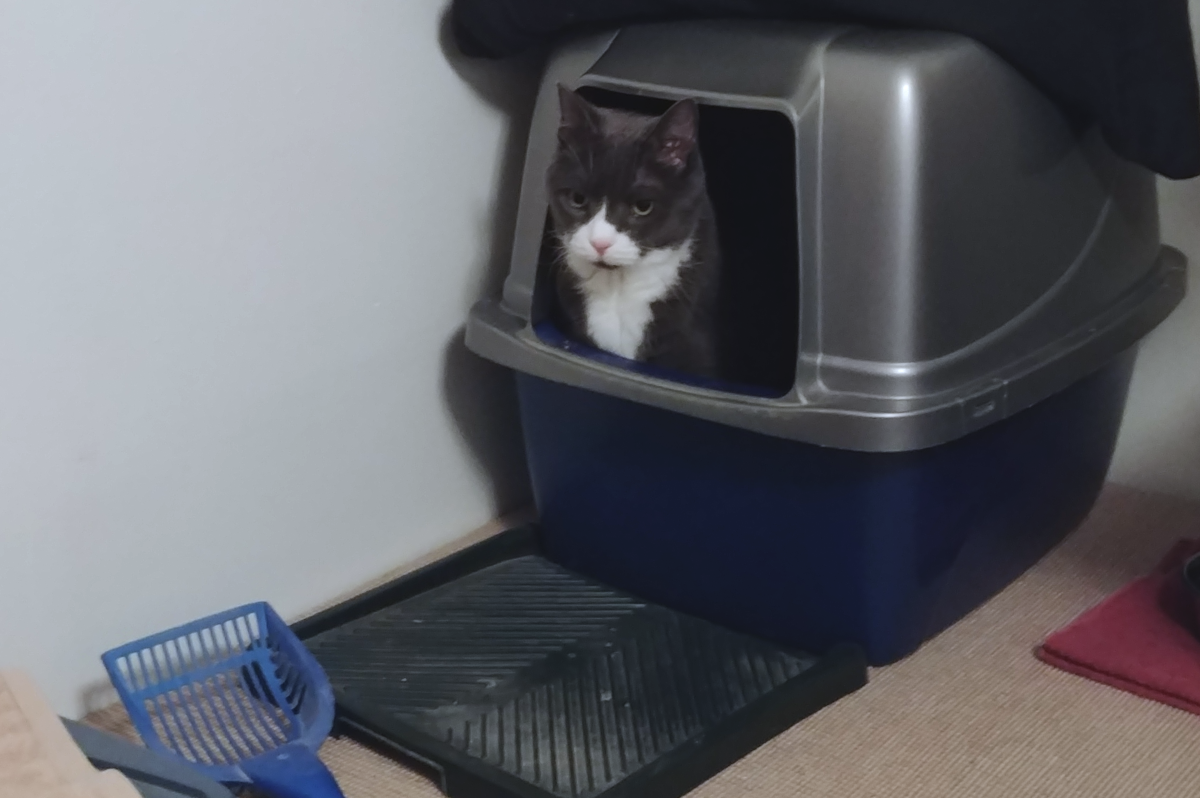 Clumping litter makes urine monitoring much easier because each void usually leaves a visible clump. I like a simple size system such as small, medium, large, and unusually large rather than trying to estimate milliliters from appearance. If a cat normally leaves four medium clumps and suddenly begins leaving six or seven large ones, that change is meaningful even if you cannot calculate the exact volume.
The condition of the box also affects what you can observe. Merck recommends daily scooping and regular full cleaning, and notes that many cats prefer unscented litter and enough space to turn and dig comfortably. A clean box is not only better for the cat, it also makes monitoring easier because fresh urine and stool are less likely to be confused with older deposits.
Record more than the clumps themselves. Note repeated trips, time spent squatting, vocalizing, licking around the genital area, urine found outside the box, visible blood, and whether the cat appears to enter the box but produces little or nothing. These observations can help separate a large-volume urination pattern from painful or difficult urination. Cornell specifically lists painful urination, increased frequency, blood, inappropriate urination, and genital licking among signs associated with lower urinary tract disease.
A photograph can also be useful when something looks unusual. Pictures of unusually large clumps, blood-tinged litter, urine spots outside the box, or the location of repeated accidents can preserve information that may be gone by the time of an appointment. The photograph is not a diagnostic test, but it can help you describe what you saw more accurately.
Tracking in a Multi-Cat Home
Shared litter boxes make individual urine tracking harder. A sudden increase in total clump volume tells you that something changed in the household, but it does not tell you which cat is responsible. This is one reason I pay attention to who enters the box whenever possible, especially when one cat is older, diabetic, has kidney disease, or has a history of urinary problems.
Temporary separation can sometimes help identify the cat producing a change, but it should be done thoughtfully. A comfortable room with food, water, bedding, and a clean litter box may allow you to observe one cat for a short period, provided separation does not cause excessive stress and your veterinarian has not given different instructions. A small indoor camera aimed at the litter box area can also help in some homes, particularly if the cats tend to use the box when no one is nearby.
Another practical approach is to add boxes in different locations and watch individual preferences. Cats often develop favorite boxes, which may make it easier to associate a pattern with a particular animal. Do not assume that urinating outside the box is automatically a behavior problem, though. Cornell notes that medical problems, pain, increased urgency, kidney disease, thyroid disease, diabetes, mobility changes, and cognitive changes can all affect litter box use.
Dogs Need a Different Kind of Urinary Log
 With dogs, the ground usually absorbs the evidence, so observation becomes more important than measurement. Record how often the dog asks to go out, whether urgency has changed, how long the urine stream lasts, whether the dog squats or lifts repeatedly with little production, and whether urine leaks while resting or sleeping. Also note accidents indoors, especially their timing and whether the dog seemed aware of them.
Older dogs deserve a little extra patience in this area. Arthritis, weakness, neurologic disease, cognitive changes, and reduced bladder control can all affect elimination habits, and a dog may simply be unable to get to the door or outside area as quickly as before. Merck notes that physical illness, pain, impaired mobility, sensory decline, increased urine production, and cognitive dysfunction can all contribute to house soiling.
If a dog begins urinating more, pairing the bathroom log with a water-intake record can be especially helpful. Your veterinarian may ask how much the dog drinks in 24 hours because increased thirst and increased urine production often occur together. Kidney disorders, diabetes mellitus, endocrine disease, liver disease, certain medications, electrolyte disturbances, and other conditions can be associated with increased drinking and urination.
Pair Urine Tracking With the Rest of the Daily Picture
Urine output rarely exists in isolation. A good record includes drinking, appetite, weight changes, vomiting, stool, energy, mobility, medications, and anything else that changed around the same time. For a diabetic pet, urinary changes may be especially useful context because increased thirst and urination can accompany poor glucose control, while other causes may be unrelated to diabetes and require separate investigation.
Medication history belongs in the record too. Corticosteroids, diuretics, and some other drugs can change thirst or urine production, which is one reason your veterinarian needs a complete list of prescriptions, over-the-counter products, and supplements. Do not stop or change a prescribed medication because urine output changed unless the prescribing veterinarian tells you to do so. The observation should prompt a conversation, not an unsupervised medication adjustment.
Patterns across several days are often easier to interpret than a single unusual bathroom trip. A hot day, a wet-food meal, extra exercise, a stressful event, or a change in routine can alter drinking and elimination temporarily. Repeated changes, progressive changes, or changes accompanied by other symptoms carry more weight and are worth reporting.
Know the Difference Between “Watch Closely” and “Go Now”
Some urinary changes can be documented for a routine veterinary discussion, but difficulty passing urine can become an emergency. A cat that repeatedly enters the litter box, strains, cries, and produces little or no urine needs prompt veterinary attention. Male cats are at higher risk for urethral obstruction because their urethra is longer and narrower, and complete obstruction can rapidly become life-threatening. Cornell describes suspected urethral obstruction as an emergency requiring immediate treatment.
Do not wait for a scheduled appointment if your pet appears unable to urinate. Repeated unsuccessful attempts, increasing distress, lethargy, vomiting, loss of appetite, or a sudden marked change in behavior can accompany serious urinary disease. Dogs can also experience urinary obstruction, so the basic rule applies to both species: straining without producing urine is not something to monitor casually at home.
Visible blood in the urine, obvious pain, a sudden major increase or decrease in urine output, repeated accidents in a previously reliable pet, or a sustained increase in drinking should also be discussed with a veterinarian. These signs have many possible causes, and the pattern alone cannot identify which one is responsible.
Urine Samples Can Add Useful Information
 Sometimes your veterinarian may ask you to collect a urine sample at home. For cats, special nonabsorbent litter or collection beads can make this possible, while dogs may allow a clean container to be placed under the urine stream. Ask the veterinary office what type of sample they need before collecting it because the preferred collection method depends on the test.
Freshness matters. Merck states that urinalysis is best performed on fresh urine, and if a sample is collected at home and cannot be examined immediately, it should be refrigerated and the collection time should be reported. For bacterial culture, a veterinarian may prefer cystocentesis, in which urine is collected directly from the bladder, because a free-catch sample can pick up bacteria from the lower urinary tract or environment.
Urinalysis can provide information that cannot be seen in a litter box, including urine concentration, blood cells, inflammatory cells, crystals, glucose, protein, and other findings. Urine specific gravity is a measure of how concentrated or dilute the urine is, and persistent dilute urine can be associated with kidney or metabolic disease. A single home observation of pale urine cannot replace that testing, but it can be one more reason to bring the change to your veterinarian’s attention.
Build a Record Your Veterinarian Can Use
A useful urinary log does not need to be complicated. Date and time, number of urinations, approximate amount, unusual behavior, accidents, water intake when practical, medications, and related symptoms are enough for most home records. For cats, add litter-clump size and location of any urine outside the box. For dogs, add extra outdoor requests, stream changes, dribbling, and nighttime incidents.
Bring the record to appointments rather than trying to reconstruct it from memory in the exam room. A week of clear observations can show whether a change was sudden, gradual, intermittent, or steadily worsening, and that timeline can help your veterinarian decide what questions, examination findings, urine testing, bloodwork, imaging, or other steps may be appropriate. Merck specifically identifies changes in water intake, urination frequency, urine volume, urine appearance, behavior, medications, appetite, diet, weight, and previous illness as useful history when urinary disease is being investigated.
Over the years, this kind of tracking has become part of how we care for older and medically complicated animals at home. It does not replace veterinary testing, and it does not tell us what diagnosis a pet has. What it does remarkably well is preserve the small daily details that are easy to forget, so the veterinarian sees more than a single snapshot of the pet on appointment day.