


One of the quieter changes that comes with an aging dog or cat is that the body may slow down before curiosity disappears. A senior dog might no longer want a long walk but still spend several minutes investigating one patch of grass. An older cat may stop climbing to the top of a tall cat tree yet remain completely absorbed by birds moving outside a window. Those moments matter because an older animal can still benefit from having things to investigate, solve, smell, watch, and anticipate.
Mental enrichment does not have to mean strenuous exercise, complicated training sessions, or expensive equipment. For many senior pets, the best activities are the ones that let the brain work while the body remains comfortable. Veterinary guidance for senior dogs and cats includes environmental enrichment among the tools that can support cognitive health, and environmental management is also part of care for animals with cognitive dysfunction. The activity still has to match the pet’s mobility, vision, hearing, medical conditions, and tolerance for frustration.
Aging Changes the Kind of Enrichment That Works
 Young animals often make enrichment look athletic. They chase, leap, wrestle with toys, race through rooms, and keep going long after we are ready to stop. Senior animals may still enjoy some of those activities, but arthritis, muscle loss, chronic illness, reduced stamina, sensory changes, and pain can make physically demanding play uncomfortable. AAHA’s senior-care guidance recommends adjusting activity to the animal’s comfort and mobility and also stresses that behavioral changes sometimes blamed on aging can actually reflect chronic pain.
That changes the goal. Instead of asking how much activity we can get from an older pet, it is often more useful to ask how much interesting information we can bring within easy reach. A scent trail across one room, a simple food puzzle beside a favorite bed, or a stable window perch reached by a low step can create a meaningful activity without asking arthritic joints to do much work.
Mental enrichment also should not be treated as a test the pet must pass. Some seniors will investigate a new puzzle immediately, while others may stare at it, walk away, or become frustrated. Difficulty can be reduced until the animal succeeds with very little effort, then increased only if that pet seems interested in more of a challenge. With older animals, success is often less about solving something impressive and more about giving them a comfortable reason to engage with their surroundings.
Scent Work Can Turn a Small Space Into an Interesting Place
Dogs experience much of their environment through smell, which makes scent-based activities especially useful when distance and speed are no longer practical. Research on canine enrichment supports olfactory activities as a way to encourage exploration, and veterinary and animal-welfare literature describes scent work, scatter feeding, and snuffle mats as low-impact ways to engage dogs. The evidence is stronger for enrichment and behavioral engagement than for claims that scent games prevent age-related cognitive decline, so those claims should not be stretched beyond what the research actually shows.
A very simple scent game can start with several pieces of the dog’s normal food placed openly on a towel. Once the dog understands that food appears there, some pieces can be tucked loosely into folds. A few days later, if the dog remains comfortable and interested, the search can become slightly less obvious. The dog’s nose is doing most of the work, while the body may move only a few feet.
The same principle can be used around a room. A pet owner might place a few pieces of measured food in easy-to-reach locations along the edge of a rug, beside a bed, or near furniture the dog already approaches safely. For an animal with limited vision or hearing, familiar smells may also provide useful environmental cues, and Merck’s veterinary guidance notes that odor, sound, and tactile cues can help some dogs with cognitive decline orient themselves within the home.
Cats can enjoy scent exploration too, although their response may look quieter. A cat may investigate a cardboard box that has been moved to a new safe location, sniff a paper bag with the handles removed, or inspect a toy that has been rotated back into use after a few days away. The point is not to overwhelm the room with strong fragrances. In fact, essential oils and concentrated fragrances can introduce safety concerns for pets, so simple food odors, familiar objects, and ordinary household scent changes are usually a better starting place than scented products.
Snuffle Mats Work Best When the Mat Fits the Pet
 A snuffle mat is essentially a soft foraging surface with folds or strips where dry food can be scattered. For a senior dog that still enjoys eating and sniffing but tires quickly on walks, it can turn part of a meal into several minutes of slow searching. Animal-welfare literature specifically describes snuffle mats and hidden food as forms of enrichment that encourage methodical searching and problem solving.
The easiest version is often the best version for an elderly dog. Food can be left near the top of the fabric instead of buried deeply, the mat can be placed on a nonslip surface, and the dog can work while standing comfortably or even while lying down if the design allows it. A pet with neck, back, or joint problems may need the mat positioned differently, and an animal that has trouble remaining upright should not be made to stand for the sake of completing an activity.
Snuffle mats also need ordinary safety supervision. A dog that tears fabric, swallows fibers, guards food, or becomes agitated when food is difficult to reach may need a different activity. Washable materials are useful because food residue and saliva accumulate quickly, and worn mats should be replaced when strips or backing begin to break apart.
For cats, a loose fabric mat is not always the most appealing choice, but the same foraging idea can be adapted. A shallow tray with large cups, a muffin tin with a few uncovered food portions, or a simple stationary puzzle can allow an older cat to sniff and retrieve food without chasing a rolling object across the floor. Research on feline food puzzles recommends starting with simple designs and increasing difficulty gradually, and published veterinary behavior literature notes that senior and disabled cats can use appropriately chosen food puzzles. The research base for companion cats is still limited, however, so food puzzles should be viewed as one useful enrichment option rather than a proven therapy for every behavioral or cognitive problem.
Food Puzzles Should Not Accidentally Change a Medical Diet
Food-based enrichment is easy to overdo because every hidden treat still counts as food. For an overweight senior, a cat with kidney disease, a pet eating a prescription diet, or an animal with another condition affected by nutrition, the safest approach is often to use part of the pet’s measured daily food rather than adding a separate supply of treats. That keeps the activity interesting without quietly increasing calories or changing the balance of the diet.
Diabetic pets need an extra layer of planning. A puzzle should not casually change the amount or timing of food that has been coordinated with insulin and veterinary care. If a diabetic dog or cat has a structured feeding schedule, the puzzle can sometimes be filled with part of the food already assigned to that meal, but any meaningful change in feeding routine should be discussed with the veterinarian managing the diabetes. The enrichment is supposed to fit into medical care, not disrupt a routine that was created for a reason.
Poor appetite is another situation where enrichment should not become an obstacle. An elderly cat that needs to maintain weight should not have to solve a difficult puzzle before being allowed to eat. If a pet begins eating less, losing weight, or walking away from food that was previously eaten normally, that deserves attention beyond simply trying a different puzzle.
Window Watching Can Be Enrichment Without Much Movement
 For many older cats, one of the most effective enrichment tools is already built into the house. A comfortable place beside a window provides changing visual, auditory, and scent information as people, birds, leaves, insects, vehicles, and weather move through the day. The Ohio State University Indoor Pet Initiative recommends window access and perches as part of an enriched indoor environment for cats.
The senior version of a window perch may look very different from the tall platforms used by a young cat. A chair with a firm cushion, a broad bench, or a low platform reached by one or two stable steps can provide the same view with far less jumping. Nonslip surfaces, ramps, and easier access to vertical space are also consistent with senior-pet and pain-management recommendations for animals with reduced mobility.
Stability matters more than height. Window-mounted beds and suction-cup platforms should be checked regularly, and a cat with balance problems should have a wide surface with little risk of falling. If the favorite window requires a difficult jump, bringing the resting spot lower may preserve the activity long after the cat stops reaching the old location.
Dogs may also enjoy watching through a window, but this is not automatically calming enrichment. A dog that quietly watches the street may be content, while another may become highly aroused by every person, delivery vehicle, or passing dog. In that case, a different observation point or a scent-based activity may be a better fit.
Predictability Can Make Enrichment Easier for a Confused Senior
Novelty is useful only when it remains manageable. Senior pets with cognitive changes can become unsettled by major changes in routine or environment, and veterinary guidance for canine cognitive dysfunction recommends a consistent, predictable routine along with appropriate mental and physical stimulation.
That means enrichment does not have to involve constantly buying new things. The same three or four activities can be rotated gently. A dog might have a snuffle mat after breakfast on some days and a short scent search on others. A cat might alternate between a window spot, a simple stationary food puzzle, and a familiar cardboard box moved to a nearby location.
The pet’s response tells us whether the activity is doing what we intended. Relaxed sniffing, sustained interest, choosing to return to the activity, and settling comfortably afterward are useful signs. Pacing, repeated vocalization, frantic pawing, food guarding, panting unrelated to heat, walking away, or difficulty getting up afterward may mean the activity is too difficult, physically uncomfortable, or simply not enjoyable for that animal.
Behavioral Changes Deserve More Than an Enrichment Toy
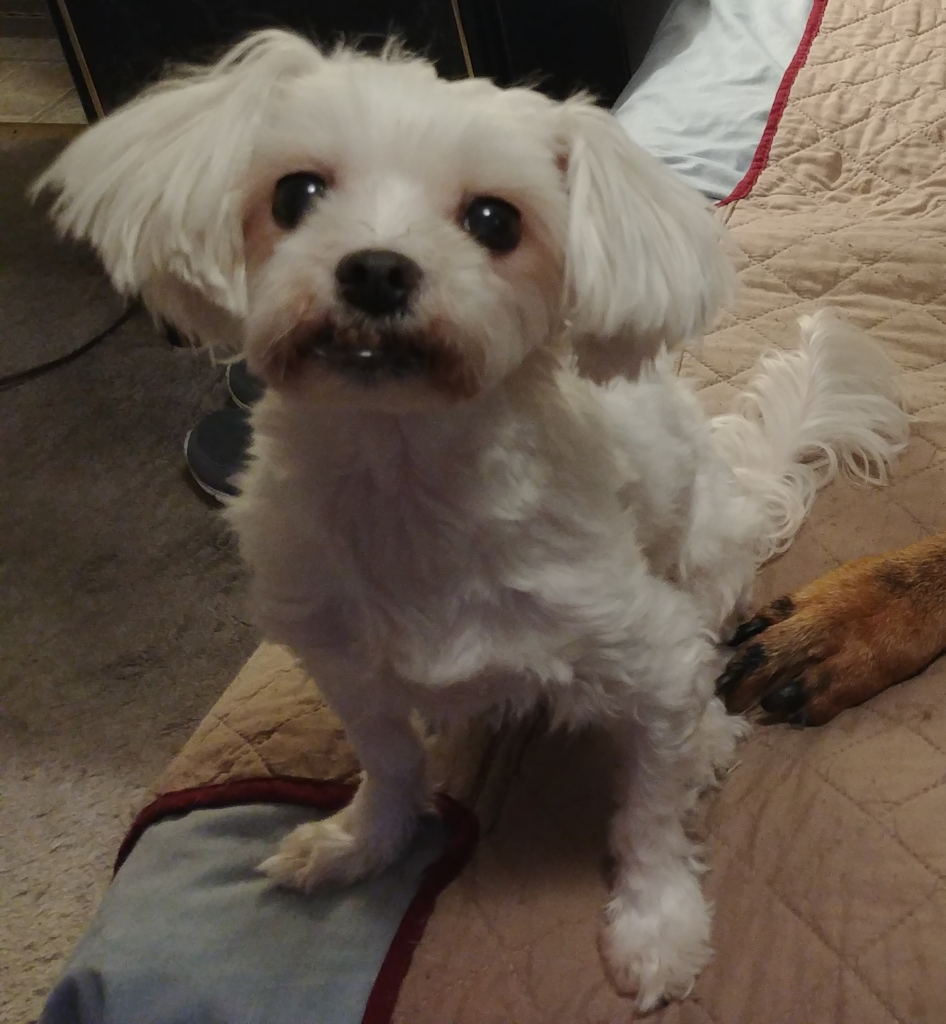 Mental enrichment can support an older pet, but it should not become a way of explaining away new behavior. Disorientation, changes in sleep, house-soiling, altered social interaction, unusual vocalization, anxiety, or changes in activity can occur with cognitive dysfunction, but similar signs may also appear with pain, sensory loss, endocrine disease, kidney disease, hypertension, diabetes, neurological problems, and other medical conditions. Veterinary evaluation is how those possibilities begin to be sorted out.
A short home video can be surprisingly useful when something has changed. Recording how a senior cat approaches a window perch, how a dog rises after using a snuffle mat, or whether an animal hesitates on a particular floor surface can give the veterinary team information that may not appear during an appointment. AAHA specifically recommends owner videos as a tool for assessing changes in mobility and chronic pain in senior pets.
There is a practical comfort in activities that meet an older pet where that pet is now. The dog who once covered miles may be perfectly satisfied spending ten minutes investigating a towel full of familiar food smells. The cat who no longer launches onto a six-foot tower may still spend half the afternoon watching birds from a stable bench beside the window. Enrichment does not have to make a senior pet act young again. It can simply give an aging brain something safe, interesting, and achievable to do while the body gets the gentler treatment it has earned.