

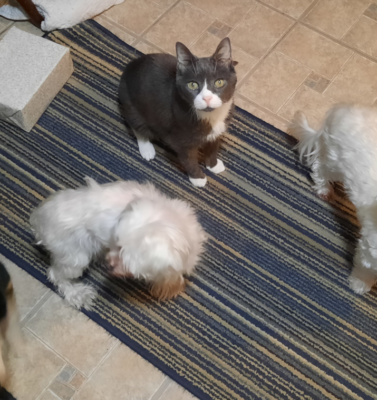
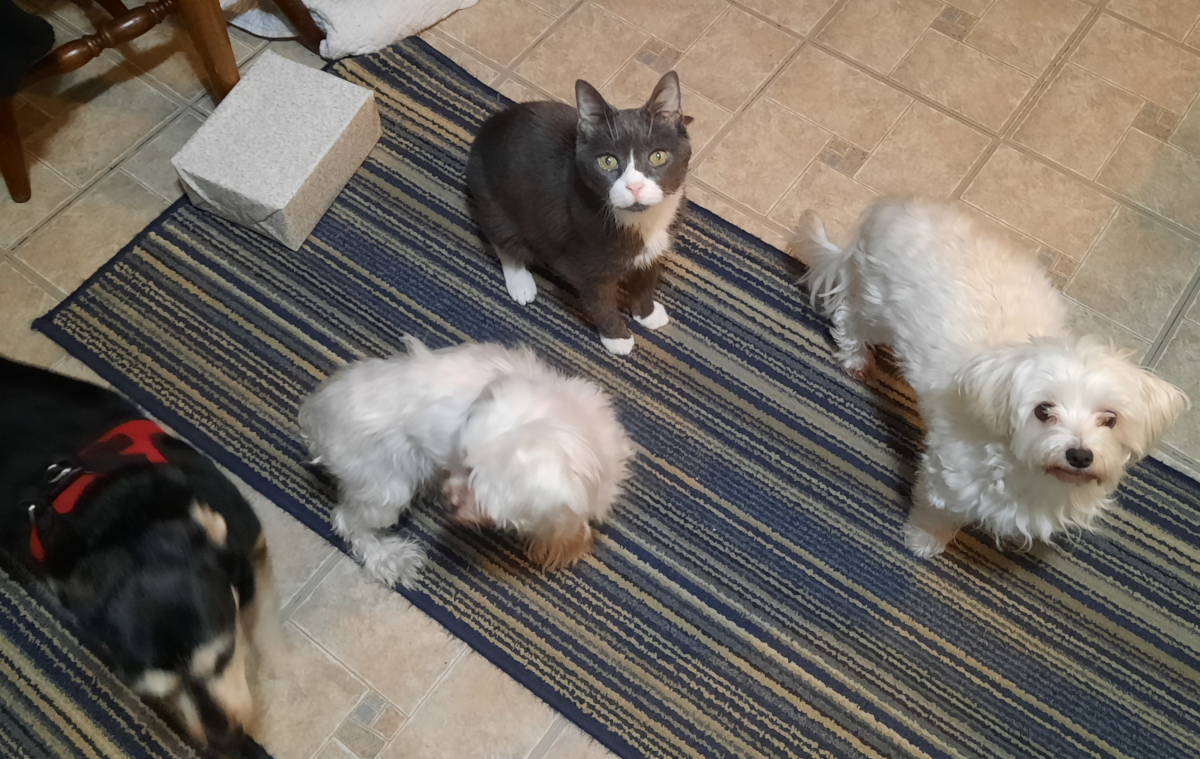
Talking to an older dog or cat can seem like one of the least complicated parts of caring for them. We say good morning, comment on dinner, tell them where we are going, complain about the weather, and sometimes carry on entire conversations knowing perfectly well that the response may be a blink, a tail movement, a head turn, or complete indifference.
With a senior pet, those ordinary conversations can become more meaningful than they first appear. Talking creates regular moments of interaction in which we can notice how our pet responds to our voice, how alert they seem, whether they approach us normally, how easily they get up, and whether something about their usual behavior has changed.
There is no good evidence that simply talking to a pet prevents age-related disease, and conversation should never be treated as a medical test. What it can provide is something experienced pet owners come to appreciate: a familiar daily routine that gives us repeated opportunities to observe the animal we know best.
Familiar Voices Really Do Matter to Dogs and Cats
Dogs and cats do not understand human conversation in the same way another person does, but that does not mean our voices are meaningless to them. Research has shown that both species can distinguish familiar human voices from unfamiliar ones.
In one controlled study, domestic cats were able to distinguish their owner’s voice from the voices of strangers using sound alone. Their reactions were often subtle, such as moving their ears or turning their head rather than walking toward the speaker. That finding matches what many cat owners see at home. A cat may appear to be ignoring us while still showing that they have heard and identified who is speaking.
Dogs also appear capable of identifying their owners by voice. Research has found that dogs can distinguish their owner’s voice from unfamiliar speakers, and other studies suggest that dogs respond to both vocal tone and the context of human speech.
That becomes especially interesting as a pet grows older. Eyesight may become less sharp, hearing may decline, mobility can change, and the animal may depend more heavily on whichever senses remain strongest. A familiar voice can become one of several predictable signals that tells an older pet who is nearby and what is happening around them.
Daily Conversation Creates a Natural Check-In
 After living with an animal for years, most people develop an unconscious picture of what “normal” looks like. We know whether our dog usually gets up when we walk into the kitchen. We know whether our cat normally answers us with a meow, slow blink, head turn, or irritated flick of the tail. Those little patterns are easy to overlook because they happen every day. They are also part of the reason daily interaction with a senior pet can be so informative.
Suppose you normally walk into the room each morning and say your dog’s name. Most mornings, the dog lifts their head and comes toward you. One morning, they lift their head but stay down. Another day, they struggle slightly before standing. A week later, you notice they are hesitating before climbing onto the couch. None of those observations tells you what is medically wrong. Taken together, however, they give you useful information to share with your veterinarian.
Veterinary guidance for senior dogs and cats specifically warns against assuming that behavioral changes are simply an unavoidable part of aging. AAHA notes that chronic pain in older animals can appear through subtle behavioral changes that owners may mistakenly dismiss as normal aging. Videos of movement and normal activities can also help veterinarians evaluate changes over time. Your conversations with your pet can become part of that observational routine without turning the household into a clinic.
The Response Can Matter More Than the Words
The subject of the conversation is probably not especially important to your cat. Bentley does not need a detailed explanation of why the electric bill went up, and your dog is unlikely to have a useful opinion about what happened at work. What matters more is the interaction.
A senior dog that normally looks toward you when you speak may stop doing so. A cat that normally chirps when greeted may suddenly become unusually vocal, unusually quiet, or reluctant to interact. Another pet may start appearing startled when approached from behind because hearing has declined.
Changes like these do not automatically indicate illness. Hearing loss, vision changes, discomfort, environmental changes, anxiety, sleep disruption, and many other factors can alter how an older animal responds. The pattern is what deserves attention.
Cornell University’s Feline Health Center advises owners not to assume that changes in an older cat’s behavior or physical condition are simply caused by age. Pain, mobility problems, kidney disease, diabetes, hyperthyroidism, and other medical conditions can all contribute to behavioral changes. That is one reason knowing your pet’s normal responses is so useful. You cannot recognize a change very well without first knowing what ordinary behavior looks like.
Talking Can Help You Notice Changes in Hearing and Awareness
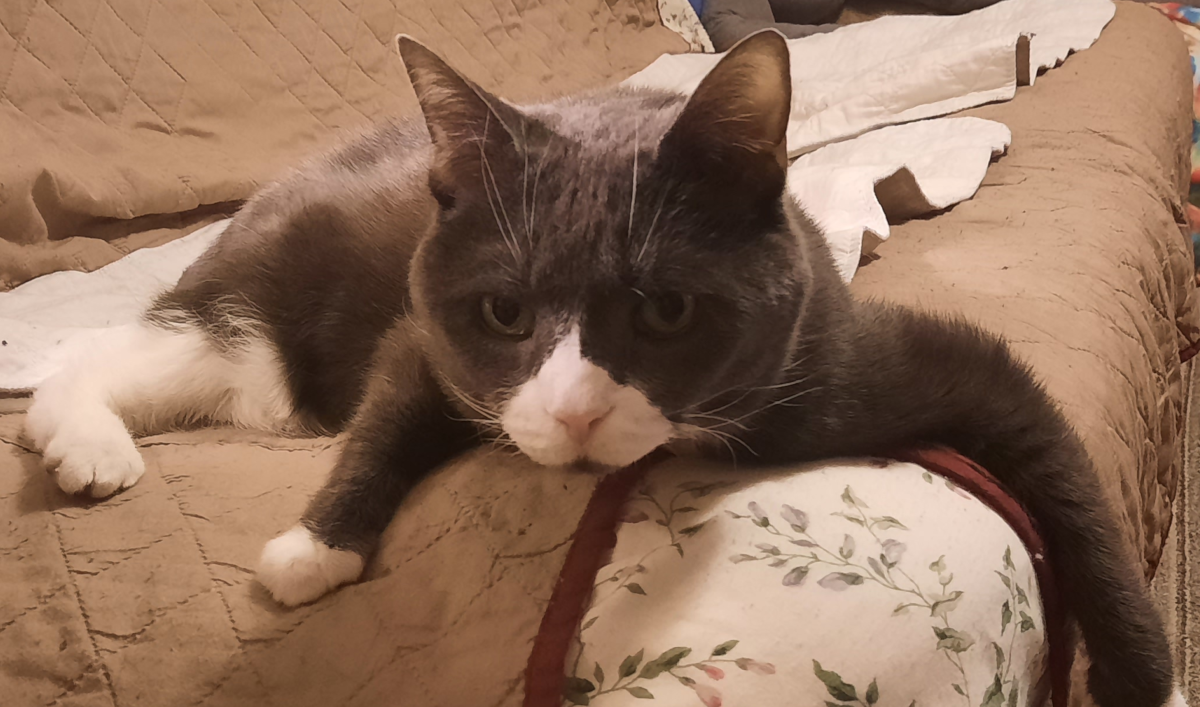 Hearing loss often develops gradually enough that people compensate for it without realizing what they are doing. We begin speaking louder. We approach from a different direction. We touch the furniture before walking up to the pet. Eventually we realize that the dog or cat has not been responding to sounds the way they once did. Regular conversation gives you many casual opportunities to notice those changes.
An older dog may respond when facing you but not when your voice comes from behind. A senior cat may react to vibration, movement, or the sight of you entering the room while showing little response when you call from somewhere else. Those observations are worth mentioning during a veterinary visit, especially if the change appeared quickly or is accompanied by other symptoms.
Vision changes can produce similar shifts in behavior. An animal that cannot see you clearly may depend more heavily on hearing and smell, while an animal with reduced hearing may rely increasingly on visual cues. Speaking before touching a sleeping or visually impaired senior pet can also help reduce surprise when the animal is still able to hear you.
Changes in Interaction Can Also Be Part of Cognitive Aging
Some older dogs and cats develop cognitive dysfunction, an age-related condition involving changes in learning, memory, awareness, behavior, and sleep patterns. It should not be assumed from one odd behavior, since several medical conditions can produce similar signs.
AAHA lists changes in social interaction, sleep-wake cycles, house training, activity, anxiety, recognition, appetite, pacing, and orientation among the possible signs seen with cognitive dysfunction. Cats may also show increased vocalization or changes in their usual interactions with people.
The Merck Veterinary Manual similarly describes disorientation, altered interactions, sleep changes, house soiling, anxiety, activity changes, learning problems, and vocalization among behaviors that can occur with cognitive decline. It also stresses that medical causes need to be considered because disease, pain, neurological problems, and other conditions can produce behavioral changes that appear similar.
Daily conversation gives you another opportunity to notice whether something about your pet’s awareness has shifted. Perhaps your dog seems confused about where your voice is coming from. Maybe your cat begins calling loudly from another room and settles when you answer. An older pet may become unusually dependent on your presence or, in the opposite direction, begin withdrawing from interactions they previously enjoyed. These are observations to record, not diagnoses to make at home.
Your Voice Can Become Part of a Predictable Routine
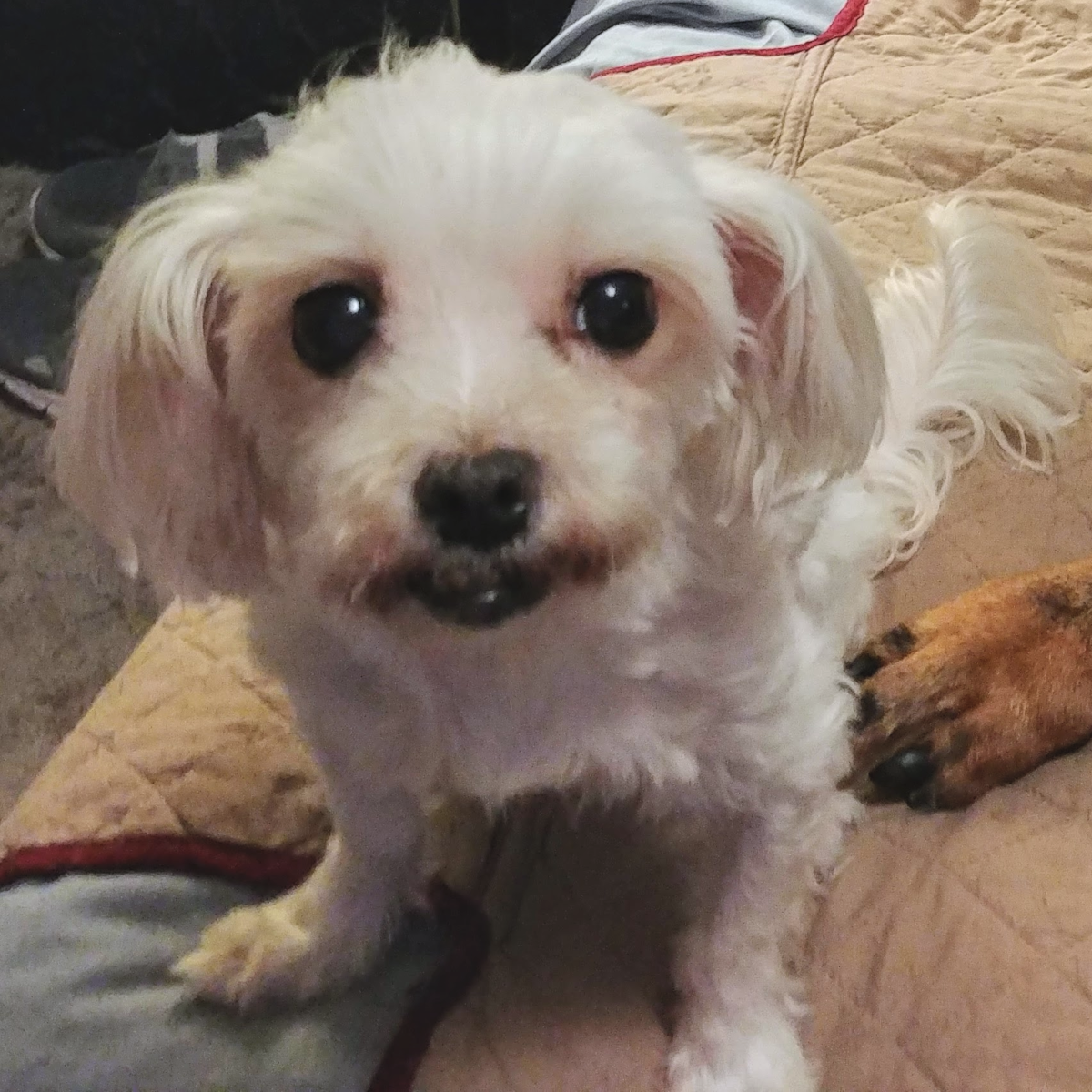 Senior animals often benefit from a household that is reasonably predictable. Feeding times, medications, walks, litter box cleaning, bedtime, and periods of activity tend to develop their own rhythm. Talking can become part of that rhythm.
I tend to tell animals what is happening even when I know they do not understand the sentence. “Time for dinner.” “We’re going upstairs.” “Let’s check your sugar.” “I’ll be right back.” The words become associated with routines through repetition, tone, body movement, location, and what happens next.
Research in dogs supports the idea that human vocal information is meaningful in ways that extend beyond simply hearing a sound. Studies indicate that dogs respond to characteristics such as speaker identity, intonation, and communicative context. Pet-directed speech, which commonly has a somewhat higher pitch and wider vocal variation, has also been found to attract adult dogs’ attention more effectively than ordinary adult-directed speech in experimental conditions.
That does not mean owners need to adopt a special voice or constantly entertain an older pet. Familiarity and consistency are more useful than performance. For animals receiving medications or regular home monitoring, predictable verbal cues can also make the routine less abrupt. A diabetic cat who receives glucose checks and insulin, for example, may learn the entire sequence of events surrounding the procedure. The familiar location, supplies, person’s movements, feeding routine, and voice all become part of what happens every day.
Quiet Pets Still Communicate Plenty
One mistake people can make is expecting communication to look dramatic. Many senior cats, in particular, respond in ways that are easy to miss. An ear rotates toward your voice. Eyes open slightly. The head lifts. A cat gives a slow blink and settles again. A dog shifts closer without standing. Another animal continues sleeping because your voice is so familiar that it does not require much of a response. These are still interactions.
A small study showing that cats could distinguish their owners’ voices is a good reminder of how restrained feline responses can be. The cats often oriented toward the sound rather than actively approaching or vocalizing.
Knowing that helps us avoid assuming that an animal who does not perform an obvious response is uninterested in us. With an older pet, watching the subtle responses can also make gradual changes easier to recognize.
A Two-Minute Daily Habit Can Reveal a Lot
Talking to a senior pet does not need to become another item on an already long caregiving schedule. Most people are doing it anyway. A useful habit is simply spending a couple of minutes each day interacting with the pet when nothing else is demanding your attention. Speak normally, scratch an ear if they enjoy it, watch them stand or walk, and notice how they respond.
During those ordinary moments, you may naturally notice:
- whether your pet responds when you say their name
- whether they seem able to locate where your voice is coming from
- whether interaction has increased or decreased
- whether vocalization has changed
- whether getting up appears slower or uncomfortable
- whether they hesitate before walking, jumping, or using stairs
- whether they seem unusually restless, confused, withdrawn, or clingy
- whether their sleep pattern appears different
- whether their normal personality or daily routine seems to be shifting
One observation usually means very little by itself. Repeated changes, several changes appearing together, or a clear departure from normal behavior deserve more attention.
Writing down the date can help when something seems different. A short note such as “didn’t get up when called three mornings this week” is often more useful later than trying to remember exactly when a change started.
Conversation Should Never Replace Watching the Whole Animal
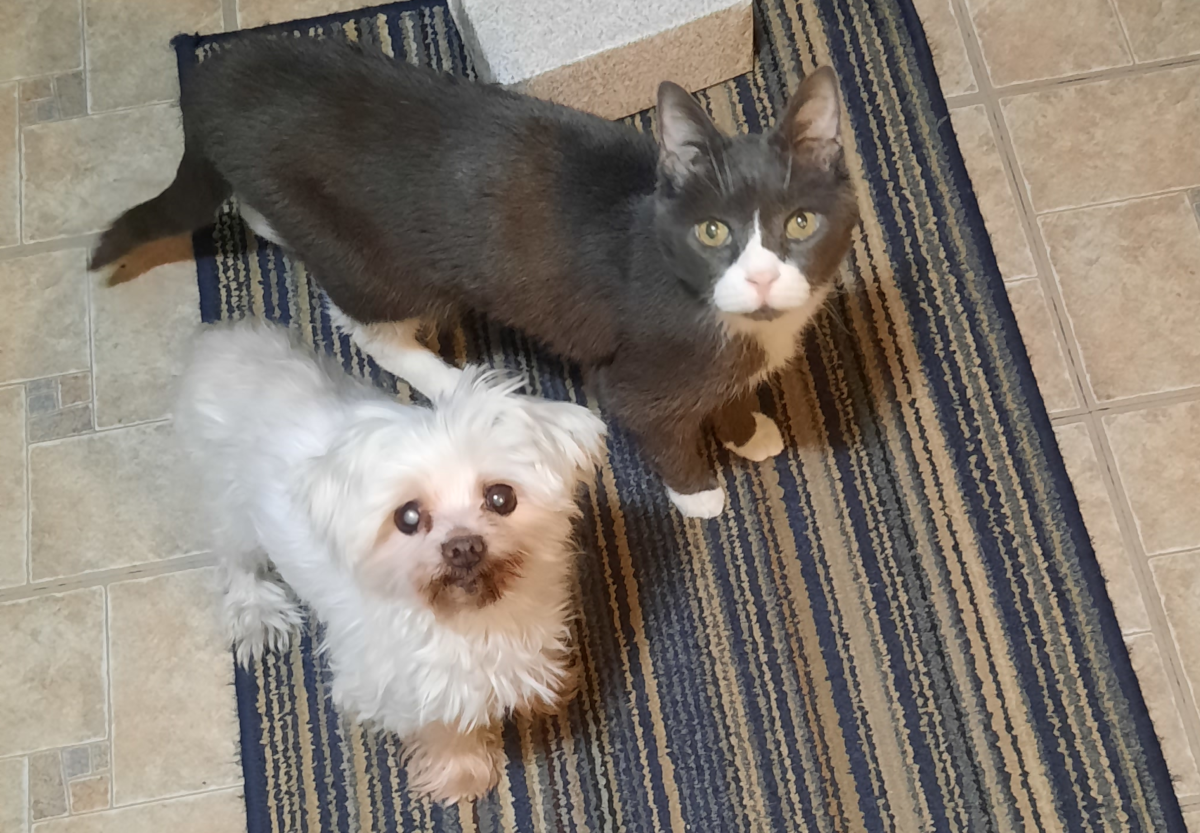 A pet responding enthusiastically to your voice does not guarantee that everything is fine. Animals can remain social while living with arthritis, dental disease, kidney problems, heart disease, diabetes, cancer, or many other conditions. The reverse is also true. A senior pet who becomes quieter is not automatically sick.
That is why daily interaction works best as one piece of a larger picture. Eating, drinking, elimination, weight, grooming, breathing, mobility, sleep, medication response, glucose readings when relevant, and general behavior all provide information.
Veterinary examinations and appropriate diagnostic testing remain necessary because many diseases cannot be identified through behavior alone. AAHA’s senior-care guidance emphasizes that aging dogs and cats may have multiple conditions at the same time and recommends a broad approach that includes medical assessment, behavior, pain, nutrition, dentistry, mobility, environmental changes, and other aspects of senior care. The conversation simply gives us another way of staying connected to what is happening between those appointments.
The Small Changes Are Often the Ones Worth Remembering
After decades of caring for animals into old age, one lesson keeps repeating itself: major changes usually get our attention immediately, but small changes are easier to explain away. The dog is just tired today. The cat is getting old. Maybe they did not hear me. Maybe they are being stubborn. Maybe they slept badly.
Sometimes that explanation is exactly right. Sometimes the same small change happens tomorrow, and the next day, and eventually becomes part of a pattern that deserves a veterinarian’s attention. Talking to a senior pet every day gives those patterns a chance to become visible. It gives us a familiar point of comparison because we already know how that animal normally looks at us, approaches us, ignores us, complains at us, follows us, or settles when they hear our voice.
And there is another reason to keep having those conversations that does not require a medical explanation. Older pets still have routines, preferences, expectations, and relationships with the people around them. A familiar voice remains part of their everyday world.
So tell your old dog what you are making for dinner. Explain the weather to your cat. Announce bedtime, narrate the trip to the kitchen, and carry on the same ridiculous conversations you have probably been having for years. While you are talking, pay attention to the answer. It may not come in words, but after enough years together, you probably already know what their version of an answer looks like.