

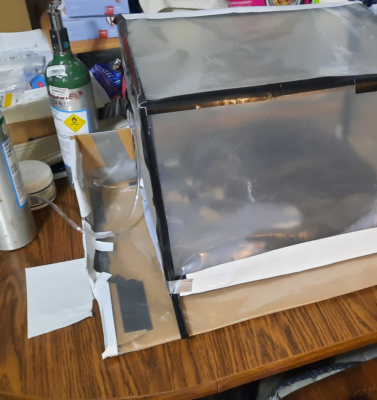
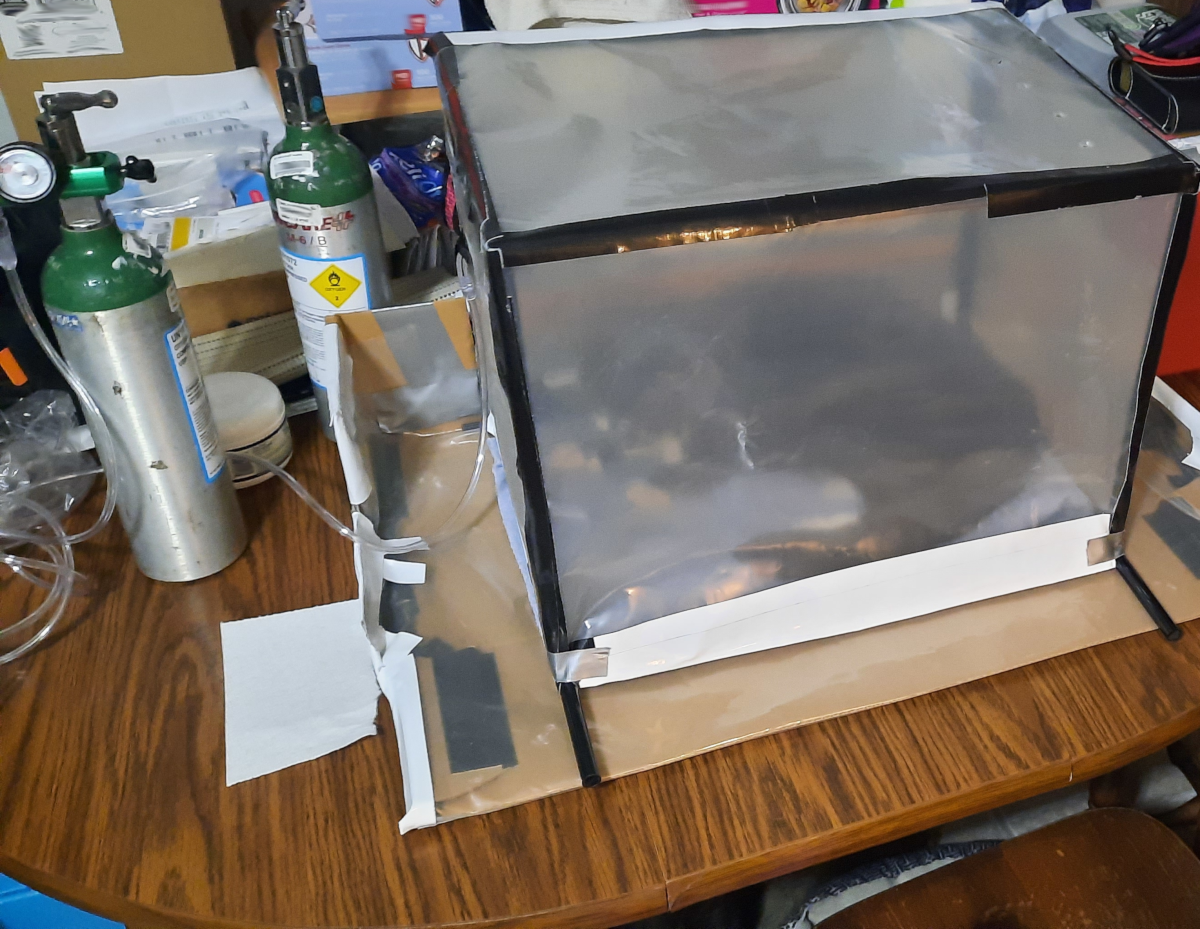
The first oxygen chamber we ever put together at home was for Paws. At that point, our purpose was comfort during his final care. We had access to medical oxygen cylinders, so we were able to create an enclosed space where he could receive supplemental oxygen without having to tolerate a mask or tubing attached to his face.
We never expected that setup to become useful again. Later, Everly needed oxygen while dealing with fluid affecting her lungs during a serious illness, and more recently our rescue Stanley needed oxygen support while being treated for pneumonia. Those experiences were very different medically, but they taught us the same lesson: sometimes oxygen is not the treatment that fixes the problem, but it can give an animal’s body much-needed support while other treatment has time to work.
Supplemental oxygen is common in veterinary emergency and critical care for exactly that reason. When a dog or cat cannot move enough oxygen from the lungs into the bloodstream, increasing the amount of oxygen available with each breath can improve oxygen delivery while veterinarians address whatever is interfering with normal breathing.
What Oxygen Treatment Actually Does
Every breath brings air into tiny structures in the lungs called alveoli. Oxygen passes from those air spaces into nearby blood vessels, while carbon dioxide moves in the opposite direction so it can be exhaled. Disease can interfere with that exchange in several ways.
Pneumonia can fill or inflame parts of the lungs. Pulmonary edema can place fluid inside lung tissue and air spaces. Fluid or air around the lungs can prevent them from expanding normally. Airway swelling, obstruction, asthma, severe inflammation, trauma, and other disorders can also make breathing inefficient. In these situations, an animal may be breathing rapidly and working very hard while still failing to get enough oxygen into the bloodstream.
Veterinarians refer to an abnormally low level of oxygen in the blood as **hypoxemia**. Pulse oximetry, blood gas testing, the animal’s breathing pattern, gum color, physical examination, imaging, and other findings can help determine whether oxygen supplementation is needed. Current veterinary guidance recommends supplemental oxygen for many lung disorders when hypoxemia or significant respiratory distress is present.
Supplemental oxygen increases the percentage of oxygen the animal inhales. Normal room air contains about 21 percent oxygen, while veterinary oxygen delivery systems can provide a considerably higher concentration depending on the method being used. That greater concentration can help more oxygen cross from functioning portions of the lungs into the bloodstream.
The distinction we learned firsthand is that oxygen usually **supports the animal while something else treats the disease**. Oxygen does not kill bacteria causing pneumonia, remove fluid surrounding the lungs, correct heart failure, eliminate an airway obstruction, or repair damaged lung tissue. It can make the difference between an animal struggling to maintain adequate oxygen levels and having enough respiratory support for those other treatments to begin working.
Pneumonia Is One Reason Oxygen May Be Needed
 Stanley’s pneumonia gave us another perspective on oxygen treatment. Pneumonia affects the lung tissue itself, and inflammation, fluid, mucus, and cellular debris can interfere with normal gas exchange. An animal can therefore breathe faster and harder while obtaining less oxygen from each breath.
The Merck Veterinary Manual identifies oxygen supplementation as part of treatment for dogs and cats with pneumonia when hypoxemia is present. Severe cases may require an oxygen cage or nasal oxygen, while animals whose oxygen levels remain inadequate despite supplementation may require mechanical ventilation. Treatment must also address the cause of the pneumonia, which can include bacterial infection, aspiration, fungal disease, or other underlying problems.
Cornell University’s College of Veterinary Medicine similarly describes oxygen supplementation as part of supportive care for serious feline pneumonia. The underlying disease still has to be identified and treated, and some animals require hospitalization for several days while their breathing and response to treatment are monitored.
This is where oxygen can act as a bridge. Antibiotics, antifungal medications, airway treatments, fluid management, nebulization, and other therapies may need time to produce improvement. Oxygen can support the animal during that period rather than leaving already compromised lungs to do all of the work alone.
Fluid in or Around the Lungs Creates a Different Problem
 Everly’s situation involved fluid affecting her lungs, which illustrates why the reason for respiratory distress matters so much. Several very different conditions can involve fluid in the chest, and they are not treated the same way.
Pulmonary edema refers to fluid accumulating within lung tissue and air spaces. It can occur with congestive heart failure and certain noncardiac conditions. Merck notes that pulmonary edema associated with heart failure interferes with normal oxygen movement and ventilation, and supplemental oxygen can increase the amount of oxygen available to the bloodstream while the underlying cardiac problem is being treated.
Pleural effusion is different. In that situation, fluid accumulates in the space surrounding the lungs and physically restricts their ability to expand. Oxygen may support the animal temporarily, but significant pleural fluid may need to be removed by a veterinarian through a procedure called thoracocentesis. Oxygen alone cannot create room for compressed lungs to expand.
That distinction is one reason visible breathing difficulty should never be treated at home simply by putting an animal on oxygen and assuming the immediate problem has been addressed. Two cats can look remarkably similar while struggling to breathe and have completely different conditions requiring different emergency treatment.
Oxygen Can Help With More Than Lung Infections
Veterinary emergency teams use oxygen in many situations besides pneumonia. Severe asthma or airway inflammation, upper airway obstruction, acute respiratory distress syndrome, chest trauma, heart disease, smoke or inhalation injury, severe shock, and complications involving the lungs may all create situations where supplemental oxygen is appropriate.
The method depends partly on what the animal will tolerate. Veterinary hospitals may use flow-by oxygen, masks, oxygen hoods or collars, nasal cannulas, nasal catheters, oxygen cages, high-flow nasal oxygen, or endotracheal tubes connected to mechanical ventilation. An oxygen cage is often especially useful for frightened cats because the animal can receive oxygen without someone continuously holding equipment against its face.
Stress matters more than many people realize. A cat already struggling to breathe can deteriorate from excessive restraint, handling, or panic. Cornell describes situations where veterinarians initially provide oxygen and allow a cat in respiratory distress to settle before attempting extensive diagnostics. Stabilizing breathing sometimes has to come before obtaining the perfect X-ray or performing a long examination.
Why an Oxygen Chamber Can Be Helpful
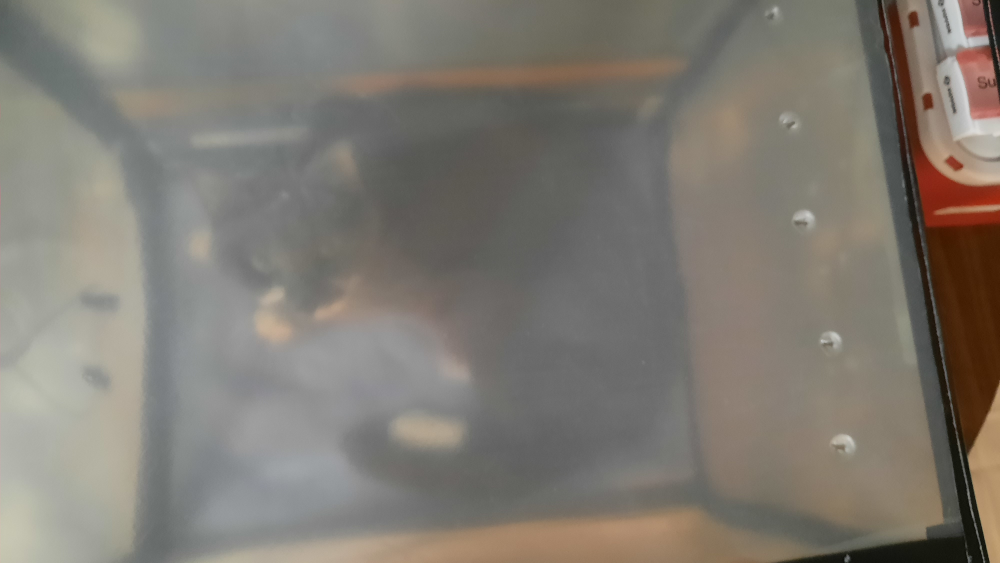 An oxygen chamber surrounds the animal with oxygen-enriched air rather than requiring oxygen to be delivered directly through something attached to the face or nose. For an animal that becomes frightened by masks or tubing, that can make treatment much easier to tolerate.
Our homemade chamber worked because we had access to medical oxygen and were using it for animals whose medical situations were already known to us and their veterinarians. That experience should not be read as a recommendation to place an animal inside an airtight container and connect an oxygen hose.
Professional oxygen cages are more sophisticated than a box filled with oxygen. Veterinary guidance specifically calls for monitoring oxygen concentration, carbon dioxide, temperature, and humidity inside an oxygen cage. A poorly ventilated enclosure can accumulate carbon dioxide, heat, and moisture even while oxygen is being added.
That is one of the biggest limitations of copying a homemade design from the internet. The size of the enclosure, ventilation openings, oxygen source, oxygen flow, leakage, animal size, respiratory rate, room temperature, and other factors affect conditions inside the chamber. A flow setting that worked in somebody else’s setup does not establish what oxygen concentration another animal will actually breathe.
Anyone considering home oxygen should therefore discuss the entire arrangement with their veterinarian. That conversation should include the oxygen source, delivery method, expected treatment time, how the enclosure will be ventilated, what should be monitored, what signs mean treatment is failing, and exactly when the animal needs to return to an emergency hospital.
Medical Oxygen Tanks Are Not the Only Possible Source
We were fortunate to have access to medical oxygen cylinders when we needed them, but many pet owners will not. Depending on the animal’s condition and the veterinarian’s treatment plan, an oxygen concentrator may sometimes provide another way of supplying supplemental oxygen at home.
A concentrator does not contain a reservoir of stored oxygen like a compressed gas cylinder. It draws in room air and produces oxygen-enriched gas. That removes the problem of a tank eventually becoming empty, but the equipment requires electricity and has limits on how much oxygen it can produce.
The existence of a concentrator does not make home oxygen automatically appropriate. The veterinarian still has to decide whether the animal is medically stable enough for home care and whether the proposed equipment can deliver adequate oxygen. A seriously unstable animal may need continuous monitoring, injectable medications, chest drainage, high-flow oxygen, intubation, or mechanical ventilation that cannot reasonably be duplicated at home.
Owners using electrically powered oxygen equipment should also discuss what happens during a power outage or equipment failure. A backup plan matters because an animal dependent on supplemental oxygen may not tolerate a long interruption.
Oxygen Equipment Adds a Serious Fire Hazard
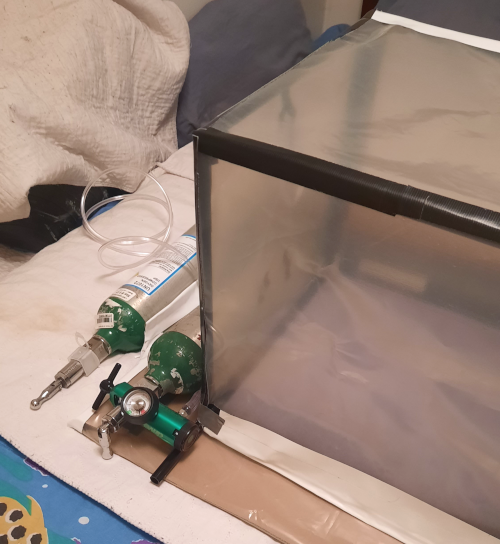 Oxygen itself does not burn, but an oxygen-rich environment allows other materials to ignite more easily and burn much faster. That means oxygen equipment needs to be treated differently from ordinary household equipment.
The FDA now requires no-smoking and no-vaping warnings on medical oxygen containers because of the increased fire risk. OSHA guidance also requires oxygen equipment to be kept away from oil, grease, combustible material, open flames, and other ignition hazards.
Smoking, vaping, candles, fireplaces, gas flames, space heaters, sparking equipment, and other ignition sources should be kept away from areas where oxygen is being administered. Oxygen cylinders also need to be secured against falling or physical damage, and fittings intended for oxygen service should never be improvised with oily or greasy substances.
This part of home oxygen care deserves the same attention as the medical side. A chamber, blanket, pet bed, clothing, furniture, and surrounding materials can become exposed to an oxygen-enriched environment, so normal household fire precautions are not enough.
Signs That Breathing Trouble Needs Emergency Care
Respiratory distress is one of those situations where watching for a few more hours can be risky. A dog or cat that is visibly struggling to breathe needs prompt veterinary assessment because the cause cannot reliably be determined from appearance alone.
Signs that deserve immediate attention include:
- Open-mouth breathing in a cat that is not simply recovering from brief exertion or heat
- Noticeably increased effort with each breath
- The abdomen working strongly during breathing
- The neck stretched forward in an attempt to breathe
- A dog standing with the elbows held outward to expand the chest
- Blue, gray, or unusually pale gums
- Collapse, severe weakness, or inability to remain standing
- An animal that cannot settle or lie comfortably because breathing becomes harder
- Rapid breathing combined with obvious distress or worsening illness
Merck identifies open-mouth breathing, abnormal posture, cyanosis, collapse, and marked respiratory effort among signs associated with severe respiratory compromise. Cornell also advises prompt veterinary evaluation when cats show signs of significant breathing difficulty.
Counting resting breaths can be useful for animals with known heart or respiratory disease, but the number should never be considered in isolation. Changes in effort, posture, gum color, behavior, appetite, energy, and the animal’s established medical history give the veterinarian much better context.
Oxygen Does Not Replace Ventilation
There is another limitation that can be easy to miss. An animal can receive plenty of oxygen and still fail to move enough air in and out of the lungs.
Oxygen supplementation improves the concentration of oxygen being inhaled, but breathing also has to remove carbon dioxide. If an animal becomes exhausted, has severe airway obstruction, or cannot ventilate adequately, simply increasing oxygen concentration may no longer be enough.
Veterinary critical-care guidance recommends mechanical ventilation when oxygen levels remain dangerously low despite supplementation, carbon dioxide rises substantially, or the work of breathing remains severe enough that respiratory failure is becoming likely.
That is another reason an oxygen chamber should never create a false sense of security. Seeing a pet sitting quietly inside an oxygen-enriched enclosure does not automatically mean the respiratory problem is under control.
Oxygen in Hospice and Comfort Care
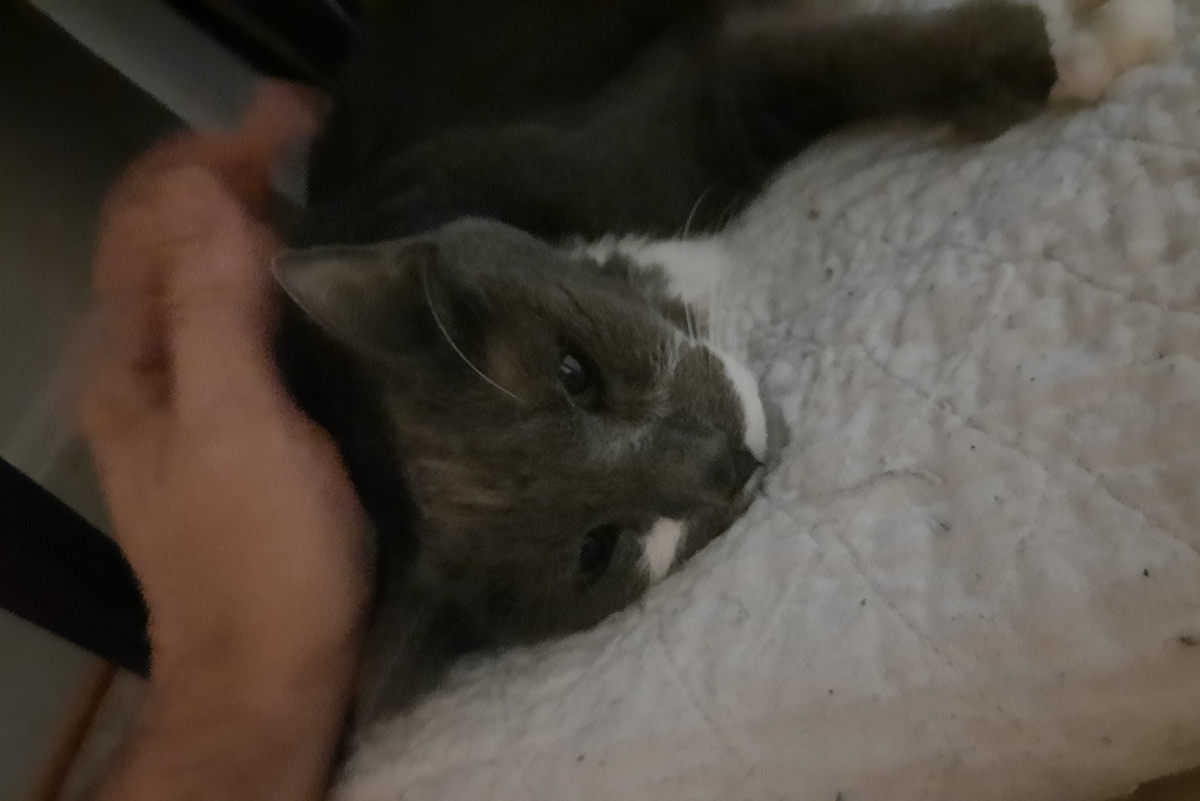 Our first reason for creating an oxygen chamber was different from treating an acute infection. With Paws, oxygen became part of keeping him comfortable during his final care.
For an animal whose low blood oxygen is contributing to respiratory distress, supplemental oxygen may reduce some of the strain associated with trying to obtain enough oxygen from compromised lungs. In a hospice setting, the goal may be less about aggressive recovery and more about reducing distress while keeping the animal somewhere familiar and quiet.
Those decisions are best made with the veterinarian who understands the animal’s condition. A useful home-care plan should establish what oxygen can realistically accomplish, which medications or other comfort measures are being used, what changes indicate worsening respiratory failure, and when continuing treatment is no longer providing acceptable comfort.
Having oxygen available can be reassuring, but the equipment itself should never become the reason an animal remains at home when hospitalization or emergency treatment is needed. The same is true during hospice care. A plan works best when everyone knows beforehand what the goals are and what signs will change that plan.
What Our Experiences With Paws, Everly, and Stanley Changed for Us
Before Paws, an oxygen cage felt like something that belonged almost entirely in an emergency hospital. After caring for him, Everly, and Stanley, we came to see supplemental oxygen as another form of supportive care, one that can serve very different purposes depending on the animal in front of us.
For Paws, it was connected with comfort. With Everly, it supported her during a serious condition involving fluid and respiratory compromise. With Stanley, oxygen helped support his breathing while pneumonia was being treated. The equipment looked similar each time, but the disease processes and goals were not the same.
That difference is probably the most useful thing we can pass along to another pet owner considering oxygen therapy. The question is not simply whether oxygen might help a dog or cat breathe. The bigger questions are why that animal is having difficulty breathing, whether oxygen is enough to stabilize the situation, what treatment is addressing the underlying cause, and how the animal will be monitored while receiving it.
Sometimes oxygen provides a little breathing room while medicine begins working. Sometimes it supports an animal through a respiratory crisis in the hospital. Sometimes it becomes part of a carefully planned home-care or hospice routine. Used with veterinary guidance and appropriate equipment, it can be an extraordinarily useful tool, but its value comes from understanding what it can support and what it cannot fix.