
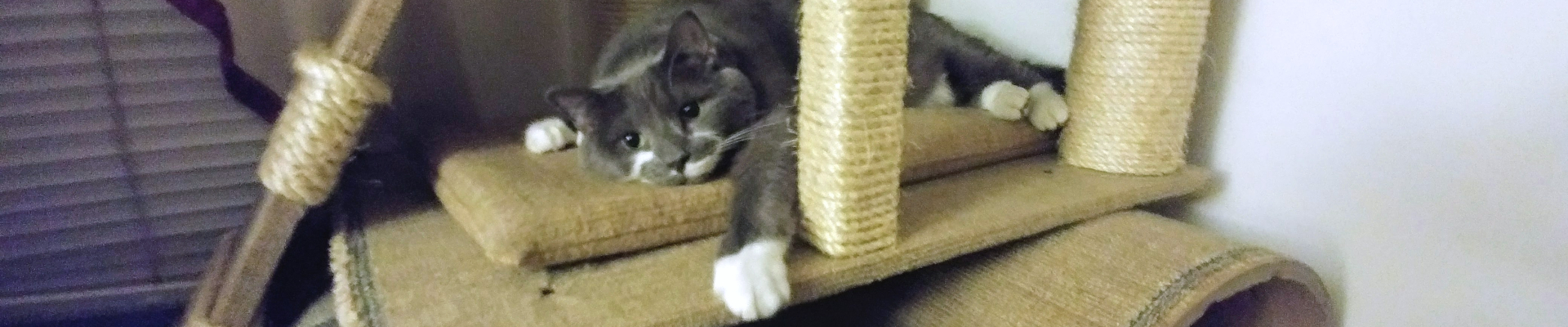
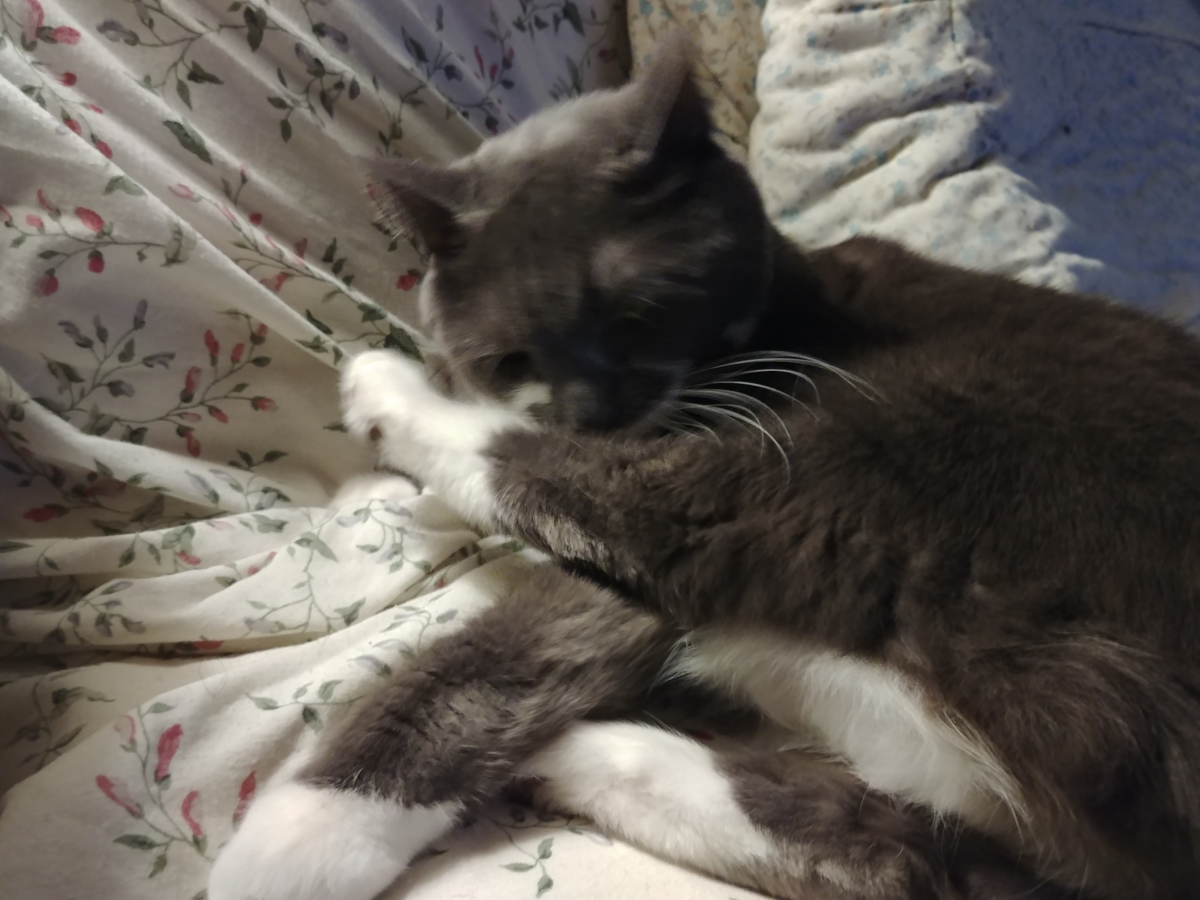
A cat that has always kept a smooth, tidy coat can begin to look a little different as arthritis develops. Fur may start to separate into small clumps along the lower back, dandruff may become more noticeable, or the coat may feel greasy in places that once looked polished. Sometimes the change is subtle enough that it gets blamed on age, but reduced grooming can be one of the behavioral signs of chronic pain or reduced mobility in cats. Veterinary guidance specifically recognizes decreased grooming as a possible sign of degenerative joint disease, while Cornell notes that joint pain can make a cat unable to groom thoroughly.
That connection makes sense once we look at what grooming actually requires. A cat does not simply lick whatever part of the body happens to be nearby. Normal grooming involves twisting the spine, flexing the hips and knees, reaching over the shoulders, balancing on three limbs, curling the body tightly, and holding awkward positions long enough to clean areas such as the lower back, belly, hindquarters, and inner legs. When those movements hurt, grooming can become less complete even if the cat still wants to stay clean.
Arthritis Can Turn Ordinary Grooming Movements Into Painful Ones
Osteoarthritis, also called degenerative joint disease, involves progressive changes within a joint that can reduce comfortable movement and cause pain. It is especially common in older cats, although younger cats can also develop joint problems after injury, abnormal joint development, or other conditions. The MSD Veterinary Manual notes that osteoarthritis is common in cats and can be easy to miss because cats often hide signs of pain.
Grooming exposes those mobility limits in a very practical way. A cat with sore hips may stop rotating far enough to reach the base of the tail. A cat with painful knees may avoid balancing in the crouched position needed to clean the belly or inner thighs. Spinal discomfort can make twisting toward the back difficult, while shoulder or elbow pain can interfere with reaching the face, chest, and front of the body.
This is one reason arthritis does not always look like obvious limping. Chronic musculoskeletal pain in cats often shows up as changes in normal behavior, including reduced jumping, reluctance to use stairs, altered resting places, lower activity, and changes in grooming. AAHA guidance emphasizes that owner observations are especially valuable when assessing chronic pain because changes may be much easier to see at home than during a veterinary examination.
The Coat May Show the Problem Before the Cat Does
 A cat with arthritis may still groom part of the body very well. The face, chest, and front legs can remain clean while the lower back, hips, tail base, or hindquarters gradually become less maintained. That uneven pattern is worth noticing because it can tell you where movement has become difficult, even though it cannot tell you the cause by itself.
Reduced grooming may leave the coat greasy, flaky, clumped, or matted. Loose hair that would normally be removed can accumulate, and longhaired cats may develop knots more quickly. AAHA notes that decreased grooming associated with pain can result in greasy, clumped, or matted fur, while Cornell recommends more hands-on grooming support for older cats whose self-grooming begins to decline.
Mats are more than a cosmetic problem. As they tighten, they can pull on the skin and make handling uncomfortable, which may cause a cat with joint pain to resist brushing even more. A cat that once enjoyed being combed may begin shifting away, swatting, tensing, or leaving when a sore area is touched. Those reactions should not automatically be treated as a behavior problem because pain can change how a cat responds to normal handling.
Some Cats Groom Less, While Others Lick Painful Areas More
Arthritis does not always cause a simple reduction in grooming. Some cats repeatedly lick or chew near a painful joint, which means both decreased grooming and excessive grooming can be associated with discomfort. AAHA includes under-grooming and over-grooming among possible signs of pain, and excessive attention to one area may occur alongside hair thinning, skin irritation, or a change in coat condition.
That makes the pattern important. A cat that has stopped cleaning the lower back is showing something different from a cat that is repeatedly licking one hip, elbow, or paw. Neither pattern proves arthritis. Skin disease, parasites, allergies, bladder pain, dental pain, other illnesses, and behavioral causes can also change grooming habits, so a noticeable or persistent change deserves veterinary attention rather than an assumption that age is responsible.
Small Changes Around the House Can Reveal the Same Mobility Problem
Poor grooming often appears alongside other changes that are easy to overlook when they happen one at a time. The cat may still get onto the bed, but pause before jumping. They may use a chair as an intermediate step to reach a favorite windowsill, sleep downstairs instead of upstairs, or hesitate before entering a high-sided litter box. A cat may also choose lower resting places simply because getting there requires less bending and jumping.
Seeing these changes together gives a veterinarian more useful information than reporting only that the coat looks messy. Cornell notes that cats with joint pain may have difficulty jumping, using stairs, entering a litter box, or grooming themselves thoroughly. International Cat Care also recommends watching for changes in normal habits and taking home videos of movement because a cat may behave differently in the clinic.
A short phone video can be especially helpful. Record the cat walking across a room, getting up from rest, using stairs if they normally do, jumping onto a familiar surface, and attempting to groom an area that seems difficult to reach. You do not need to provoke movement or make the cat perform. The goal is simply to capture ordinary behavior that may not happen during an appointment.
Helping an Arthritic Cat Stay Clean Without Making Grooming Another Source of Pain
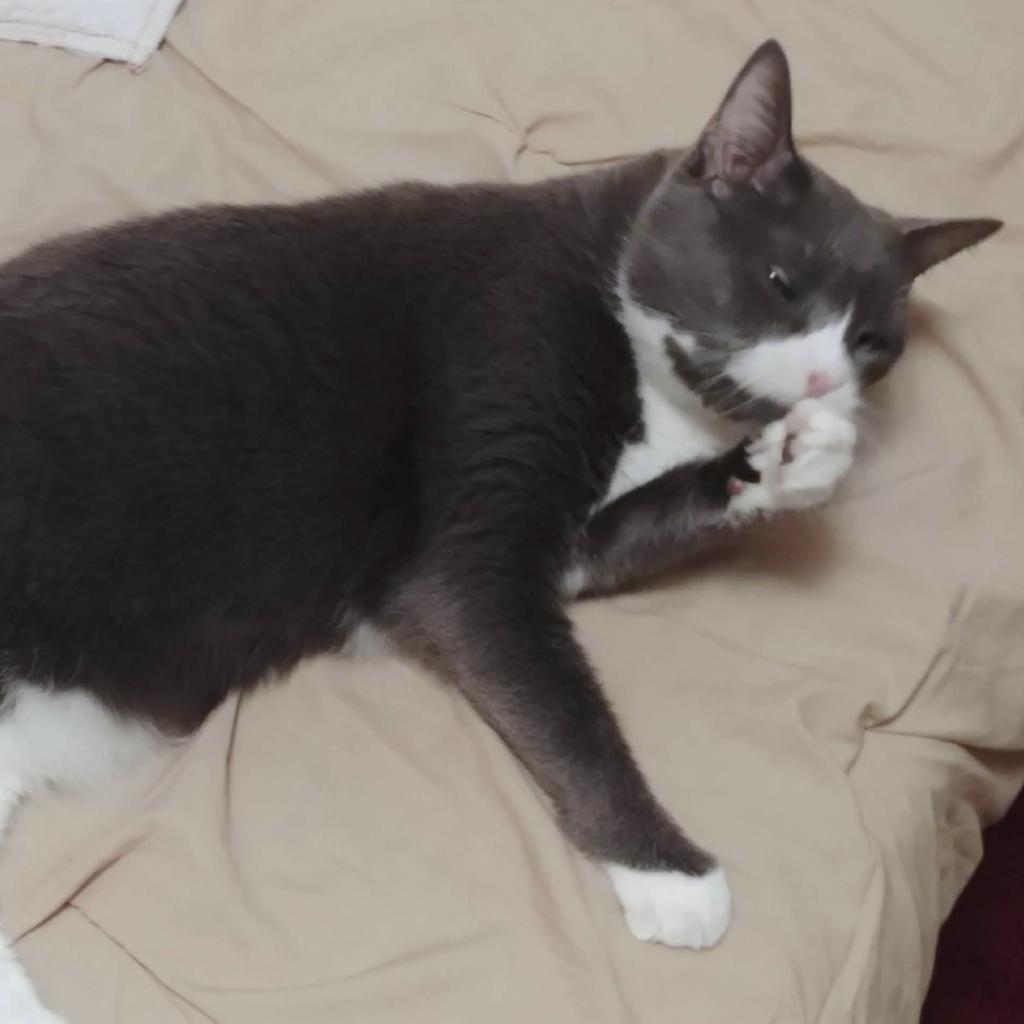 Hands-on grooming can help, but comfort matters more than getting the entire coat finished in one session. Short, gentle sessions are usually easier for a sore cat than prolonged brushing, especially if the cat has already started associating certain touches with discomfort. Cornell recommends gentle grooming for older cats whose self-grooming is declining, with brushing or combing used to remove loose hair and help maintain the coat.
Start with areas the cat already enjoys having touched, then work gradually toward places that need more help. A soft brush or wide-toothed comb may be more comfortable than a tool that pulls strongly on the coat. Support the cat on a stable, nonslip surface so they do not have to brace against sliding while being groomed. If the cat repeatedly flinches, tenses, turns to bite, growls, swats, or tries to escape when a particular area is touched, stop and make a note of the location rather than pushing through the session.
Longhaired cats may need more frequent help because mats can form quickly when regular self-grooming declines. If mats are tight against the skin, extensive, or painful to touch, veterinary staff or an experienced professional groomer may be better equipped to remove them safely. The larger issue is not whether the coat looks perfect. It is whether grooming can be restored as a comfortable part of the cat’s routine while the cause of the mobility problem is being addressed.
Grooming Changes Are Useful Information for the Veterinary Visit
A veterinarian evaluating possible arthritis will consider the cat’s history, behavior at home, physical examination, mobility, and sometimes imaging or other testing. X-rays can show changes associated with osteoarthritis, but chronic pain assessment also depends heavily on how the cat functions in everyday life. AAHA notes that chronic pain evaluation relies significantly on owner input, and the absence of dramatic findings during a clinic visit does not erase the value of changes seen at home.
Before the appointment, it can help to write down when the grooming change started, which areas of the coat are affected, whether brushing causes discomfort, and whether you have also noticed changes in jumping, stairs, litter box use, sleep, appetite, play, or social behavior. Photos taken every few weeks can show whether mats, dandruff, or greasy areas are becoming more noticeable. Videos can document movement that the cat may not repeat in the examination room.
Treatment for diagnosed osteoarthritis is individualized and may include pain management, weight management when appropriate, home modifications, controlled activity, rehabilitation approaches, or other veterinary therapies. Current pain-management guidance supports a multimodal approach rather than relying on a single intervention, and treatment needs to account for the individual cat’s health, other medical conditions, and response over time.
Making Grooming Easier Can Support the Rest of the Cat’s Daily Routine
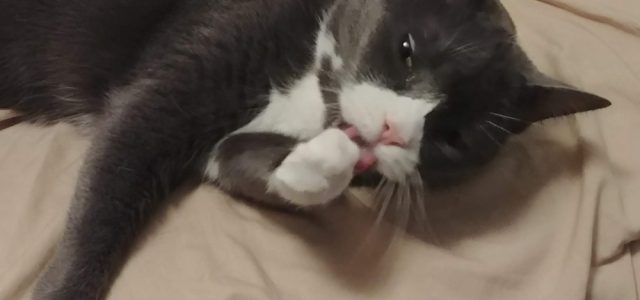 The same home changes that make movement easier can also help a cat reach favorite grooming and resting spots without unnecessary strain. Stable steps or ramps can reduce the height of jumps, nonslip surfaces can improve footing, and easy access to food, water, litter boxes, and resting areas can reduce how often a sore cat has to climb or stretch. International Cat Care specifically recommends environmental changes for cats with muscle, joint, and mobility problems as part of supporting comfort and quality of life.
Placement matters too. If a cat normally grooms after settling on a favorite bed, keeping that bed easy to reach may help preserve the routine. A cat that has to jump onto a high dresser before curling up to groom may simply stop using that location once jumping becomes uncomfortable. Bringing preferred resources closer to floor level can remove some of the physical barriers without taking away the cat’s familiar habits.
Weight can also affect mobility. Excess body weight may add mechanical stress and make it harder for a cat to bend and reach parts of the body, but weight loss should be planned carefully with a veterinarian so nutritional needs are still met. Cornell has also reported an association between excess weight and both lameness and skin problems related to difficulty grooming hard-to-reach areas.
A Messier Coat Should Not Be Dismissed as “Just Getting Old”
One of the lessons that comes with caring for cats over many years is that small changes deserve context. A senior cat may still eat, use the litter box, seek attention, and sleep in the same sunny spot while quietly giving up movements that have become uncomfortable. Grooming is one of those everyday behaviors that can change long before an owner sees anything that looks like a traditional limp.
A coat that becomes greasy, flaky, tangled, or unevenly groomed is not proof of arthritis, but it is useful information. Paired with hesitation before jumping, lower activity, stiffness after rest, difficulty reaching the hindquarters, or sensitivity to touch, it gives the veterinary team a clearer picture of what daily life looks like at home. Recognizing that pattern gives the cat a better chance of receiving help for the underlying discomfort while also getting the practical grooming support needed to stay clean and comfortable.