
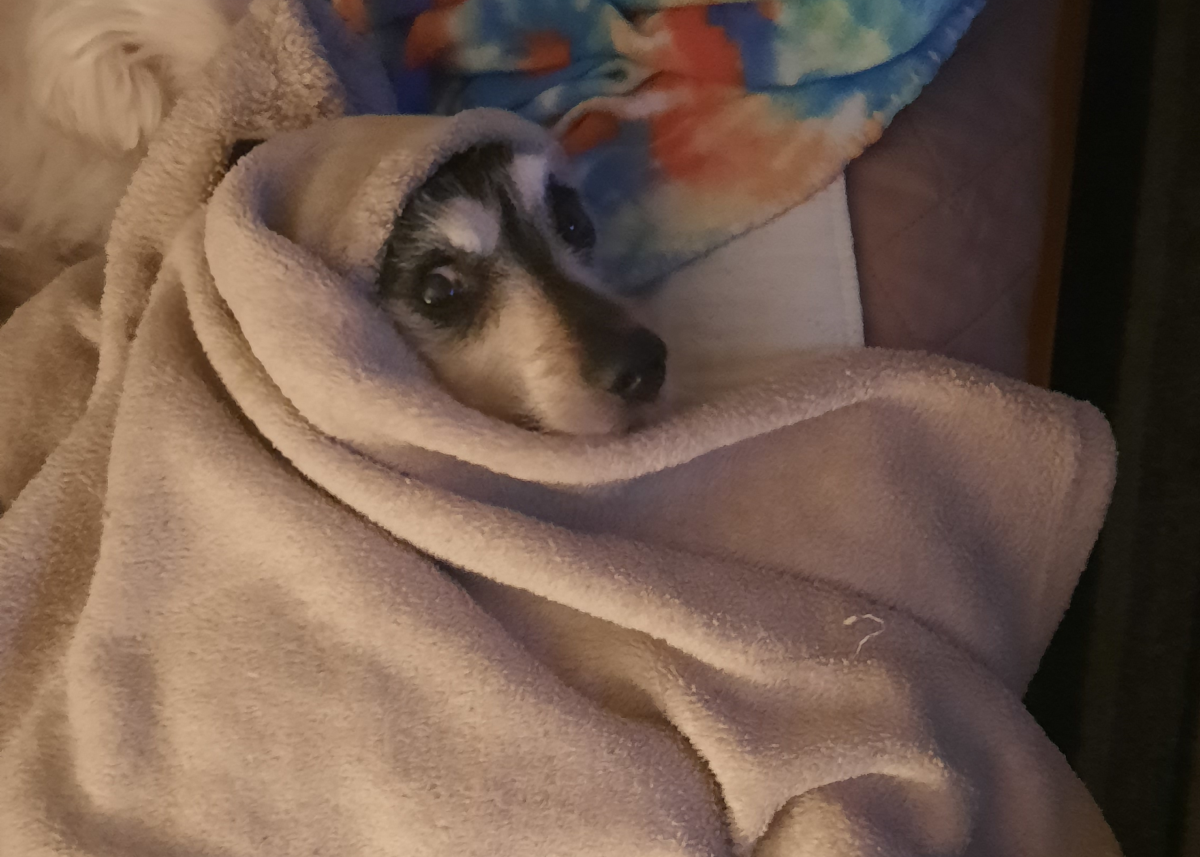
An old blanket tucked away in a closet may have another practical use for a rescue dog struggling with anxiety. With suitable fabric and careful preparation, it can be repurposed into a lightweight calming wrap that provides gentle contact around the dog’s torso. For pet owners interested in inexpensive comfort options, this offers a way to experiment with a simple garment without purchasing specialized equipment.
Calming wraps are commonly marketed for dogs frightened by thunderstorms, fireworks, unfamiliar environments, and other stressful situations. Some dogs appear more comfortable wearing them, although scientific evidence supporting their effectiveness remains limited. A homemade version also introduces considerations involving fit, fabric, movement, and supervision that deserve attention before placing anything around an anxious animal.
Rescue dogs may have unfamiliar handling histories, and their comfort with physical contact cannot always be predicted from ordinary behavior. A dog that enjoys being petted might still dislike having fabric secured around its body. The safest approach is to introduce the material gradually, observe the dog’s willingness to participate, and accept that a wrap may not be appropriate for every animal.
How Calming Wraps May Affect Canine Anxiety
Commercial calming wraps are designed to apply mild, distributed pressure around a dog’s torso. The theory is that steady physical contact may have a soothing effect on some animals, potentially influencing their behavioral or physiological responses to stressful situations. However, the precise mechanisms remain uncertain, and the comforting effects sometimes associated with pressure in humans cannot automatically be assumed to occur in dogs.
A 2024 systematic review published in the journal Animals examined four studies investigating compression garments for canine anxiety. The researchers identified some improvements in behavioral signs or physiological measurements, including heart rate, but the reported benefits were generally modest. Small study populations, inconsistent findings, and weaknesses in study design reduced confidence in the results.
The review concluded that evidence supporting pressure wraps as an anxiety-management tool remains weak and limited. Although the included studies did not identify significant adverse effects, the small number of studies does not establish that these garments are risk-free. Importantly, the research examined commercial compression products and a telemetry vest, not homemade wraps constructed from household blankets.
This distinction matters because fabric thickness, fastening methods, and the amount of pressure applied can vary considerably between homemade designs. Without standardized construction or pressure measurements, there is no reliable way to establish that a blanket wrap provides the same effect as a commercially manufactured garment. Owners should therefore regard a homemade wrap as an optional comfort measure whose usefulness must be judged through the individual dog’s behavior.
Selecting a Blanket Suitable for a Homemade Wrap
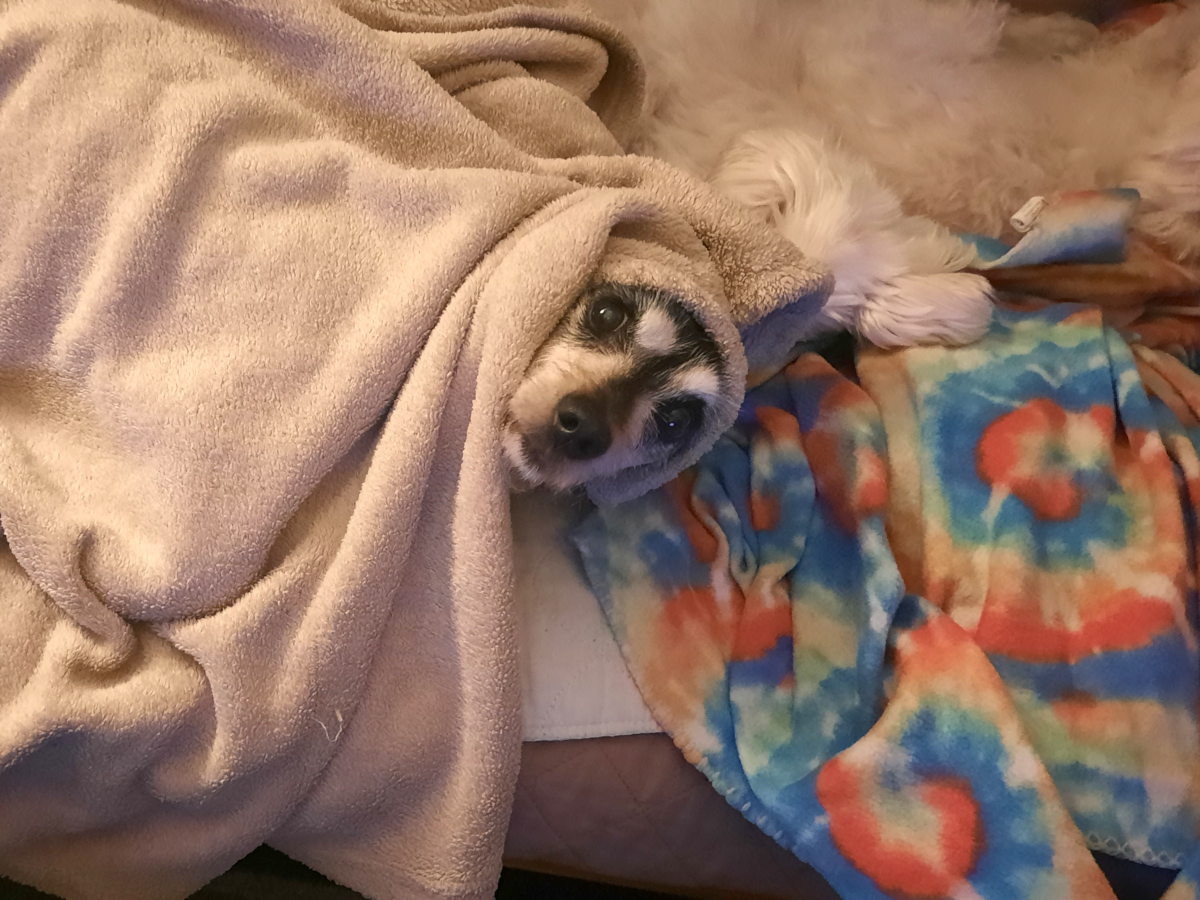 Lightweight fleece is one of the more practical materials for this project because it is soft, flexible, and generally easy to cut without extensive fraying. A clean cotton knit may also work if it holds its shape without excessive stretching. The material should feel comfortable against the dog’s coat and remain flexible when the animal bends, walks, or lies down.
Avoid thick comforters, heavy quilts, and blankets containing weighted filling. These materials can add unnecessary bulk, trap heat, or restrict movement, particularly when secured around a smaller dog. Human weighted blankets are especially unsuitable because their weight may be excessive relative to an animal’s size.
Veterinary behavior specialist Dr. Wailani Sung discusses these concerns in an explanation of anxiety blankets and pet safety published by PetMD. The article identifies restricted movement, breathing difficulties, skin irritation, and ingestion hazards as potential problems associated with unsuitable weighted materials. Those concerns provide good reasons to choose lightweight fabric and avoid attempting to reproduce the weight of a human anxiety blanket.
Inspect the material carefully before beginning the project. Loose threads, decorative fringe, buttons, stuffing, and damaged seams can become hazards if the dog chews or pulls at the wrap. Fabric that repeatedly sheds fibers or has developed rough, stiff areas should be reserved for another purpose or discarded.
A blanket with a familiar household scent may be appealing to some animals, although this does not establish that it will reduce anxiety. Wash heavily soiled material before use, and avoid strongly scented laundry products that might irritate sensitive skin. The blanket should be completely dry and free of detergent residue before it touches the animal.
Making a Simple Calming Wrap from an Old Blanket
The simplest homemade design is a broad, adjustable torso band that provides light contact without restricting the dog’s movement. It should never be constructed to squeeze the chest or prevent the animal from changing position. Because homemade pressure wraps have not been adequately studied, there is no scientifically established blanket pattern, fabric tension, or fastening arrangement that guarantees comfort or therapeutic benefit.
Begin by measuring the dog’s chest circumference around the rib cage, immediately behind the front legs. The dog should be standing comfortably, and the measuring tape should rest against the coat without pulling tightly. If the animal resists handling or becomes distressed, postpone the measurements rather than attempting to hold it in place.
Cut a rectangular piece of lightweight fleece long enough to extend around the torso with a modest overlap for fastening. The width should cover part of the rib cage without reaching the neck, pressing into the armpits, or interfering with the movement of the front legs. Dogs with short bodies, deep chests, or unusual proportions may require more careful shaping to prevent the material from bunching.
Sew broad sections of soft hook-and-loop fastening material onto the overlapping ends so the wrap closes along the dog’s upper back. Position the fasteners where they can be opened quickly, keeping any rough hook surfaces covered and away from the skin. All stitching should be secure, with no loose loops or exposed attachments that the dog could catch with its claws or teeth.
Avoid strings, narrow elastic bands, metal clips, safety pins, or tightly tied knots. These can introduce concentrated pressure, skin irritation, or snagging hazards, especially if the dog suddenly twists or attempts to escape. A suitable closure should remain secure during gentle movement without requiring the fabric to be pulled tightly around the animal.
During the first fitting, check that the wrap lies smoothly against the body and does not slide toward the neck. You should be able to place your fingers comfortably beneath the fabric, although this familiar clothing-fit check cannot establish a medically safe pressure level. Observe the dog walking, turning, standing, and lying down to determine whether the material interferes with normal movement or breathing.
If the wrap repeatedly slips, twists, or requires considerable tightening to stay in place, the design is unsuitable. Trying to compensate with additional straps or tighter fastening can introduce more hazards than the original garment. A commercially fitted dog garment or a nonwearable comfort option may be preferable when a simple homemade design does not fit properly.
Introducing the Wrap to a Nervous Rescue Dog
 A calming wrap should first be introduced during an ordinary, quiet period when the dog is not already frightened. Place the folded fabric nearby and allow the animal to investigate at its own pace. Some dogs may approach immediately, while others prefer to watch from a distance before becoming comfortable with an unfamiliar object.
When the dog voluntarily approaches or investigates the material, a favorite treat can help create a pleasant association. Once the fabric itself is familiar, briefly touch it against the dog’s side or rest a small section across its back. Remove it before discomfort develops, keeping the interaction short enough that the dog remains willing to participate.
Gradually introduce longer contact and eventually a loose fitting if the animal continues behaving comfortably. Avoid fastening the wrap during the earliest introductions, and never trap the dog between your body and furniture to keep it from leaving. Allowing the animal to move away provides useful information about whether the process is acceptable.
The American Veterinary Society of Animal Behavior’s position on humane dog training recommends reward-based approaches and discourages aversive handling and training methods. Although these recommendations are not specific to calming wraps, they support introducing unfamiliar experiences without coercion. Treats and praise can encourage willing participation, but they should not be used to disguise the fact that a dog is struggling or attempting to escape.
Rescue dogs do not necessarily require a different fitting technique from other dogs, but an unknown history makes careful observation particularly useful. An animal may tolerate gentle touching while becoming uncomfortable with the sensation of being enclosed by fabric. If repeated introductions produce avoidance, freezing, or resistance, discontinue the project rather than continuing until the dog submits to wearing the garment.
Reading Body Language Before and After Applying the Wrap
Determining whether a calming wrap is helpful requires more than observing whether the dog becomes quiet. A comfortable animal should remain capable of normal movement and show no obvious signs of distress associated with wearing the fabric. Some dogs may continue exploring their surroundings, while others may choose to rest in a familiar location.
The American Animal Hospital Association’s guidance on common signs of anxiety and distress identifies behaviors such as trembling, lip licking, yawning, lowered body posture, avoidance, and freezing. These signs must be interpreted in context because individual behaviors can have several explanations. A yawn, for example, does not independently establish that a dog is frightened, but repeated yawning accompanied by stiff posture or attempts to withdraw may indicate discomfort.
Compare the animal’s behavior immediately before and after the wrap is applied. A dog that was moving freely but suddenly becomes rigid or reluctant to walk may be reacting negatively to the garment. Scratching at the material, repeatedly looking toward the fastening area, or trying to rub against furniture can also suggest an uncomfortable fit.
Remove the wrap promptly if the dog appears distressed, overheated, or physically restricted. Panting that develops in a warm environment may indicate discomfort, while respiratory effort that is unusual for the animal requires greater concern. Labored breathing, collapse, or severe weakness warrants emergency veterinary attention rather than further experimentation with the garment.
Using the Wrap During Thunderstorms and Fireworks
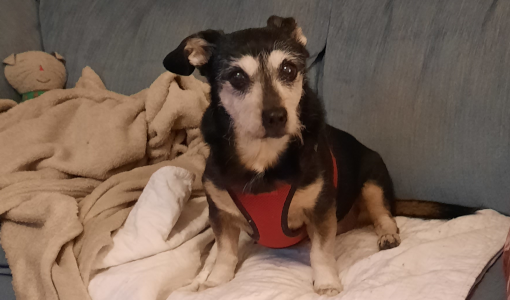 Once a dog has demonstrated that it accepts the garment comfortably, owners can consider using it during predictable stressful events. Thunderstorms and fireworks are common examples, although the wrap should be applied before the animal becomes highly distressed rather than introduced during a panic response. Supervision remains necessary because frightened dogs may behave unpredictably even when they have previously tolerated clothing.
The Cornell University College of Veterinary Medicine’s guidance on fear of fireworks and thunderstorms recommends preparing a familiar, quiet environment and reducing exposure to frightening sounds where possible. Interior rooms, comfortable bedding, and background sound may help some dogs cope with noise. A crate should be offered as a resting place only when the animal already considers it safe.
A calming wrap can be used alongside appropriate environmental arrangements rather than replacing them. Dogs should still have access to water, the ability to move freely, and an opportunity to choose where they rest. If the animal becomes distressed despite wearing the wrap, concentrate on reducing its exposure to the frightening situation instead of tightening the garment or repeatedly repositioning it.
Keeping brief notes can help determine whether the wrap deserves a place in the dog’s routine. Record the circumstances, approximate duration of use, and observable behaviors such as pacing, trembling, hiding, or resting. These observations may reveal whether the dog appears consistently more comfortable, although differences in storm intensity and other conditions make comparisons imperfect.
A dog that settles during one thunderstorm may have responded to several factors, including reduced noise, the presence of a familiar person, or the availability of a secure hiding place. The wrap’s contribution cannot be established from a single successful experience. Repeated observations are more informative, particularly when they include the dog’s willingness to wear the garment before the stressful event begins.
Special Considerations for Senior Rescue Dogs
Older dogs may have physical limitations that make a wearable wrap uncomfortable even when the fabric appears appropriately fitted. Arthritis, reduced mobility, chronic skin problems, and sensitivity to handling can influence how an animal responds to contact around the torso. A garment that interferes slightly with movement may be particularly troublesome for a dog already having difficulty standing or lying down.
Dogs with breathing disorders, significant heart disease, recent surgery, painful conditions, or healing wounds require additional caution. Depending on the condition, pressure or friction around the body may be inappropriate, making veterinary assessment advisable before trying a wrap. Dogs with thick coats or a tendency to overheat may also tolerate additional fabric poorly.
Behavioral changes in older rescue dogs deserve separate consideration from their history. Increased nighttime restlessness, sensitivity to ordinary sounds, and reluctance to be handled can sometimes accompany pain, sensory changes, or cognitive dysfunction. These possibilities should be investigated when symptoms are new or worsening rather than assuming that the dog is simply remembering a frightening experience.
For a senior dog with limited mobility, a lightweight blanket placed on an accessible resting surface may provide a more practical option. The animal can choose whether to lie on it, move away, or change position without assistance. This arrangement also avoids the need for repeated handling that might aggravate existing discomfort.
Why Homemade Compression Wraps Are Less Suitable for Rescue Cats
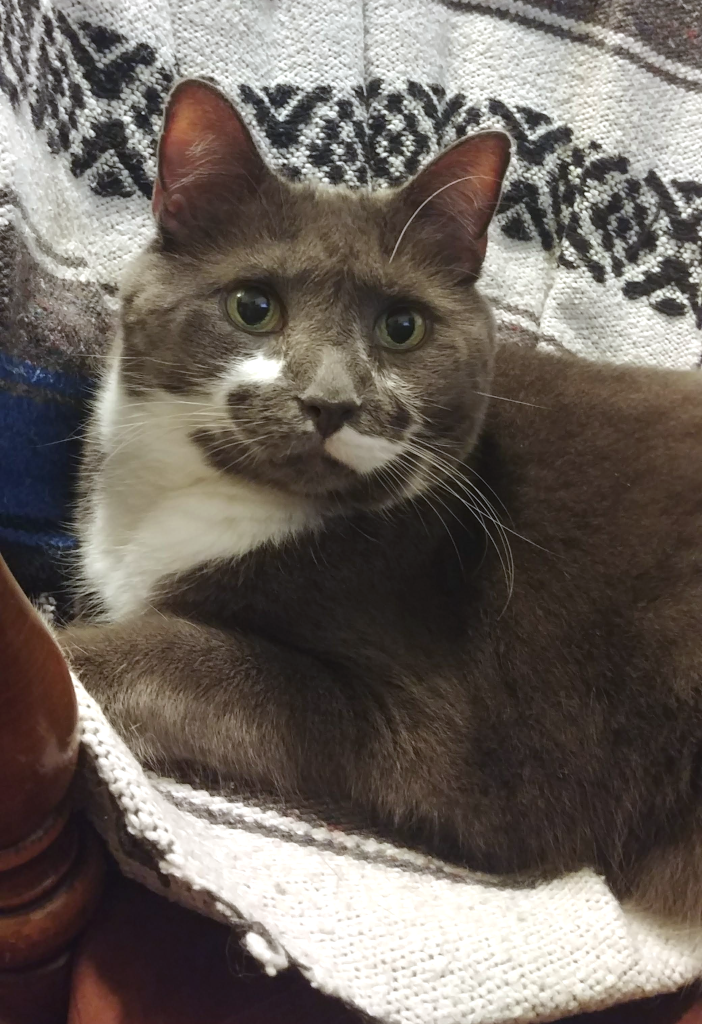 Cats have different handling preferences and behavioral responses from dogs, so the same homemade compression-wrap approach should not be generalized to feline rescues. There is insufficient evidence demonstrating that homemade torso wraps safely and reliably reduce anxiety in cats. Tight wrapping also risks creating unwanted restraint, particularly when the animal is already frightened.
The Feline Veterinary Medical Association’s 2026 guidance on respectful cat handling emphasizes choice, predictable surroundings, hiding opportunities, and avoiding forceful restraint. These recommendations extend beyond veterinary clinics to interactions in homes and other environments where cats receive care. They provide a stronger basis for supporting anxious rescue cats than attempting to reproduce canine compression garments.
Repurposing a blanket can still be useful for a nervous cat without securing the material around its body. Fold the blanket into an accessible hiding box, place it on a familiar resting surface, or use it to partially cover a carrier while maintaining ventilation. Any hiding arrangement should allow the cat to enter and leave voluntarily, provided it is not being used for necessary transportation or veterinary care.
Some cats prefer enclosed spaces, while others seek elevated resting areas that provide a clear view of their surroundings. Offering several comfortable locations allows the animal to select its preferred arrangement. The blanket becomes part of an accessible environment rather than a garment the cat must tolerate.
When a Calming Wrap Is Not an Appropriate Anxiety Solution
Some dogs remain uncomfortable wearing clothing despite gradual introductions. Others experience anxiety severe enough that a gentle wrap is unlikely to provide adequate relief. Destructive escape attempts, persistent separation-related distress, intense noise phobias, and fear that interferes with ordinary activities may require a structured behavioral treatment plan.
Veterinary assessment can help identify medical contributors and determine whether environmental management, behavior modification, or prescription treatment is appropriate. Qualified veterinary behavior professionals can also help develop plans for animals whose responses are difficult to manage safely. A wrap may be considered alongside these approaches if the dog accepts it, but it should not delay more effective treatment.
Owners should also avoid homemade wraps for dogs that routinely chew, tear, or swallow fabric. Loose fibers and detached fasteners can become ingestion hazards, while damaged material may catch around a limb or other object. A dog with these behaviors may be safer with a supervised resting arrangement that does not involve wearable fabric.
Never leave a dog unattended while wearing a homemade wrap, including during overnight sleep or confinement. Fabric can shift, twist, or become caught as the animal changes position, particularly if it becomes frightened or restless. The wrap should also be removed before unsupervised outdoor activity or any situation where its fastening could become entangled.
Maintaining the Wrap and Recognizing When to Retire It
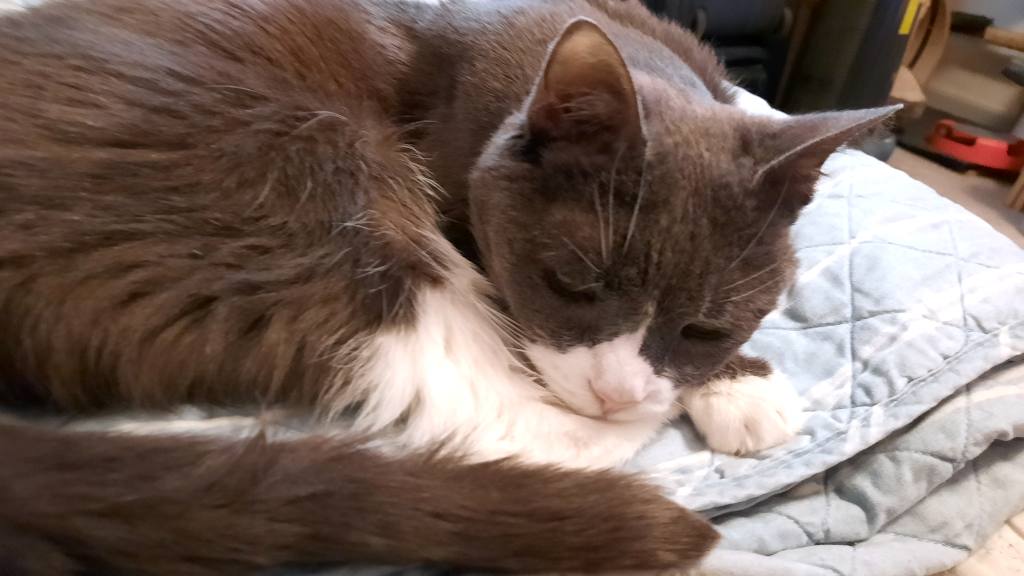 Regular inspection is necessary because washing, stretching, and repeated fastening can alter the fit of a homemade garment. Examine the stitching, fabric edges, and hook-and-loop closures for damage before each use. Replace the wrap when the fastening no longer holds securely, the material becomes misshapen, or rough areas begin contacting the skin.
Wash the fabric when needed using a mild laundry product appropriate for the household, and rinse thoroughly to remove residue. Avoid adding essential oils or strong fragrances in an attempt to improve the wrap’s calming effect. Allow the garment to dry completely, then check its fit again before returning it to use.
A dog’s comfort with the wrap may change over time because of weight fluctuations, coat changes, developing medical conditions, or changing tolerance for handling. If the animal begins resisting a garment it previously accepted, inspect the fit and consider whether physical discomfort or another problem might explain the reaction. Continuing to use an old pattern without reassessment can overlook changes that affect comfort.
A blanket that no longer works as a wearable wrap may still be suitable for an ordinary resting area if the material remains intact and safe. Folding it onto a familiar bed, placing it in a preferred quiet room, or making it available during supervised relaxation gives the dog access to the fabric without securing it around the body. For rescue animals that prefer familiar bedding but dislike being dressed, that may be the most useful way to repurpose the blanket.