

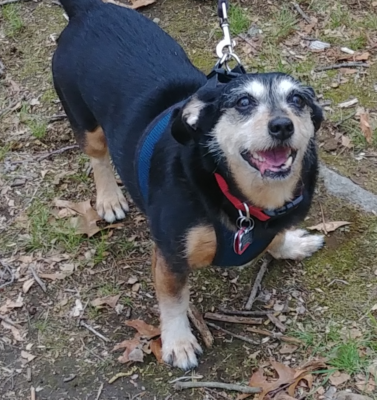
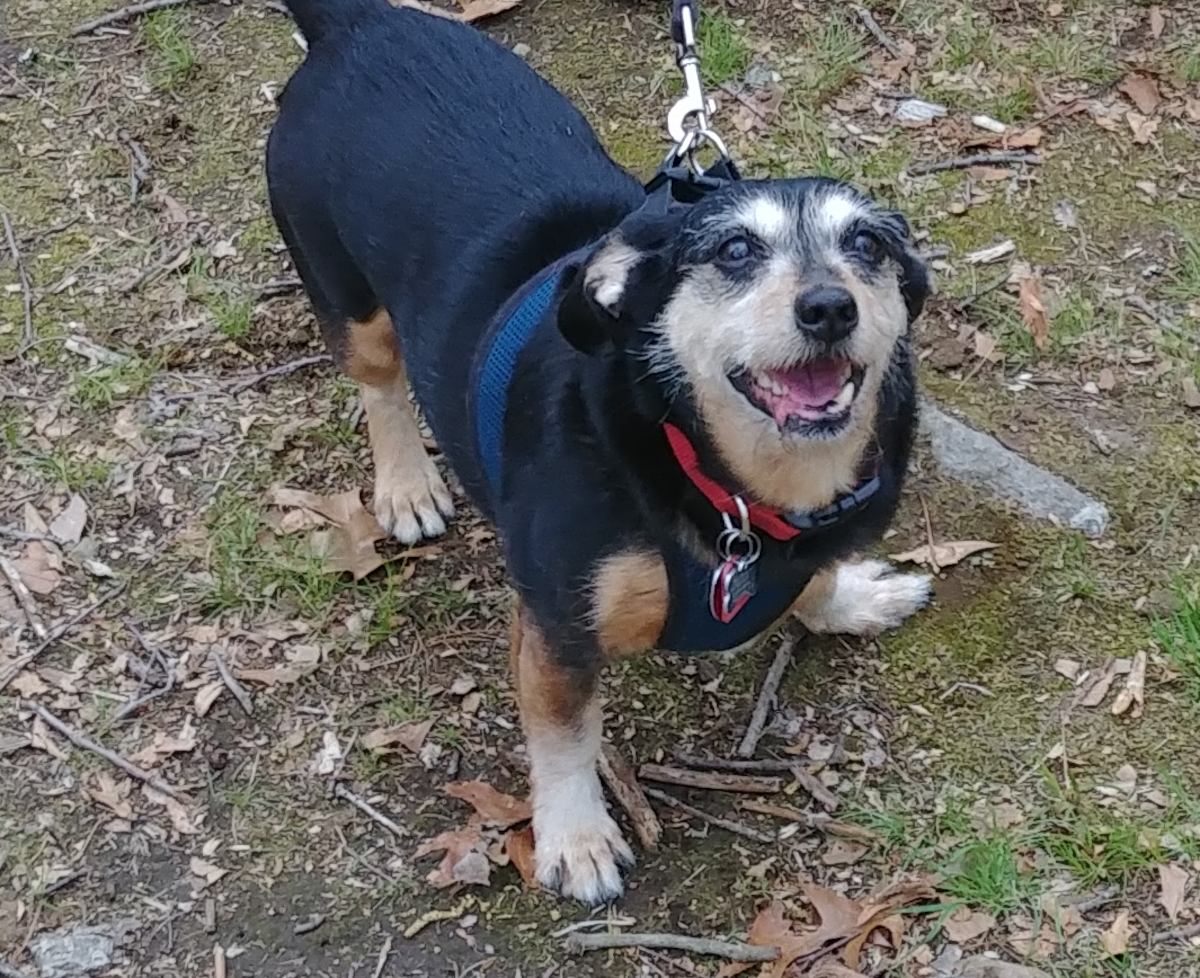
Bringing home an adopted adult dog is a special kind of beginning. You may know very little about the life that came before you. Your new dog may have lived in a home, wandered as a stray, spent months in a shelter, or moved through several temporary placements. Even when a rescue group provides a detailed history, there are usually missing chapters. Leash walking can expose those missing pieces quickly.
One adopted dog may walk beside you as though you have been together for years. Another may drag you toward every mailbox, freeze at the end of the driveway, bark at passing dogs, bite the leash, or panic when a truck rumbles by. None of these reactions mean you adopted a bad dog. They mean you brought home an individual with habits, fears, preferences, and experiences that you are still learning about.
Adult dogs can absolutely learn new leash skills. Age does not close that door. The training may simply require more patience than people expect, especially while the dog is also adjusting to a new home, new people, new sounds, and an unfamiliar daily routine.
The First Walks Are About Safety, Not Perfection
The first few walks should not be treated like obedience tests. Your new dog does not yet understand your expectations, your pace, your neighborhood, or whether you can be trusted when something frightening happens. Start small.
A quiet trip around the yard or a short section of sidewalk may be enough during the first several days. Some dogs become overstimulated after only a few minutes outside. Others appear calm but are quietly absorbing far more than we realize. A dog that seems well behaved on the first day may begin pulling, barking, or freezing several days later as their personality emerges and they become less inhibited. This is normal.
Give your dog time to settle before expecting polished leash manners. Keep early outings calm, predictable, and short enough that both of you return home before frustration takes over. A successful ten-minute walk is more useful than a stressful forty-minute battle.
Newly adopted dogs should remain leashed outside unless they are inside a securely enclosed area. Proper identification is also essential, including an identification tag and an up-to-date microchip registration. Dogs can slip away surprisingly fast when startled, especially before they recognize their new home as a safe place.
Choose Equipment That Helps Without Hurting
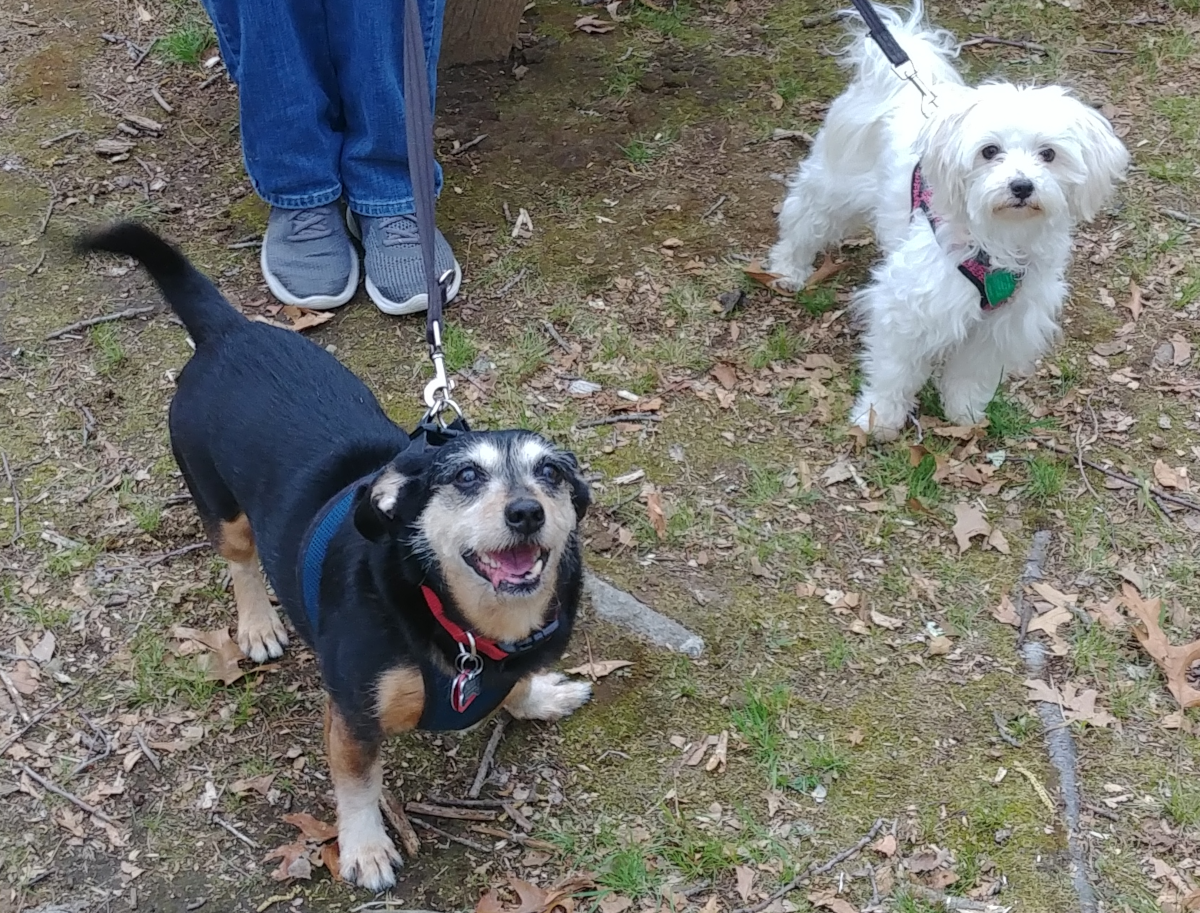 A standard leash between four and six feet long is usually a practical starting point. It gives your dog room to move and sniff while still allowing you to maintain control. Retractable leashes can make early training harder because the distance and leash pressure keep changing. They may also allow a dog to reach traffic, another animal, or a stranger before you can react.
A properly fitted harness is often a good choice for an adopted adult dog, especially one that pulls, coughs, has a delicate neck, or may try to back out of equipment. The harness should fit securely without rubbing behind the front legs. You should be able to slide a couple of fingers beneath the straps, but the dog should not be able to twist free.
Escape-prone dogs may need two points of attachment, such as a leash connected to a harness with a safety strap attached to a flat collar. This is not about restraining the dog harshly. It is backup protection while you learn how the dog responds to sudden noises, wildlife, bicycles, and other surprises.
Choke chains, prong collars, shock collars, and sharp leash jerks are not needed to teach loose-leash walking. The American Veterinary Society of Animal Behavior recommends reward-based training and advises against aversive methods, including physical leash corrections. These methods can add fear, discomfort, and stress without teaching the dog what to do instead.
Learn What Your Dog Finds Rewarding
Food is often the easiest training reward, but not every dog responds to the same treat. Some will happily work for ordinary kibble. Others need small pieces of chicken, cheese, or another soft, high-value reward. Treats should be tiny. You are paying for repeated good choices, not serving a second dinner. Food is not the only reward available.
Many dogs value permission to sniff a tree, investigate a patch of grass, greet a familiar person, or continue moving forward. These everyday activities can become part of training. A loose leash earns progress. Pulling makes progress pause.
Praise also matters, but it should match the dog. A nervous dog may find loud excitement overwhelming. A quiet “good” followed by a treat may feel safer. An outgoing dog may enjoy cheerful praise and a quick game. Watch the dog in front of you rather than following a rigid formula.
Reward-based teaching is not bribery. A reward helps the dog understand which action worked. Once the behavior becomes dependable, treats can be given less often, while praise, movement, sniffing, and access to enjoyable places continue to support the habit.
Begin Indoors Where Success Is Easier
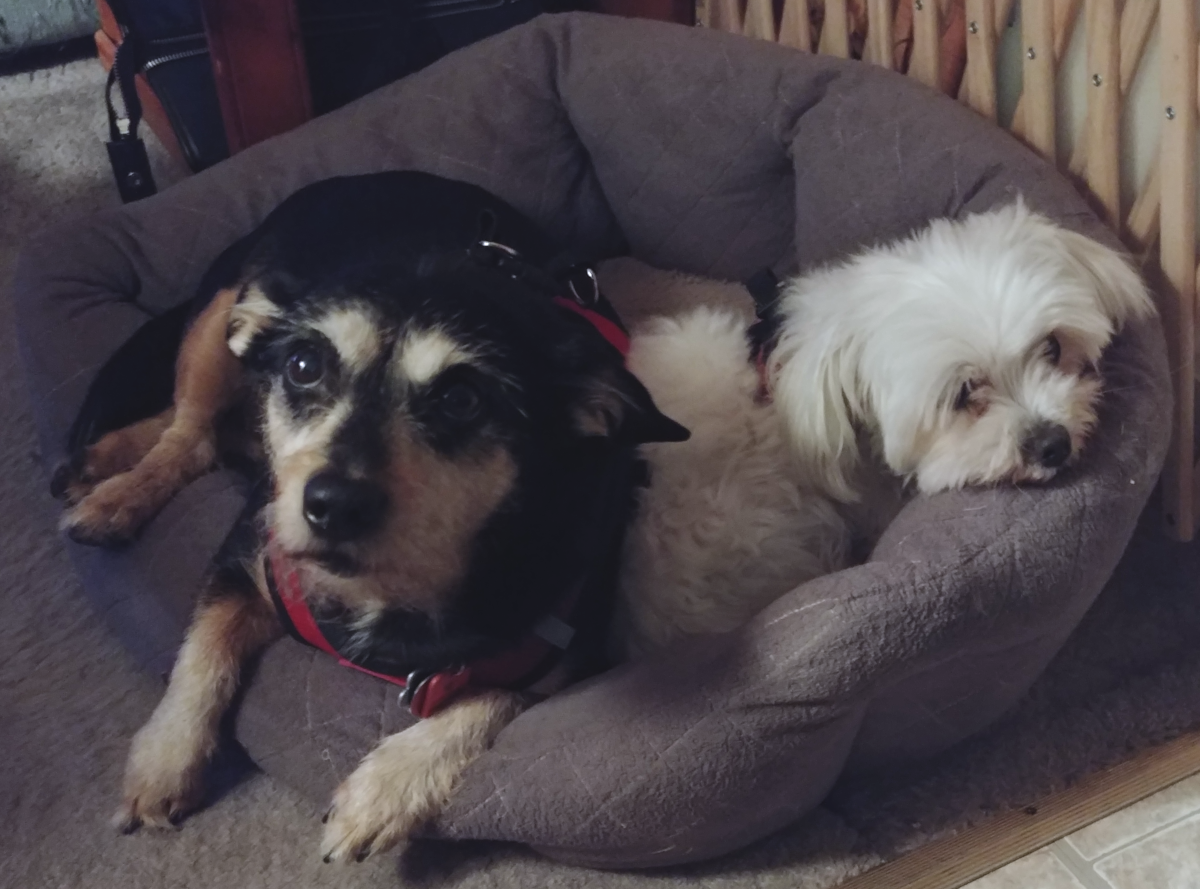 Many people attach the leash and immediately head into a busy neighborhood. That can be too much, too soon. Begin inside the house, where there are fewer distractions. Let your dog wear the harness for a few supervised minutes. Offer treats while putting it on and taking it off. If the dog backs away, hides, mouths your hands, or becomes stiff, slow the process down. Place the harness nearby. Reward the dog for looking at it, approaching it, and allowing it to touch their shoulder.
Once the equipment feels ordinary, clip on the leash and practice walking across a room. Hold the leash loosely. Take two or three steps, reward the dog for staying near you, and then pause. Change direction. Walk toward another room. Reward again. Keep these sessions brief. Three minutes of focused practice can teach more than half an hour of repeated pulling.
You can also practice a simple attention cue. Say the dog’s name once. The moment they look toward you, mark the behavior with “yes” or “good,” then give a treat. This small exercise becomes very helpful outside when you need to regain your dog’s attention before passing a distraction.
Teach the Meaning of a Loose Leash
Dogs pull because pulling often works. They pull toward a smell, reach the smell, and learn that tension on the leash moves them forward. The dog is not trying to dominate you or win an argument. They are repeating a behavior that has produced results. Loose-leash walking changes that pattern.
Begin in a quiet location. Hold several treats in the hand closest to your dog, or keep them in a treat pouch. Start walking. Each time the leash hangs loosely and your dog remains within a comfortable distance, praise and reward.
Give the treat beside your leg rather than reaching forward. Treat placement matters. Feeding far ahead can encourage the dog to surge in front after each reward. When the leash becomes tight, stop moving. Do not yank the dog backward. Wait quietly. The instant the dog turns toward you, steps back, or releases the pressure, praise, reward, and begin walking again.
Consistency does the teaching. If pulling sometimes reaches the exciting tree and sometimes does not, the dog may pull harder and longer. Everyone who walks the dog should follow the same basic rule. A loose leash allows movement. A tight leash pauses movement.
The RSPCA recommends stopping when the leash tightens, rewarding the dog when attention returns, and practicing in short, regular sessions. It also suggests using access to desired objects as a reward for walking without pulling.
Sniffing Is Part of the Walk
A walk should not feel like a military march. Dogs experience the world heavily through scent. Sniffing provides mental activity, information, and enjoyment. An adopted dog may also use sniffing to gather information about an unfamiliar neighborhood. Build sniffing into the outing instead of fighting it.
You might ask for a short stretch of loose-leash walking, then release your dog with a phrase such as “go sniff.” Let the dog investigate for a minute before moving on. This creates a fair exchange. Your dog practices walking with you, and you allow time to explore.
Some dogs need more sniffing than distance. A slow fifteen-minute walk with several scent stops may leave them more satisfied than a hurried mile. This can be especially true for senior dogs, anxious dogs, and dogs that are still gaining confidence.
Pulling and Fear Require Different Responses
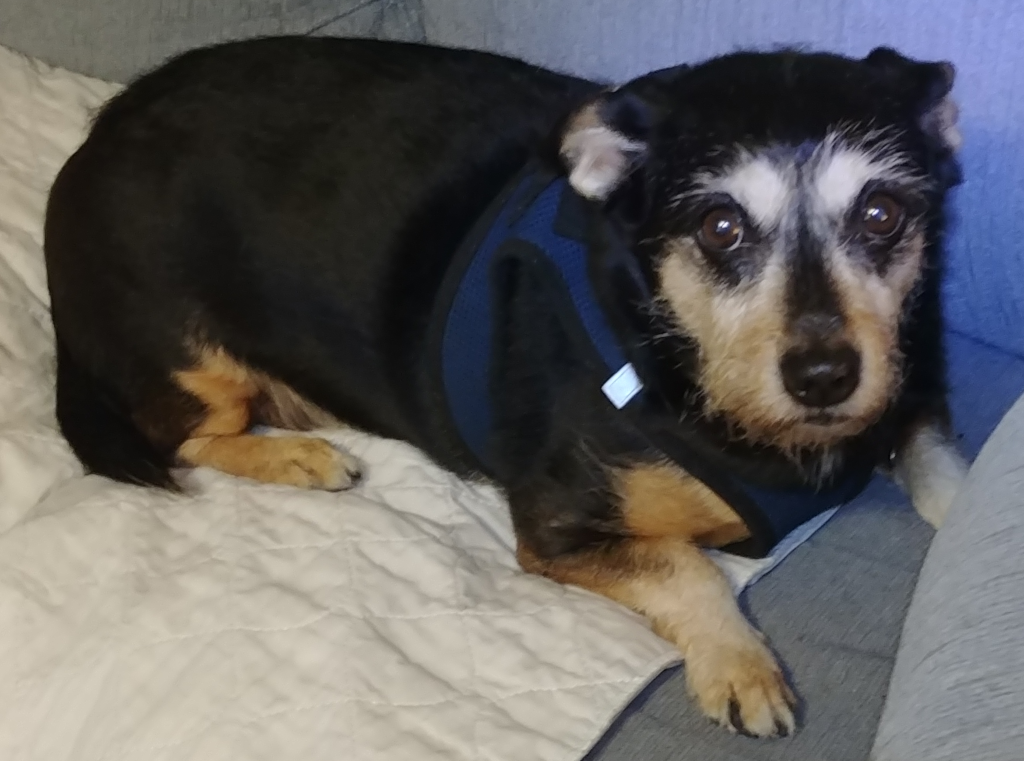 A dog leaning forward toward a squirrel is not showing the same emotion as a dog crouching away from a garbage truck. Both may create tension on the leash, but the reason matters. Fearful dogs may freeze, tremble, tuck their tails, lower their bodies, scan constantly, pant when it is not hot, or refuse treats. A frightened dog should not be dragged toward the scary object. Create distance. Turn around, cross the street, step behind a parked car, or return home. Distance is not failure. It is relief.
Once the dog can observe the trigger without panicking, pair that sight or sound with something pleasant. A dog who notices a bicycle from across the street and then receives a treat can begin forming a better association. If the dog cannot eat, respond to their name, or move with you, the trigger is probably too close. Fear work should progress at the dog’s pace. Repeatedly forcing a dog through terrifying situations can make the reaction stronger and weaken trust.
Handling Barking and Lunging on Walks
Some adopted dogs react strongly to other dogs, strangers, skateboards, vehicles, or wildlife. Barking and lunging may come from fear, frustration, excitement, guarding behavior, or a mixture of emotions. Management comes first.
Choose quieter walking times. Avoid narrow paths where you cannot create space. Scan ahead instead of waiting until another dog is directly beside you. Turn calmly and move away before your dog erupts. Carry high-value treats that are reserved for difficult moments.
Do not insist on on-leash greetings with unfamiliar dogs. Many dogs feel trapped when restrained and approached face-to-face. Your adopted dog does not need to greet every dog in the neighborhood to become well adjusted.
Teach an emergency turn in a quiet place. Say a phrase such as “this way,” turn around, and reward your dog for following. Practice until the movement becomes familiar. During a real encounter, this gives both of you a rehearsed escape rather than a panicked tugging match.
Dogs with repeated, intense reactions may benefit from help from a qualified reward-based trainer or veterinary behavior professional. Dog training is not consistently regulated in the United States, so ask direct questions about methods, equipment, credentials, and experience. Avoid anyone who relies on intimidation, pain, dominance claims, or promises of an instant cure.
Respect Physical Limits in Adult and Senior Dogs
Not every leash problem is behavioral. An adult dog who walks slowly, sits down, resists stairs, lags behind, or suddenly dislikes the harness may be experiencing pain. Arthritis, hip problems, paw injuries, neck discomfort, breathing trouble, vision loss, and other health concerns can change how a dog moves. Adopted dogs may arrive with conditions that have not yet been diagnosed. A veterinary examination gives you a clearer starting point, especially if the dog shows stiffness, limping, coughing, weakness, or a sudden change in behavior.
Senior dogs may need shorter walks, softer surfaces, slower pacing, and more time to sniff. They can still learn. Training simply needs to respect the body carrying the lesson. Watch the weather as well. Hot pavement can burn paws, and older dogs may struggle more with heat and cold. Check the walking surface with your hand, carry water when needed, and choose the safest part of the day.
Expect Progress to Be Uneven
 Leash training rarely improves in a straight line. Your dog may walk beautifully on Tuesday and pull through the entire route on Wednesday. A delivery truck, loose dog, windy day, new construction project, or change in household routine can affect concentration.
Keep notes if patterns are hard to spot. Record the route, time of day, major distractions, equipment used, and how your dog responded. You may discover that the dog walks calmly before breakfast, struggles near a certain yard, or becomes overwhelmed after twenty minutes.
Celebrate small improvements. Looking back at you without being asked is progress. Recovering more quickly after a barking episode is progress. Walking past one driveway on a loose leash is progress. The goal is not to create a dog who never sniffs, pauses, or looks away from you. The goal is a dog who can move through the world safely while feeling supported by the person holding the leash.
Let Trust Set the Pace
An adopted adult dog may need weeks or months before walks feel easy. Some previous habits will fade quickly. Others may require careful repetition and professional support. Keep your voice steady. Protect your dog from situations they are not ready to handle. Reward the choices you want repeated. Give them room to learn without pain or intimidation.
The leash is more than a piece of equipment during those early months. It is the physical connection between a dog with an unknown past and the person showing them what life will be like now. Hold it with patience, keep it loose whenever you can, and let that connection become safer one walk at a time.