
Building something for a pet can be deeply satisfying. A homemade scratching post, feeding station, set of senior-pet steps, window perch, toy box, or raised bed often fits the household better than anything found in a store. It can also be built around one pet’s exact needs.
That personal care matters, especially for older dogs and cats. A senior pet may need lower platforms, wider steps, softer resting areas, better traction, and sturdier support. A diabetic pet may benefit from a feeding station that keeps meals organized and predictable. DIY projects let us solve those little problems ourselves.
The trouble is that materials commonly considered acceptable for furniture, decks, crafts, and home repairs are not always sensible choices for an object a pet may lick, scratch, sleep against, or chew. Pets do not interact with furniture the way people do. They rub their faces on it. They clean residue from their paws. They pull loose fibers out with their teeth. Some dogs will chew nearly anything within reach. A project can be strong, attractive, and well built while still containing unnecessary risks. Pet-safe construction starts long before the first board is cut.
Wood Stain Is Not Pet-Safe Just Because It Is Dry to the Touch
Wood stain is one of the first products many DIY builders reach for. It makes inexpensive lumber look finished and helps a project match the rest of the room. Unfortunately, stain is also one of the easiest places to make a poor choice.
 Oil-based stains commonly contain petroleum-based solvents. These products can irritate a pet’s skin, mouth, and digestive system. Hydrocarbon products, including some wood stains, are especially concerning because vomited material can enter the lungs and cause serious inflammation.
Water-based stain is usually the more sensible option for an indoor pet project, but water-based does not mean edible, harmless, or safe to lick while wet. The ASPCA notes that many modern indoor paints, stains, and varnishes are water-based and may cause vomiting or diarrhea if swallowed. Outdoor finishes are more likely to contain hydrocarbons, which can create additional danger if aspirated into the lungs.
Keep pets completely away during staining, drying, sanding, and cleanup. Do not rely on an open window and a baby gate. Cats can jump barriers, dogs can nose through doors, and a curious pet can walk across a freshly coated board before anyone notices.
A finish also needs time to cure, not merely become dry enough to handle. Drying means the surface no longer feels wet. Curing means the coating has completed the hardening process described by the manufacturer. That may take several days or longer, depending on the product, temperature, humidity, and number of coats. Read the label. Follow the longest recommended cure time. Add extra time if the air is cool or damp.
For surfaces that will be scratched, mouthed, or rubbed regularly, unfinished solid wood is often the simplest option. Sand it carefully, round the edges, remove every splinter, and leave it bare. A scratching-post base does not need to look like fine furniture. Safe and sturdy beats glossy.
“Low VOC” Does Not Mean Safe to Chew
Low-VOC and zero-VOC labels can be useful when choosing household products, particularly for indoor air quality. They should not be treated as pet-edibility claims. A low-VOC coating may still contain pigments, preservatives, drying agents, mildewcides, or other ingredients that were never intended to be swallowed. Products marketed as natural can still irritate the mouth, skin, lungs, or stomach.
The same caution applies to labels such as eco-friendly, green, child-friendly, and non-toxic. Those terms may describe a product under specific testing conditions. They do not promise that a cat can repeatedly lick the finished surface or that a dog can chew off pieces without harm.
For a pet project, ask a more practical set of questions. Will the pet’s mouth touch this area? Will claws break the coating? Could urine, saliva, or water soften it? Could an older pet rub thin skin against it every day? Will the project be close to food or water bowls? The more contact a pet will have with the surface, the fewer coatings it should need.
Avoid Unknown or Reclaimed Painted Wood
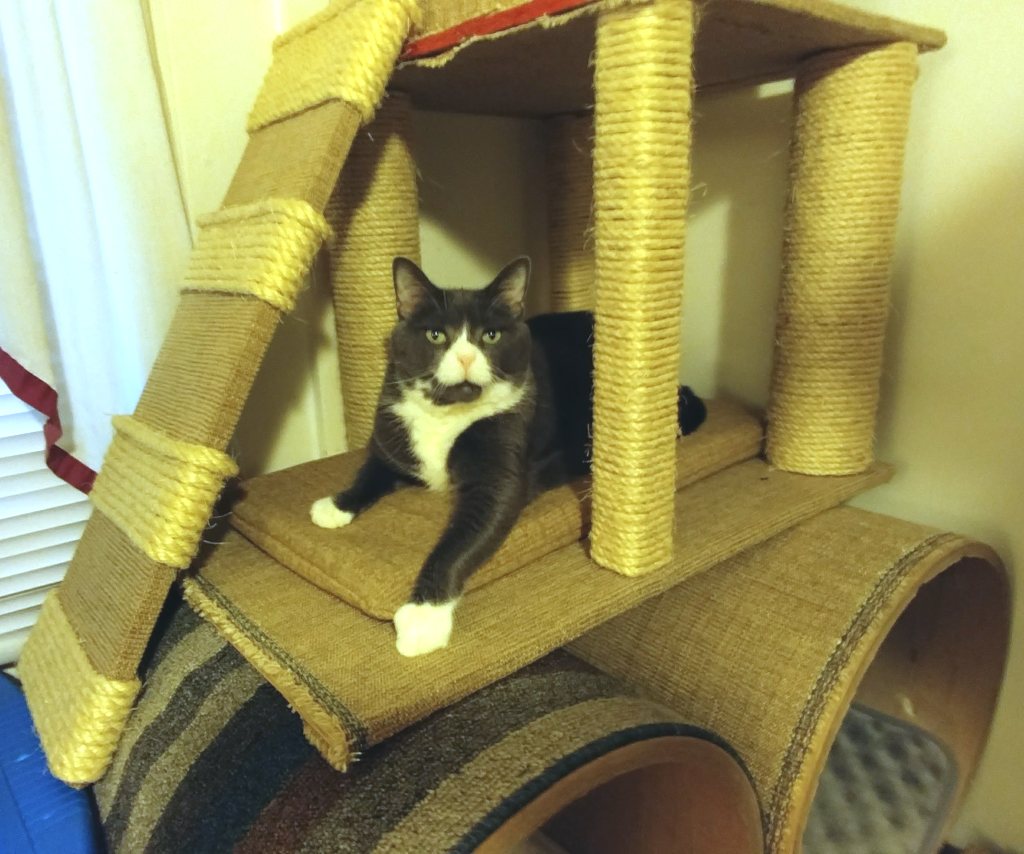 Reclaimed lumber can look beautiful, but its history is often a mystery. Old boards may have been painted with lead-based paint, treated with preservatives, exposed to pesticides, stored around automotive fluids, or used in industrial settings.
Sanding old painted material can release contaminated dust. Lead exposure is a known concern during DIY renovation work involving older painted surfaces, particularly when sanding or heating the paint. That dust does not stay neatly on the workbench. It settles on floors, clothing, fur, bedding, and paws. Pets are then exposed through grooming.
Avoid painted reclaimed wood unless you know what coating was used and have reliable testing that supports its reuse. Boards from pallets deserve similar caution. Pallets may have chemical treatments, spills, mold, embedded metal, or contamination from whatever they previously carried. A new piece of plain, kiln-dried lumber is usually cheaper than a veterinary emergency and far easier to evaluate.
Pressure-Treated Lumber Has No Place in a Chewable Pet Project
Pressure-treated wood is designed to resist insects and decay. That makes sense for fences, decks, posts, and outdoor structures. It does not automatically make sense for dog ramps, cat platforms, feeding stations, or anything an animal may chew.
Older pressure-treated lumber may contain chromated copper arsenate, commonly called CCA. Most residential uses of CCA-treated wood were phased out in the United States after 2003, though older lumber and structures still exist. The EPA warns against burning CCA-treated or other preservative-treated wood because hazardous chemicals may be released in smoke and ash.
Newer treated lumber uses different preservatives, but it is still treated lumber. A pet does not need direct mouth contact with wood preservatives simply because the material was available in the garage. Never burn treated scraps. Do not turn them into scratching-post bases, chew-resistant trim, toy boxes, bedding platforms, or indoor ramps. Do not reuse old deck boards for pet furniture.
Choose untreated lumber and design the project so it remains dry. If outdoor exposure is unavoidable, use a pet-inaccessible frame or consult the manufacturer about the exact treatment and intended use.
Rope Needs More Scrutiny Than Most People Give It
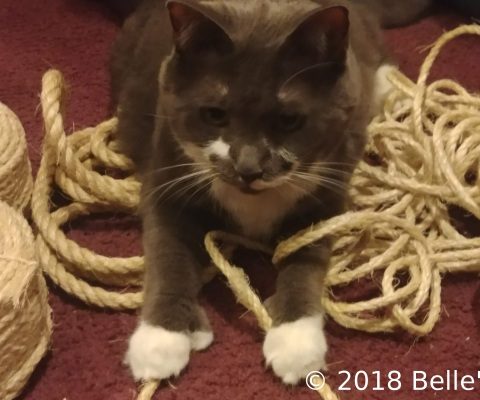 Rope seems harmless. It is natural-looking, inexpensive, and widely used on scratching posts. Yet rope varies greatly in fiber, treatment, strength, and manufacturing residue. Untreated sisal rope is usually the preferred material for cat scratching projects. It has a rough texture that many cats enjoy, holds up reasonably well, and can be replaced once worn. The key word is untreated.
Avoid rope that is:
- Heavily dyed
- Oiled or waxed
- Treated for rot, mildew, insects, or outdoor marine use
- Coated with an unknown chemical finish
- Strongly scented
- Made from mystery fibers with no product description
- Previously used in a garage, garden, boat, farm, or workshop
Marine rope and utility rope may be designed to resist water, sunlight, mold, or abrasion. Those qualities can come from treatments that were never meant for repeated feline clawing and grooming contact.
Natural fiber does not automatically mean safe either. Some rope is processed with oils, dyes, or preservatives. Buy from a supplier that clearly identifies the fiber and confirms that the rope is untreated. Smell the rope before using it. A strong chemical, petroleum, or musty odor is a reason to reject it.
Synthetic Rope Can Become an Ingestion Hazard
Nylon, polypropylene, and polyester rope are strong and weather-resistant, but they are poor choices for many scratchers and chewable pet structures. Synthetic fibers may fray into long strands. Cats can pull those strands loose while scratching, and dogs may chew them. Swallowed string-like material can become a serious intestinal problem. A strand may lodge under a cat’s tongue or bunch the intestines as the digestive tract tries to move it.
Loose rope loops can also catch claws, toes, tags, or collars. Senior cats with weaker balance and arthritic joints may have more trouble freeing themselves. Inspect rope regularly. Trimmed ends should be securely enclosed rather than left exposed. Replace rope before it becomes shredded enough to release long fibers. Do not wait until the post is falling apart.
Our rope length calculator at BellenPaws can help estimate how much rope a scratching-post project will require. Buying the right amount from the start reduces the temptation to splice in a different rope halfway through the build.
Adhesives Should Stay Buried Inside the Construction
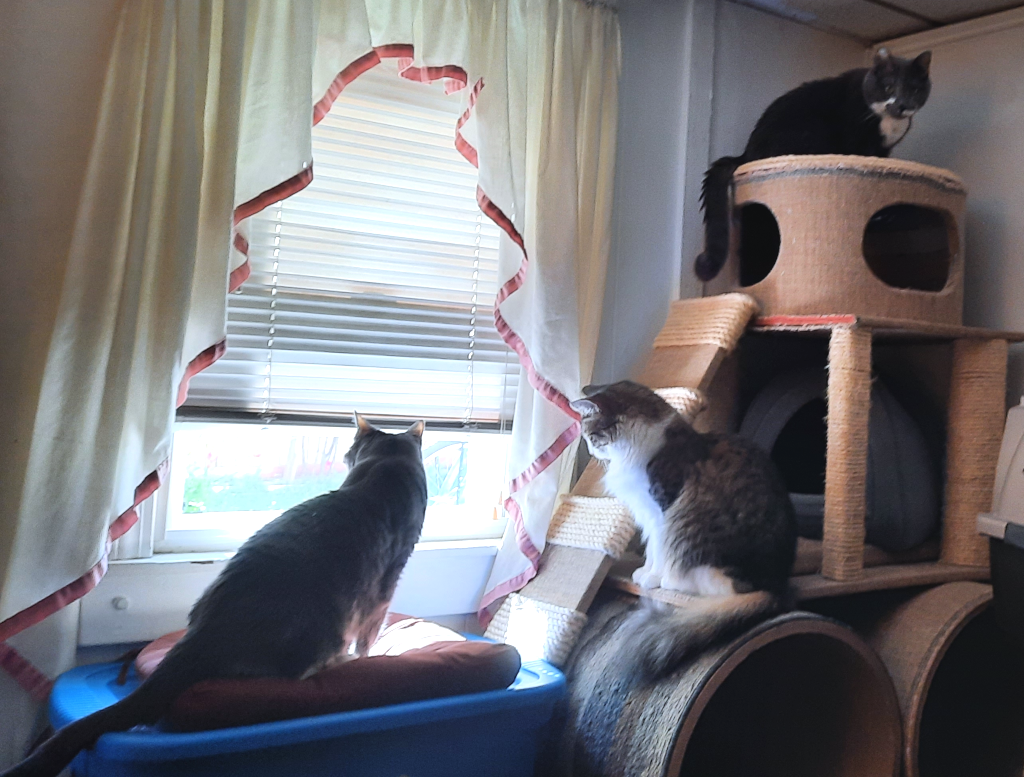 Glue can make a DIY project easier, but exposed adhesive invites trouble. Construction adhesive, contact cement, epoxy, expanding polyurethane glue, instant glue, and hot glue all have different risks. Wet products can stick to fur, paws, lips, or the inside of the mouth. Solvents may irritate the skin and airways. Expanding glue can swell as it reacts with moisture, which makes ingestion especially concerning.
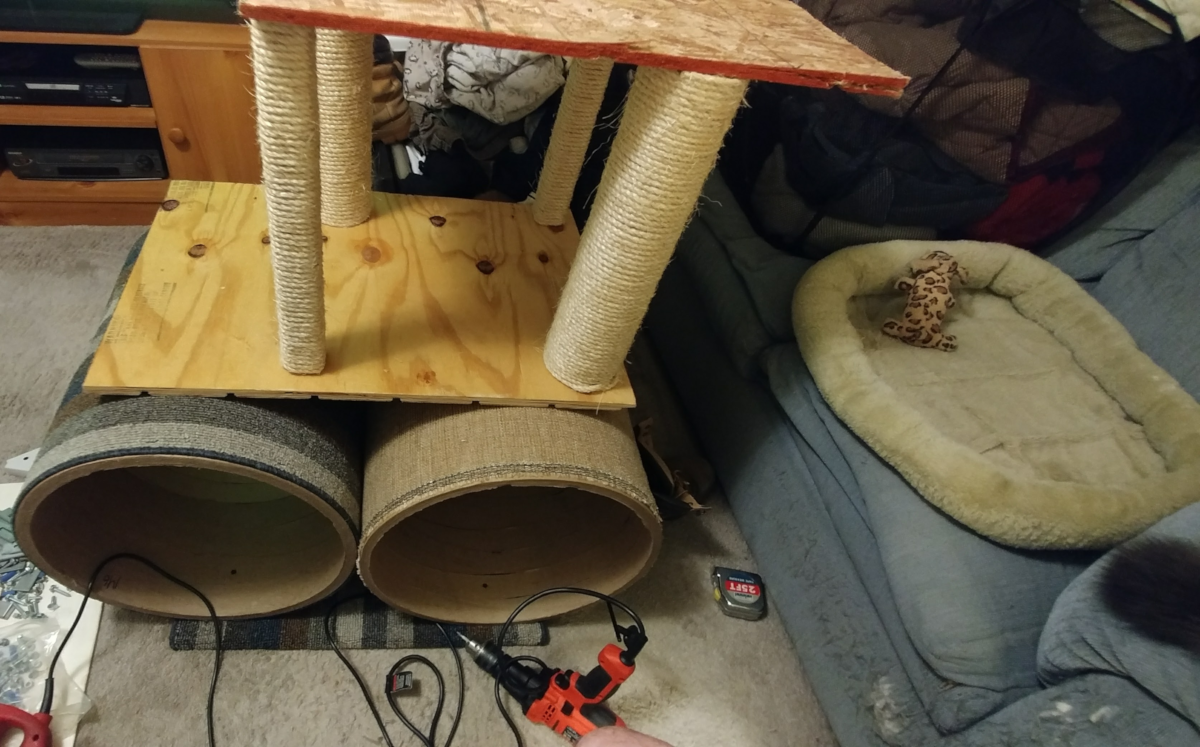
The safest approach is mechanical fastening wherever possible. Use screws, bolts, washers, brackets, and recessed hardware to carry the structural load. Glue should support the assembly, not serve as the only thing preventing collapse. Place adhesive inside joints where the pet cannot reach it. Remove squeeze-out immediately. Allow the full manufacturer-recommended cure time in a separate, ventilated area.
Hot glue deserves special caution on rope projects. It is convenient, but a determined cat may pull off hardened beads while tearing at the rope. Use the smallest amount needed, keep it beneath the rope layers, and secure the rope mechanically at both ends. Never leave glue sticks, open tubes, mixing cups, brushes, or adhesive-covered rags where pets can investigate them.
Particleboard and MDF Create Different Problems
Medium-density fiberboard, particleboard, and similar engineered panels are common in budget furniture. They are flat, inexpensive, and easy to find. They are also made from wood fibers or particles held together with resins.
Cutting these materials creates fine dust. Moisture from spilled water, urine, drool, or repeated cleaning can cause edges to swell and crumble. Once the surface layer breaks, pets may be exposed to loose fibers and adhesive-bound material.
Formaldehyde is used in some building materials and household products, including certain manufactured wood products. Reducing exposure and increasing ventilation are recommended ways to limit indoor formaldehyde levels.
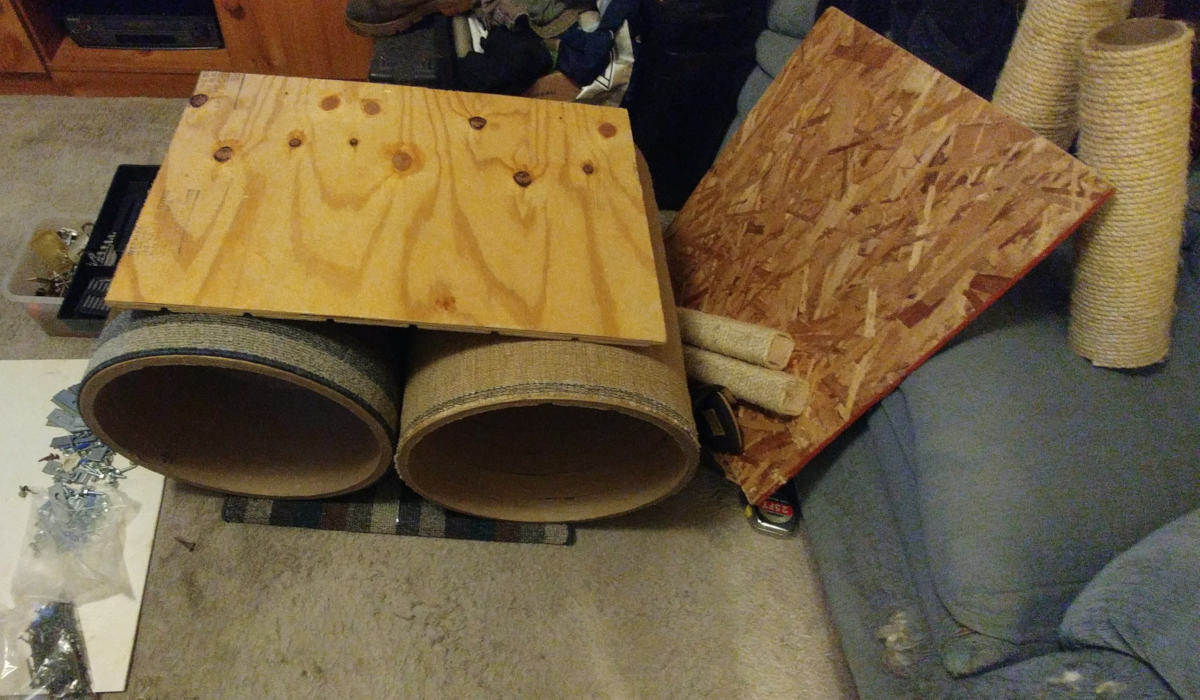
Solid untreated wood and quality plywood are usually better choices for pet furniture. If engineered wood must be used, all edges need to be sealed and completely inaccessible. It should not be used where a pet is likely to chew, scratch through the surface, urinate, or repeatedly spill water.
Paint Pigments, Solvents, and Spray Products Need Distance
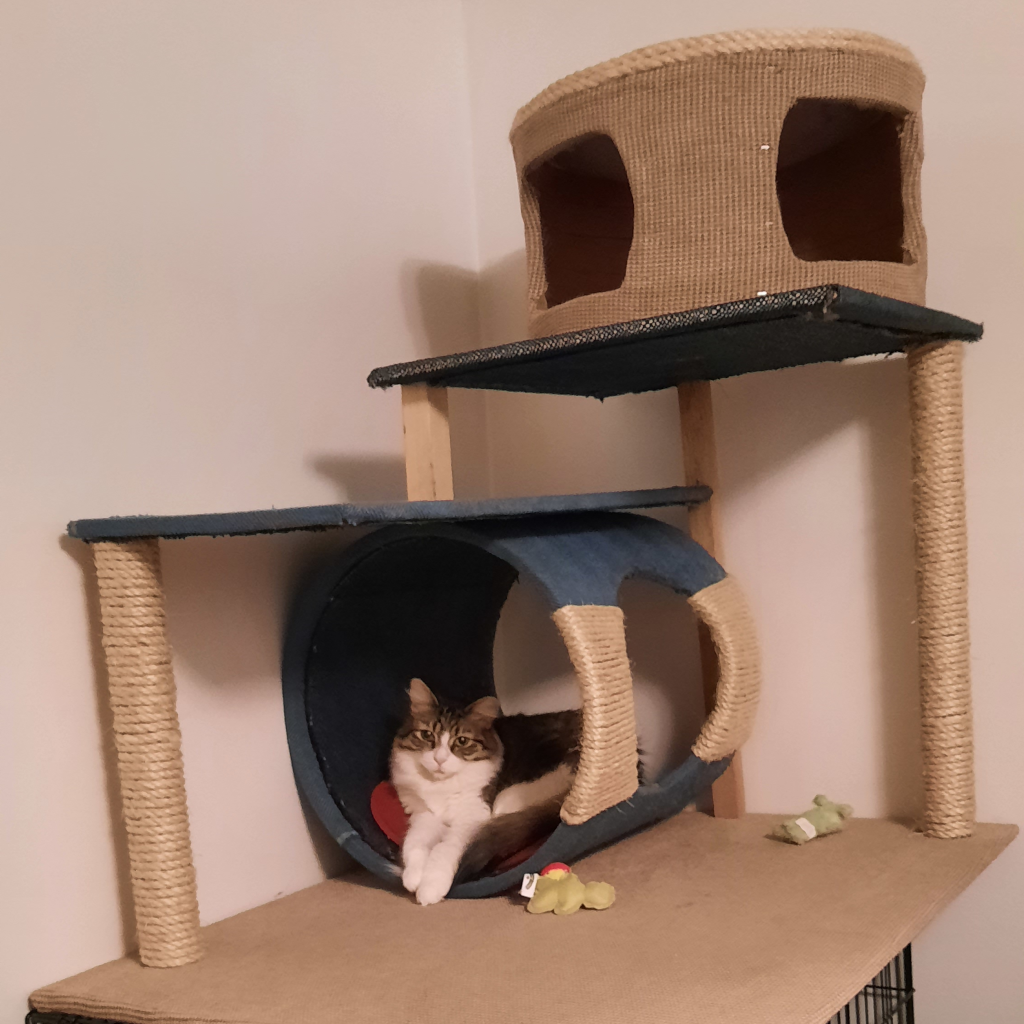 Paint can make pet steps easier to see and clean, but painting should take place far away from animals. Spray paint creates airborne particles that can settle beyond the immediate work area. Solvent fumes can irritate pets, and birds are especially sensitive to airborne contaminants. Paint thinner, mineral spirits, turpentine, and brush-cleaning solvents should never be used around pets. The ASPCA advises checking art-supply labels because some pigments may carry added risk, while solvents such as turpentine can cause vomiting, aspiration, and irritation.
Use water-based products when a finish is truly needed. Paint outdoors or in a closed, ventilated work area that pets cannot enter. Store the project elsewhere until the odor is gone and the coating has fully cured. Do not use fragrance as your safety test. Some harmful products have little odor, while a cured product may retain a mild smell without remaining wet. The manufacturer’s instructions matter more than your nose.
Carpet, Fabric, and Foam Can Hide Treatments
Carpet remnants are often used on pet ramps, shelves, and scratching structures. Before attaching one, find out where it came from. Used carpet may contain cleaning residue, flea treatments, mold, urine, adhesive, dust, or pest-control chemicals. New carpet may have stain-resistant treatments or strong manufacturing odors. Foam cushions may be treated with flame retardants or contain adhesives that become accessible if the cover tears.
Choose washable, tightly woven fabric with no loose loops. Avoid long fringe, dangling threads, rubber backing that crumbles, and exposed foam. Cats may eat loose fibers, while dogs may tear open cushions and swallow pieces. For senior pets, traction matters as much as softness. A slick blanket loosely draped over a ramp can slide under a dog’s weight. Secure the fabric firmly, inspect it often, and replace it when seams begin to fail.
Hardware Must Be Hidden From Teeth and Paws
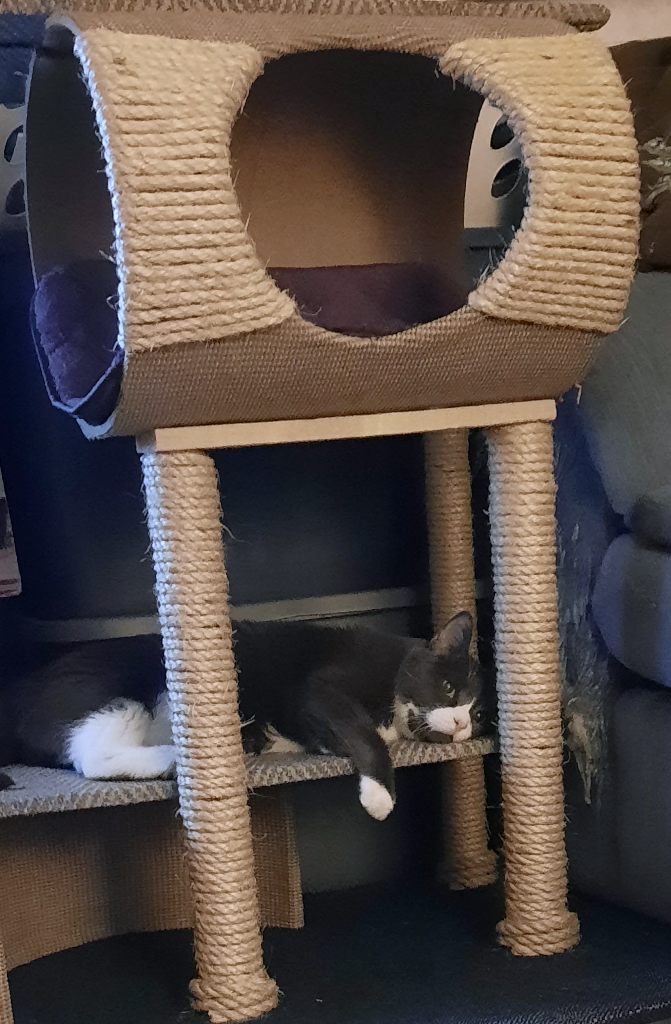 Even safe lumber and rope can become dangerous when assembled with the wrong hardware. Exposed staples can work loose as rope is scratched. Nails can back out as wood shifts. Screws that are too long may protrude through the opposite side. Sharp brackets can cut thin senior skin, especially around hips, shoulders, and paws.
Use screws instead of finish nails for load-bearing joints. Recess screw heads where possible. Add washers when bolts pass through wood. Cover access holes only with a material the pet cannot pull out and swallow. Avoid small decorative caps, plastic plugs, loose washers, and rubber feet that can be chewed off. Check the finished project from a pet’s height. Run your hands across every edge, underside, corner, and joint. Then shake it. Hard. A scratching post should not wobble. A senior ramp should not flex. Steps should not shift when a dog places weight on one side. Stability is a safety feature, not a finishing touch.
Workshop Dust and Cleanup Are Part of the Build
The project is not pet-safe if the house is filled with sawdust afterward. Keep animals out of the work area while cutting, drilling, sanding, painting, staining, or gluing. Vacuum floors, furniture, windowsills, and nearby fabric. Change dusty clothing before holding a cat or allowing a dog to rub against your legs.
Pick up every screw, staple, blade, wire clipping, sanding disc, and rope strand. Dispose of solvent-soaked materials according to the product label and local rules. Never leave oily rags in a pile, since some finishing-product rags can generate heat as they dry.
If a pet walks through paint or stain, licks wet adhesive, chews treated wood, or swallows rope, do not induce vomiting unless a veterinarian or animal poison specialist specifically directs you to do so. Contact your veterinarian or an animal poison-control service promptly, and keep the product container or label available so the exact ingredients can be identified.