
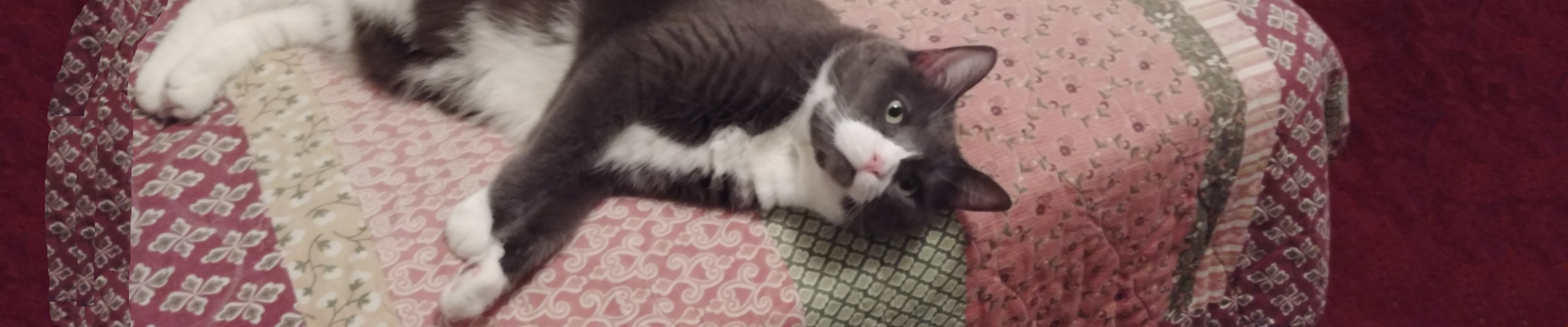
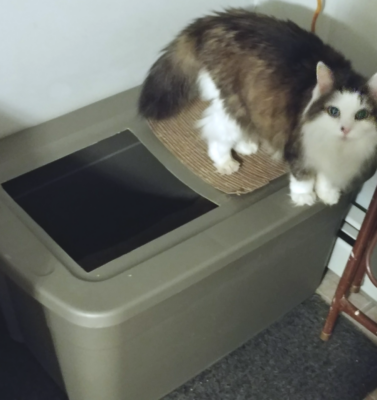
A cat can use the same litter box faithfully for years and then, seemingly out of nowhere, begin hesitating at the entrance, balancing awkwardly on the edge, leaving urine or stool beside the box, or searching for another place to go. It is easy to interpret this as fussiness or bad behavior, especially when the cat still appears capable of walking around the house. For an older or physically uncomfortable cat, however, the litter box itself may have quietly become harder to use.
Changes in litter box habits deserve attention because they can also accompany medical problems. Veterinary guidance recommends having a cat evaluated when new house-soiling or unusual elimination behavior appears, since urinary tract disease, constipation, kidney disease, diabetes, osteoarthritis, pain, and other problems can affect how often a cat needs the box or how comfortable it is to get there and use it. A litter box makeover can remove physical and environmental obstacles, but it should not be used as a substitute for investigating a new medical change.
Start With the Entrance, Not the Litter
 For a stiff cat, the most obvious problem may be the wall they have to climb over every time they enter. A box that seemed perfectly ordinary at age five can become a small obstacle course when hips, knees, ankles, shoulders, or the spine are uncomfortable. Degenerative joint disease becomes more common with age, and affected cats may show changes in climbing and jumping long before an owner recognizes obvious lameness.
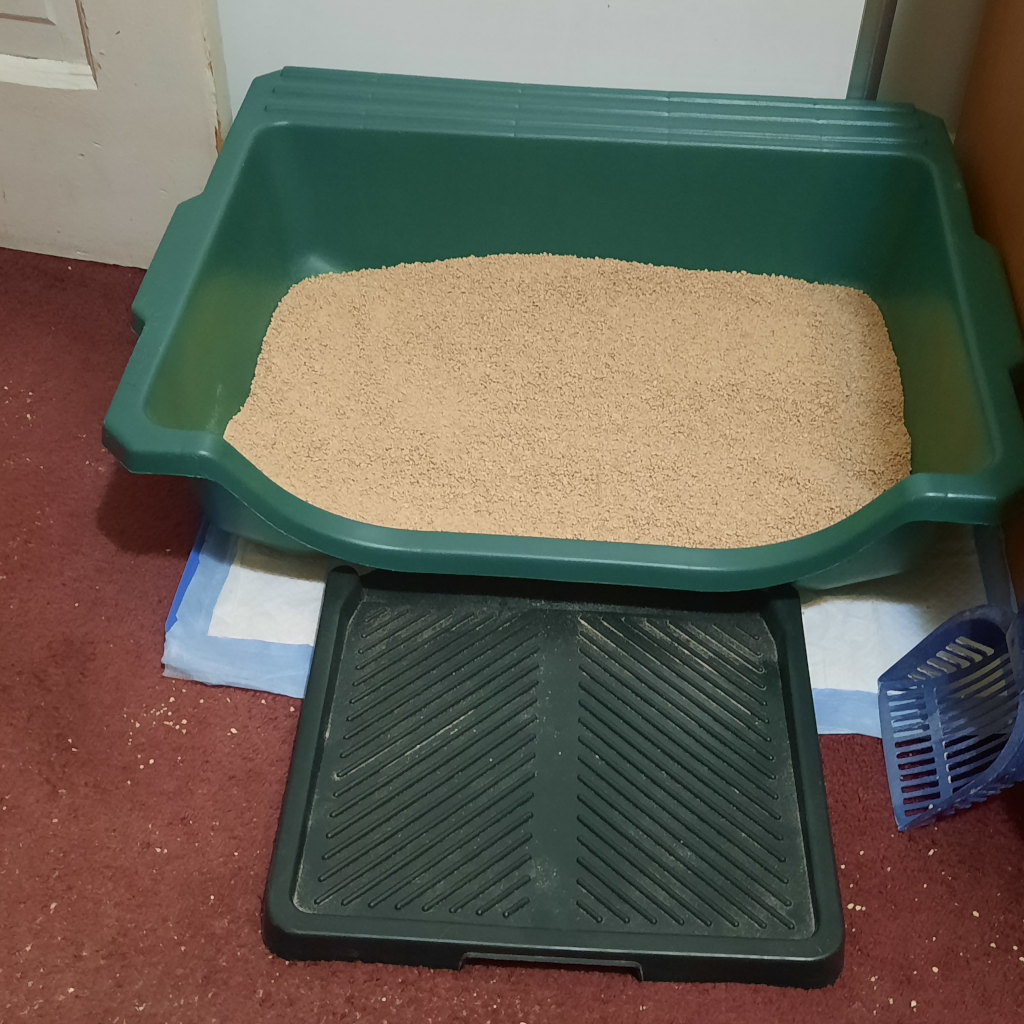
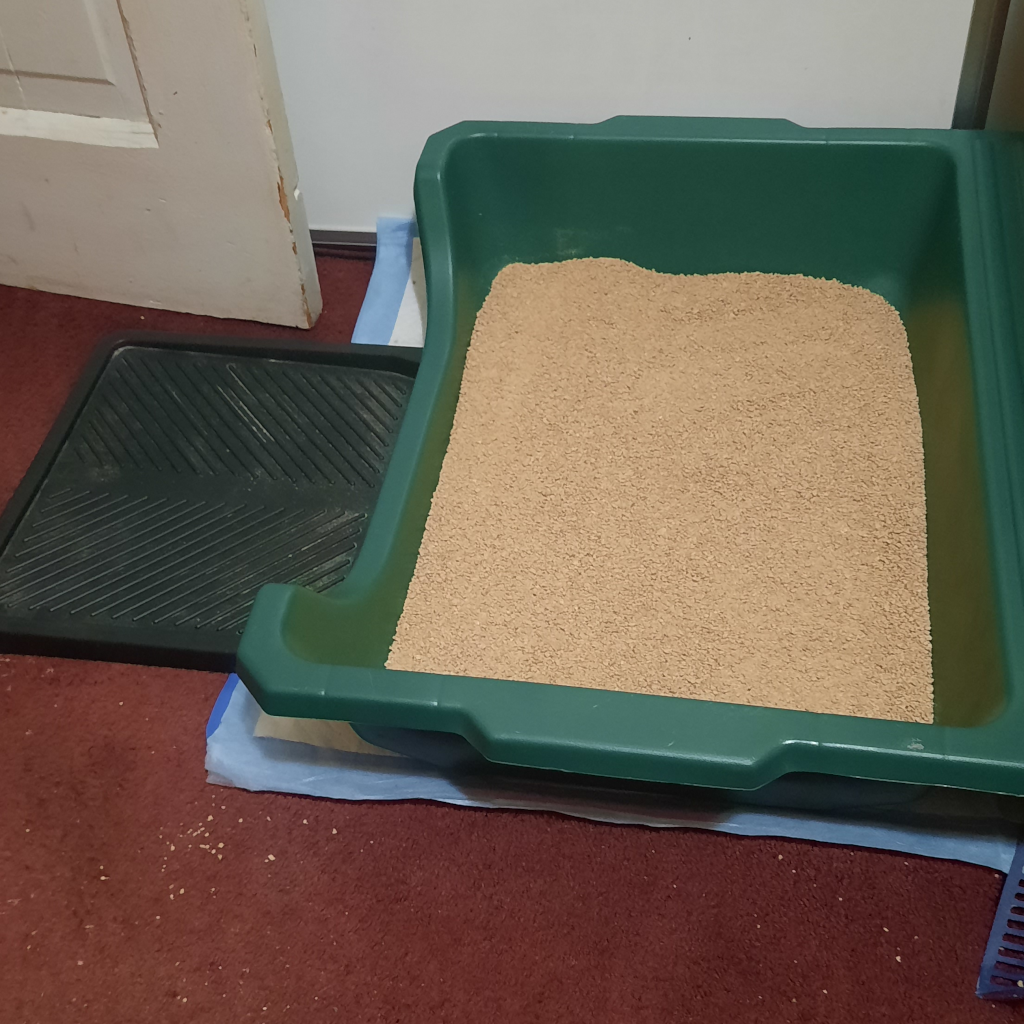
Both Cornell’s Feline Health Center and feline veterinary guidance recommend low-sided or low-entry litter boxes for older cats and cats with joint discomfort. This does not necessarily mean replacing the entire box with a very shallow pan. A particularly useful design has a low entrance in front with higher walls along the sides and back, giving the cat easy access while still containing litter and helping with cats that urinate while standing fairly upright.
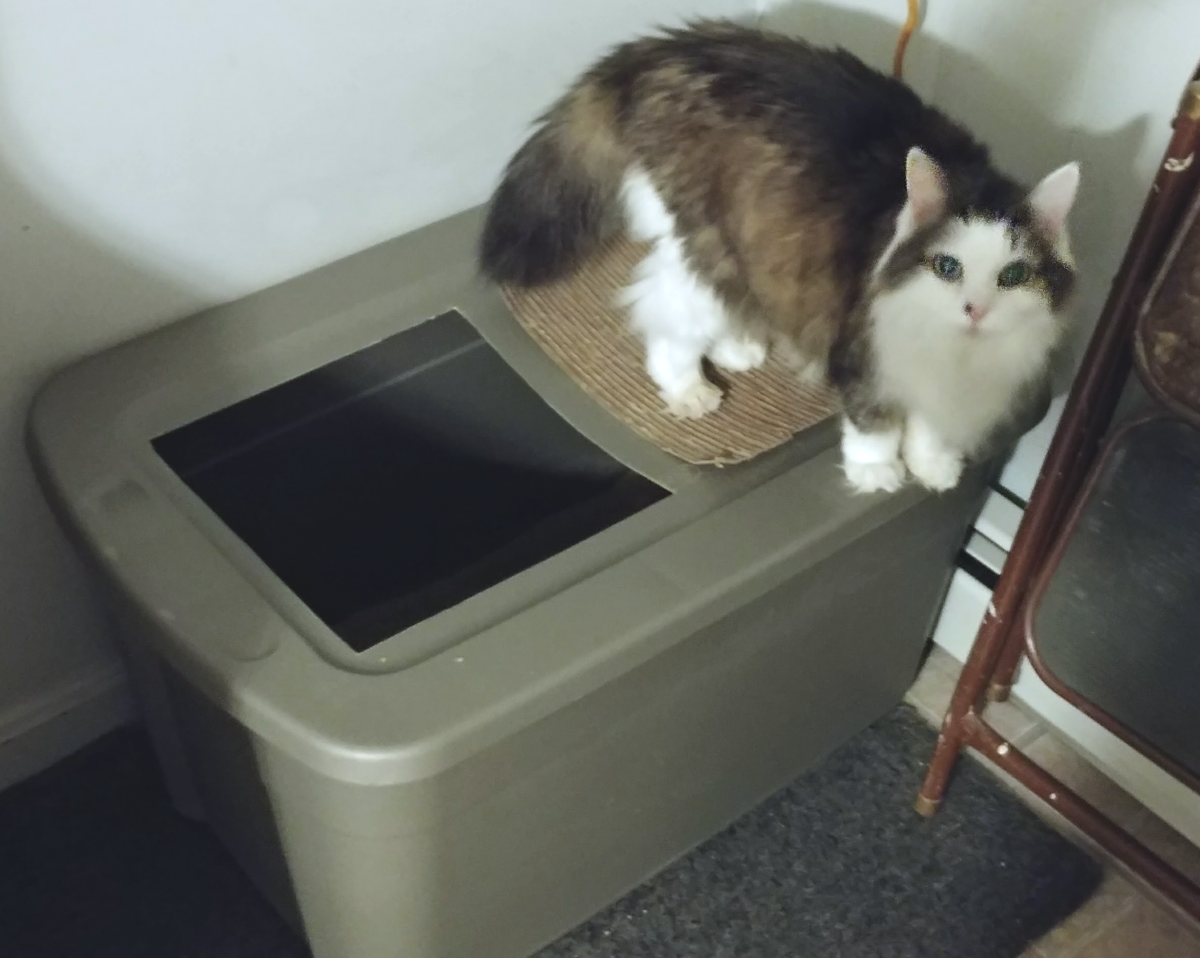
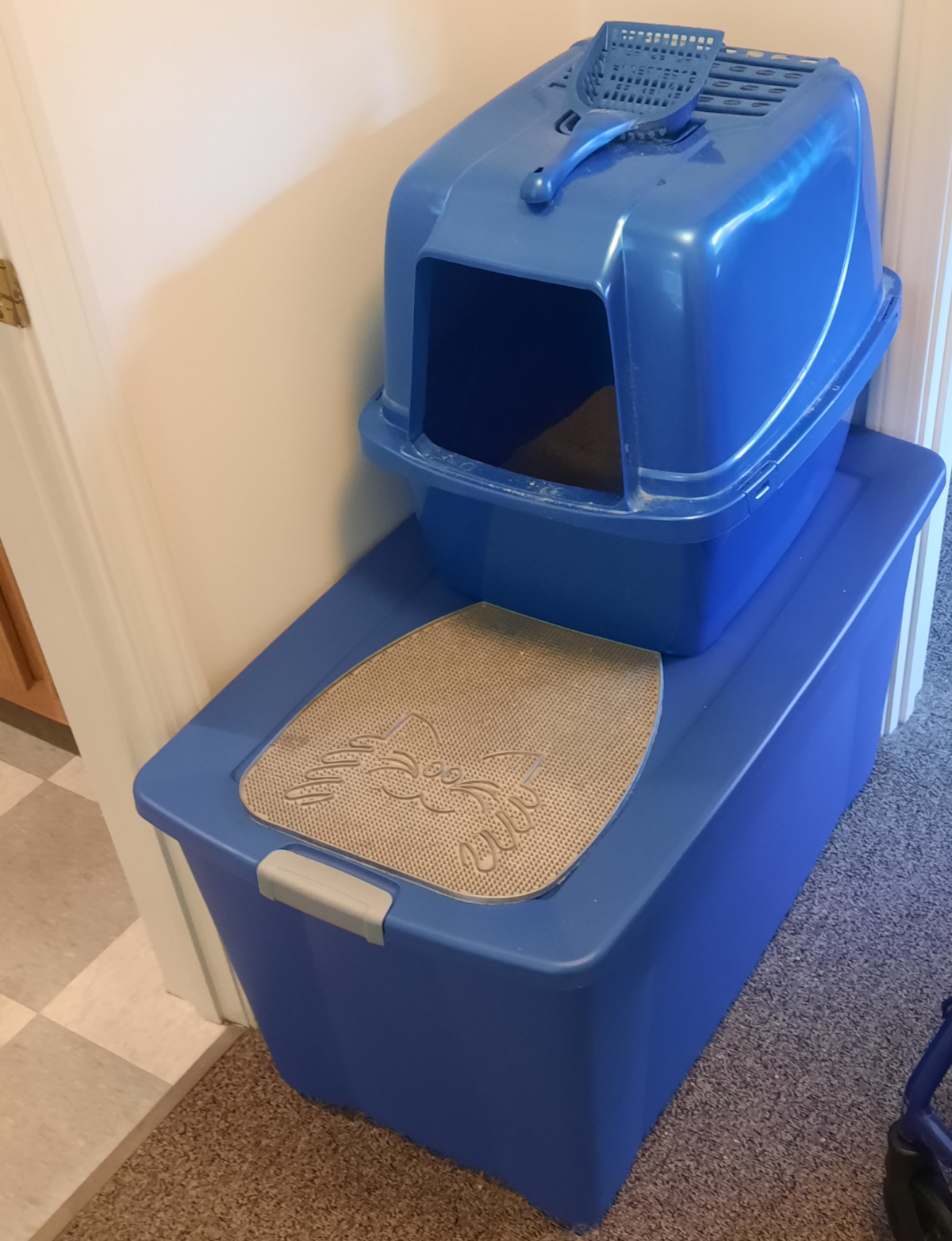
Large plastic storage containers can sometimes be converted into excellent senior-cat boxes by cutting a lower doorway into one side. Current Feline Veterinary Medical Association guidance specifically mentions modifying storage containers in this manner, while warning owners to inspect the cut area carefully for sharp edges. Any homemade entrance should be smoothly finished and sturdy enough that it cannot flex or create a rough edge when the cat steps across it.
Watch how your cat enters rather than choosing an arbitrary doorway height. A cat that pauses, lifts a front leg several times, pulls a rear leg over slowly, or steps into the box with the front feet while leaving the rear feet outside may be showing you that the threshold is harder to cross than it used to be. Those observations cannot tell you why the cat is having difficulty, but they are valuable details to share with your veterinarian.
Give the Cat Enough Room to Turn Around
Some litter boxes are surprisingly small once an adult cat is standing inside them. A stiff cat may find a cramped box especially uncomfortable because turning, digging, squatting, and stepping around waste all require more body movement than simply walking across a room.
Feline veterinary guidance recommends a box roughly one and a half times the cat’s length from the nose to the base of the tail, and notes that many commercial boxes are smaller than ideal. Large storage boxes, concrete mixing trays, and similarly roomy containers can sometimes provide substantially more usable floor space.
The extra room matters for picky cats as well. A cat may want to inspect several spots, dig, turn around, eliminate, and then choose another location from which to cover the deposit. Making the box larger allows the cat to perform those normal movements without repeatedly stepping into previously soiled litter.
Roominess can also help reveal another problem. If a cat readily uses a large, low-entry box after avoiding a smaller high-sided one, that information tells you something useful about the old setup. It still does not prove arthritis or another particular condition, but it gives you and your veterinarian a more detailed picture of what the cat finds difficult.
The Best Litter May Be the One Your Cat Already Likes
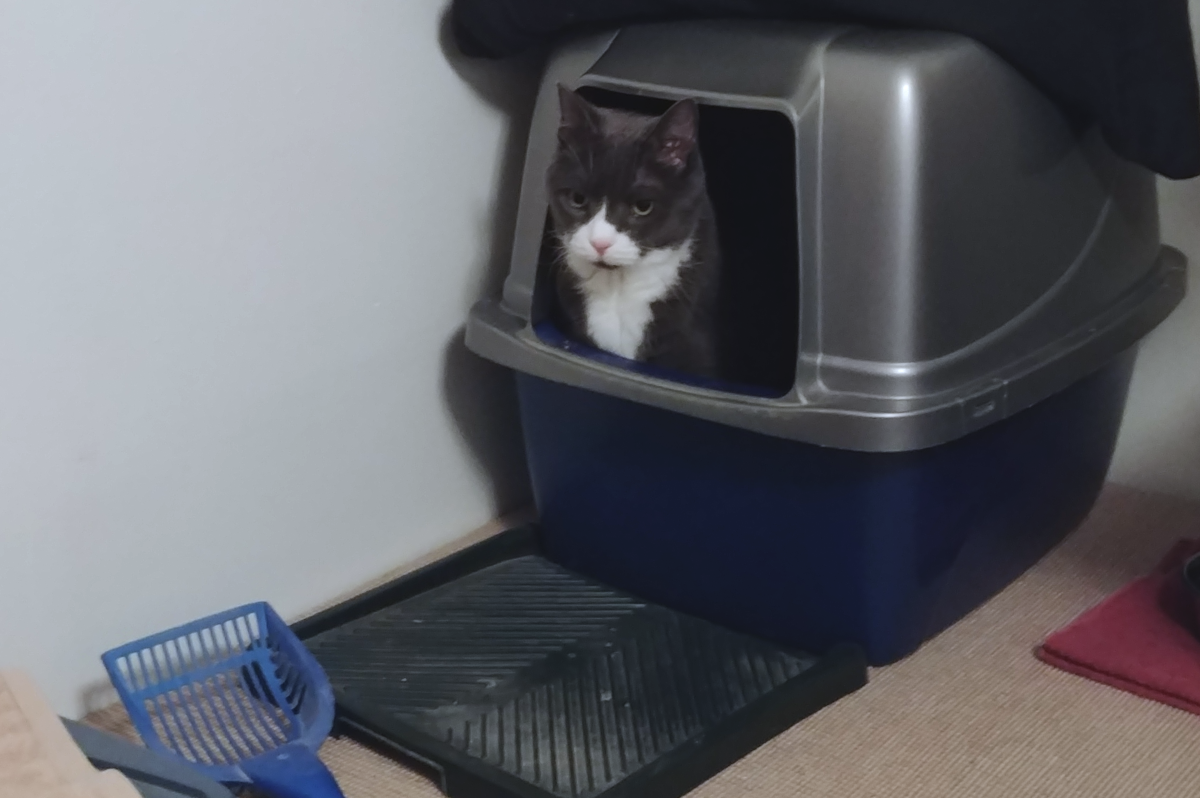 A litter box makeover can go wrong when everything is changed at once. An owner replaces the box, moves it across the room, buys a different litter, changes the litter depth, adds a liner, and installs a scented deodorizer. From the human point of view, the bathroom has been completely upgraded. From the cat’s point of view, its familiar toilet has disappeared.
Many cats prefer soft, fine-grained, unscented clumping litter, although individual preferences vary. Feline veterinary guidance also notes that aromatic litter, dusty litter, deodorizers, and box liners can be objectionable to some cats. If your cat has been happily using a particular litter for years, there is usually little reason to change it simply because you are changing the box.
If litter preference itself seems to be the problem, testing choices side by side is more informative than repeatedly replacing one litter with another. The Feline Veterinary Medical Association recommends offering multiple boxes with different litter types or depths when trying to identify a cat’s preference. Keeping the boxes otherwise similar helps you determine whether the litter is actually what the cat is choosing.
Depth matters too. Older feline behavior guidance reports that many cats prefer approximately 1.5 inches of litter, while emphasizing that preferences differ. A cat with sore joints may also behave differently on a very deep, shifting surface than on a shallower layer that provides firmer footing, so observing comfort and stability can be as useful as watching whether the cat digs.
Uncovered Can Be Easier for a Stiff Cat
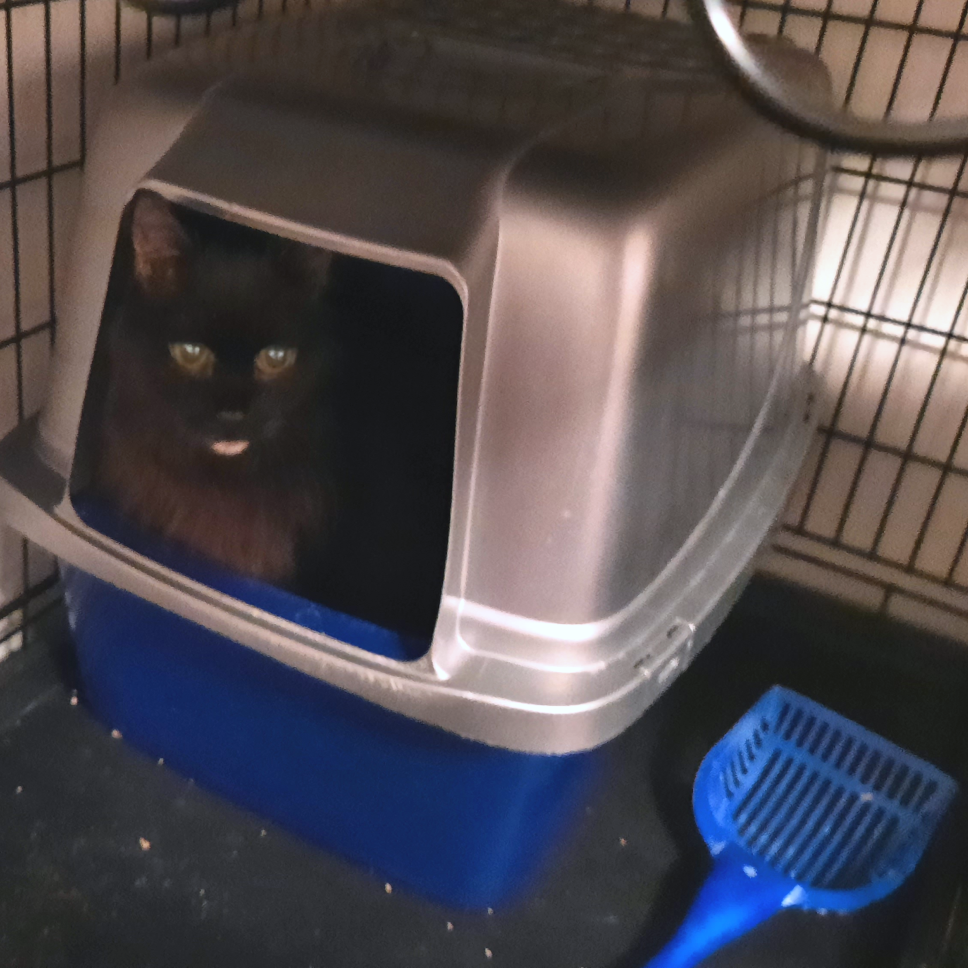
 Covered litter boxes appeal to people because they hide waste, contain scattered litter, and provide some visual privacy. Cats do not always share our priorities. Current AAHA guidance says cats generally prefer shallow, uncovered boxes, while acknowledging that litter box preference varies among individuals.
An uncovered box can give a stiff cat more freedom to enter, turn, raise the head, and choose an exit direction. It also gives an owner a much better opportunity to observe posture and movement, which can be surprisingly informative when an older cat’s mobility is changing.
Automatic self-cleaning boxes deserve similar consideration. They can be convenient, but AAHA notes that the movement or operation of these boxes can frighten some cats enough to contribute to avoidance. A cat that has become more cautious with age may do better with a simple box that stays still and behaves exactly the same way every time.
Location Can Become a Mobility Problem
 A perfectly designed litter box does little good if reaching it requires a stiff cat to cross a slippery floor, go downstairs, pass another cat, or travel to the farthest corner of the house. Senior-care guidance recommends reducing the distance older cats need to travel to reach basic resources, including litter boxes.
In multilevel homes, placing a box on every floor can make an enormous practical difference. The Feline Veterinary Medical Association specifically recommends keeping a box on the level where an older cat spends most of its time rather than expecting the cat to repeatedly climb stairs.
A quiet location usually works better than one beside a washer, dryer, furnace, or another appliance that can suddenly start making noise. Boxes should also be positioned so a cat cannot easily be cornered by another animal. Veterinary behavior guidance recommends multiple box locations and easy routes of entry and exit, particularly in homes with more than one cat.
The commonly recommended starting point for multi-cat households is one litter box for each cat, plus one additional box, with the boxes distributed in separate locations rather than grouped together. Three boxes lined up beside one another may look like three bathrooms to us, but they do not provide the same choices as boxes placed in different parts of the home.
Make the Area Around the Box Easier Too
The makeover should extend a few feet beyond the plastic box itself. A senior cat may step comfortably through a low doorway and then struggle because the box slides against tile or the cat’s rear feet lose traction while exiting.
A stable box placed on a secure surface can make entry and exit less awkward. If you add a mat, choose one that lies flat, does not bunch beneath the paws, and is easy to clean. Avoid creating another raised edge that the cat must step across in order to reach the low-entry box you just installed.
Large absorbent pads or washable protective mats around the box can also save considerable frustration while you are figuring out what works. A cat that begins urinating immediately beside the box is not necessarily rejecting the entire area. Sometimes the location is acceptable but some part of the physical setup is not, and protecting the floor gives you time to investigate without turning every accident into a household emergency.
Clean Enough for a Picky Cat, Without Making It Smell Like a Cleaning Cabinet
 Cats generally prefer clean elimination areas, and veterinary recommendations support frequent scooping. Current Feline Veterinary Medical Association material recommends removing waste at least daily, while other feline behavior guidance recommends scooping once or twice each day.
Strong fragrances are not necessarily an improvement. Guidance recommends cleaning boxes with soap and hot or warm water and avoiding strong-smelling or ammonia-based cleaning products. AAHA also notes that heavily odor-retaining older boxes may eventually become less appealing to a cat.
For a very particular cat, cleanliness may need to be judged from the cat’s perspective rather than the household schedule. Some cats will continue using a box containing several deposits, while another cat may begin searching for a cleaner place after a single bowel movement. That preference can become more noticeable in a cat that is already dealing with restricted mobility because stepping around waste inside a smaller box requires additional turning and balancing.
Change One Thing at a Time When Possible
One of the most useful habits we have learned from caring for animals over the years is to make changes in a way that lets us tell whether they actually helped. That principle works beautifully with litter boxes.
If the problem is uncertain, keep the familiar box and place a second, larger low-entry box nearby using the same litter. If the cat strongly prefers the new box, you have learned something without taking away the familiar option. Later, if you need to test litter texture, location, or depth, change one of those variables while keeping the others reasonably consistent.
A few days of simple observations can be useful. Note whether the cat approaches willingly, hesitates before stepping in, keeps part of the body outside, changes position repeatedly, urinates over an edge, stops covering waste, visits more frequently, or seems unable to maintain a comfortable squat. These details can help separate a straightforward box-preference issue from a broader change that deserves veterinary attention.
Do Not Assume a Sudden Litter Box Problem Is Just Pickiness
 A cat that suddenly begins eliminating outside the box should be evaluated medically, particularly if there are other changes in urination, defecation, thirst, mobility, appetite, or behavior. AAHA lists urinary disorders, kidney disease, diabetes, osteoarthritis, and other medical problems among the possible causes of house-soiling, and senior-cat guidelines specifically warn that litter box changes can reflect pain, reduced strength, impaired balance, constipation, urinary disease, or metabolic illness.
Repeated trips to the litter box, prolonged straining, crying while attempting to urinate, blood in the urine, or producing little to no urine deserve prompt attention. A complete urethral obstruction is a medical emergency, and male cats are at particular risk because of their anatomy. If a cat appears unable to pass urine, that is not a situation to troubleshoot by changing litter or waiting to see whether a new box helps.
Once medical problems have been investigated and any needed veterinary care is underway, the litter box remains part of the comfort plan. A roomy box with a low entrance, familiar unscented litter, stable footing, regular cleaning, and an easy-to-reach location asks less of an aging body while still respecting the preferences cats develop over a lifetime.
The most useful makeover is often not the fanciest one. It is the box that your cat can approach without hesitation, enter without climbing, turn around in comfortably, use without losing balance, and leave without struggling. Watching those small movements closely can improve the bathroom setup today while also giving you better information to bring to your veterinarian if your cat’s stiffness or litter habits continue to change.