



Bringing home an older rescue dog can be surprisingly quiet. Instead of exploring the house, carrying toys around, or following everyone from room to room, a timid senior may find the safest corner available and simply watch. Some will hesitate to eat while anyone is nearby, retreat when a hand reaches toward them, freeze when the leash appears, or become uneasy over ordinary household sounds that another dog barely notices.
The natural impulse is to show the dog that everything is okay. We want to pet them, reassure them, introduce them to the family, take them for a pleasant walk, and give them all the things we have been waiting to provide. With a frightened dog, though, confidence is usually built less by what we add and more by how much pressure we remove. The first job is not convincing the dog to trust us. It is creating enough safety and predictability that trust has room to develop.
Fear Does Not Automatically Mean a Dog Was Abused
A fearful rescue dog often arrives with an incomplete history, and it is easy to fill those missing pages ourselves. A dog who ducks from a raised hand, trembles around strangers, or avoids men may have experienced something frightening in the past, but those behaviors alone cannot tell us exactly what happened.
Behavior develops from a combination of genetics, early experiences, learning, environment, health, and individual temperament. AAHA notes that both inherited traits and life experiences influence canine behavior. A dog can therefore be deeply cautious without having been intentionally mistreated.
This matters because our assumptions can affect how we respond. If we decide that every fearful behavior must be evidence of abuse, we may spend more time trying to uncover a story that cannot be confirmed than observing the dog who is standing in front of us. What helps most is learning which situations make this particular dog uncomfortable, what helps them recover, and which choices allow them to feel safer.
An adult rescue is also dealing with an enormous amount of change. The sleeping location is new, the smells are new, the people are new, the feeding routine is new, and even the sounds made by the furnace, refrigerator, television, doors, traffic, or neighboring dogs may be unfamiliar. A senior dog may have the additional challenge of reduced vision, hearing loss, arthritis, chronic pain, or cognitive changes.
Start With the Senior Dog’s Physical Health
 Fear should not automatically be treated as a training problem, especially in an older dog. Pain and illness can change how a dog reacts to touch, movement, other animals, stairs, slippery floors, handling, sleep interruptions, and unfamiliar situations.
AAHA’s senior-care guidance specifically warns that behavioral changes in older pets can be mistaken for ordinary aging when chronic pain may be involved. Changes associated with aging can also include increased anxiety, altered sleep, disorientation, house-soiling, changes in social interaction, and the development of new fears.
That makes a veterinary examination a sensible part of helping a fearful senior rescue, particularly when the dog’s medical history is incomplete. Tell the veterinarian about behaviors you have noticed at home, even if they do not initially seem medical. Hesitating before lying down, resisting stairs, startling when approached from one side, becoming defensive when touched near the hips, sleeping much more deeply, or appearing confused in familiar areas can provide useful context.
Short videos can help too. AAHA specifically recommends video as one way owners and veterinarians can evaluate changes in senior pets, including movement and behavior that may not appear during an office examination. A dog who becomes extremely quiet at the veterinary hospital may behave very differently at home.
Give the Dog a Small, Predictable World at First
A frightened dog does not need access to every room, every visitor, every walking trail, and every exciting experience during the first few days. A smaller world is often easier to understand.
Set up a quiet resting area where the dog can retreat without being followed. Depending on the dog, that might be a bed in a quiet corner, an open crate the dog already accepts, or a gated section of a room. Food, water, access to elimination areas, and comfortable bedding should be easy to reach without forcing the dog through busy parts of the house.
For an older dog, physical comfort matters as much as emotional comfort. Non-slip rugs can make hard floors less intimidating, night-lights can help dogs with declining vision, and keeping furniture arrangements fairly consistent can make movement easier. A dog who feels physically insecure while walking across the kitchen may appear behaviorally fearful when the actual problem is that their feet keep slipping.
Predictability also helps. Meals, bathroom trips, sleep, quiet time, and walks do not need to occur at precisely the same minute every day, but a recognizable rhythm can make the household easier for the dog to understand. Merck Veterinary Manual notes that structured, consistent interactions can reduce anxiety by making outcomes more predictable for dogs dealing with fear and anxiety.
Stop Measuring Progress by Affection
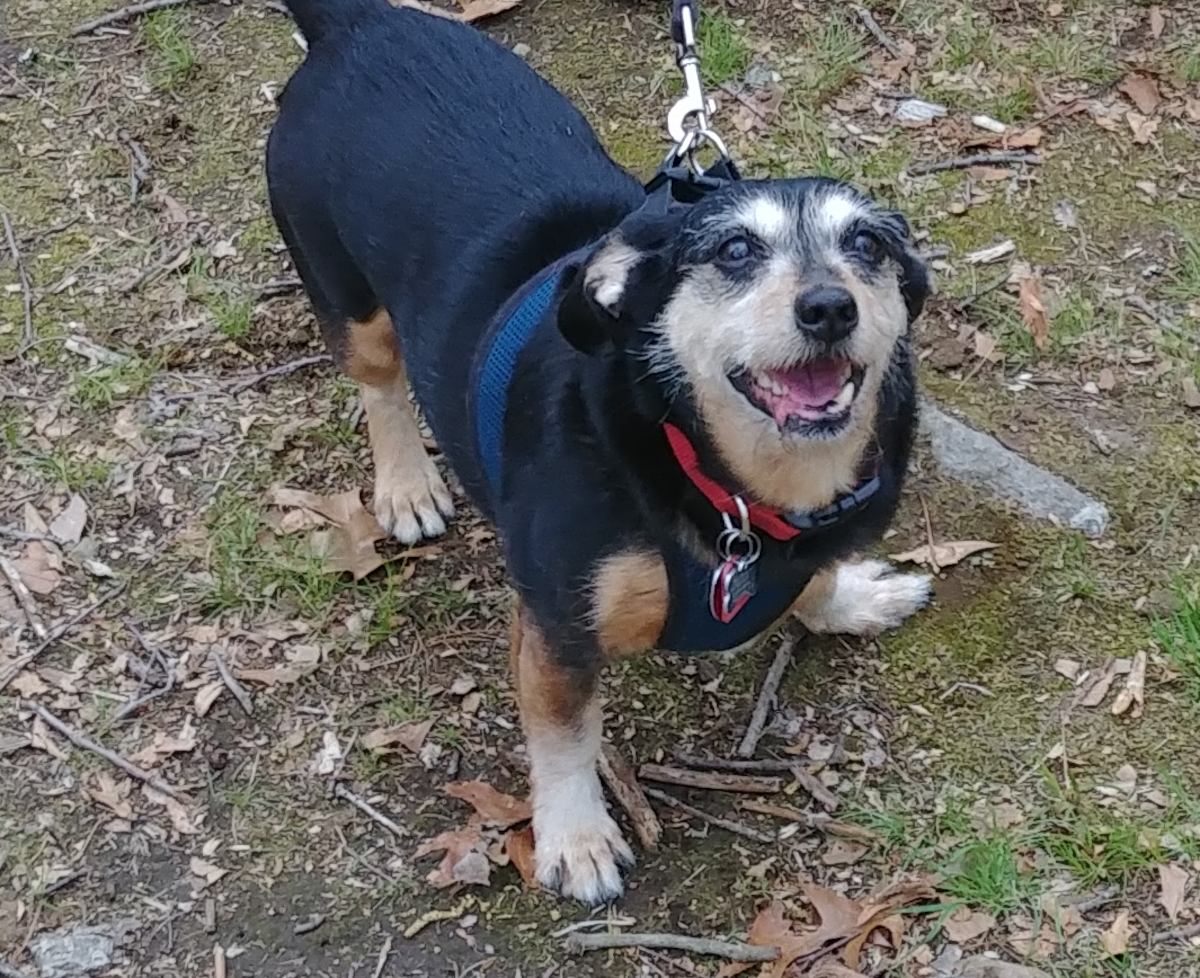 One of the easiest mistakes with a timid rescue is using physical affection as the main measure of success. A dog who does not want to be hugged, picked up, cuddled, or stroked may still be making substantial progress.
Confidence can look much smaller than that. The dog eats while you remain in the room. They sleep on their side instead of remaining tightly curled and alert. They walk past you instead of waiting for you to move. They investigate a toy after everyone becomes quiet. They choose to lie six feet away instead of staying behind the furniture.
Those choices matter because the dog made them voluntarily. A timid dog approaching and then retreating is not necessarily rejecting the person. Moving closer, gathering information, and backing away again may be exactly what the dog currently needs.
Allow that retreat whenever safety permits. Repeatedly following a dog who moves away can teach the dog that moving away does not work, which may eventually leave freezing, growling, snapping, or other defensive behaviors as the remaining options.
Learn to Recognize the Dog’s Threshold
Behavior professionals often use the word “threshold” to describe the point where a trigger becomes intense enough to produce a fear or stress response. Confidence-building generally works best before the dog reaches that point.
A dog who can calmly notice a stranger from across the street while still accepting treats may be able to learn something positive from the experience. The same dog might become unable to eat, respond to familiar cues, or disengage if that stranger walks directly toward them. At that distance, the situation has become too difficult.
Fear can show itself through obvious behavior such as trembling, hiding, barking, growling, or attempting to escape. Earlier changes may include turning the head away, lowering the body, pulling the ears back, freezing, repeatedly scanning the surroundings, becoming unusually still, trying to increase distance, or suddenly refusing food the dog normally enjoys. Individual signals need to be interpreted in context because some can also occur for reasons unrelated to fear.
Learning those earlier signals gives you a chance to increase distance before the dog becomes overwhelmed. Merck’s veterinary behavior guidance recommends controlled exposure at an intensity low enough that the dog remains calm, with progress guided by the dog’s body language rather than by a predetermined schedule.
Use Distance Instead of Forcing the Dog Through Fear
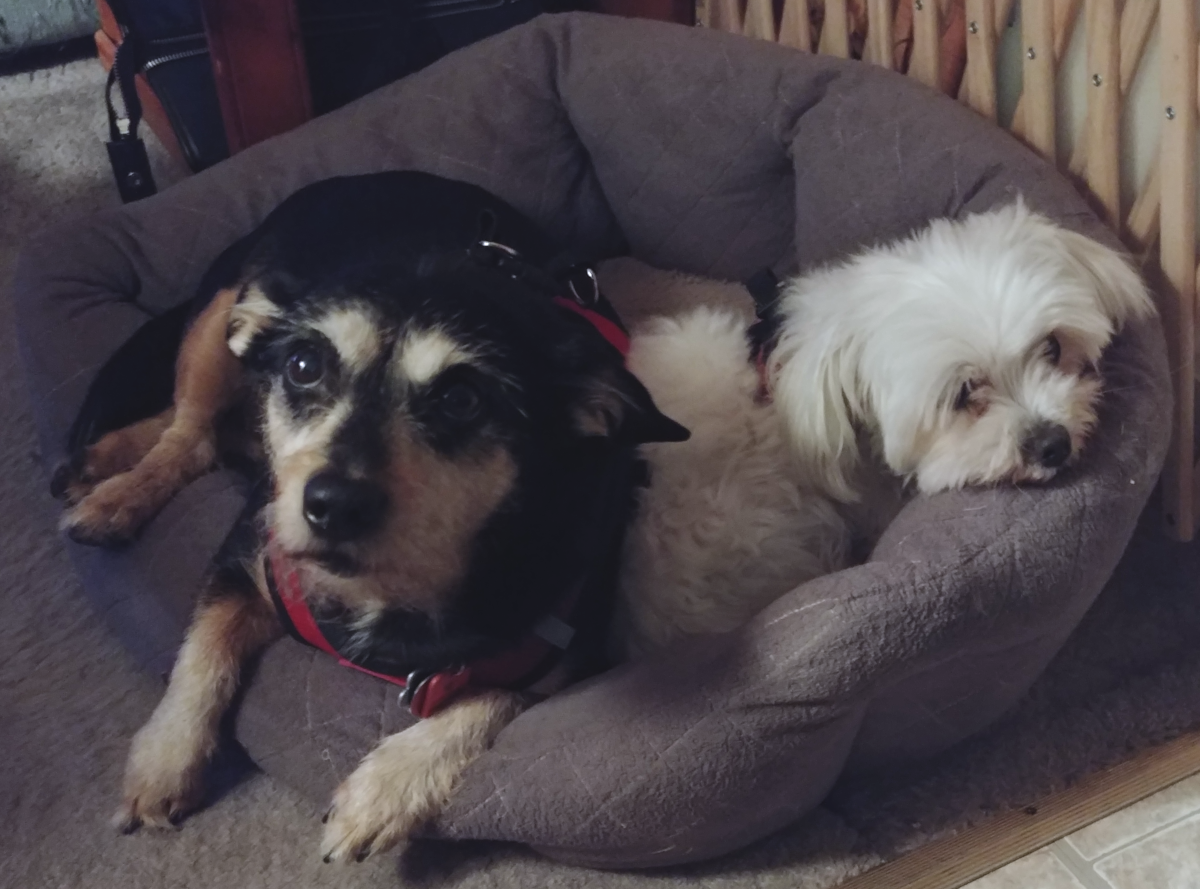 A frightened dog does not need to “face the fear” at full strength. Forcing prolonged exposure to something frightening is often called flooding, and veterinary behavior guidance warns that it can increase fear and make behavior worse.
A much gentler method is desensitization. The frightening thing is presented at such a low intensity that the dog can remain comfortable. A person might stand farther away, a sound might be played more quietly, or a feared object might simply remain motionless across the room.
Counterconditioning can then be paired with that process. The dog encounters the low-level version of the trigger while something enjoyable happens, such as receiving a favorite treat. Over repeated experiences, the goal is to change the dog’s emotional association rather than merely stopping an outward behavior. Merck describes desensitization and counterconditioning as common behavior-modification methods for fear and anxiety.
Progress should be slow enough that it almost looks uneventful. If the dog suddenly freezes, bolts away, stops taking food, or becomes highly distressed, the session probably became too difficult. More distance or less intensity is not failure. It is information about what the dog can currently handle.
Let Good Things Happen Without Requiring Interaction
Food can be particularly useful because it allows positive experiences to occur without forcing physical contact. A timid dog does not have to approach your hand to receive every reward.
You can quietly toss a small treat away from yourself, allowing the dog to collect it without coming closer. That may sound backward when the goal is building a relationship, but it gives the dog control over distance. After getting the treat, the dog can decide whether to remain nearby, investigate further, or move away.
Some fearful dogs initially will not take treats around people at all. That does not mean food-based work has failed. Refusing a normally desirable food can be a useful indication that the situation is currently too stressful, particularly when the dog readily eats the same food in a calmer setting.
Meals can also become part of the relationship without turning into a test. Put the food down, step away, and let the dog eat. Over time, some dogs begin eating while their person remains farther across the room, then closer, and eventually nearby. There is no prize for reaching the last stage quickly.
Make Human Body Language Less Intimidating
People can be enormous from a dog’s perspective. We walk straight toward them, lean over them, reach toward the top of their head, stare at them, and sometimes trap them between our bodies and furniture without realizing we have done it.
A fearful dog may find indirect interaction much easier. Turning slightly sideways, avoiding prolonged staring, moving smoothly, and allowing the dog to approach can reduce social pressure. Sitting quietly in the same room while reading or working can sometimes accomplish more than repeatedly calling the dog’s name and trying to encourage contact.
Visitors need the same instruction. A well-meaning guest who immediately crouches down, extends a hand toward the dog’s nose, and tries to make friends may be far more difficult for a timid dog than someone who simply enters, sits down, and ignores them.
Children require especially careful management because their movement, voices, and desire to touch an animal can be unpredictable. A frightened senior dog should always have a protected place where children and visitors do not follow.
Reward-Based Training Builds Communication
 Simple training can become a confidence-building activity once the dog is comfortable enough to participate. The purpose is not strict obedience. It is giving the dog an understandable way to interact with people and earn predictable outcomes.
Very easy behaviors are enough. Looking toward you, touching a target with the nose, stepping onto a mat, following you a few feet, or responding to a familiar cue can all become opportunities for success. Keep sessions short and stop while the dog is still comfortable.
The American Veterinary Society of Animal Behavior currently recommends reward-based methods for dog training and behavior modification and advises against aversive methods such as electronic collars, prong collars, choke chains, and physical or psychological punishment. The organization cites risks that include increased fear, anxiety, stress, aggression, and damage to the relationship between the dog and caregiver.
That recommendation has particular weight with a fearful dog. Correcting growling, dragging a frightened dog toward something, jerking the leash, or punishing attempts to retreat may suppress communication without changing the fear underneath it. A dog who learns that expressing discomfort produces punishment has not necessarily become more comfortable.
Walks Should Feel Safe Before They Become Adventures
Walking is another area where people sometimes try to accomplish too much too quickly. A newly adopted fearful senior may be far more comfortable making a short trip outside to eliminate than walking through a busy neighborhood full of dogs, delivery trucks, bicycles, strangers, and unfamiliar noises.
Security deserves special attention because frightened dogs can be surprisingly determined escape artists. Use properly fitted equipment, check gates before opening doors, and make sure identification information is current. A secure, well-fitted harness can offer more control without requiring pressure around the neck, particularly for a dog prone to backing away when startled.
Let the dog’s behavior determine how ambitious the outing becomes. Sniffing around a quiet yard or walking the same calm block repeatedly may provide plenty of activity at first. Longer or more stimulating trips can come later if the dog begins showing that they are comfortable.
Senior dogs also have physical limits that may not be immediately obvious. A reluctance to walk farther might reflect fear, but arthritis, weakness, fatigue, heart or respiratory disease, paw discomfort, or another medical issue can also affect activity. Persistent changes deserve discussion with the veterinarian rather than being treated automatically as stubbornness or anxiety.
Expect Confidence to Develop Unevenly
Progress with a fearful rescue rarely moves forward in a perfectly straight line. A dog can become comfortable with one person while remaining wary of everyone else, master the backyard while still fearing the front sidewalk, or happily accept handling on Tuesday and seem much more cautious after a stressful Wednesday.
Those changes do not erase previous progress. Stress accumulates, environments change, unexpected events happen, and older dogs can have good physical days and difficult ones. Keeping brief notes about triggers, recovery time, appetite, sleep, mobility, visitors, walks, and unusual events can make patterns easier to recognize.
Avoid comparing the dog to another rescue you have known. Decades of living with rescued animals teaches you very quickly that the timetable belongs to the animal, not the household calendar. Some dogs expand their comfort zone rapidly, while others make progress through tiny changes that are easy to miss unless someone is paying attention.
Know When Fear Needs Professional Help
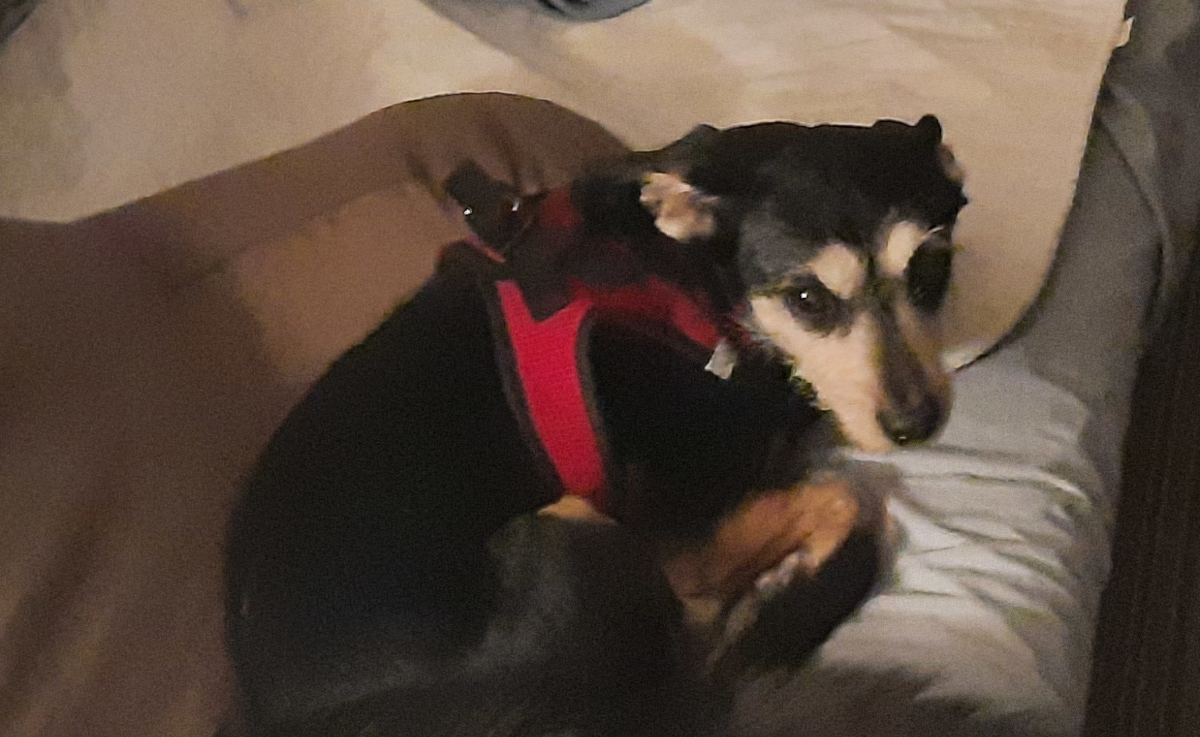 Some timid dogs gradually become more comfortable through routine, choice, careful exposure, and reward-based training. Others experience fear intense enough that additional professional help can make life much easier for both dog and household.
Fear that causes repeated panic, attempted escape, inability to perform ordinary daily activities, serious separation distress, self-injury, or aggression deserves veterinary attention. AAHA specifically recommends referral to a veterinary behaviorist for profound fears or phobias, aggression, self-injury, multiple behavioral diagnoses, or cases that have not responded adequately to initial treatment.
A veterinarian can also determine whether pain, sensory loss, cognitive changes, illness, or medication effects may be contributing. In some cases, prescription behavioral medication may be part of a treatment plan, but that decision belongs with the veterinarian after evaluating the individual dog. Medication is not a substitute for creating a safer environment, and needing medical support does not mean an owner has failed at training.
The most meaningful moment with a fearful senior rescue may eventually be something that another household would barely notice. The dog walks into the room while people are talking and lies down. They choose the bed beside your chair instead of the one across the room. They hear an unfamiliar noise, look toward you, and remain where they are.
Those moments are easy to overlook because nothing dramatic happens. That is exactly what makes them valuable. A dog who once spent much of the day preparing to retreat is beginning to believe that ordinary life can simply be ordinary, and that quiet change is often where genuine confidence first becomes visible.