

There comes a time when the familiar walk around the neighborhood begins to look a little different. Your dog may still get excited when you reach for the leash, but somewhere along the usual route, their pace slows. A hill they once climbed without hesitation becomes a struggle, or they begin stopping at a corner where they previously would have kept walking.
These changes can be especially noticeable in dogs living with arthritis. A walk that provided healthy exercise and mental stimulation for years may now place uncomfortable demands on aging joints. The answer is not necessarily to eliminate walks altogether. Often, it means reconsidering where you go, how far you travel, and what the experience feels like for your dog.
Modifying a walking route is about much more than shortening the distance. The surfaces beneath your dog’s paws, the number of inclines, the availability of resting places, and even the direction you travel can influence how comfortably they move. With a little observation and thoughtful planning, daily walks can remain an enjoyable part of life for a dog managing arthritis.
Understanding How Arthritis Changes Your Dog’s Walking Experience
Osteoarthritis is a progressive joint condition involving changes to cartilage, bone, and other structures within the joint. It can cause pain, stiffness, inflammation, and reduced mobility. Although arthritis is frequently associated with senior dogs, it can also affect younger animals, particularly those with previous injuries or underlying orthopedic conditions.
As explained by the Cornell University College of Veterinary Medicine, managing canine osteoarthritis generally involves several approaches, including weight management, appropriate exercise, pain control, and changes to the dog’s environment. Maintaining muscle strength is particularly valuable because muscles help support and stabilize affected joints.
This creates an important balance for pet owners. Too little activity can contribute to muscle loss and reduced physical conditioning, while excessive or poorly planned exercise may increase discomfort. A dog who spends most of the week resting and then takes a long weekend walk may have more difficulty than one whose activity is distributed into manageable daily sessions.
The challenge is finding an amount and type of activity that supports mobility without repeatedly aggravating painful joints. That balance will depend on your dog’s condition, general health, and veterinary treatment plan.
Start by Observing Your Dog’s Current Route
 Before changing an established walking routine, pay attention to how your dog moves along the route they already know. The goal is to identify particular locations or activities that appear more demanding than others.
You might notice that your dog walks comfortably along a level sidewalk but slows considerably when approaching an incline. They may hesitate before stepping off a curb, take wider turns around corners, or become noticeably slower toward the end of the walk.
Watch for changes in their normal movement, including:
- Shortened strides or an uneven walking pattern.
- Limping or favoring one leg.
- Slowing down or repeatedly falling behind.
- Hesitation before climbing slopes, curbs, or steps.
- Scuffing or dragging paws.
- Stopping frequently or attempting to sit or lie down.
- Difficulty maintaining balance on certain surfaces.
These observations are useful, but they do not establish the cause of a mobility problem. Arthritis can produce some of these changes, but injuries, neurologic conditions, and other illnesses can cause similar signs. A new or worsening limp deserves veterinary assessment rather than automatically being attributed to an existing arthritis diagnosis.
It is also worth observing your dog after returning home. A walk may appear perfectly manageable while they are outside, yet increased stiffness later in the evening or difficulty getting up the following morning may suggest that the activity was too demanding.
Choose Flatter Routes With Predictable Footing
One of the simplest walking modifications is replacing steep or uneven sections with routes that provide more stable footing. Hills introduce additional physical demands, although the effects vary depending on which joints are affected. Walking uphill requires greater muscular effort, while descending can challenge balance and control. Dogs with painful front limbs, weak hindquarters, or multiple affected joints may find different portions of the same hill uncomfortable.
A relatively flat neighborhood sidewalk or level park pathway may provide a more manageable alternative. However, the walking surface itself deserves attention because not every flat surface offers the same advantages.
Smooth, well-maintained sidewalks often provide predictable footing, making them convenient for dogs with limited balance or joint movement. Their firmness may be less comfortable for some dogs, and pavement temperature must be considered during hot weather.
Firm, packed-earth pathways can be a useful option when they are relatively even and free from holes, exposed roots, and loose stones. Some dogs may find these paths comfortable, although wet conditions can quickly change their traction.
Grass-covered areas may offer a softer surface, but appearances can be misleading. Thick grass can conceal uneven ground, and wet lawns may become slippery. Very soft or irregular terrain may also require more muscular effort.
Loose gravel, deep sand, mud, and rocky trails can create additional challenges because the paws may shift unexpectedly or sink into the surface. These conditions may be particularly difficult for dogs that already have trouble maintaining balance.
The Canine Arthritis Resources and Education organization recognizes controlled leash walking, including appropriate trails, as a beneficial activity for many arthritic dogs. Terrain variety is not necessarily harmful, but the surface should match the dog’s current abilities. A veterinary rehabilitation professional can help determine whether more challenging ground has a place in an individual exercise program.
The safest choice is not always the softest surface. It is usually one that allows your dog to move comfortably, maintain traction, and walk without repeatedly correcting their balance.
Replace Long Walks With Shorter, More Frequent Outings
 Many dogs spend years following a predictable walking schedule, perhaps taking one lengthy morning walk and another shorter trip outside in the evening. Arthritis may make that arrangement less suitable.
Instead of covering a mile in a single outing, some dogs may do better with several shorter walks spread throughout the day. This provides opportunities for regular movement without requiring the same sustained effort.
There is no universal walking duration for an arthritic dog. Ten minutes may be comfortable for one animal, excessive for another, and unnecessarily restrictive for a third. Dogs with severe mobility limitations might initially tolerate only a few minutes, while others remain capable of considerably longer activity.
A practical way to begin is to identify a distance your dog can complete comfortably, including the return trip, without developing increased limping or stiffness afterward. If your veterinarian agrees, you can establish that distance as a starting point and make gradual adjustments based on your dog’s response.
One helpful route modification is creating a small loop close to home. A loop avoids the temptation to continue farther simply because your dog seems enthusiastic during the first half of the outing. It can also make it easier to shorten the walk when needed.
An out-and-back route offers another advantage. You can turn around at a familiar landmark, provided you allow enough energy for the return journey. Remember that a dog who walks comfortably for ten minutes away from home may not necessarily have another ten comfortable minutes remaining. Consistency matters more than achieving a particular distance. An appropriate daily routine gives the body regular opportunities to move without repeatedly pushing beyond its limits.
Reduce Curbs, Stairs, and Abrupt Changes in Elevation
A route may appear relatively flat while still requiring your dog to negotiate several small obstacles. High curbs, flights of steps, drainage channels, raised pavement edges, and uneven sidewalk transitions can place additional demands on joints. These obstacles are easy for people to overlook because we often step over them automatically.
For an arthritic dog, however, stepping down from a curb may require a controlled shift in weight that feels uncomfortable. Repeatedly climbing short staircases can also become tiring, especially when hind-leg strength has declined.
When planning a new route, look for pedestrian crossings with gradual curb ramps and pathways that minimize abrupt elevation changes. Avoid making your dog jump over drainage channels or scramble across broken pavement when an easier crossing is available.
Corners deserve some attention as well. Tight turns and sudden changes in direction may be uncomfortable, particularly when a dog is moving quickly or pulling against the leash. Allowing a little more room to turn and maintaining a steady walking pace can reduce unnecessary twisting. These small adjustments may not dramatically change the appearance of a walk, but they can make the physical demands more predictable.
Let Your Dog Set a Comfortable Walking Pace
Dogs do not necessarily lose their enthusiasm for walks when they develop arthritis. Some remain eager to investigate everything around them, even when their joints cannot comfortably support the same level of activity. That enthusiasm can make it difficult to determine an appropriate pace. A dog who pulls toward an interesting scent may be motivated to keep moving despite discomfort.
Begin each walk slowly, allowing your dog time to settle into a comfortable rhythm. Avoid suddenly increasing speed, encouraging running, or pulling them along when they fall behind. A properly fitted harness may help with leash control and reduce pressure on the neck, although the design should allow natural shoulder and leg movement. Dogs requiring physical assistance may benefit from a support harness specifically designed for that purpose, preferably selected with veterinary guidance.
Frequent stops are not necessarily a problem. Allowing your dog to investigate interesting smells can provide mental stimulation without requiring continuous movement. For some dogs, a five-minute outing filled with interesting scents may be more satisfying than a longer walk along a busy street. The goal is not to cover the greatest distance possible but to provide an appropriate combination of physical activity and environmental enrichment.
Adjust Walking Routes for Weather Conditions
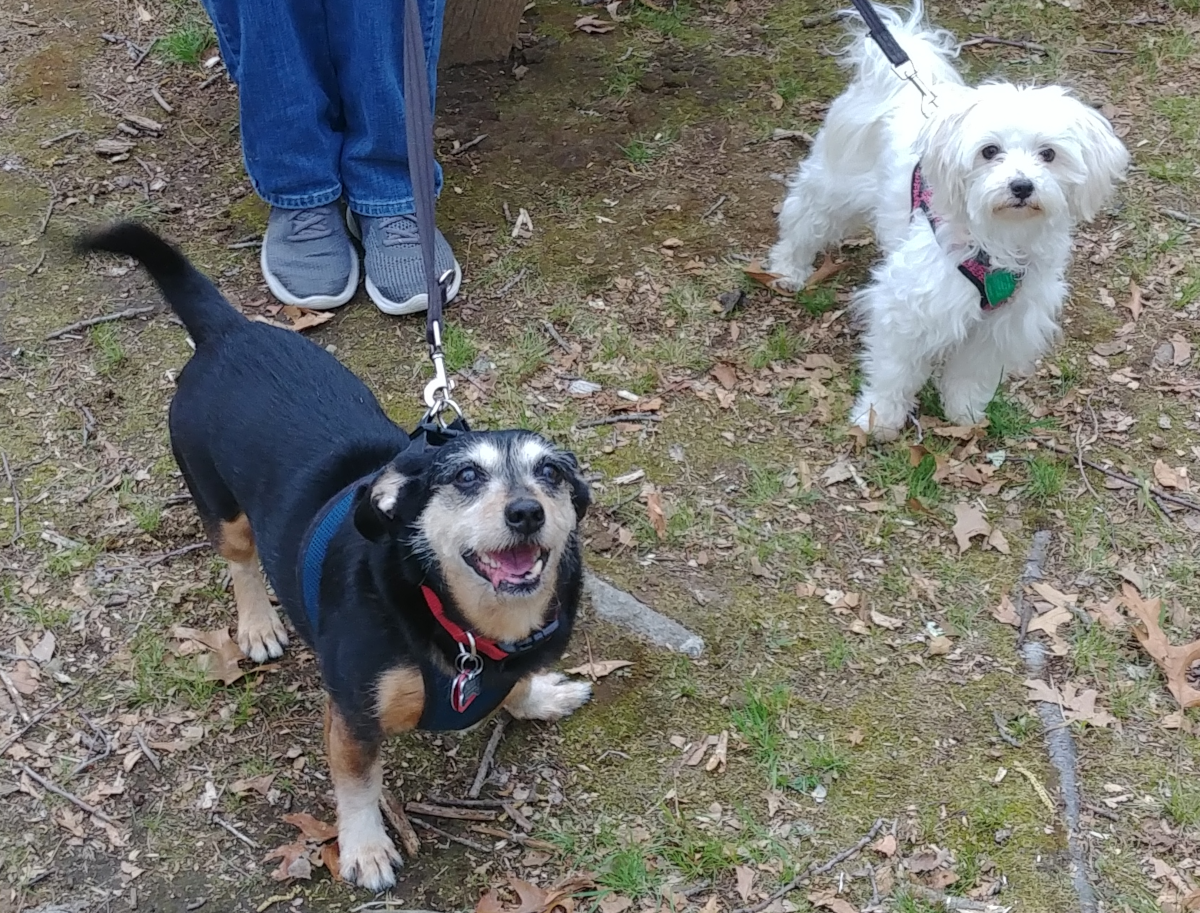 Weather can significantly change how manageable a familiar route feels. Cold conditions may coincide with increased stiffness or reluctance to move in some arthritic dogs. Although individual responses differ, dogs that seem uncomfortable in the cold may benefit from shorter outings during warmer parts of the day.
In hot weather, the concern shifts toward overheating and pavement temperature. Asphalt and concrete exposed to direct sunlight can become hot enough to injure paw pads, even when the surrounding air seems reasonably comfortable. Early morning or evening walks may provide more comfortable conditions during warmer months. Shaded routes, access to drinking water, and avoiding prolonged exposure to hot pavement can make a meaningful difference.
Rain creates another set of challenges. Wet grass, painted road markings, smooth pavement, and muddy trails may become slippery, increasing the risk of a fall. Snow and ice deserve particular caution because dogs with arthritis may have difficulty recovering their balance after slipping. Ice-melting products can also irritate paws, so avoiding treated surfaces where possible and cleaning paws after exposure are sensible precautions.
A useful approach is to establish more than one walking route:
- A regular route with comfortable footing and manageable distance.
- A shorter route for days when your dog is stiff or tired.
- A sheltered or shaded route for uncomfortable weather.
Having alternatives available makes it easier to adjust the routine without feeling pressured to complete the usual walk regardless of conditions.
Recognize When Your Dog Has Had Enough
One of the more difficult parts of caring for an arthritic dog is learning to distinguish ordinary changes in pace from signs that the activity has become uncomfortable. Some dogs are naturally slow walkers, while others stop frequently because they enjoy investigating their surroundings. The useful comparison is your dog’s own normal behavior.
Watch for progressive slowing, noticeable limping, difficulty placing the feet, repeated stumbling, muscle trembling, or reluctance to continue. Excessive panting in the context of the weather and activity level may also indicate distress or fatigue, although panting has several possible causes.
If your dog begins showing signs of discomfort, avoid encouraging them to push through the remaining distance. Stop the activity and arrange a safe return home, using assistance if necessary. Persistent or recurring symptoms warrant discussion with your veterinarian.
The period after exercise can reveal information that was not obvious during the walk. A dog who returns home and rests comfortably may have tolerated the outing well, while one who becomes significantly stiffer, limps more, or struggles to rise later may need their activity plan reassessed. Sudden inability to bear weight, severe pain, collapse, or difficulty breathing requires urgent veterinary attention. Those symptoms should not be treated as an ordinary arthritis flare-up.
Keep a Simple Record of Walking Comfort
Managing arthritis often involves gradual changes rather than dramatic improvements. A brief walking record can help identify patterns that might otherwise go unnoticed. You do not need complicated equipment or detailed measurements. A notebook or a simple note on your phone can record the route taken, approximate walking time, surface conditions, and any changes in your dog’s movement.
It can also help to note whether your dog appeared stiff before leaving home, walked comfortably throughout the outing, or showed increased discomfort afterward. For example, you might discover that your dog handles a twelve-minute walk along a level sidewalk comfortably but consistently struggles after an eight-minute route that includes a steep hill. That information suggests that the physical demands of the route matter alongside its duration.
Short videos can also be useful when discussing mobility changes with your veterinarian. Recording your dog walking naturally from the side and from behind may help demonstrate changes that are difficult to describe during an appointment. These observations should support veterinary evaluation rather than replace it. They can give your veterinarian or rehabilitation practitioner a clearer picture of how your dog functions during ordinary daily activities.
Make Room for Mental Stimulation Without Adding Distance
 Walks offer dogs more than exercise. They provide opportunities to explore scents, observe familiar surroundings, and participate in daily routines outside the home. An arthritic dog may still enjoy these experiences even after their physical abilities have changed. One option is to create a shorter route that includes several interesting places to stop. A grassy area, a familiar tree, or a quiet stretch of sidewalk can provide opportunities for scent investigation without requiring substantial distance.
Consider allowing additional time at these locations rather than extending the entire walk. Sniffing can provide enrichment while allowing your dog to remain relatively stationary, although prolonged standing may still become uncomfortable for some animals. Quiet routes may also be preferable to areas where excited dogs frequently approach, creating the possibility of sudden pulling, jumping, or rough interactions.
For dogs with substantial mobility limitations, brief outdoor visits close to home may remain worthwhile. Sitting or standing comfortably in a secure yard, exploring a small patch of grass, or enjoying a few minutes of familiar outdoor activity can offer stimulation without requiring a lengthy walk.
A pet stroller or wagon may help some dogs participate in longer family outings, provided it is safe and comfortable for the animal. These devices should supplement, rather than automatically replace, whatever appropriate movement the dog can still perform.
Work With Your Veterinarian as Mobility Changes
Walking modifications are one part of managing canine arthritis, but they cannot compensate for untreated or inadequately controlled pain. The American Animal Hospital Association’s Pain Management Guidelines emphasize the value of combining medical pain management with approaches such as appropriate exercise, weight control, rehabilitation, and environmental adjustments. While clinical research on specific exercise programs for dogs remains more limited than research involving people, controlled activity is widely recommended as part of comprehensive arthritis care.
Your veterinarian can help determine whether the walking routine is appropriate for the joints involved and whether additional pain management or physical rehabilitation may be useful. Dogs with significant weakness, previous orthopedic surgery, or multiple health conditions may require more individualized exercise recommendations.
A veterinary rehabilitation practitioner can assess movement patterns and develop a plan designed around your dog’s strength, balance, and joint limitations. That plan may include carefully selected exercises beyond ordinary leash walking.
Maintaining a healthy body weight also deserves attention. Excess weight adds mechanical stress to joints, and excess body fat can contribute to inflammatory processes. Working with your veterinarian on weight management may improve comfort alongside changes to exercise.
Never change prescribed pain medication or give human pain relievers in response to increased stiffness without veterinary direction. A dog who repeatedly struggles after even modest walks may need their overall treatment plan reevaluated, not simply another reduction in walking distance.
Allow the Walking Route to Change With Your Dog
 Arthritis rarely affects mobility in exactly the same way every day. Some mornings, a dog may rise comfortably and show enthusiasm for the usual route. On other days, stiffness or fatigue may make a shorter outing more appropriate. This variability is worth accommodating rather than trying to maintain a rigid schedule. A route that worked comfortably several months ago may eventually need additional adjustments as joint disease progresses or other health concerns develop.
Changes should also account for improvements. When pain is better controlled or rehabilitation helps restore strength, a veterinarian may recommend gradually increasing activity. Keeping a route permanently restricted without considering the dog’s current abilities could unnecessarily limit beneficial movement.
Sometimes the most useful adjustment is choosing a different destination entirely. Instead of walking several blocks to a park, driving to a level, accessible area may allow your dog to enjoy a comfortable outing without exhausting themselves before reaching it.
For a dog who has spent years eagerly waiting beside the door for a daily walk, preserving that familiar experience can mean a great deal. A shorter path, an easier surface, and a few extra minutes to investigate the neighborhood may allow that routine to continue comfortably, even when the distance traveled is no longer what it used to be.